Data handling begins with scope
We define what data is needed, what should stay out of scope, how it will be used, and who needs access before implementation decisions are made.
Trust Center
InitializeAI helps organizations move from AI interest to governed execution with clear data boundaries, responsible AI practices, security review readiness, human oversight, workflow accountability, and measurable adoption built into the work.
Trust Snapshot
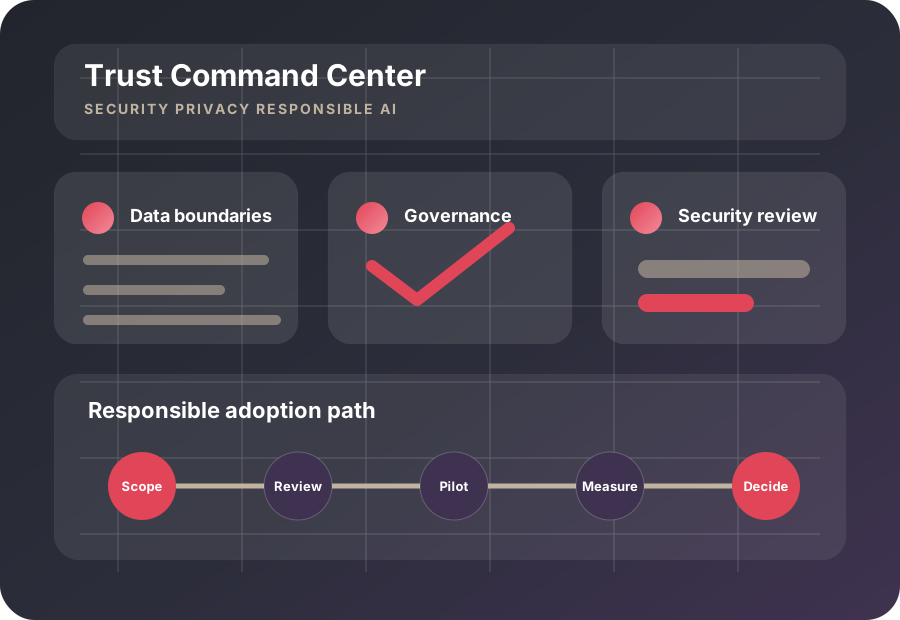
Trust is not a final checkbox. It is part of the AI execution model: what data is used, who reviews outputs, which vendors and models are involved, what risks are acceptable, how controls are documented, and when a pilot is ready to scale.
We define what data is needed, what should stay out of scope, how it will be used, and who needs access before implementation decisions are made.
We help teams establish policies, review paths, ownership, human oversight, escalation, and documentation before pilots expand.
We support security and procurement review by documenting architecture assumptions, vendor/model choices, data flows, risks, and controls.
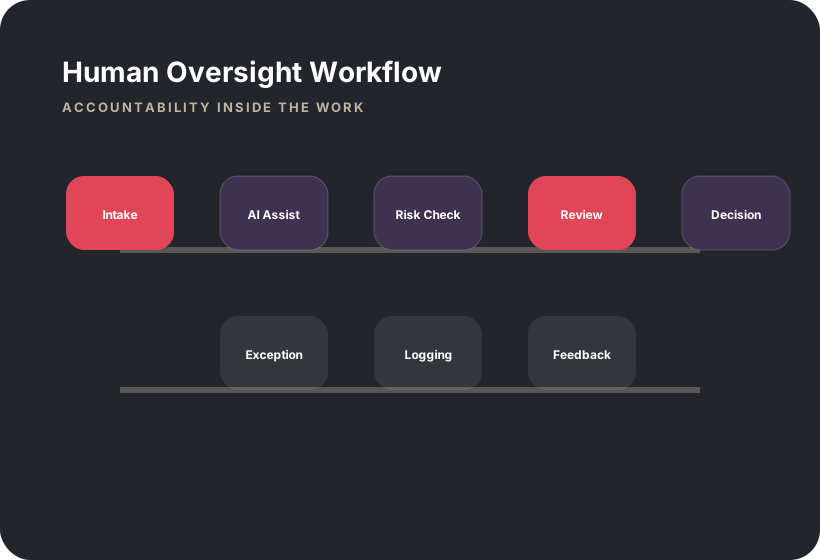
We design AI-enabled workflows with clear points for human review, decision authority, exception handling, and accountability.
We evaluate risk in context. A low-risk internal workflow and a public-facing decision-support system require different controls.
We help teams define what will be measured, what will be logged, what evidence matters, and how pilot decisions will be documented.
Clear Posture
InitializeAI does not use trust language as a substitute for review. We help teams clarify the facts that matter: the use case, data, model path, workflow, risk level, human oversight, security assumptions, and approval process.
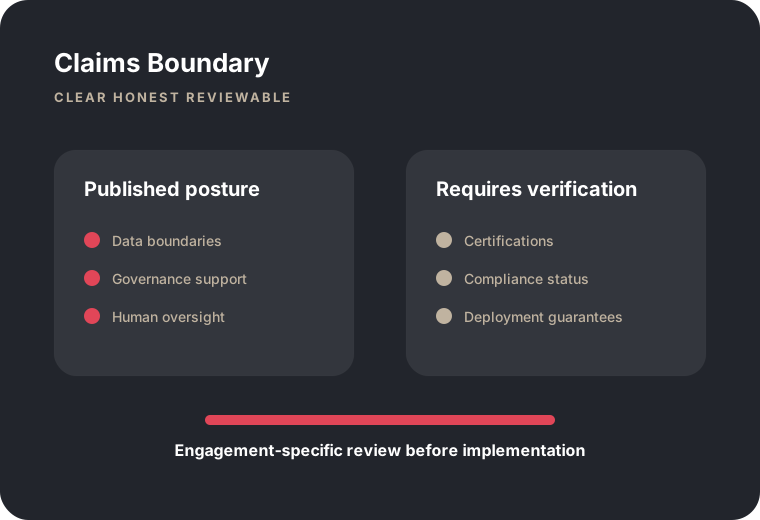
Specific security, privacy, compliance, and deployment requirements are defined during engagement scoping and client review.
Responsible AI Principles
InitializeAI can help teams align AI governance work with recognized frameworks such as NIST AI RMF, agency-specific requirements, internal security policies, procurement standards, and client-defined risk tolerances.
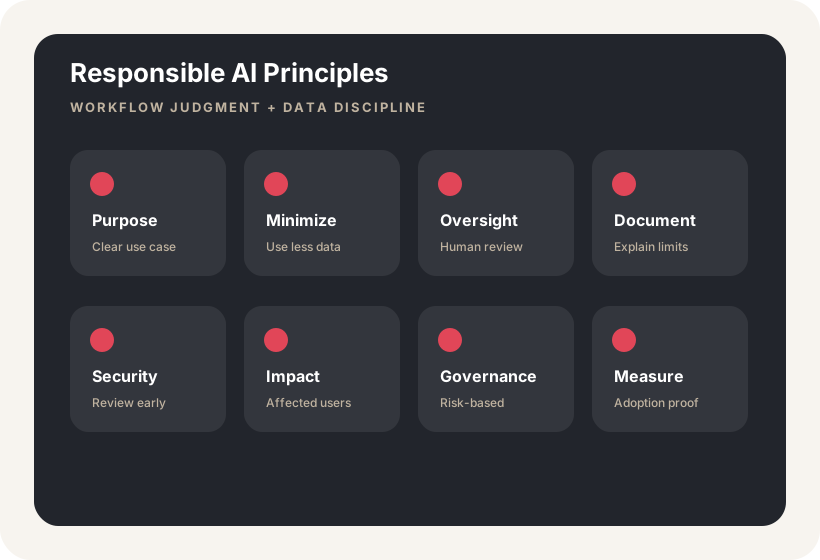
AI should support a clear business, operational, public-service, or user need.
Use the minimum data needed, and avoid sensitive data unless there is a clear, governed reason.
AI can support decisions, but people and organizations remain accountable for outcomes and escalation.
Teams should understand what the system does, what data it uses, where it can fail, and how it should be reviewed.
Data flows, access, vendors, models, integrations, and deployment choices should be reviewed before pilots scale.
AI systems should be evaluated for potential harms, affected stakeholders, fairness concerns, and unintended consequences.
Internal productivity tools, regulated workflows, and public-facing systems need different review levels.
Responsible AI should be measured by workflow impact, user adoption, risk controls, quality, and scale readiness.
AI Governance Operating Model
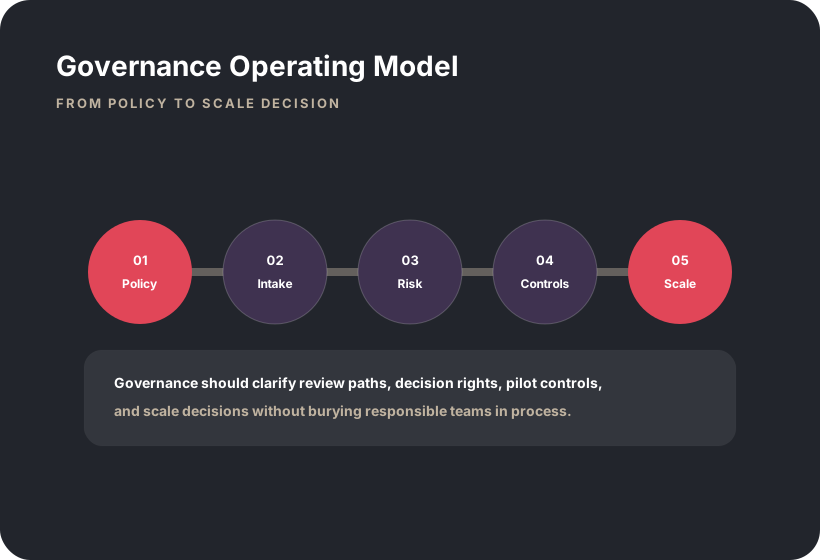
Governance should help teams move faster with clarity - not freeze responsible innovation.
Acceptable use, prohibited use, review standards, and responsible AI expectations.
Business purpose, affected users, data needs, workflow fit, sensitivity, risk, and owner.
Privacy, security, bias, safety, legal, vendor/model, operational, reputational, and public trust considerations.
Human review, access boundaries, logging, training, feedback, escalation, and measurement.
Adoption evidence, risk posture, operational readiness, quality, security review, and governance approval.
Data Boundaries
AI work should start with a clear understanding of data sources, sensitivity, access, retention expectations, vendor/model use, and approval requirements.
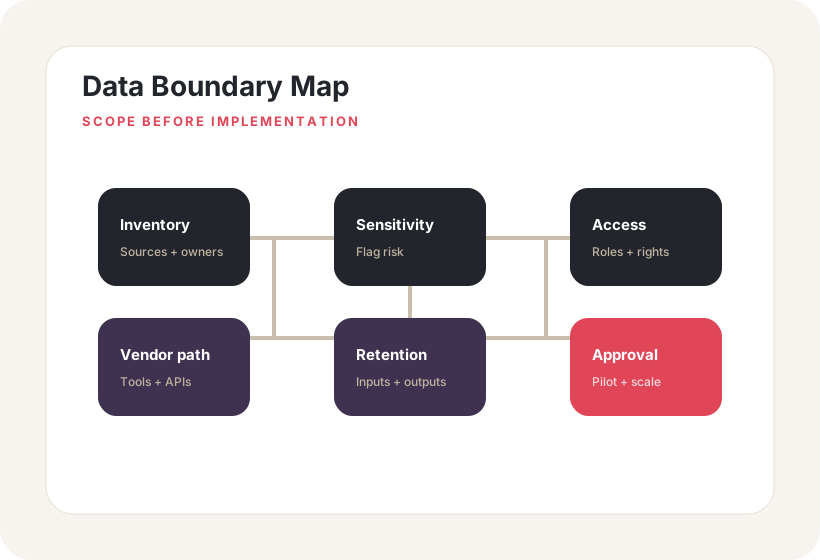
Identify what data is involved, where it lives, who owns it, and whether it is necessary.
Flag personal, confidential, regulated, proprietary, employee, financial, health, legal, or operationally sensitive information.
Define permissions and where human review or segregation of duties is needed.
Document third-party tools, APIs, hosted models, internal systems, or custom workflows. Use the AI Vendor Due Diligence Guide when the review involves external AI tools or embedded AI features.
Clarify how inputs, outputs, logs, generated content, and review evidence should be handled.
Define who signs off before a pilot, before production use, and before expansion of scope.
Security Review Readiness
Security review requirements vary by client, use case, deployment model, and procurement environment. InitializeAI helps organize the materials needed for a clear review process.
Discuss Security Review Needs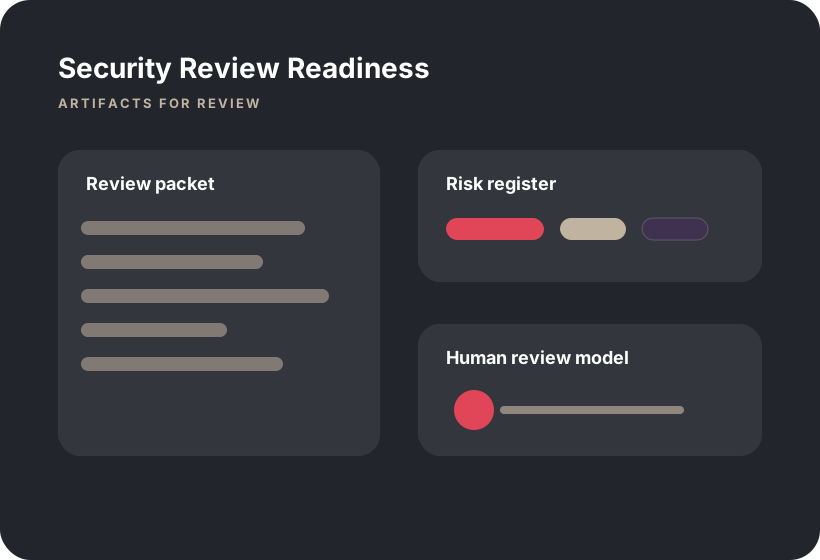
LLM and GenAI Risk Planning
Generative AI introduces workflow-specific risks that should be considered before pilots expand. These are planning areas, not claims that every risk has been eliminated.
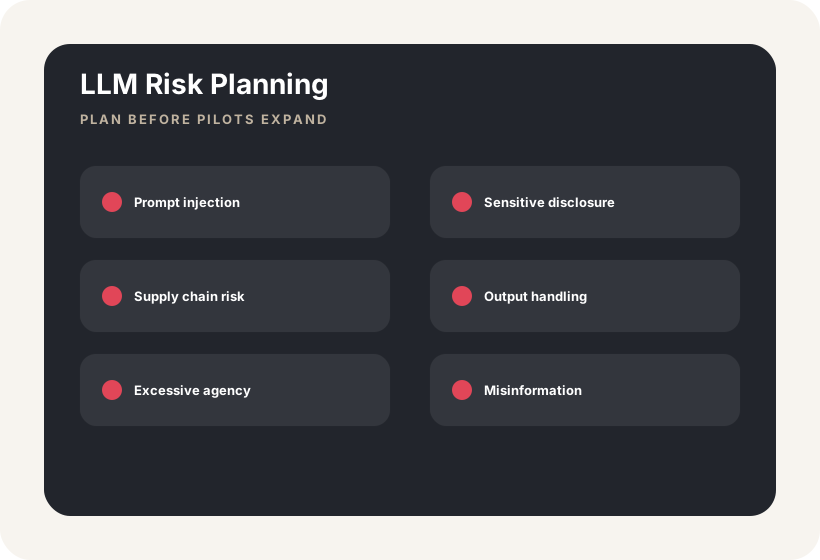
Plan for adversarial or unexpected inputs that may attempt to alter system behavior.
Reduce the risk that confidential, personal, proprietary, or regulated information is exposed.
Evaluate third-party tools, model providers, plugins, APIs, dependencies, and data-processing paths with a structured AI vendor due diligence process.
Define how AI outputs are reviewed, validated, routed, and prevented from triggering unsafe downstream actions.
Limit what AI systems can do autonomously, especially when actions affect users, money, records, communications, or operations.
Design review steps, user training, grounding, and escalation paths for uncertain or high-impact outputs.
Consider retrieval quality, access controls, data leakage, stale knowledge, and embedding-store governance.
Track quality, adoption, exceptions, user feedback, failure patterns, and escalation signals during pilots.
Human Oversight
AI adoption fails when accountability is vague. InitializeAI helps define who reviews, who decides, who approves, and what happens when the system is uncertain.
Public Sector and Procurement
For public-sector teams, trust is inseparable from adoption. AI work must be understandable, reviewable, documented, governed, and aligned with mission needs before it can earn confidence from stakeholders, staff, procurement teams, and the public.
View Government Contracting Profile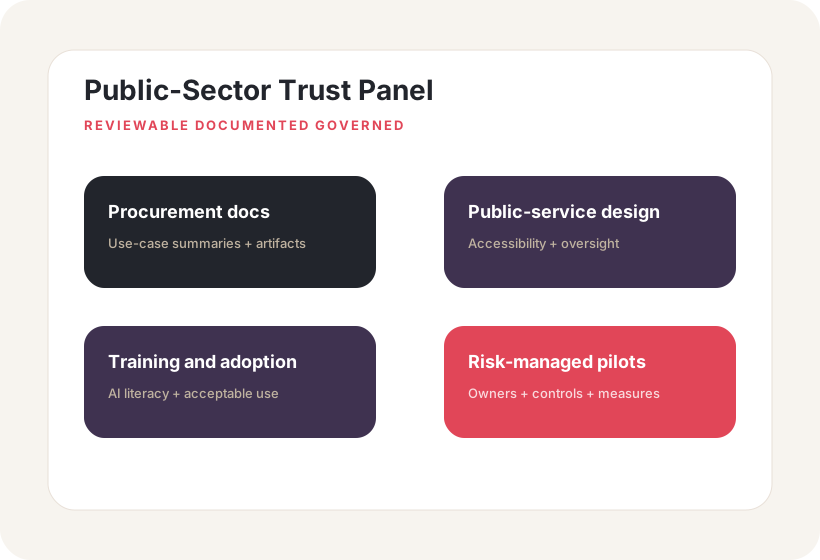
Support for capability statements, use-case summaries, governance artifacts, pilot scopes, data-flow assumptions, and review materials.
Considerations for accessibility, equity, transparency, human oversight, public trust, and affected stakeholders.
AI literacy, acceptable-use training, governance workshops, and workflow-specific enablement.
Pilot design that defines owners, metrics, data boundaries, review steps, and scale decisions before implementation.
Trust Artifacts
Practical trust work becomes real when it is documented, reviewed, and used in project decisions.
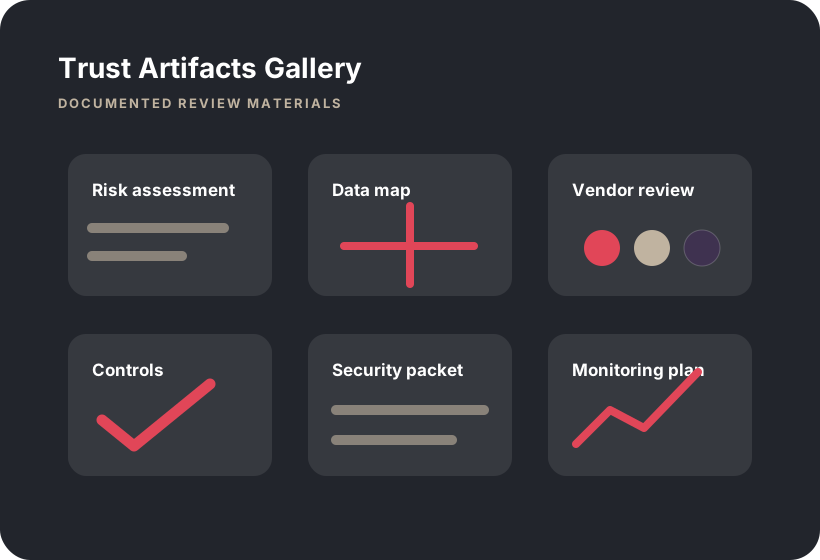
Used during governance design and pilot review.
Trust artifactUsed when ranking opportunities and setting review intensity.
Trust artifactUsed before implementation and security review.
Trust artifactUsed during procurement and technical evaluation.
Trust artifactUsed during workflow design and adoption planning.
Trust artifactUsed to organize data flows, architecture assumptions, and controls.
Trust artifactUsed during rollout and responsible adoption.
Trust artifactUsed when deciding whether a pilot should expand, revise, or stop.
Trust artifactEngagement-Specific Controls
Different AI work requires different controls. InitializeAI helps match the review process to the risk, use case, data, users, and deployment path.
FAQ
Only verified certifications should be published. Security, privacy, and compliance requirements are reviewed during engagement scoping. If a specific certification or control framework is required, InitializeAI will address that requirement in the project or procurement discussion.
Client data handling is defined by the engagement scope, applicable agreements, selected tools, and client requirements. InitializeAI's trust process is designed to clarify data boundaries before AI work begins.
Use-case scoping includes data inventory, sensitivity review, access needs, vendor/model path, retention expectations, and approval requirements.
InitializeAI designs AI-enabled workflows with human review, output validation, escalation paths, user training, and monitoring based on the risk level of the use case.
Yes, InitializeAI can help prepare public-sector AI readiness, governance, training, pilot, documentation, and procurement support materials. Specific government certifications should not be assumed unless verified.
Yes. InitializeAI can help develop acceptable-use guidance, governance workflows, risk registers, vendor/model review processes, pilot controls, and training materials.
No. InitializeAI uses a proportional approach. Controls should match the sensitivity, risk, users, data, workflow, and operational impact of the use case.
Start with an AI readiness or execution gap assessment to evaluate strategy, data, governance, workflows, ownership, and adoption readiness before scaling AI investments.
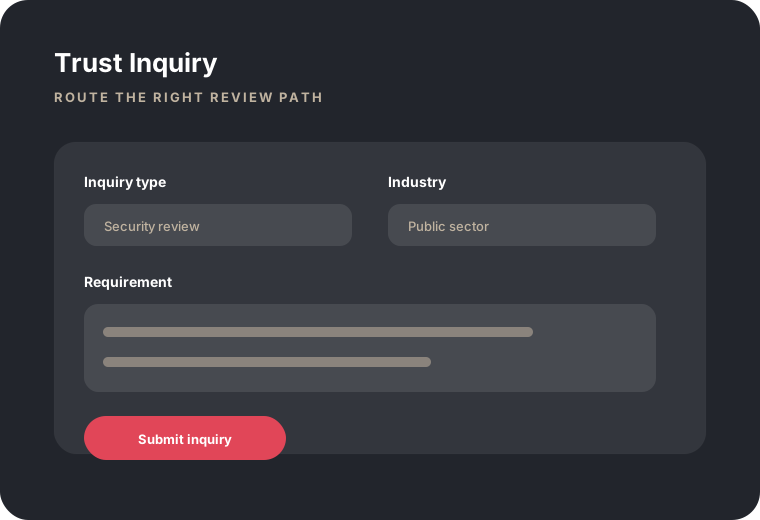
Trust Inquiry
Use this form for vendor review, procurement questions, AI governance discussions, security review needs, responsible AI workshops, or trust-related project scoping.
Next Step
InitializeAI can help your team define data boundaries, assess AI risk, design governance-first pilots, prepare security review materials, train users, and move from AI experimentation to responsible execution.