AI ideas without readiness
Teams see many possible use cases, but lack a clear way to evaluate mission value, data readiness, risk, and adoption capacity.
Government & Public Sector AI
InitializeAI helps agencies, municipalities, school districts, and public-sector partners assess AI readiness, prioritize responsible use cases, design measurable pilots, train teams, modernize workflows, and build implementation paths that can survive oversight, procurement, and real-world adoption.
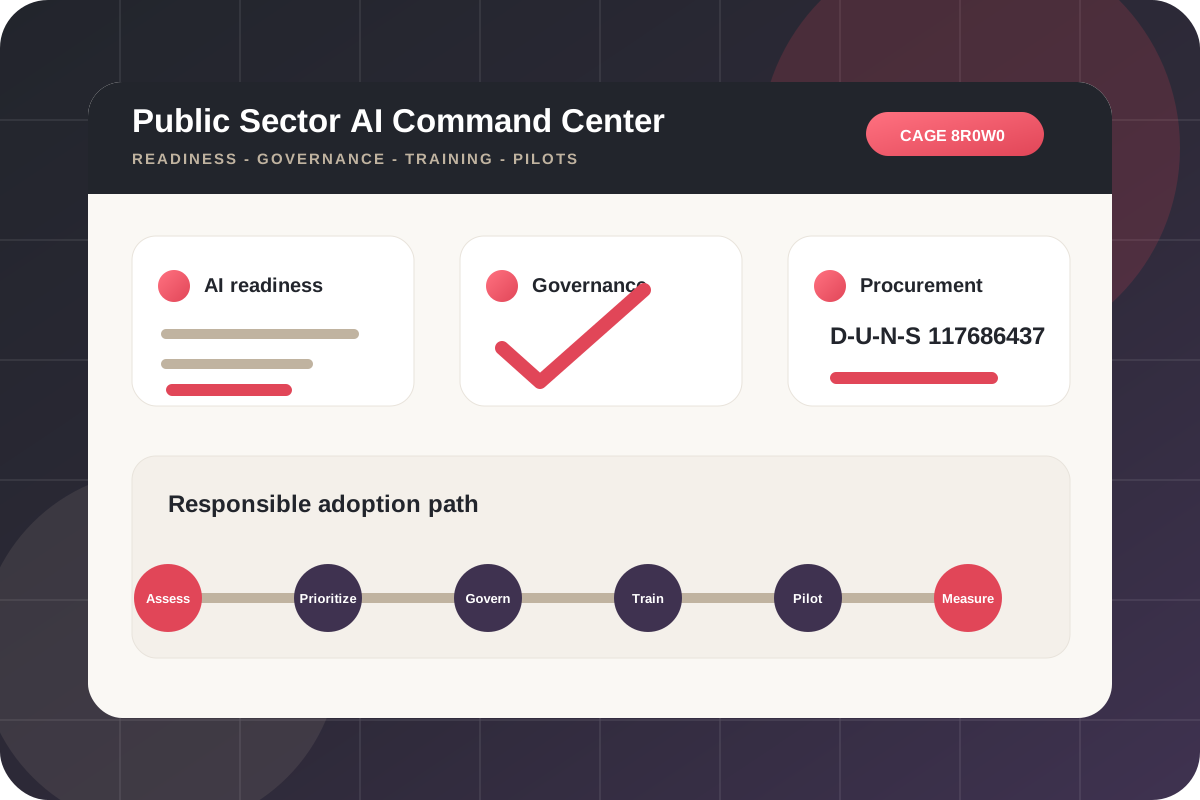
Public-sector AI execution
Government teams are being asked to evaluate AI quickly while protecting public trust, privacy, accessibility, security, staff adoption, procurement integrity, and mission outcomes. InitializeAI helps teams move from scattered AI interest to a practical path for governed execution.
Teams see many possible use cases, but lack a clear way to evaluate mission value, data readiness, risk, and adoption capacity.
Public-sector AI requires clarity around human oversight, acceptable use, privacy, security, accessibility, bias, vendor review, and public trust.
Service delivery, permitting, procurement, case management, reporting, and training workflows often span legacy systems and manual handoffs.
AI pilots often stall when owners, metrics, adoption plans, risk controls, and scale decisions are not defined up front.
Leaders and teams need practical AI literacy, role-specific training, and guidance on safe, useful adoption.
Public-Sector AI Intake Check
Public-sector AI adoption often begins inside a department: a staff team sees a tool, a vendor offers a demo, or a program owner identifies a workflow that could move faster. Before that idea becomes informal use, a pilot request, or a procurement action, the department should capture the mission fit, data sensitivity, resident impact, human oversight model, workforce readiness, procurement constraints, and measurable service improvement expected from the use case.
Give each AI idea enough structure to decide whether it should proceed, be revised, require governance review, or stop.
An AI idea should connect to a mission outcome before the department evaluates tools.
The data involved often determines the review path, tool constraints, vendor requirements, and oversight model.
Public-sector AI should be evaluated based on who may be affected, not only who will use the tool.
AI can support public work, but accountability must remain visible.
Adoption depends on more than access to a tool. Staff need training, rules, manager reinforcement, and confidence in how AI fits into the work.
Some AI ideas can be explored through internal workflow design, while others require formal procurement, vendor, legal, or security review before use.
Without a baseline, the department cannot prove whether AI improved service delivery, speed, quality, capacity, risk, or staff workload.
A completed intake check should not create a long report. It should produce a clear next-step recommendation: proceed to readiness review, revise the use case, route to governance or procurement review, pilot in a bounded workflow, or stop because the risk, data, ownership, or measurement case is not clear enough.
InitializeAI helps public-sector teams turn AI ideas into structured intake, readiness review, governance questions, pilot criteria, and measurable next steps before adoption spreads informally.
Public-Sector AI Procurement Readiness
Public-sector AI procurement should begin with the service outcome and operating requirements—not a model, platform, or vendor category. Before an agency buys, pilots, or expands AI, leaders should define the workflow, accountable owner, approved data boundaries, governance requirements, human oversight model, workforce adoption plan, measurement baseline, and the evidence that will determine whether the initiative should scale.
An AI intake check decides whether an idea should proceed. AI procurement readiness starts after the mission need advances: it converts responsible AI principles into requirements for an RFI, RFP, pilot request, vendor evaluation, statement of work, contract review, or implementation plan—requirements vendors can answer, evaluators can compare, staff can use, and leadership can measure.
Do not let the technology category become the problem definition.
Ownership should not sit only with IT, innovation, procurement, or the vendor.
Evaluate both data permission and data fitness.
Governance should become an implementation requirement, not remain a general policy statement.
AI may support public work, but accountability must remain visible.
Software access alone is not an implementation plan.
Without a baseline, procurement cannot demonstrate measurable public value.
AI opportunity areas
InitializeAI helps identify and evaluate AI opportunities that improve services, reduce friction, support staff, and strengthen decision-making without skipping governance.
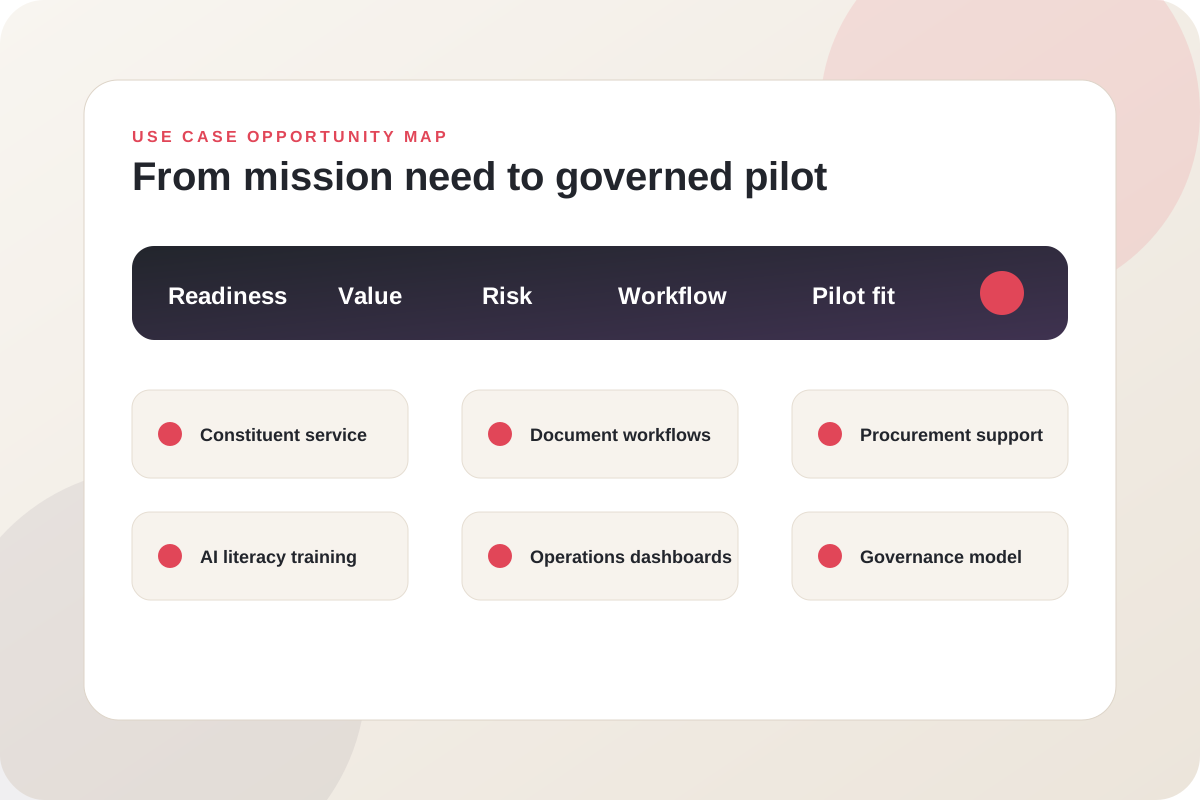
Mission value: Faster routing, better context, and reduced staff burden.
Governance: Human review, privacy boundaries, accessibility, and escalation rules.
First pilot: Summarize requests, classify urgency, and support response workflows.
Workflow automationMission value: Better intake, classification, retrieval, and review throughput.
Governance: Sensitive data handling, retention expectations, and approval paths.
First pilot: Document summarization and review routing with human oversight.
Custom AI supportMission value: Less manual evidence collection and more consistent reporting.
Governance: Source traceability, reviewer accountability, and output validation.
First pilot: Requirement mapping and report drafting support.
Pilot designMission value: Faster comparison of requirements, questions, and documentation.
Governance: Procurement integrity, vendor neutrality, and review records.
First pilot: Summarize solicitations and organize proposal documentation.
Contracting profileMission value: Safer adoption and clearer expectations across roles.
Governance: Acceptable use, data boundaries, review practices, and escalation.
First pilot: Executive briefing plus role-specific staff workshops.
Advisory & trainingMission value: Easier access to policies, procedures, FAQs, and knowledge bases.
Governance: Retrieval quality, source grounding, access controls, and review.
First pilot: Internal assistant for a bounded policy area.
AI governanceMission value: Better visibility into backlogs, operations, risk, and program performance.
Governance: Data quality, assumptions, decision authority, and documentation.
First pilot: Reporting workflow and dashboard concept for one program.
AI readinessMission value: Reduce repetitive status, routing, summarization, and review tasks.
Governance: Exception handling, permissions, audit trail, and training.
First pilot: Human-in-the-loop routing for one high-volume workflow.
Workflow automationMission value: Help districts and workforce organizations adopt responsibly.
Governance: Staff policy, student or participant safeguards, and training needs.
First pilot: Readiness assessment and AI literacy training plan.
Education & Workforce AIMission value: Clear intake, review, risk control, and scale decision paths.
Governance: The governance model is the deliverable: policy, roles, controls, and documentation.
First pilot: Use-case intake and vendor/model review workflow.
Trust CenterSchool district AI readiness
AI literacy for school districts should come before broad tool adoption.
For school systems, responsible AI adoption is not just a technology decision. It requires clear guidance for educators, administrators, students, families, procurement teams, and vendors before AI becomes embedded in classroom, operational, or administrative workflows.
AI literacy helps district leaders create a shared understanding of what AI can support, where human judgment is required, what data should remain protected, and which use cases are appropriate for early pilots.
The goal is not to chase AI tools. The goal is to build the conditions for safe AI adoption in schools.
InitializeAI helps school districts and public-sector leaders assess AI readiness, use the AI Readiness Assessment Framework, prioritize responsible use cases, design training and AI governance models, and move from AI interest to practical implementation.
Assess whether your district, agency, or public-sector team has the policy, training, governance, workflow, and adoption conditions needed before expanding AI use.
Public-sector profile
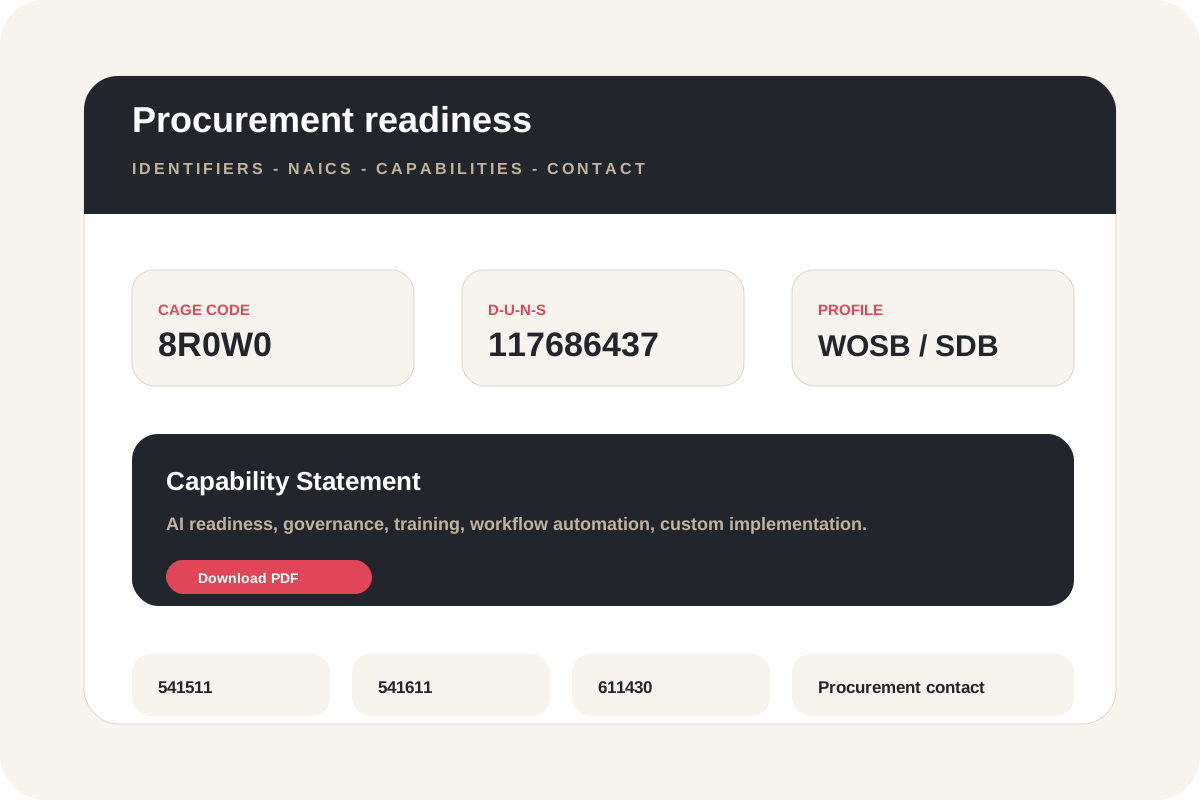
Access InitializeAI LLC's public-sector profile, identifiers, small business profile, NAICS codes, and capability statement from the same government-facing path.
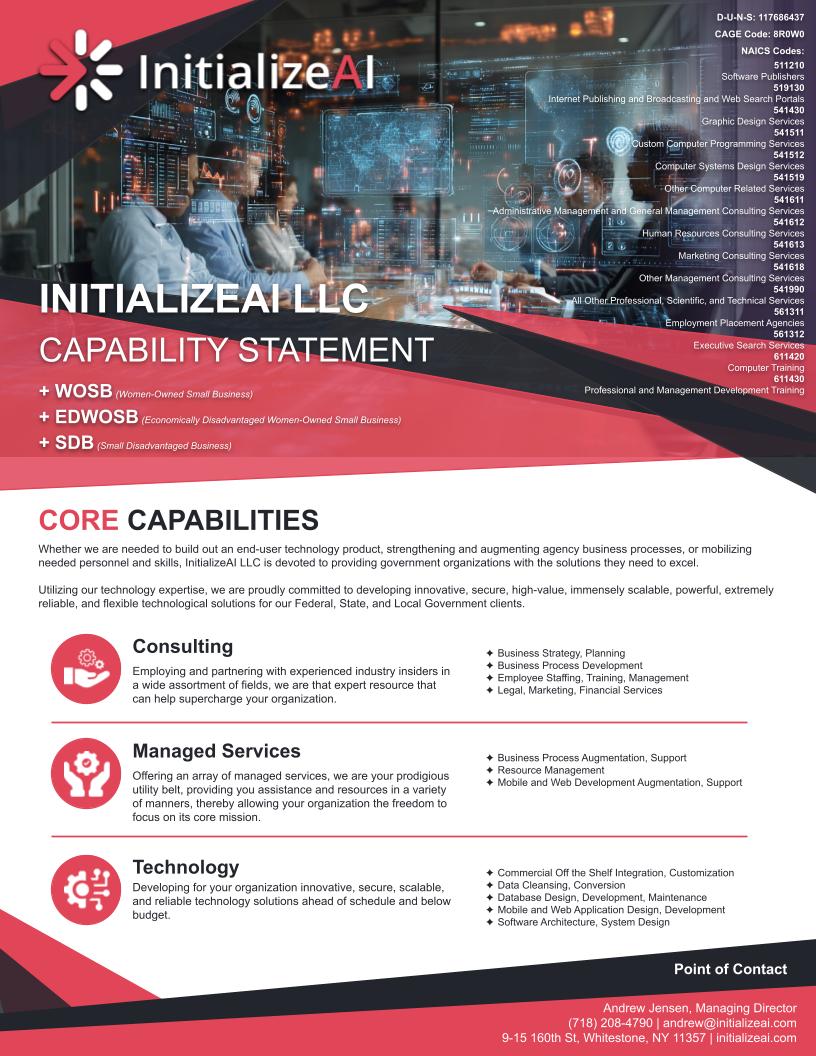
Public-sector AI services
Evaluate strategy, data, systems, governance, workflows, ownership, adoption capacity, and pilot readiness.
Deliverables: readiness score, risk summary, use-case inventory, priority recommendations, 30/60/90-day roadmap. Explore AI ReadinessCreate practical guardrails for privacy, security, accessibility, human review, vendor/model review, acceptable use, and auditability.
Deliverables: governance checklist, risk register, acceptable-use guidance, human oversight model, vendor/model review framework. Explore AI GovernanceEquip leadership, staff, educators, and program teams with practical AI literacy and role-specific responsible-use guidance.
Deliverables: executive briefings, staff workshops, governance training, role-specific playbooks, training materials. Explore Advisory & TrainingRun focused sessions for leadership teams, agencies, school districts, and program owners to align on AI opportunities and responsible adoption.
Deliverables: workshop agenda, use-case map, governance questions, opportunity backlog, next-step roadmap. Explore WorkshopsMove from use-case idea to measurable pilot with defined owner, workflow, data, risk controls, adoption plan, and scale decision.
Deliverables: pilot charter, workflow map, metrics plan, control checklist, adoption plan, scale recommendation. Explore AI Pilot ProjectsSupport AI-enabled intake, routing, summarization, reporting, dashboards, document intelligence, and internal tools.
Deliverables: workflow automation design, prototype, dashboard concept, internal tool, integration map, implementation plan. Explore Custom AIGovernance-first public-sector AI
Public-sector AI must be understandable, reviewable, accountable, and designed around the people who use or are affected by it.
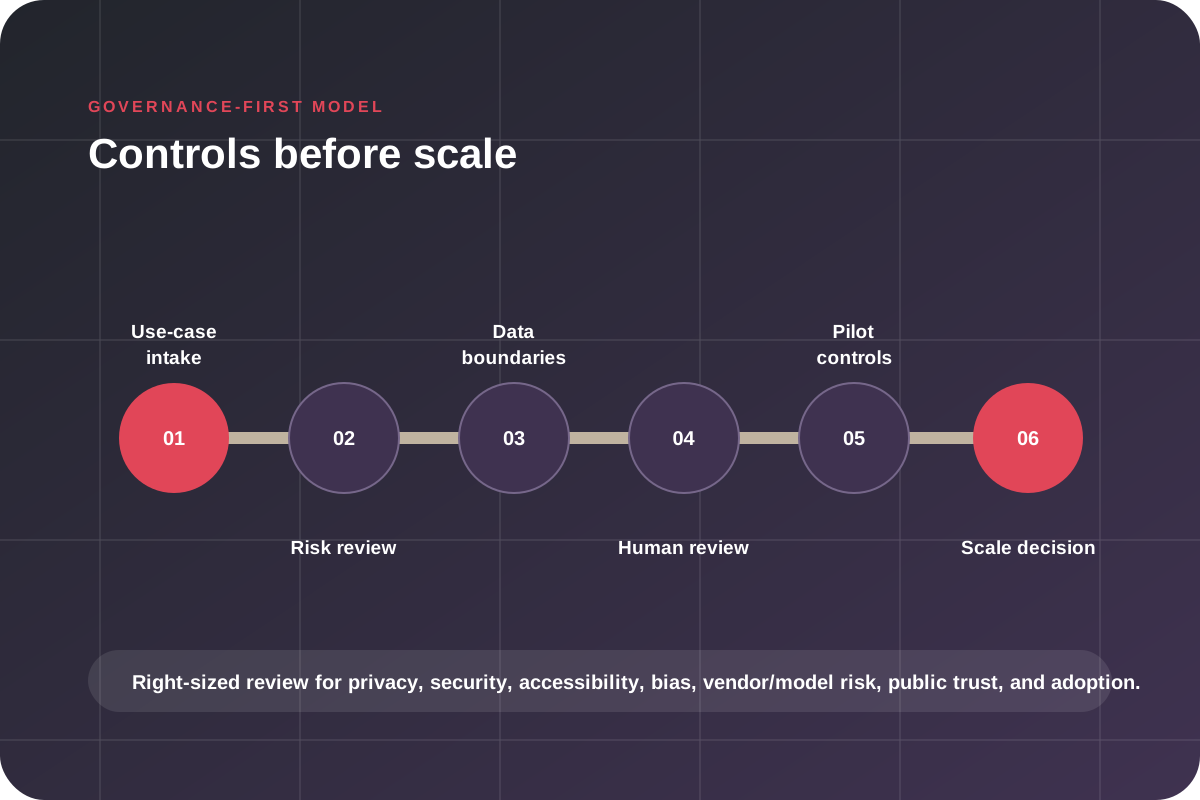
Define mission purpose, owner, users, affected stakeholders, data, and workflow.
Review privacy, security, accessibility, bias, legal, operational, reputational, and public-trust risks.
Clarify what data is needed, what should stay out of scope, who can access it, and how outputs are handled.
Define review steps, escalation paths, decision authority, and exception handling.
Set metrics, training, monitoring, feedback loops, risk controls, and documentation requirements.
Decide whether to scale, refine, pause, or stop based on adoption, quality, risk, and operational value.
Municipal AI readiness FAQ
Responsible AI adoption in government starts before tool selection. These questions help public-sector leaders evaluate AI readiness, governance, data boundaries, workforce readiness, vendor oversight, citizen-service use cases, and the right sequence for a measurable first pilot.
AI readiness means the organization has enough governance, data clarity, workflow understanding, staff capacity, risk controls, measurable use cases, and executive ownership to evaluate AI responsibly. It does not mean every system is perfect. It means leaders know which workflows are candidates, what data is involved, who reviews outputs, how risk will be managed, and how a pilot will be measured. Start with an AI readiness assessment when those conditions are unclear.
A public-sector AI intake check should capture the mission fit, data sensitivity, resident or stakeholder impact, human oversight model, workforce readiness, procurement or policy constraints, and measurable service improvement expected from the use case. The goal is to decide whether the idea should proceed to readiness review, governance review, pilot scoping, procurement planning, revision, or deferral.
Before procuring AI, public-sector organizations should define the mission outcome, workflow owner, data boundaries and readiness, governance requirements, human oversight model, workforce adoption plan, measurement baseline, vendor evidence requirements, and criteria for scaling, redesigning, pausing, or stopping the initiative. Those decisions turn an approved mission need into implementation requirements vendors can answer and evaluators can compare.
A municipality should start with a bounded workflow, not a broad platform purchase. Good first pilots have repeatable volume, a clear workflow owner, available data, human review, low-to-moderate risk, and a baseline that can show whether service quality, cycle time, staff effort, or documentation improved. The pilot should answer a decision: scale, revise, pause, or stop. Explore AI pilot design before launch.
Leaders should decide which AI uses are allowed, review-required, or off limits; what data can be used; who approves tools; where human oversight is required; how vendors are evaluated; how outputs are documented; and how incidents or exceptions are escalated. Practical AI governance helps agencies move faster because staff know the rules before pilots or tools spread informally.
Public trust depends on clarity, oversight, and restraint. Agencies should explain the purpose of each AI use case, keep sensitive or restricted data out of inappropriate tools, maintain human review for consequential decisions, document assumptions, train staff, and create a path for questions or correction. AI should support service delivery and staff productivity without removing accountability from public officials or approved reviewers.
Before adopting AI, agencies should identify the data sources involved, sensitivity level, records obligations, access rules, retention expectations, vendor data handling terms, and whether outputs could expose protected or confidential information. Data readiness is also practical: the team should know whether the data is accurate, current, available, and useful enough to support the workflow. Legal, privacy, security, procurement, and data stakeholders should be involved before higher-risk uses move forward.
Government teams should evaluate more than product features. Review data handling and training use, privacy and security controls, model behavior and limitations, accessibility, contract terms, auditability, implementation effort, human oversight, workforce training and adoption assumptions, pilot success metrics, and the evidence the vendor can provide. The AI Vendor Due Diligence Guide can help connect those questions to governance, procurement, workflow ownership, and measurable acceptance criteria.
Staff need role-specific guidance, not generic AI enthusiasm. Training should explain approved uses, prohibited uses, data boundaries, prompt and output review expectations, escalation paths, and how AI fits into daily workflows. Managers also need adoption signals and feedback channels so the organization can see whether AI is improving work or creating new risks. InitializeAI supports public-sector AI advisory and training for leadership and staff teams.
A responsible sequence starts with readiness and use-case intake, then workflow review, governance requirements, data assessment, pilot design, staff training, measurement, and a scale decision. Agencies should avoid scaling because a tool is popular or a demo is impressive. The better path is to prove measurable business impact in one bounded workflow, document what changed, and use that evidence to decide whether to scale, revise, pause, or stop.
Assess whether your agency, municipality, district, or public-sector team has the governance, data, workflow, training, and pilot conditions needed before expanding AI use.
Procurement-aware delivery
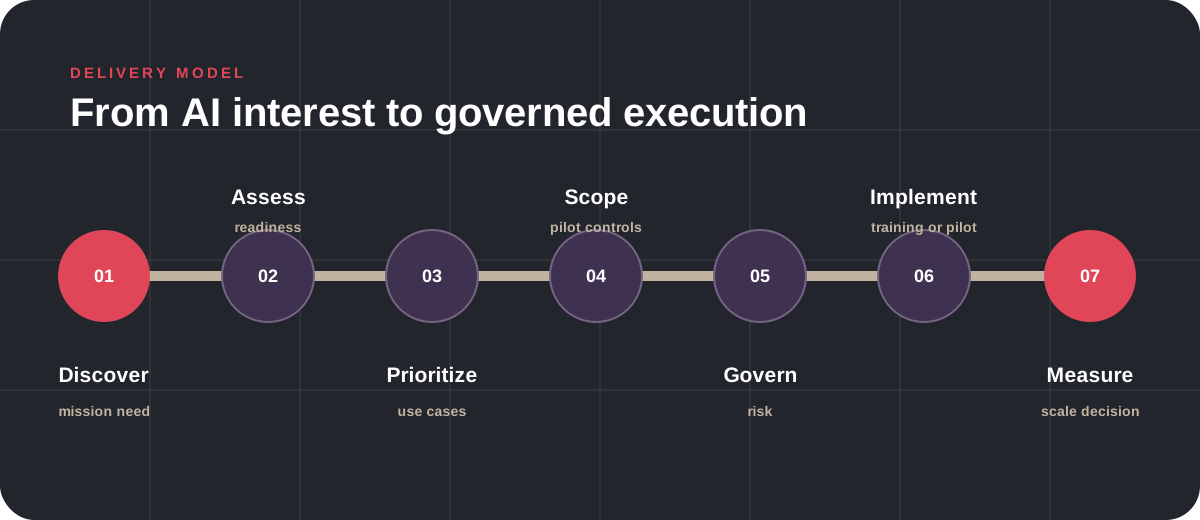
Clarify goals, stakeholders, constraints, systems, and procurement path.
Evaluate governance, data, workflows, technology, ownership, and adoption.
Rank opportunities by mission value, feasibility, risk, and readiness.
Define deliverables, timeline, owner, controls, metrics, and expected decision.
Prepare staff, define policy guardrails, document oversight, and establish review paths.
Deliver pilot, automation, training, dashboard, implementation plan, or scale recommendation.
Capture adoption, workflow impact, lessons learned, risk posture, and next decision.
Function-by-function use cases
A good first pilot should be bounded enough to govern, useful enough for staff, and measurable enough to support a scale decision.
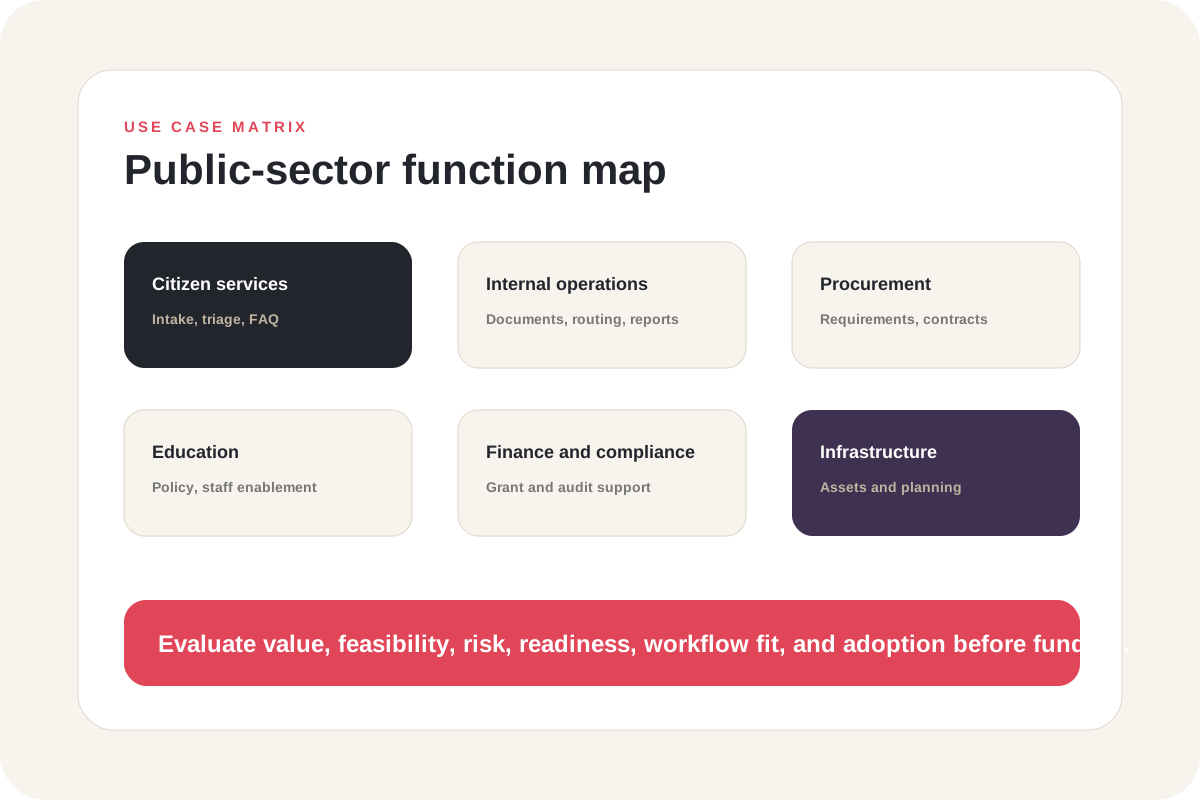
Good first pilot: A human-reviewed intake and routing workflow for one service category.
Good first pilot: Internal knowledge retrieval for a bounded policy or procedure set.
Good first pilot: Requirements matrix support with reviewer signoff.
Good first pilot: AI readiness assessment plus staff training plan.
Good first pilot: Evidence collection and report review support.
Good first pilot: A dashboard or workflow map for one operational planning need.
Contracting services

Help agencies use AI and analytics to improve service delivery, understand demand, identify bottlenecks, and support staff decisions.

Support municipalities and public-sector operators with AI-enabled planning, monitoring concepts, workflow automation, and reporting.

Help public-sector teams define policies, risk controls, oversight, training, and documentation before pilots scale.
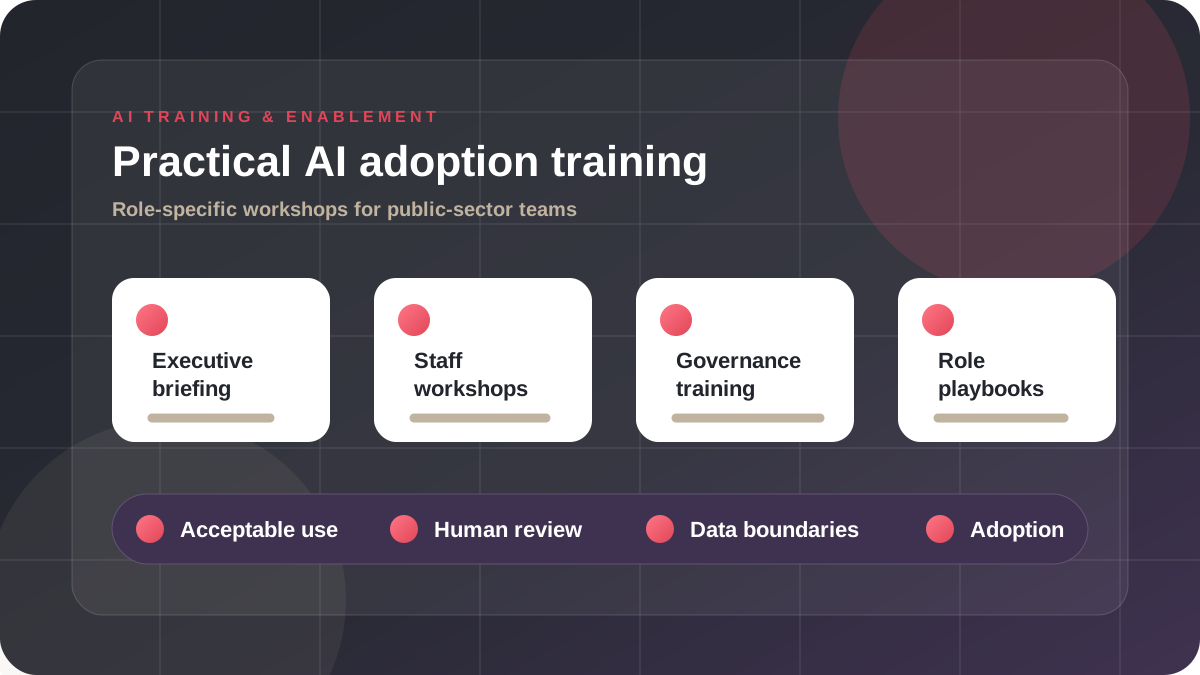
Prepare public-sector teams to use AI responsibly, confidently, and consistently.
NAICS codes
NAICS applicability depends on the solicitation scope.
Why InitializeAI?
Assess the conditions required for AI to work before buying tools or funding pilots.
Design risk review, data boundaries, human oversight, policy, training, and auditability into the work.
Focus on the actual service, administrative, operational, and staff workflows where AI must be useful.
Provide clear capability materials, identifiers, NAICS alignment, and teaming paths for public-sector opportunities.
Help leaders and staff understand how to use AI responsibly inside real work.
Define what success, risk, adoption, and scale-readiness look like before implementation begins.
Next steps
Public-sector inquiry
Use this path for agency consultations, public-sector AI workshops, school district AI readiness, governance support, workflow modernization, pilot design, or teaming conversations.