Regulated workflows
Healthcare, finance, government, legal, and education teams need governance, privacy, human oversight, and reviewability.
AI by Industry
InitializeAI helps organizations across government, education, healthcare, financial services, logistics, SaaS, nonprofit, manufacturing, field service, energy, legal, real estate, construction, infrastructure, retail, ecommerce, and operational environments identify high-value AI opportunities and implement them responsibly.
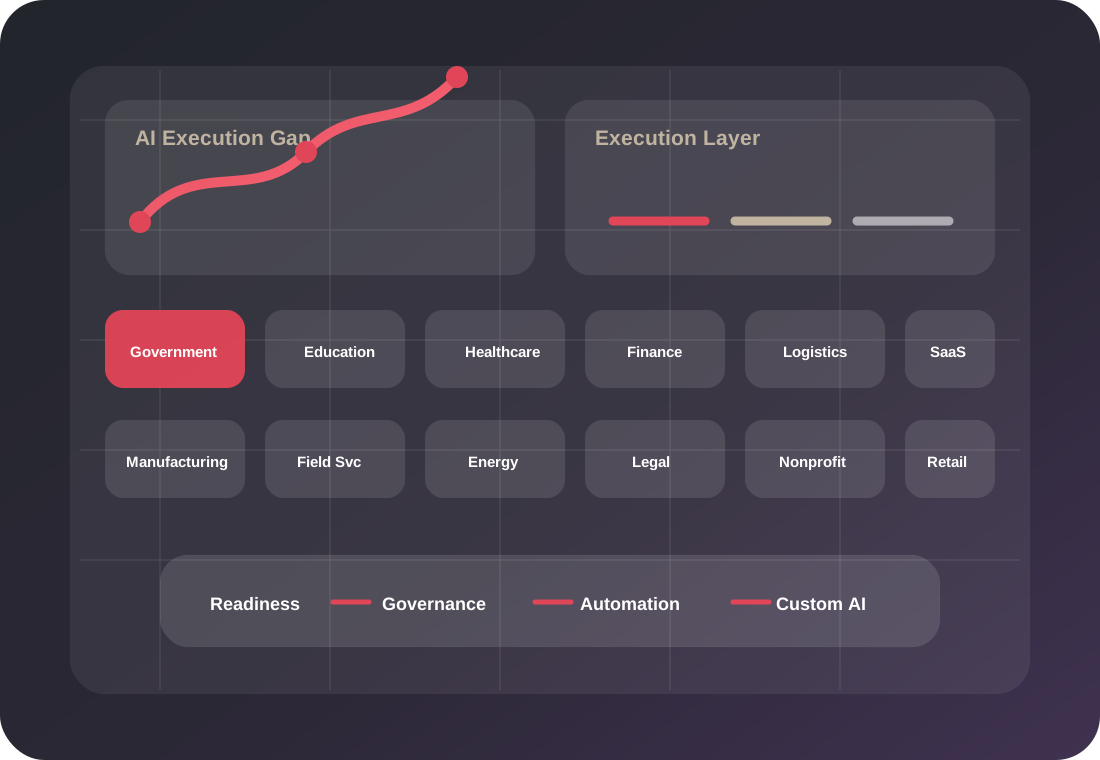
Industry Execution Gap
AI adoption does not stall for the same reason in every sector. Government teams need trust, procurement readiness, and governance. Education and nonprofit teams need staff enablement and responsible use. Healthcare and finance need risk-aware workflows. Logistics and operations need measurable process improvement. SaaS teams need AI product capability. InitializeAI helps each sector identify the right starting point.
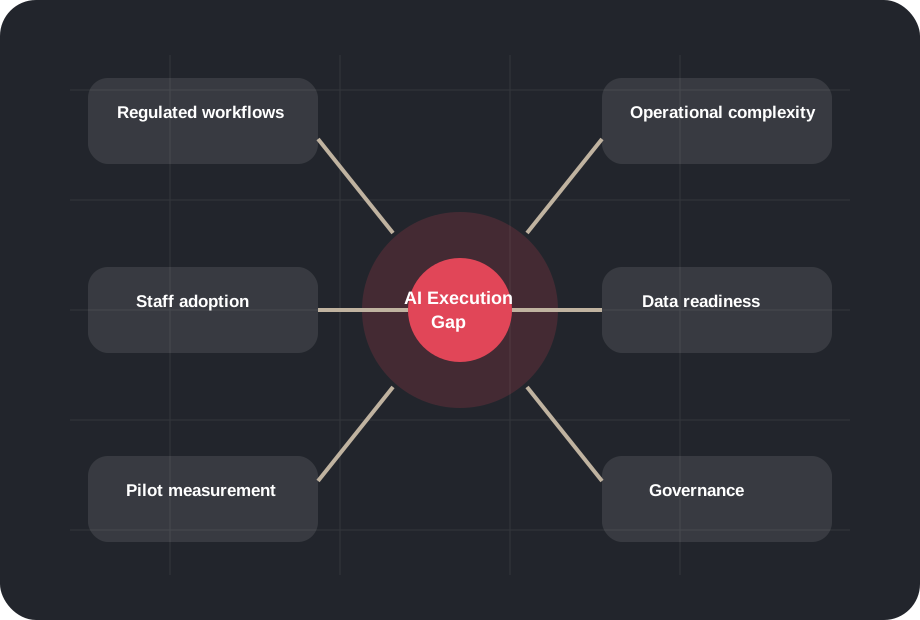
Healthcare, finance, government, legal, and education teams need governance, privacy, human oversight, and reviewability.
Logistics, manufacturing, field service, facilities, energy, and infrastructure teams need AI that fits real workflows, assets, handoffs, and data realities.
Education, workforce, nonprofit, government, and enterprise teams need AI literacy, training, role-specific playbooks, and responsible-use guidance.
AI value depends on whether data, systems, integrations, permissions, and ownership are ready for the use case.
Teams need measurable pilots with owners, workflows, controls, metrics, and scale/refine/stop decisions.
Responsible AI adoption requires policy, risk review, vendor/model questions, human oversight, and documentation before pilots expand.
Explore Industries
Active industry pages link to full sector guidance. Use the filters to compare public-sector, regulated, operational, mission-driven, and technology-focused AI paths.
12 industry cards shown.

AI readiness, governance, staff training, workflow modernization, procurement-aware support, and responsible public-service adoption.
AI execution gap: Trust, policy readiness, procurement context, staff enablement, and reviewable pilots.

AI literacy, responsible governance, program operations, grant reporting, workforce pathways, nonprofit workflows, and staff enablement.
AI execution gap: Responsible use, staff confidence, program operations, data boundaries, and mission alignment.

Governance-aware AI opportunities for administrative, operational, patient access, documentation, and clinical-adjacent decision-support workflows.
AI execution gap: Sensitive data, oversight, workflow fit, review paths, and adoption evidence.

Regulatory-aware AI opportunities for risk workflows, compliance support, document intelligence, client operations, and financial operations.
AI execution gap: Sensitive data, model/vendor review, human oversight, workflow fit, and review-ready documentation.

Practical AI opportunities for forecasting support, routing workflows, exception management, document processing, warehouse operations, and operations dashboards.
AI execution gap: Data readiness, workflow mapping, operator review, adoption, and measurable operational change.

AI product strategy, feature prioritization, internal copilots, customer support automation, product analytics, and responsible product capability.
AI execution gap: User value, adoption signal, architecture readiness, evaluation, trust, and governance for product teams.

AI readiness, quality workflow support, visual inspection planning, predictive maintenance readiness, asset operations, safety documentation, SOP assistants, and industrial dashboards.
AI execution gap: Data readiness, systems dependencies, operator review, safety-aware governance, and practical pilot scope.

AI readiness, technician workflow support, field documentation, proof-of-work packets, facilities request routing, maintenance triage, and supervisor review.
AI execution gap: Field evidence, handoffs, review queues, technician adoption, and proof-ready pilot measurement.

AI readiness, asset workflows, maintenance planning, field operations, reporting support, outage and incident workflows, public-service context, and governed pilots.
AI execution gap: Field data readiness, human oversight, governance-first pilots, safety-aware review, and critical-infrastructure-sensitive planning.

Document intelligence, knowledge management, matter and client intake, review workflows, responsible AI policies, client-service operations, and professional productivity support.
AI execution gap: Reviewability, client-data boundaries, knowledge governance, human approval, and measurable adoption.

AI readiness, project documentation support, permitting workflows, field reporting, asset data readiness, facilities operations, capital planning, and owner-reviewed pilots.
AI execution gap: Project documents, field reporting, owner review, asset data, and workflow visibility.

AI readiness, recommendation strategy, product data readiness, merchandising workflows, support automation, returns triage, inventory forecasting support, marketing operations, and customer-trust-aware pilots.
AI execution gap: Recommendation quality, customer trust, inventory data, workflow adoption, and privacy-aware personalization planning.
Choose by Challenge
Use the challenge lens when your team knows what is painful but has not yet selected a sector-specific AI path.
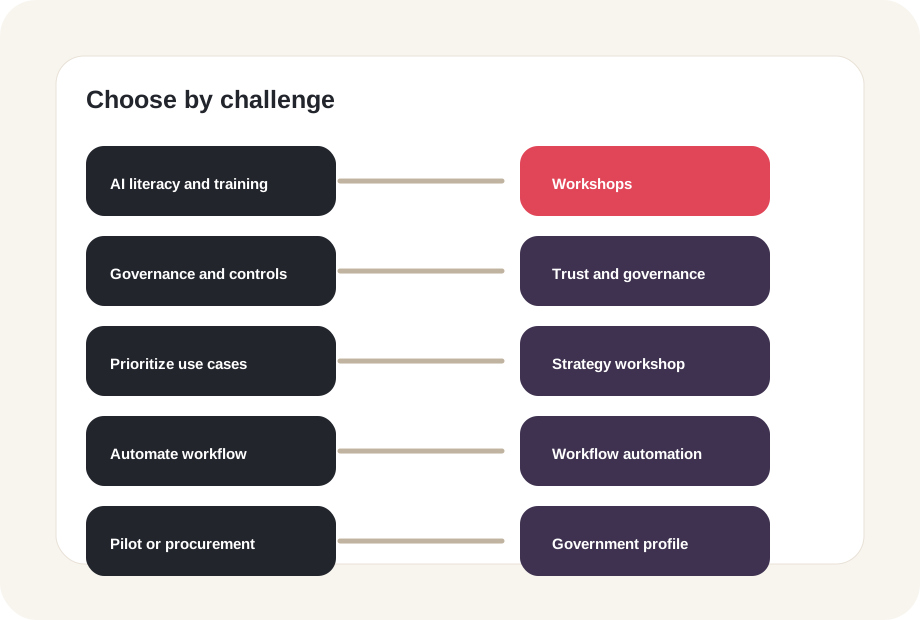
Best fit: Government, Education, Healthcare, Financial Services, SaaS / Tech.
Best fit: Government, Healthcare, Financial Services, Legal, Education.
Best fit: All industries.
Best fit: Operations, Education, Government, Manufacturing, Field Services, Finance.
Best fit: All industries.
Best fit: Government, Education, Workforce, Nonprofit, Energy & Utilities, Real Estate & Construction.
Priority Focus
Government, education, workforce, and nonprofit teams need AI adoption that is responsible, staff-ready, procurement-aware, and aligned with public trust.
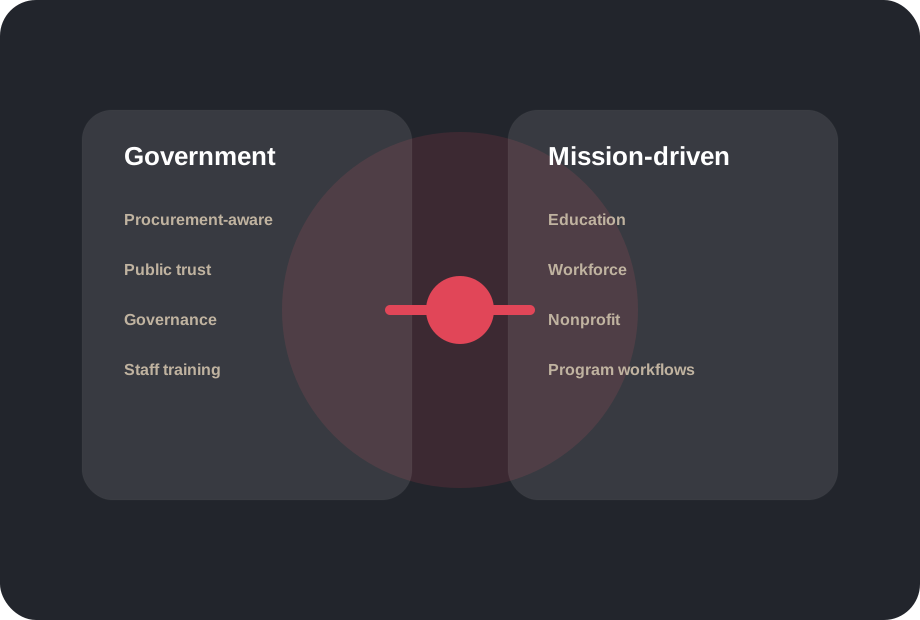
AI readiness, governance, staff training, procurement-aware implementation, public-service workflows, and capability materials.
AI literacy, responsible-use guidance, program operations, grant reporting, workforce pathways, nonprofit workflows, and staff enablement.
Regulated Industries
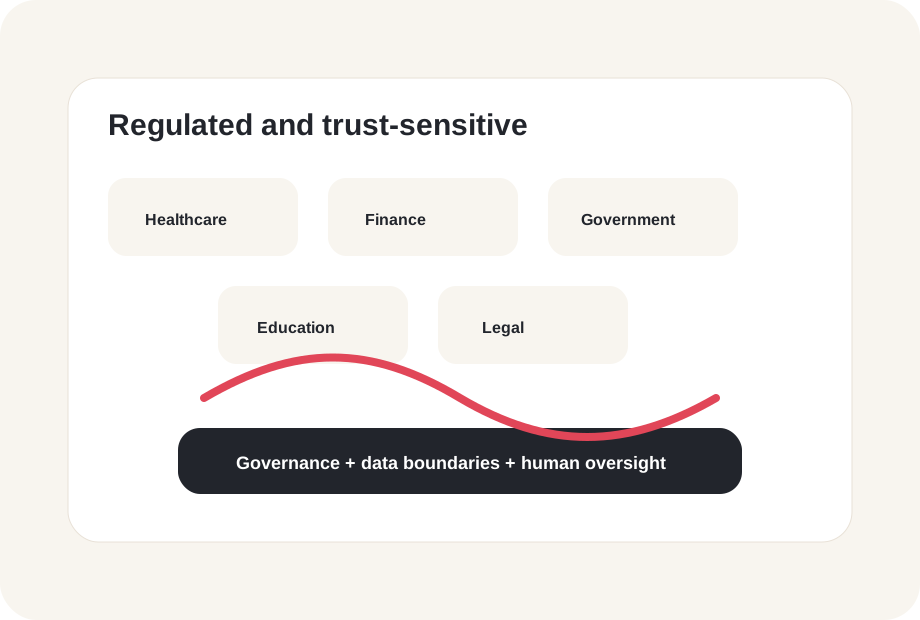
Healthcare, financial services, legal, government, education, and other trust-sensitive sectors need governance, data boundaries, human oversight, and review-ready implementation.
Opportunity: Administrative workflows and documentation support.
Good first step: Governance-aware readiness review.
ExploreOpportunity: Risk workflows and document intelligence.
Good first step: Use-case prioritization with governance review.
ExploreOpportunity: Service intake, staff training, policy assistants.
Good first step: Public-sector AI readiness workshop.
ExploreOpportunity: AI literacy, program workflows, reporting.
Good first step: AI literacy and governance readiness session.
ExploreOpportunity: Document intelligence and knowledge workflows.
Good first step: Explore document review, responsible-use policy, and AI readiness.
ExploreOperational Industries
Operations-heavy organizations often benefit most when AI is embedded into real workflows: intake, routing, forecasting, documentation, review, inspection, reporting, and decision support.
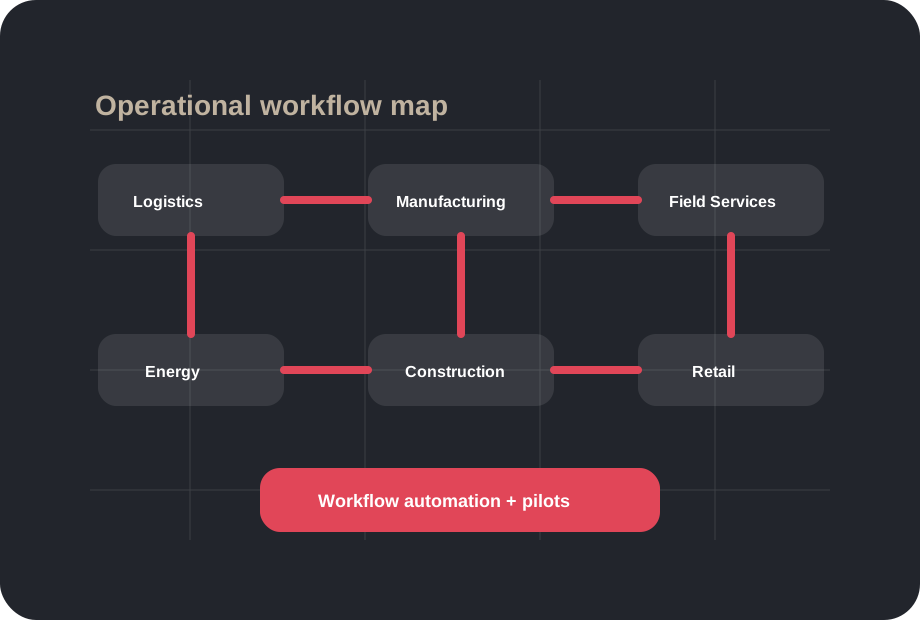
Forecasting, routing, inventory, and operations dashboards.
ExploreQuality workflows, visual inspection, asset operations, and maintenance support.
ExploreTechnician workflows, proof-of-work packets, and supervisor review.
ExploreAsset workflows, field operations, reporting, and reliability support.
ExploreProject documentation, permitting support, asset data, and field reporting.
ExploreRecommendations, merchandising, customer support, inventory, and forecasting.
ExploreTechnology & Product
Product and platform teams need AI capability that is useful, responsible, differentiated, and connected to user value.
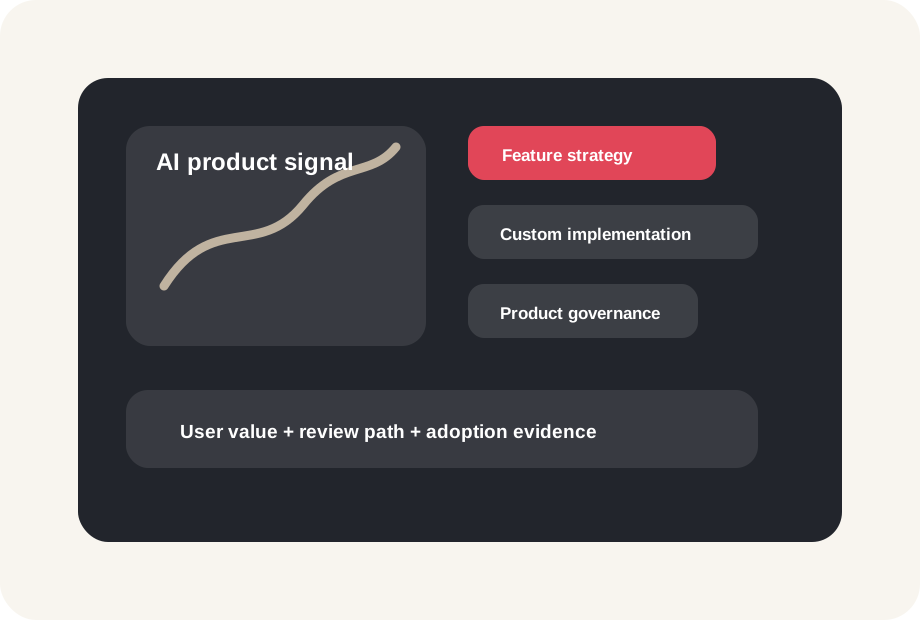
AI product strategy, internal copilots, support automation, product intelligence, and adoption evidence.
Move from AI feature ideas to useful, responsible, pilot-ready product capability.
Build AI-enabled tools, assistants, dashboards, and workflow systems around real product and user needs.
Clarify data boundaries, evaluation expectations, human oversight, and user trust considerations.
Use-Case Matrix
Start with the workflow, then choose the right AI path.
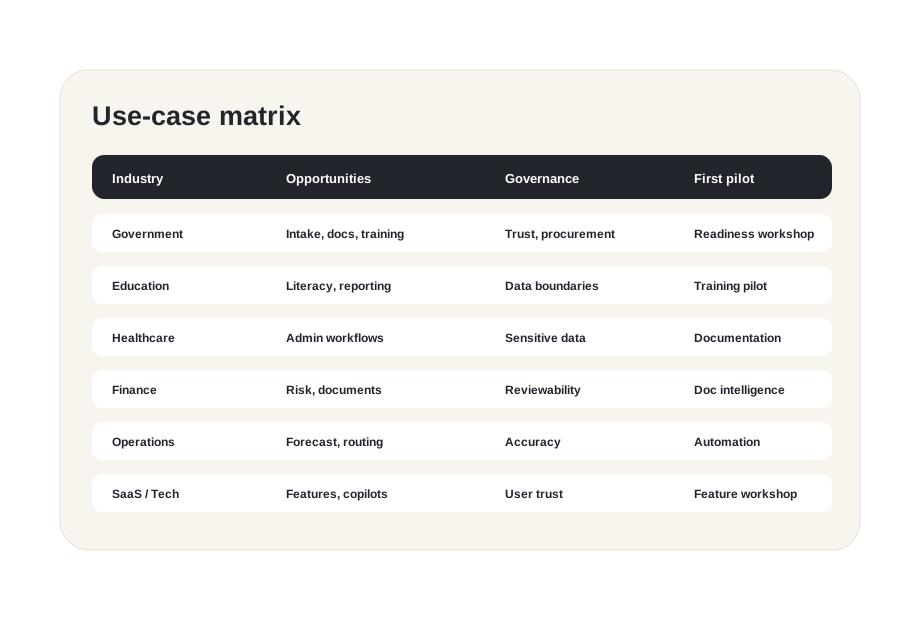
| Industry | Common AI opportunities | Governance considerations | Good first pilot | Related service |
|---|---|---|---|---|
| Government / Public Sector | Service intake, document summarization, public-sector training, policy assistants, dashboards. | Public trust, privacy, procurement, human oversight, accessibility. | AI readiness workshop or service intake pilot. | Government Contracting / Workshops |
| Education, Workforce & Nonprofit | Staff AI literacy, grant reporting, program intake, knowledge assistants. | Student/participant data, policy readiness, staff guidance. | AI literacy workshop or grant reporting workflow. | Advisory & Training / Workflow Automation |
| Healthcare | Administrative workflow support, documentation, triage, reporting. | Privacy, clinical oversight, sensitive data, review. | Administrative documentation pilot. | AI Governance / Readiness |
| Financial Services | Fraud signals, risk workflows, document review, customer operations. | Model risk, reviewability, human approval. | Document intelligence or risk workflow pilot. | AI Governance / Custom AI |
| Logistics & Operations | Forecasting, routing, inventory, warehouse workflows, dashboards. | Operational accuracy, data quality, exception handling. | Forecasting or workflow automation pilot. | Workflow Automation |
| SaaS / Tech | AI product features, support automation, internal copilots, recommendations. | User trust, product safety, data boundaries, evaluation. | AI feature prioritization workshop. | AI Product Coaching |
| Manufacturing & Industrial | Visual inspection, quality workflows, asset operations, maintenance support. | False positives, process fit, safety review, human approval. | Quality workflow pilot. | Manufacturing AI |
| Field Services & Facilities | Technician support, proof-of-work packets, maintenance routing, supervisor review. | Field evidence, escalation, permissions, exception handling. | Field documentation workflow. | Field Services AI |
| Energy & Utilities | Asset workflows, maintenance planning, field operations, reporting. | Reliability, public-service context, governance, review. | Asset reporting workflow. | Energy & Utilities AI |
| Legal & Professional Services | Document intelligence, knowledge management, intake, review workflows. | Client data, reviewability, professional judgment, policy. | Document review support workflow. | Legal & Professional AI |
| Real Estate, Construction & Infrastructure | Project documentation, permitting support, asset data, field reporting. | Source quality, review ownership, handoffs, audit trail. | Document or field reporting pilot. | Real Estate & Construction AI |
| Retail & Ecommerce | Recommendations, merchandising, support automation, inventory, forecasting. | Customer trust, feedback loops, data quality, user control. | Recommendation or support pilot. | Retail & Ecommerce AI |
Methodology
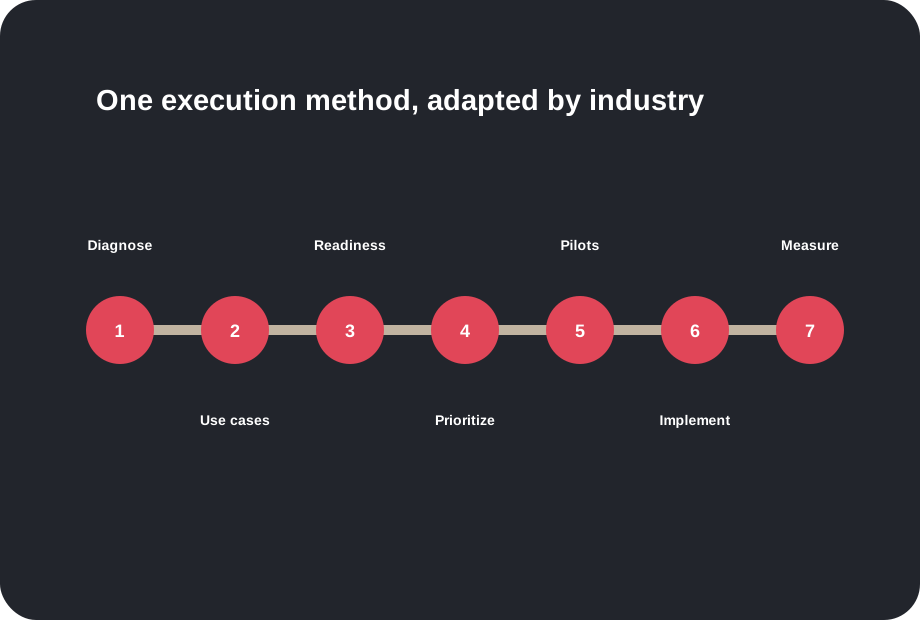
InitializeAI applies a consistent methodology across industries, then adapts it to each sector's data, workflows, governance requirements, staff needs, and operating constraints.
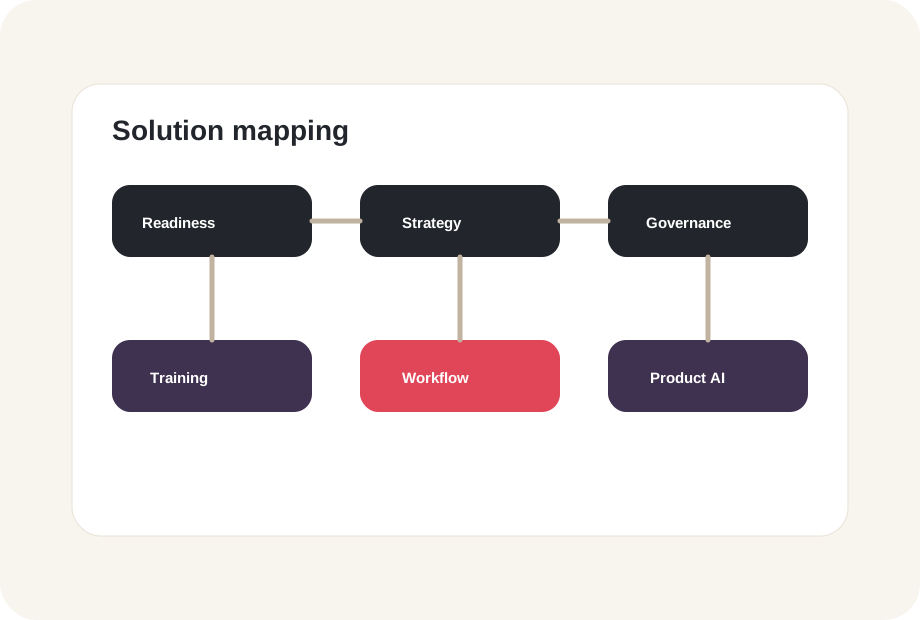
Solution Mapping
Different sectors may start with the same need, but the implementation path should fit the industry context.
AI Readiness Assessment, AI Execution Gap Assessment.
Best for: Government, Education, Healthcare, Finance, SaaS.AI Strategy Workshop, Workshops & Briefings.
Best for: All industries.AI Governance, Trust Center.
Best for: Government, Healthcare, Finance, Education, Legal.Advisory & Training, Workshops.
Best for: Government, Education, Nonprofit, Enterprise, SaaS.Workflow Automation, Custom AI Implementation.
Best for: Logistics, Manufacturing, Field Services, Public Sector, Nonprofit, Finance.AI Product Coaching, Custom AI.
Best for: SaaS / Tech, Ecommerce, Platforms.Resources
Use a lightweight signal before committing to a workshop, assessment, pilot, automation, or implementation path.
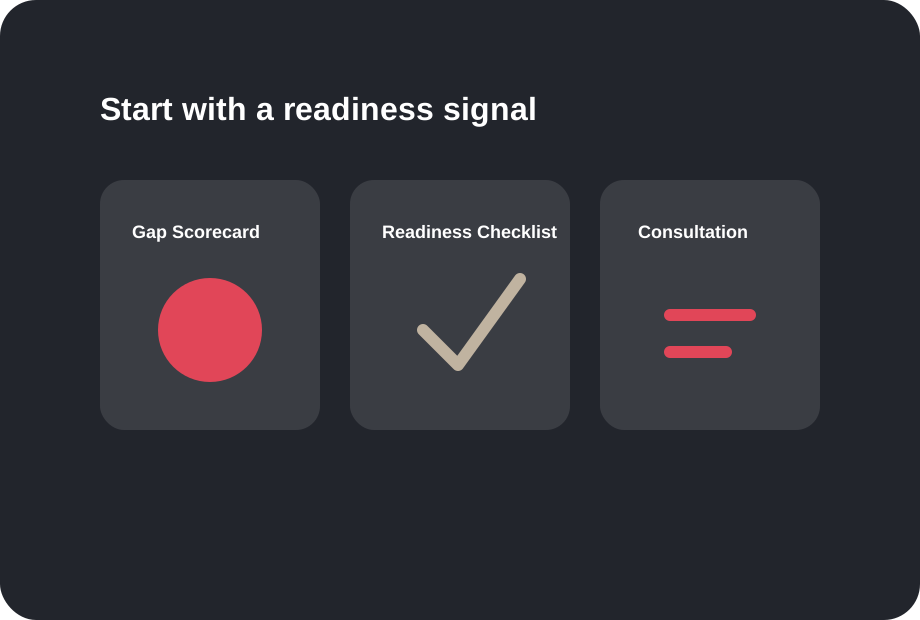
Get a fast signal on the blockers standing between AI activity and measurable value.
Get Your Gap Score ChecklistAssess maturity across strategy, data, governance, workflows, and pilot readiness.
Download the Checklist ConsultationDiscuss which AI path fits your sector, use case, risk profile, and operating model.
Book an AI Opportunity ReviewRelated Pages
FAQ
Yes. The core execution method is consistent, but the use cases, data boundaries, governance concerns, staff training needs, and implementation path vary by industry.
InitializeAI can still help evaluate your AI readiness, use cases, governance needs, and workflow opportunities. Use the consultation path to discuss your sector.
InitializeAI currently emphasizes public-sector, education/workforce/nonprofit, regulated industries, operational teams, and technology/product organizations.
Yes. InitializeAI supports public-sector AI readiness, governance, training, workshops, workflow modernization, procurement-aware documentation, government contracting inquiries, and teaming discussions.
Yes. InitializeAI can support AI literacy, staff enablement, responsible-use guidance, program operations, grant reporting workflows, and nonprofit/workforce modernization.
Start with readiness and use-case prioritization. The right use case should have clear value, feasibility, data access, governance fit, workflow ownership, and measurable adoption potential.
Start with the AI Execution Gap Scorecard, AI Readiness Checklist, an industry consultation, or a workshop depending on how much clarity your team already has.
Yes. Industry conversations often lead into AI readiness assessments, strategy workshops, governance sprints, pilot projects, workflow automation, custom AI implementation, or advisory/training.
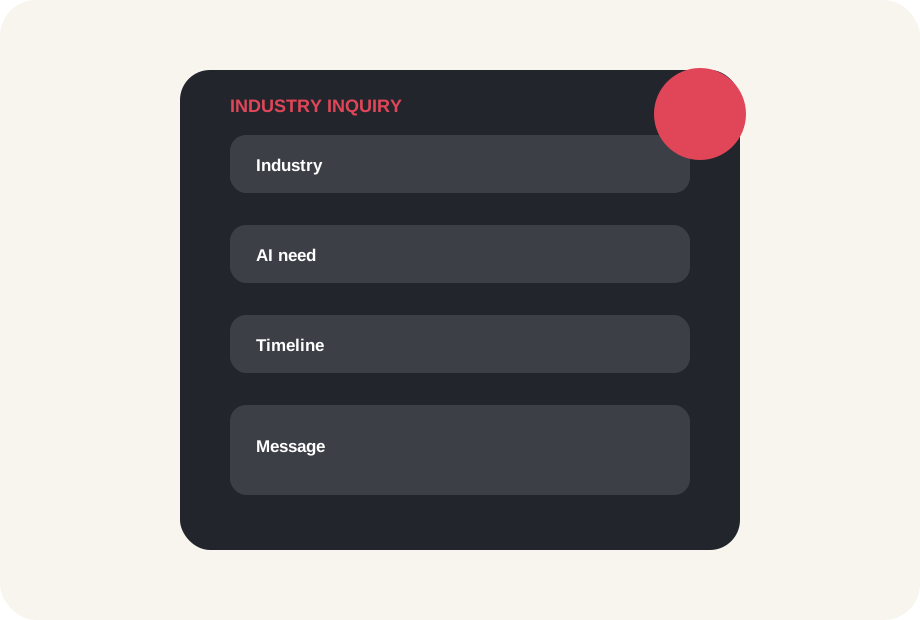
Industry Inquiry
Use this path if you are exploring AI readiness, governance, staff training, workflow automation, custom AI implementation, public-sector support, or industry-specific use cases.
Find the Path
InitializeAI can help your team assess readiness, prioritize use cases, govern risk, train staff, design pilots, automate workflows, and implement practical AI inside your industry's real operating constraints.