01
AI ideas without prioritization
Teams see opportunities across risk, compliance, client service, operations, analytics, and product, but need a practical way to rank what is valuable, feasible, and reviewable.
AI for Financial Services
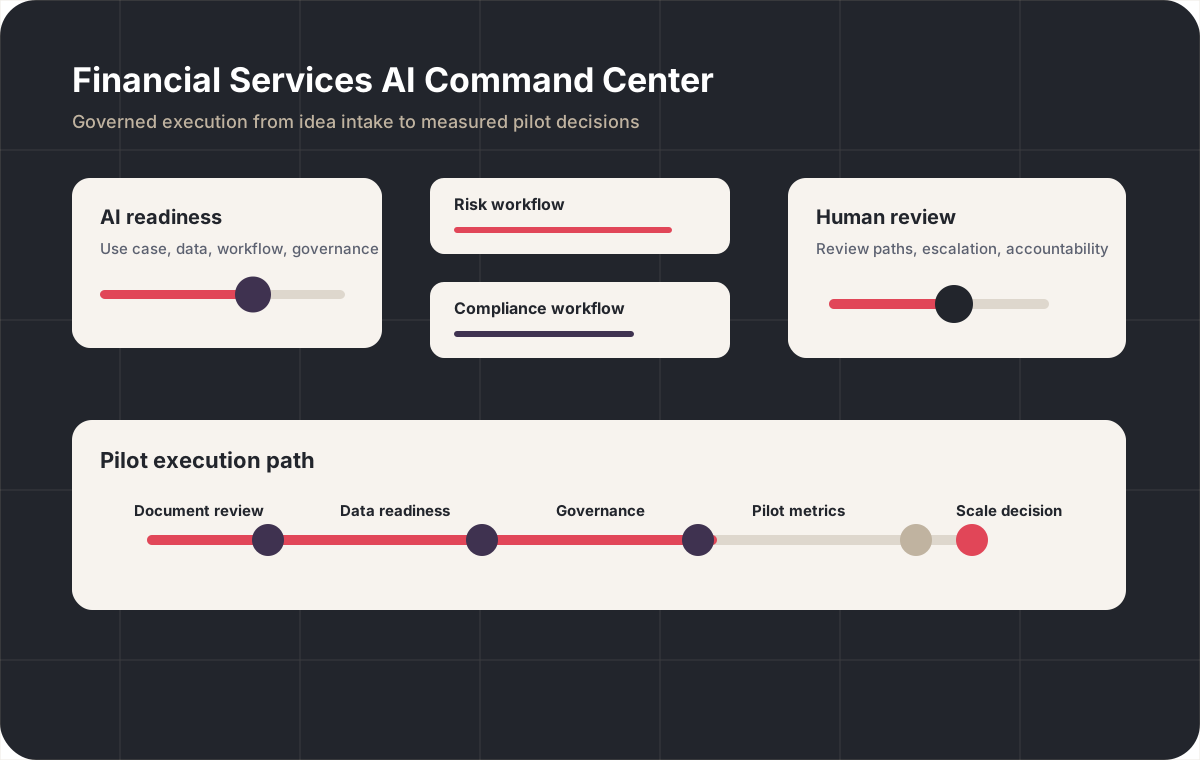
InitializeAI helps financial services teams evaluate AI opportunities, assess readiness, govern risk, modernize manual review workflows, design measurable pilots, and implement practical AI with human oversight and review readiness built in.

Financial services AI Execution Gap
Financial services organizations are under pressure to improve efficiency, strengthen controls, reduce manual review burden, personalize client operations, and evaluate AI quickly. But AI adoption in financial services requires extra discipline: data boundaries, model/vendor review, compliance review, human oversight, auditability considerations, staff training, and measurable pilots.
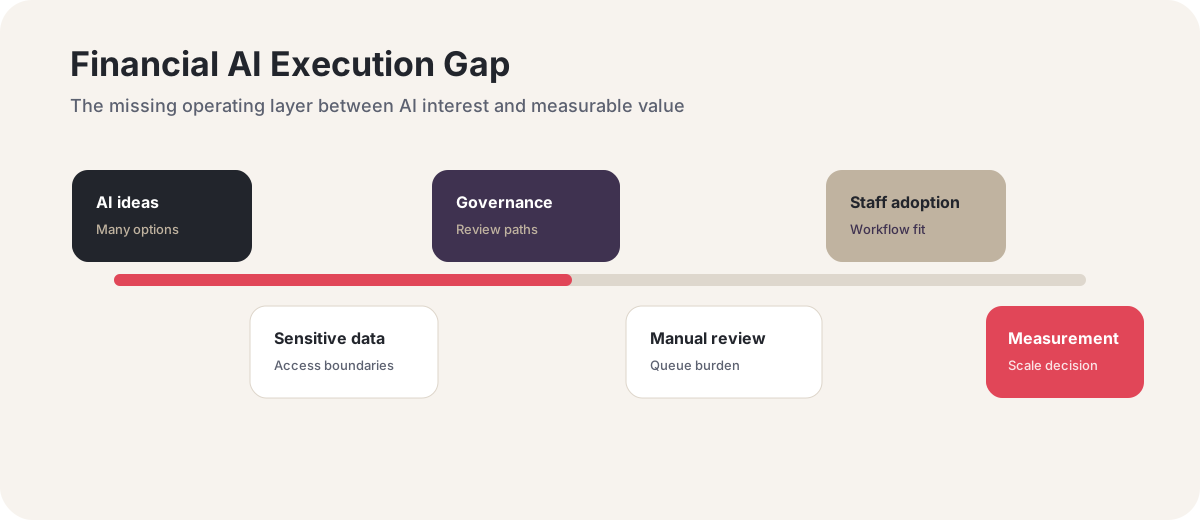
Teams see opportunities across risk, compliance, client service, operations, analytics, and product, but need a practical way to rank what is valuable, feasible, and reviewable.
Financial workflows can involve customer, account, transaction, portfolio, underwriting, claims, employee, and confidential business data that require careful scoping.
AI usage needs acceptable-use guidance, human oversight, vendor/model review, data handling, output review, escalation, and documentation.
Compliance, risk, operations, support, onboarding, document review, and reporting workflows often depend on high-volume manual work.
AI must reduce burden, fit review workflows, and help teams trust the process rather than adding another disconnected tool.
Financial services AI pilots should define owners, metrics, review steps, risk controls, user feedback, and scale/refine/stop criteria before launch.
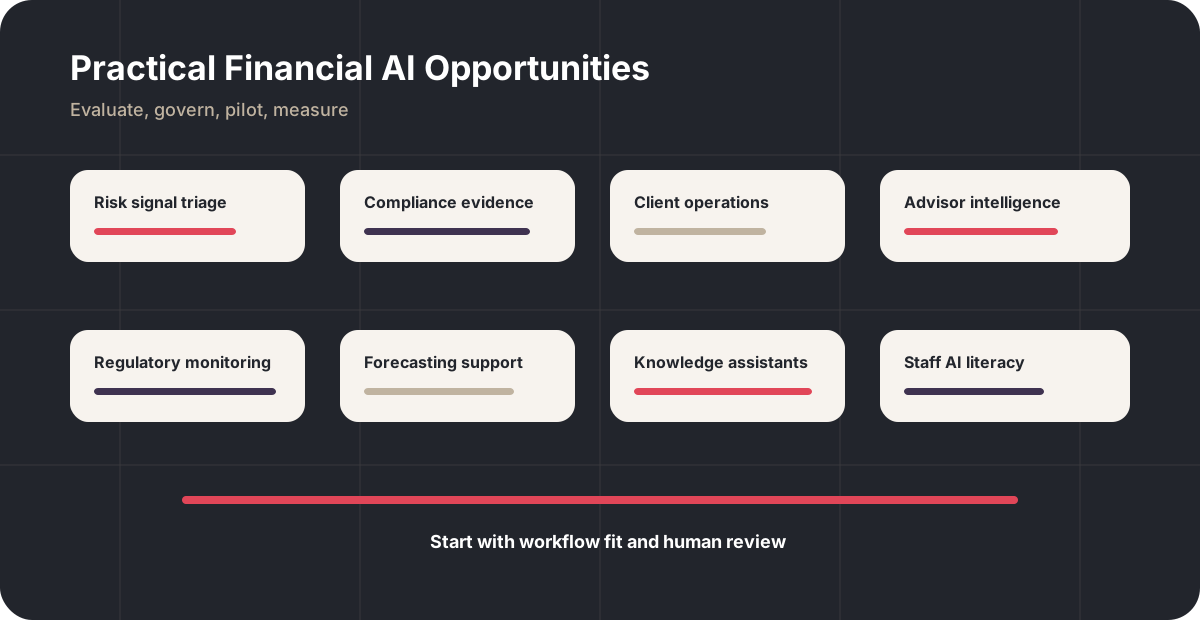
Financial services opportunity areas
InitializeAI focuses on use cases that can be evaluated, governed, piloted, and measured without skipping human review.
Support workflows that surface unusual patterns, prioritize review queues, summarize signals, and assist human analysts.
Possible first pilot: One bounded review queue with existing signals, human analyst review, and quality metrics.
Governance considerations: False positives/negatives, human review, model/vendor questions, data access, escalation, and documentation.
Related: AI Pilot ProjectsAssist with parsing, summarizing, organizing, and routing regulatory, audit, policy, procedure, and evidence documentation.
Possible first pilot: One compliance documentation workflow with source references and reviewer signoff.
Governance considerations: Source traceability, legal/compliance review, data boundaries, auditability considerations, and output validation.
Related: Workflow AutomationSupport customer onboarding, document collection, information routing, account service, claims support, or advisor/service workflows.
Possible first pilot: One onboarding or service workflow with AI-assisted summarization and staff approval.
Governance considerations: Customer privacy, accuracy, disclosure, human review, escalation, and approved communications.
Related: Workflow AutomationSupport internal teams with summaries, insights, reminders, client-service preparation, and knowledge retrieval.
Possible first pilot: One internal assistant for pre-meeting preparation or account-service support.
Governance considerations: Data access, client confidentiality, output review, suitability/compliance review where relevant, and auditability.
Related: Custom AI ImplementationHelp teams monitor, summarize, compare, and route regulatory or policy updates for human review.
Possible first pilot: One regulatory update workflow with source citations and compliance team review.
Governance considerations: Legal review, source reliability, output validation, responsible escalation, and documentation.
Related: AI GovernanceSupport operational forecasting, resource planning, risk trend analysis, retention/churn signals, and business intelligence workflows.
Possible first pilot: One planning or analytics workflow with historical data and human interpretation.
Governance considerations: Data quality, interpretation, confidence, decision authority, and monitoring.
Related: AI ReadinessHelp teams find policies, procedures, product information, training materials, compliance guidance, and operational knowledge faster.
Possible first pilot: One internal knowledge base with access boundaries and source-grounded answers.
Governance considerations: Content freshness, permissions, source references, output review, and user training.
Related: Custom AI ImplementationEquip risk, compliance, operations, product, technology, and leadership teams with practical AI literacy and responsible-use expectations.
Possible first pilot: One department or leadership group training plus responsible-use checklist.
Governance considerations: Acceptable use, sensitive data, output review, escalation, model/vendor questions, and role-specific examples.
Related: Advisory & TrainingUse-case matrix
Start with the workflow, then decide whether the right next step is training, readiness, governance, pilot design, automation, or custom implementation.
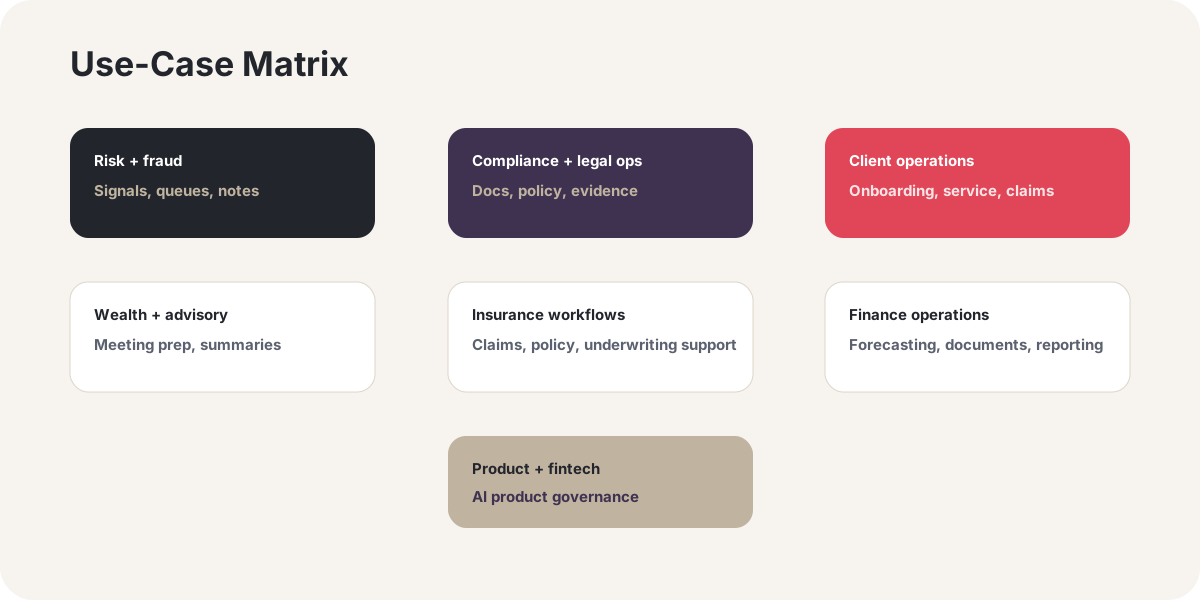
| Function | Use cases | Good first step |
|---|---|---|
| Risk and fraud | Risk signal triage, fraud/anomaly queue support, alert summarization, case prioritization, investigation note support, pattern review dashboards. | Governance Review + Pilot Scoping |
| Compliance and legal operations | Regulatory document parsing, policy comparison, audit evidence organization, compliance reporting support, vendor/model review workflow, risk register automation. | AI Governance Workshop |
| Customer and client operations | Onboarding support, customer service triage, claims workflow support, account service summaries, client feedback analysis, human-reviewed message drafting. | Workflow Automation Workshop |
| Wealth, advisory, and relationship workflows | Meeting prep assistant, portfolio/report summarization with review, relationship manager knowledge assistant, client service intelligence, task follow-up support, research summary workflow. These are not investment advice automation. | Custom AI Scoping + Compliance Review |
| Insurance workflows | Claims intake summarization, underwriting document review support, policy document assistant, customer service triage, fraud signal support, regulatory evidence workflow. | Readiness Assessment or Workflow Automation Workshop |
| Finance and operations | Forecasting and planning, invoice/document review, back-office workflow automation, operations dashboard, reconciliation support, executive reporting assistant. | AI Readiness + Workflow Automation |
| Product and fintech | AI feature prioritization, product feedback summarization, user support copilot, risk-aware personalization, AI product governance checklist, internal product knowledge assistant. | AI Product Coaching or Strategy Workshop |
How InitializeAI helps
Evaluate AI-enabled workflows that support anomaly signal triage, case prioritization, review queue summarization, and analyst decision support with appropriate human review and governance controls.

Support relationship, onboarding, service, and engagement workflows when outputs are reviewed and aligned with internal policy, data boundaries, and client communication standards.

Support compliance and risk teams by helping evaluate AI-enabled document parsing, policy review, evidence collection, monitoring support, and reporting workflows.
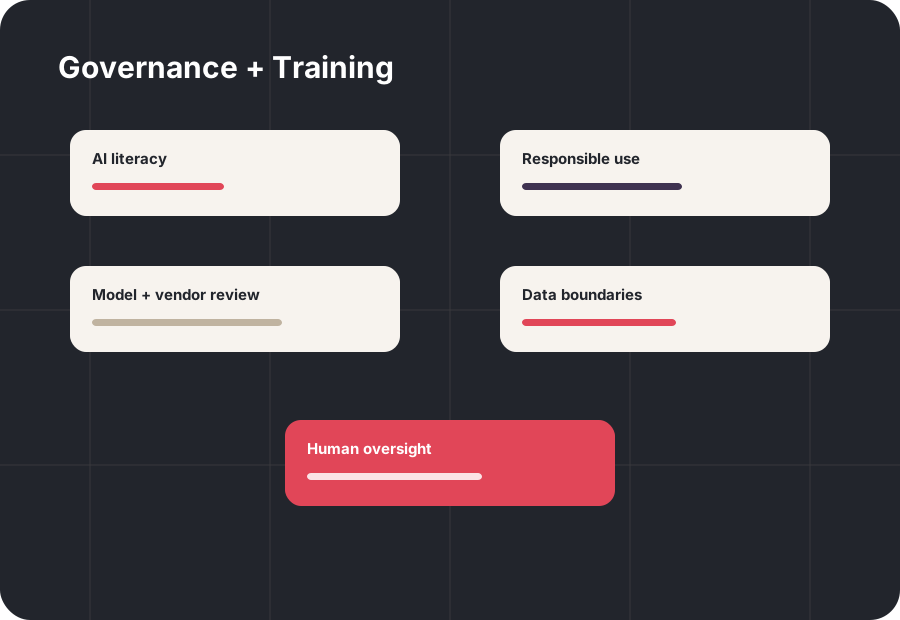
Financial AI adoption requires AI literacy, acceptable-use guidance, risk review, human oversight, data boundaries, model/vendor review, and review-ready documentation.
Governance-first financial AI
Financial services AI work should be scoped with privacy, security, regulatory awareness, human oversight, data access, and workflow accountability in mind from the beginning.
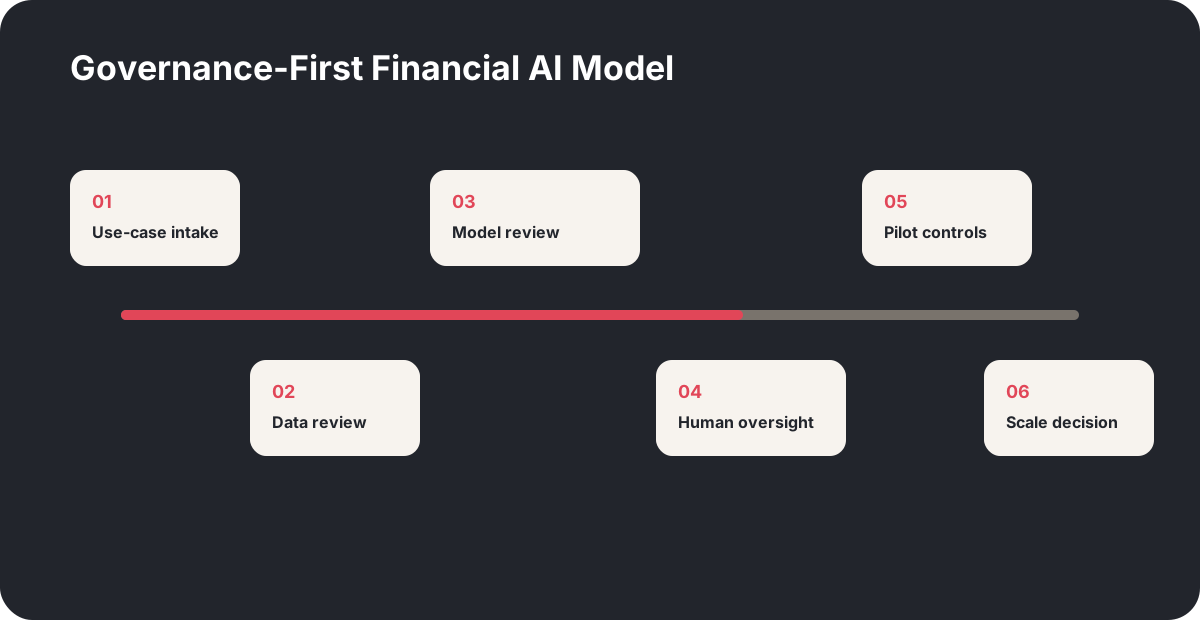
Define purpose, owner, users, affected stakeholders, data, workflow, and expected outcome.
Identify customer, account, transaction, portfolio, underwriting, claims, employee, operational, and confidential data involved.
Document model/vendor path, data processing, dependencies, tool usage, integration assumptions, and review questions.
Define who reviews outputs, who approves actions, when escalation is required, and where accountability sits.
Set metrics, feedback loops, output validation, access assumptions, documentation, and stop/refine/scale criteria.
Decide whether to scale, refine, pause, or stop based on adoption, quality, risk posture, and operational value.
Data readiness
Financial AI value depends on understanding data quality, access, sensitivity, systems, integrations, ownership, and review requirements before building.
Explore AI Readiness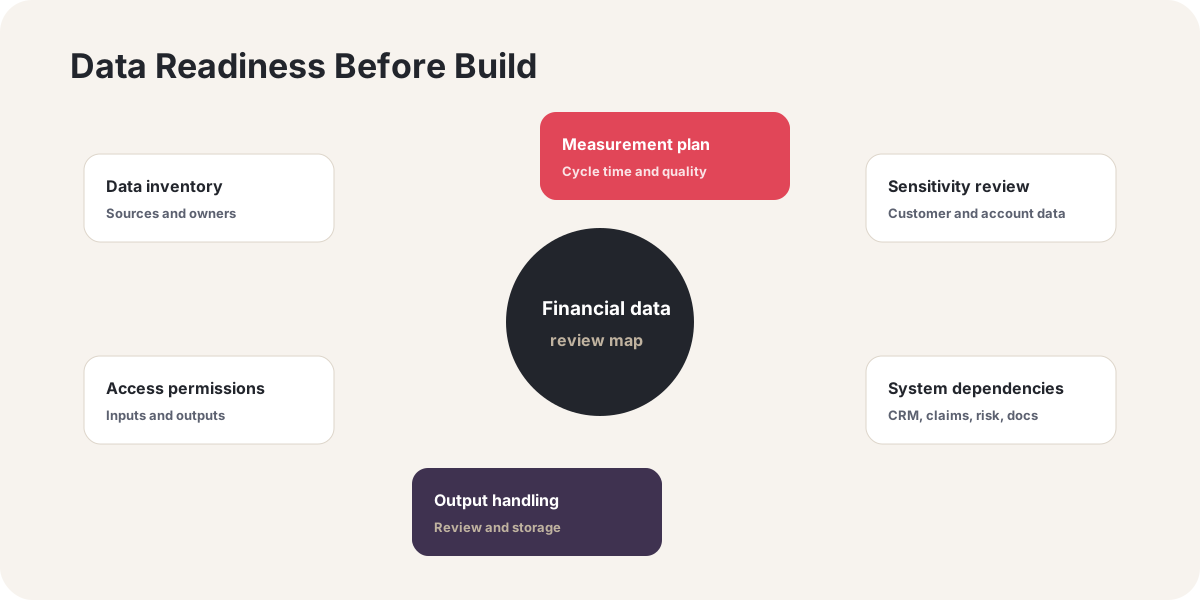
Which data sources are involved and who owns them?
Could the workflow involve customer, account, transaction, claims, portfolio, employee, financial, or confidential business information?
Who should access inputs, outputs, dashboards, and review queues?
Which CRM, core banking, policy admin, claims, risk, compliance, document, ticketing, data warehouse, or analytics systems may be involved?
How will AI-generated summaries, classifications, recommendations, drafts, or risk signals be reviewed and stored?
What will be measured: cycle time, review quality, false positives, analyst burden, adoption, escalation rate, or decision usefulness?
Pilot design
Strong first pilots avoid high-impact autonomous decisions, focus on a clear workflow, preserve human review, and produce evidence for a scale decision.
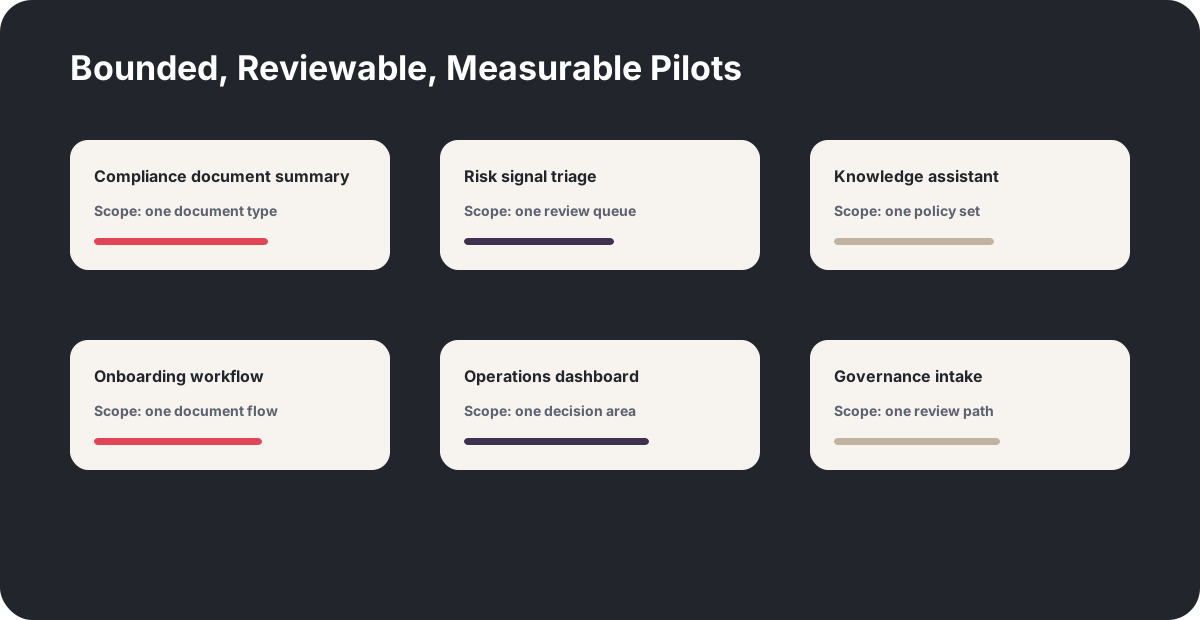
Scope: One document type or policy workflow, one reviewer group, clear source references.
Measures: Review time, completeness, correction rate, reviewer confidence.
Scope: One existing signal queue or review workflow with human analyst approval.
Measures: Prioritization usefulness, false positives, analyst workload, escalation quality.
Scope: One knowledge base or policy set with access boundaries.
Measures: Search time, source accuracy, answer usefulness, staff adoption.
Scope: One onboarding document or request workflow with human-reviewed outputs.
Measures: Cycle time, completeness, exception rate, reviewer burden.
Scope: One management decision area such as backlog, workflow volume, retention signal, or service level.
Measures: Decision usefulness, data quality, adoption, reporting time.
Scope: One AI use-case intake form and review workflow.
Measures: Use-case clarity, risk identification, approval readiness, review consistency.
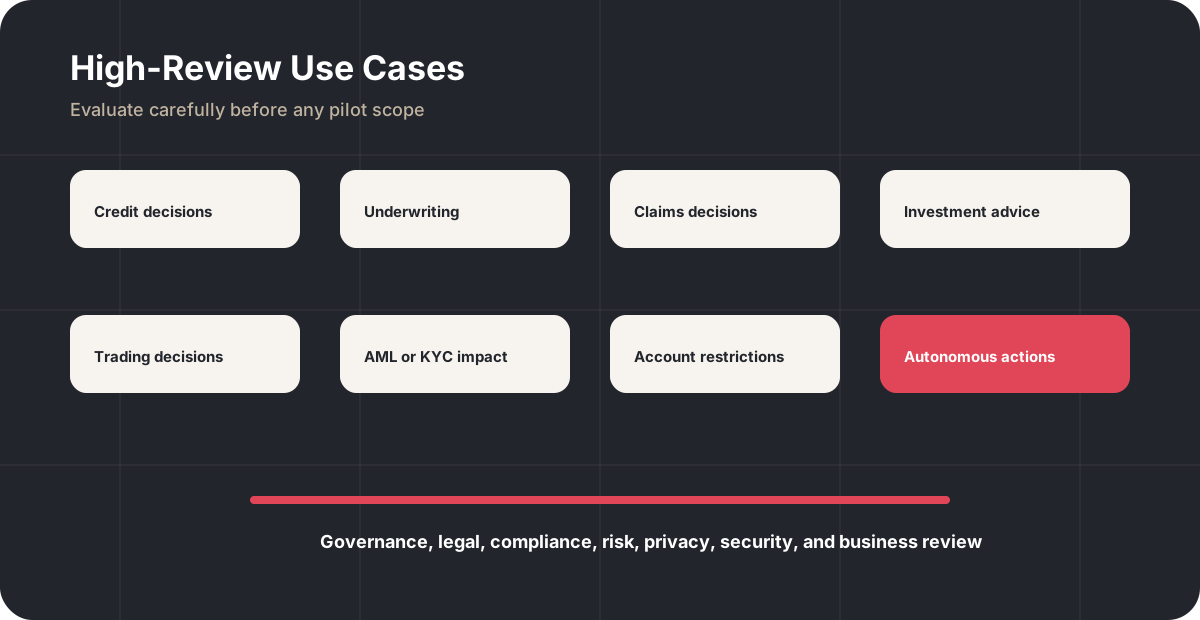
High-review use cases
Some financial AI opportunities may be valuable, but they require stronger governance, legal/compliance review, model risk review, privacy/security review, human oversight, validation, and monitoring. These are not casual first pilots.
Why review matters: Decisions can affect access, pricing, obligations, and rights.
Recommended first step: Governance, legal/compliance, privacy/security, model/vendor review, human oversight model, and pilot-risk assessment.
Discuss Governance RequirementsWhy review matters: Underwriting workflows can affect coverage, pricing, eligibility, and protected data.
Recommended first step: Compliance, legal, model risk, data access, and human oversight review.
Discuss Governance RequirementsWhy review matters: Claims actions can affect money, benefits, obligations, and customer outcomes.
Recommended first step: Governance review, escalation design, privacy/security review, and approval path definition.
Discuss Governance RequirementsWhy review matters: Advice-related workflows need careful suitability, disclosure, compliance, and human accountability review.
Recommended first step: Compliance/legal stakeholder review, human oversight model, and pilot-risk assessment.
Discuss Governance RequirementsWhy review matters: Market activity, authorization, monitoring, and risk controls require careful review.
Recommended first step: Legal/compliance, risk, model/vendor, and security review before any pilot scope is considered.
Discuss Governance RequirementsWhy review matters: These workflows can affect account access, regulatory obligations, and escalation decisions.
Recommended first step: Governance review, legal/compliance review, model/vendor review, and documented human review.
Discuss Governance RequirementsWhy review matters: Restrictions can affect access, service, funds, and rights.
Recommended first step: Legal/compliance review, privacy/security review, and human escalation path design.
Discuss Governance RequirementsWhy review matters: Any fully autonomous action affecting money, rights, access, benefits, or obligations should involve appropriate compliance, legal, risk, privacy, security, and business stakeholders.
Recommended first step: Pilot-risk assessment before scope, tooling, or implementation planning.
Discuss Governance RequirementsEngagement paths
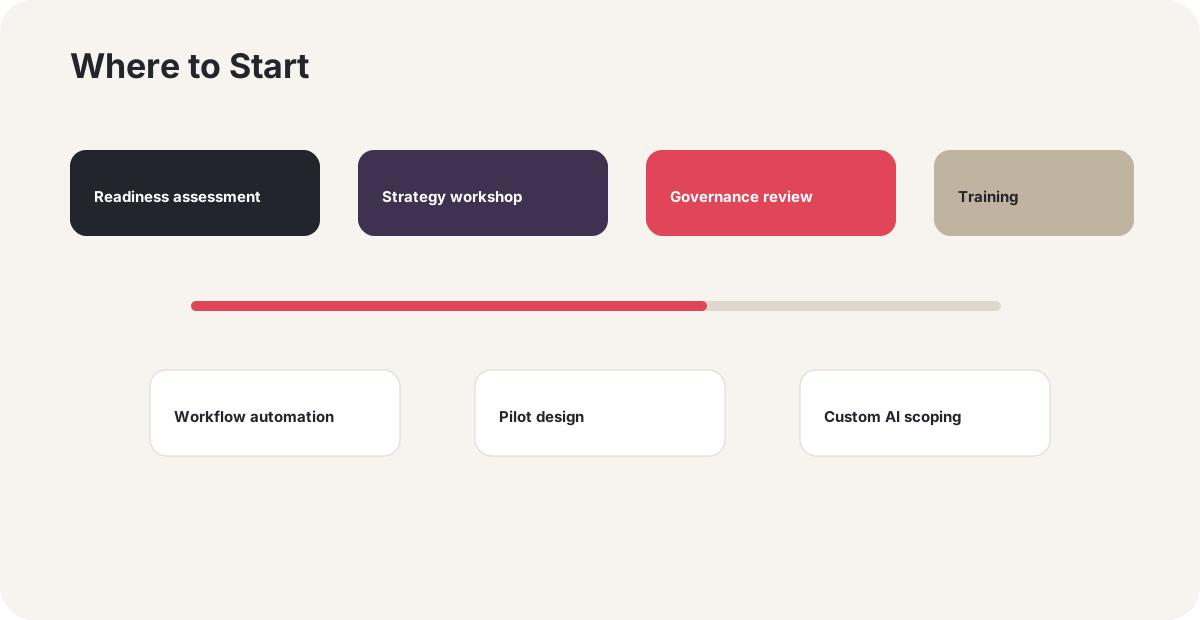
Different starting points can lead to the same disciplined operating layer: readiness, governance, workflow fit, human oversight, and measurement.
Recommended path: AI Readiness Assessment
Outputs: Readiness map, data/governance gaps, use-case priorities, roadmap.
Explore AI ReadinessRecommended path: AI Strategy Workshop
Outputs: Use-case inventory, prioritization matrix, pilot candidates.
Explore Strategy WorkshopRecommended path: AI Governance Workshop / Trust Review
Outputs: Use-case intake, risk register, human oversight model, acceptable-use guidance.
Explore AI GovernanceRecommended path: Workflow Automation Workshop
Outputs: Workflow map, automation candidates, pilot scope.
Explore Workflow AutomationRecommended path: AI Pilot Design Sprint
Outputs: Pilot charter, metrics plan, control checklist, scale criteria.
Explore Pilot ProjectsRecommended path: Custom AI Implementation Scoping
Outputs: Architecture map, prototype path, governance controls, launch plan.
Explore Custom AIRecommended path: Advisory & Training / Workshops
Outputs: AI literacy training, responsible-use guidance, role-specific playbooks.
Explore Advisory & TrainingFinancial services solution mapping
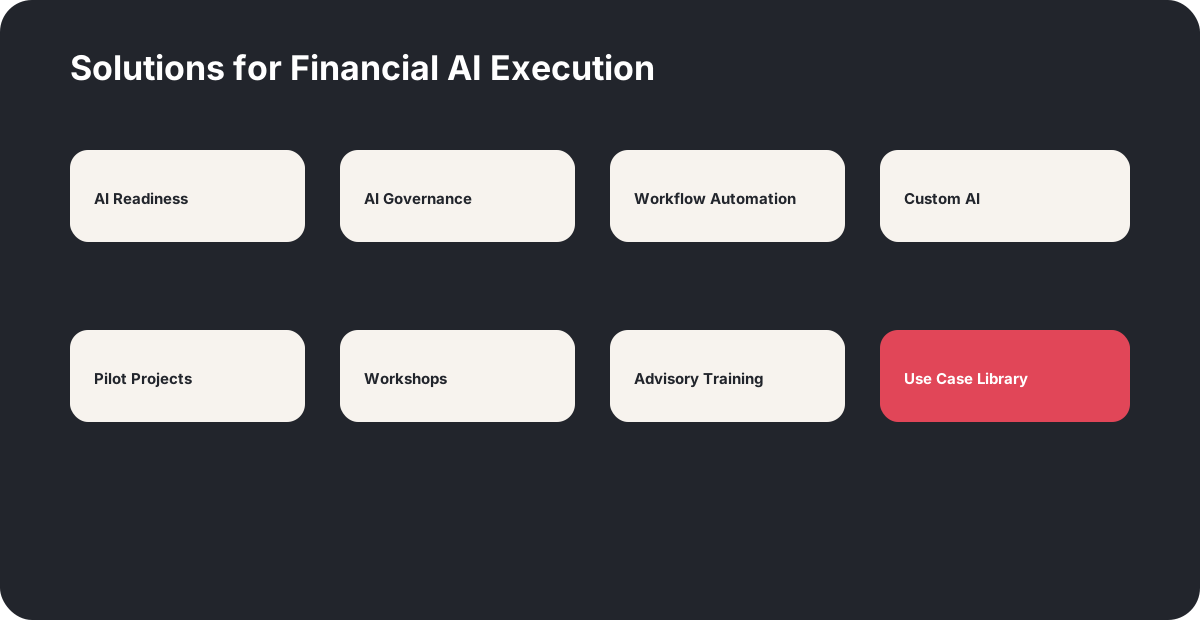
Evaluate readiness across strategy, data, systems, governance, workflows, staff capability, and adoption.
Resource GuideFinancial Services AI Readiness ReviewReview use cases, data readiness, governance, vendor risk, controls, workflows, and pilot readiness.
GovernanceAI GovernanceCreate practical guardrails for responsible use, human oversight, data boundaries, model/vendor review, and risk controls.
WorkflowWorkflow AutomationMap and improve compliance, risk, onboarding, operations, document review, and back-office workflows.
ImplementationCustom AI ImplementationScope and build internal assistants, document workflows, dashboards, review queues, and AI-enabled tools around financial operations.
PilotAI Pilot ProjectsDesign measurable, bounded, reviewable pilots with owners, metrics, controls, and scale criteria.
WorkshopsWorkshops & BriefingsRun financial services AI readiness, governance, responsible-use, AI literacy, and pilot-scoping workshops.
TrainingAdvisory & TrainingBuild leadership alignment and team capability around financial AI adoption.
Use casesAI Use Case LibraryExplore financial services and cross-industry AI use-case patterns.
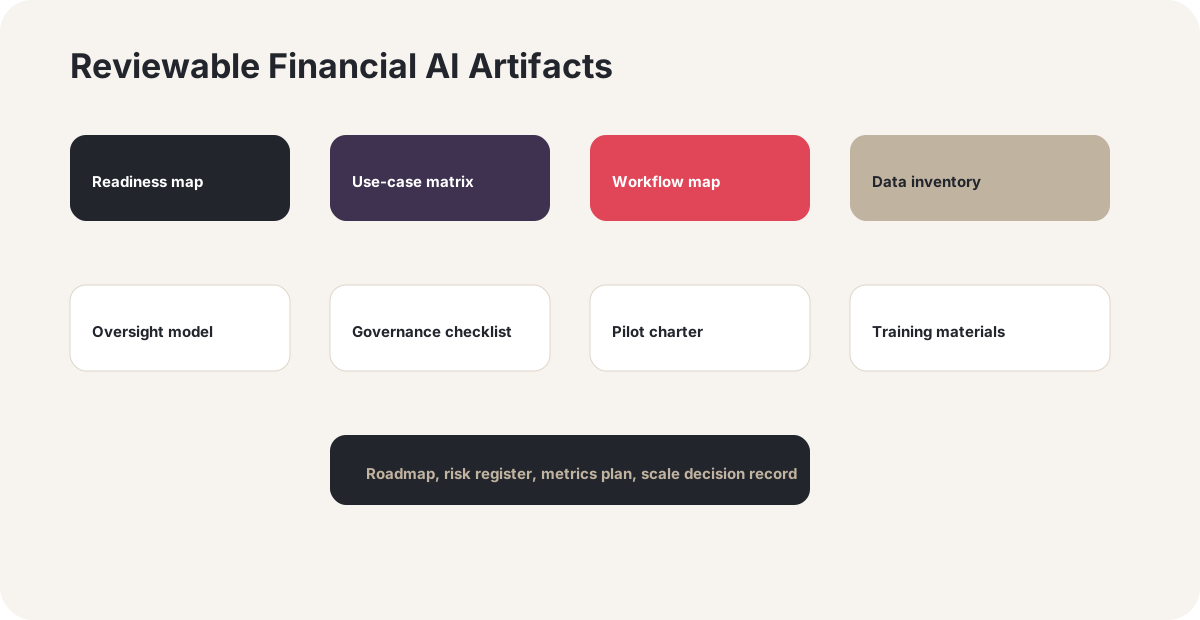
Reviewable artifacts
Practical financial AI work should produce materials stakeholders can evaluate, discuss, and use.
Financial Workflow Proof
Relevant InitializeAI experience
The anonymized Financial Review Intelligence case study demonstrates how InitializeAI approaches document-heavy, high-accountability work: organize the source material, assist with extraction and review, preserve the evidence trail, and keep accountable people in control of interpretation and approval.
Review queues drew from policy documents, evidence files, onboarding materials, internal knowledge, and service records. Supporting context was scattered, making consistency and traceability part of the operating problem.
InitializeAI mapped review queues, handoffs, approvals, sources, and escalation paths, then modeled a governed workbench for summarization, classification, evidence extraction, source lookup, and routing support.
Reviewers retained responsibility for checking source references, correcting output, handling exceptions, adding notes, approving or escalating the work, and determining whether the evidence supported the next business action.
The concept organized source references, reviewer comments, exceptions, correction feedback, and approval status so the path from incoming material to reviewed decision support was designed to remain visible.
The pattern is relevant to financial-services risk, compliance, onboarding and client operations, and technology or operations teams evaluating document-intensive workflows. It demonstrates a governed implementation approach that can be adapted to a specific operating context; it does not claim deployment across those environments.
This anonymized public example presents a representative pilot architecture, not a claim of live integrations or autonomous financial decision-making. AI-supported analysis remains subject to qualified human review and is not investment, accounting, audit, or financial advice.
Why InitializeAI?
InitializeAI brings a practical, governance-aware approach to AI adoption for financial services teams that need clarity before implementation.
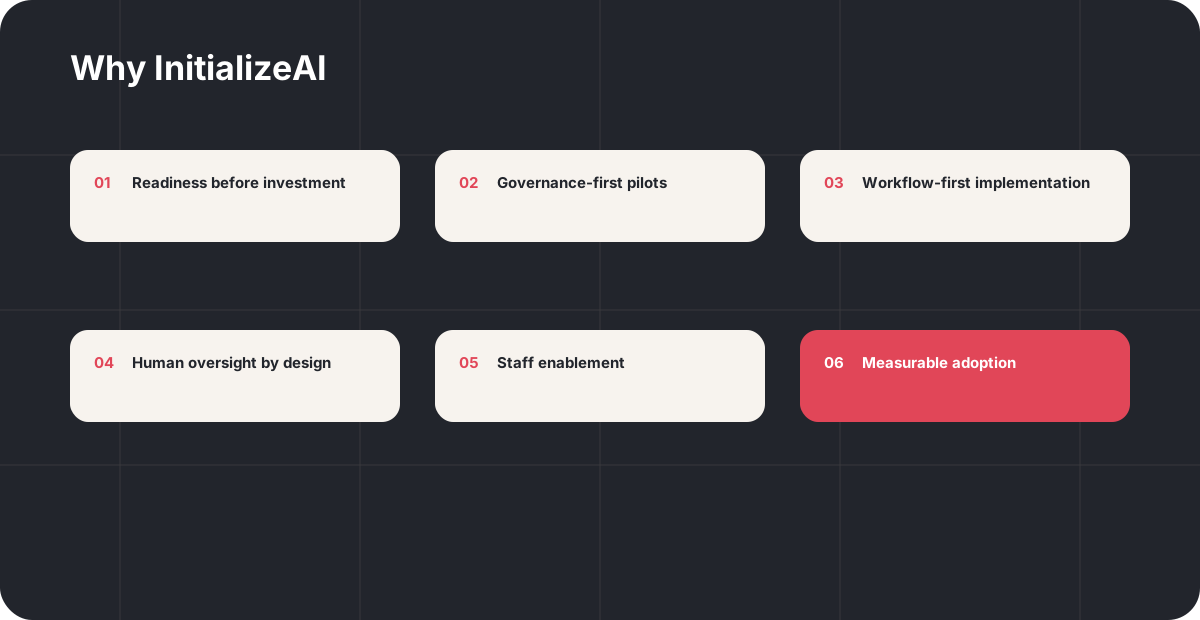
Understand whether the use case, data, systems, governance, workflow, and adoption path are ready before funding AI work.
Define privacy/security review needs, data boundaries, human oversight, model/vendor review, and risk controls before pilots scale.
Focus on compliance, risk, operations, document review, client service, and product workflows where AI can support real work.
Design review steps, escalation paths, output validation, and accountability into the workflow.
Help leaders and staff understand AI capabilities, limitations, responsible use, and workflow-specific expectations.
Define what success, risk, adoption, quality, and scale readiness mean before expansion.
Reviewed before implementation planning begins.
Responsible AI, human oversight, and review paths are part of the scope.
Financial operations, technology, governance, product, and adoption stay connected.
Review requirements are defined before implementation assumptions harden.
Security-review-aware planning helps teams prepare the right questions.
Related resources
An anonymized financial-services case study for governed review workflows, evidence packets, human approval, data boundaries, and pilot measurement.
Use casesAI Use Case LibraryExplore practical AI use-case patterns across financial services and adjacent workflows.
GovernanceAI GovernanceBuild guardrails, human oversight, review paths, and use-case intake.
TrustTrust CenterReview InitializeAI's approach to responsible AI, data boundaries, privacy, and security review readiness.
ReadinessAI Readiness AssessmentAssess strategy, data, systems, workflows, governance, and adoption capacity.
AssessmentAI Execution Gap AssessmentDiagnose blockers across ownership, use-case quality, data readiness, governance, workflow integration, and adoption.
ROIAI ROI CalculatorModel baseline metrics, pilot economics, payback, operational value, and execution risk before funding AI work.
ROI GuideAI Workflow Automation ROI GuideBuild workflow baselines, value levers, cost assumptions, and risk-adjusted ROI before funding financial AI pilots.
WorkflowWorkflow AutomationMap and modernize operational, review, document, and back-office workflows.
RiskAI Risk Register TemplateTrack AI risks, owners, controls, mitigation plans, residual exposure, and escalation decisions.
Vendor GuideAI Vendor Due Diligence GuideStructure AI vendor review across data handling, security, privacy, contracts, governance, and pilot readiness.
Vendor ReviewAI Vendor Evaluation ChecklistReview AI vendors for data use, security, privacy, contracts, workflow fit, governance, and pilot readiness.
BuildCustom AI ImplementationScope internal assistants, document workflows, dashboards, and review tools.
Related industryLegal & Professional ServicesExplore document intelligence, knowledge governance, human approval, and responsible-use workflows.
WorkshopsWorkshops & BriefingsAlign stakeholders around practical, responsible AI adoption.
MethodMethodologySee how InitializeAI moves from readiness to pilots, governance, implementation, and measurement.
EngagementsEngagement ModelsCompare workshops, sprints, pilots, implementation, and advisory support.
InsightsBlogRead practical AI strategy and execution guidance.
Financial services AI FAQ
Start with readiness and use-case prioritization. Evaluate strategy, data, systems, governance, workflow fit, staff capability, and adoption before investing in AI tools or pilots.
InitializeAI can help financial services teams think through regulatory-aware planning, governance, data boundaries, model/vendor questions, human oversight, documentation, and review-readiness as part of AI scoping. Specific legal, regulatory, compliance, privacy, and security requirements should be reviewed with qualified internal or external stakeholders.
InitializeAI focuses on practical AI readiness, governance, workflow automation, document intelligence, pilot design, and implementation planning. High-impact financial use cases such as credit, underwriting, claims decisions, investment recommendations, or trading decisions require additional legal, compliance, model risk, privacy, security, and business review before implementation.
Good first pilots are bounded, reviewable, and measurable, such as document summarization, internal knowledge assistants, compliance evidence workflows, customer service triage, operations dashboards, AI literacy training, or AI governance intake workflows.
Pilots should define data boundaries, human review, output validation, access controls, model/vendor assumptions, review needs, user training, metrics, and scale/refine/stop criteria.
Yes, AI can support manual review workflows such as intake, routing, summarization, document review, queue prioritization, evidence collection, and reporting when designed with human oversight and appropriate controls.
Yes. InitializeAI can support AI literacy, responsible-use training, governance workshops, executive briefings, and role-specific playbooks for financial services teams.
Yes. Readiness assessments, workshops, governance reviews, and pilot scoping can lead into workflow automation, custom AI implementation, internal assistants, document workflows, dashboards, or other AI-enabled tools.
Financial services consultation
Use this path for financial AI readiness, governance, staff training, compliance workflow support, risk workflow automation, client operations, pilot scoping, or custom AI implementation planning.
Practical, governed, measurable
InitializeAI can help your financial services team assess readiness, prioritize use cases, govern risk, train staff, scope pilots, automate workflows, and plan practical AI implementation around real operational needs.