01
AI feature pressure
Teams feel pressure to add AI, but not every AI idea improves the product or deserves engineering investment.
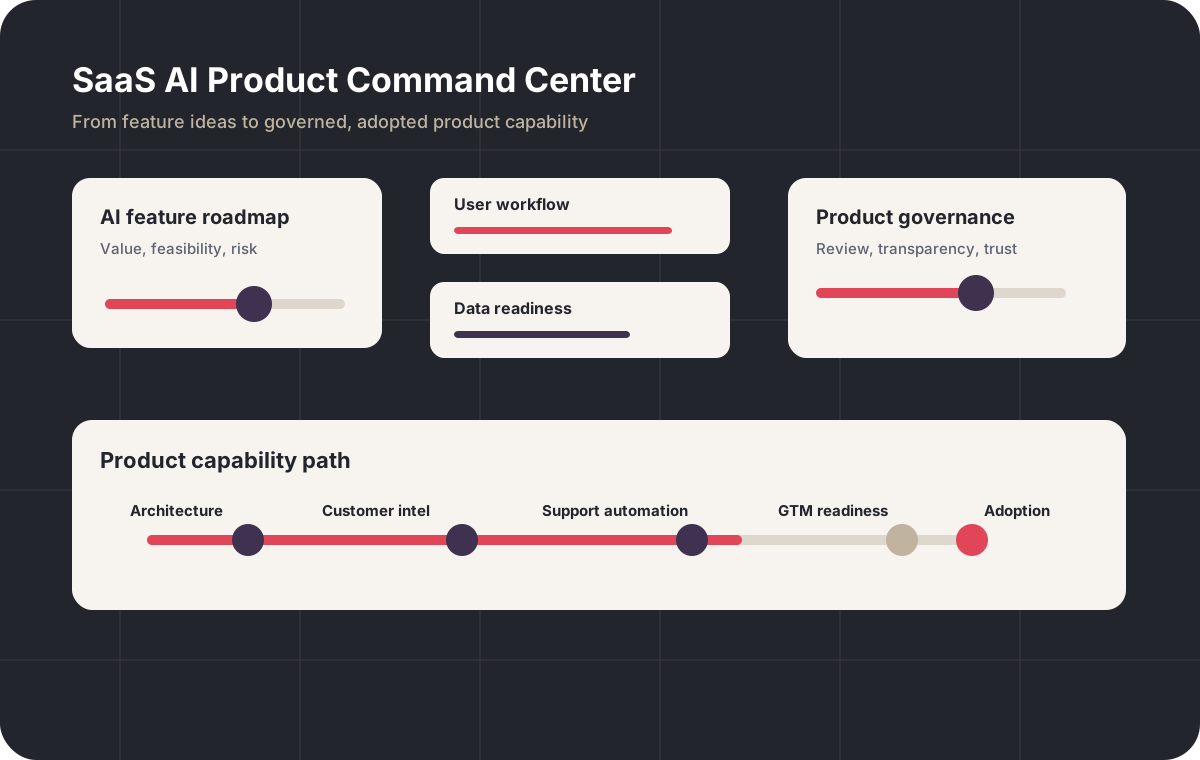
AI for SaaS & Technology
InitializeAI helps SaaS and technology teams identify practical AI product opportunities, prioritize features, govern product risk, automate internal workflows, design measurable pilots, and plan AI implementation around real user value.
SaaS AI Execution Gap
SaaS teams are under pressure to add AI to roadmaps, differentiate products, reduce support burden, improve onboarding, and create new revenue opportunities. But AI features only create value when they solve a real user problem, fit the product workflow, use the right data, satisfy trust expectations, and have a clear adoption and measurement path.
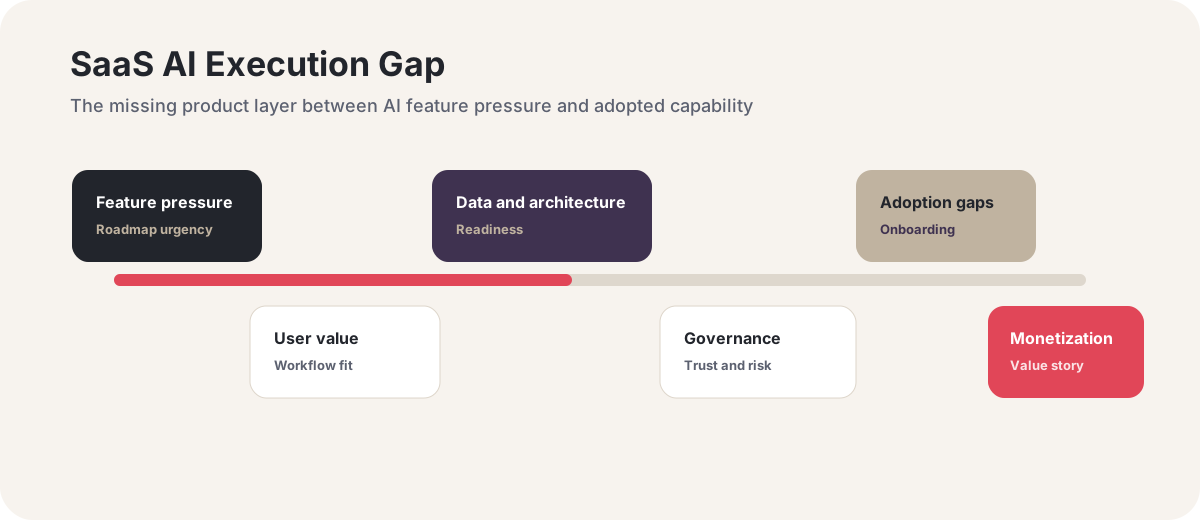
Teams feel pressure to add AI, but not every AI idea improves the product or deserves engineering investment.
AI features fail when they are impressive in demos but unclear in the user workflow.
SaaS AI depends on whether data, permissions, integrations, retrieval, APIs, models, and product surfaces are ready.
AI features need review for data use, user trust, output quality, transparency, privacy, vendor/model risk, and abuse potential.
Users need to understand what the feature does, when to trust it, when to review it, and how it fits their workflow.
AI pricing and packaging require clear value, cost awareness, usage assumptions, GTM messaging, and adoption evidence.
SaaS AI opportunity areas
InitializeAI helps teams evaluate AI use cases that can be prioritized, governed, piloted, measured, and implemented responsibly.
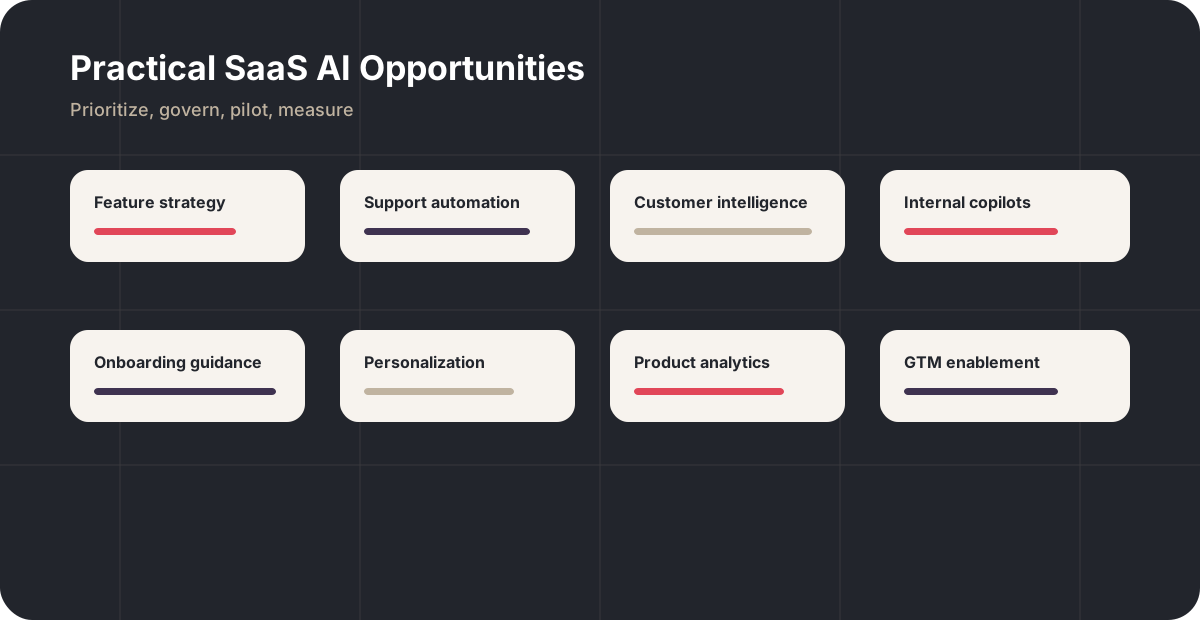
Identify which AI capabilities deserve roadmap attention based on user value, feasibility, risk, adoption potential, and business model fit.
Possible first pilot: One user workflow, one feature hypothesis, one measurable adoption goal.
Governance considerations: User data, output quality, transparency, product risk, evaluation, and abuse potential.
Related: AI Product CoachingSupport ticket triage, knowledge retrieval, response drafting, onboarding guidance, renewal insights, and customer health workflows.
Possible first pilot: One support or success workflow with human-reviewed outputs and quality metrics.
Governance considerations: Customer data, response accuracy, escalation, tone, source grounding, and approval.
Related: Workflow AutomationSummarize feedback, support tickets, call notes, surveys, reviews, feature requests, and churn signals for product and GTM teams.
Possible first pilot: One feedback source or customer segment with review and prioritization workflow.
Governance considerations: Data access, source attribution, bias, interpretation, and decision authority.
Related: AI Strategy WorkshopHelp teams find documentation, engineering knowledge, product requirements, support policies, sales enablement content, and customer context faster.
Possible first pilot: One bounded internal knowledge base with access controls and source-grounded outputs.
Governance considerations: Permissions, stale content, confidential data, output review, and feedback loops.
Related: Custom AI ImplementationUse AI to help users understand product workflows, troubleshoot issues, generate setup guidance, or navigate complex tasks.
Possible first pilot: One onboarding or activation workflow with clear handoffs and human review where needed.
Governance considerations: User trust, accuracy, support escalation, product safety, and observability.
Related: AI Product CoachingSupport relevant content, next-best-action, resource, product, learning, workflow, or feature recommendations.
Possible first pilot: One recommendation surface with clear value hypothesis and user feedback loop.
Governance considerations: Fairness, transparency, user control, data boundaries, and measurement.
Related: Custom AI ImplementationCreate dashboards and intelligence layers that help teams understand adoption, usage, user behavior, workflow friction, and product opportunities.
Possible first pilot: One product decision area tied to adoption, retention, activation, or workflow success.
Governance considerations: Data quality, interpretation, privacy, decision rights, and metric definitions.
Related: AI ReadinessSupport pricing/packaging discussions, AI feature messaging, sales enablement, customer education, onboarding, and value narrative.
Possible first pilot: One AI feature launch-readiness package with messaging, risk notes, adoption assumptions, and sales enablement.
Governance considerations: Unsupported claims, customer expectations, feature limitations, privacy, and trust language.
Related: Advisory & TrainingUse-case matrix
Start with the product or operating workflow, then decide whether the right next step is coaching, workshop, governance, pilot design, workflow automation, or custom implementation.
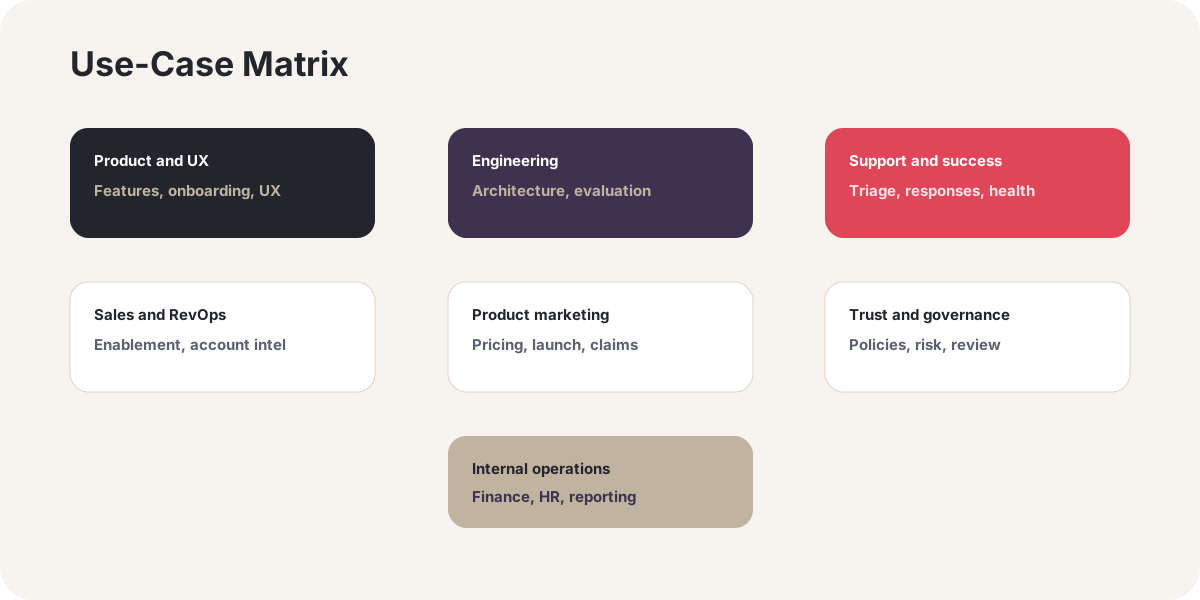
| Team | Use cases | Good first step |
|---|---|---|
| Product and UX | AI feature prioritization, in-product copilots, user onboarding guidance, personalization/recommendations, product feedback summarization, user workflow assistance. | AI Product Coaching or AI Strategy Workshop |
| Engineering and architecture | Data readiness review, LLM/RAG architecture planning, API/model vendor evaluation, internal developer knowledge assistant, AI evaluation workflow, integration planning. | Custom AI Scoping or Architecture Review |
| Customer support and success | Ticket triage, response drafting with review, customer health summaries, knowledge assistant, escalation routing, onboarding support. | Workflow Automation Workshop |
| Sales, marketing, and RevOps | Sales enablement assistant, customer call summarization, account research support, lead/segment intelligence, AI feature messaging, demo personalization. | Advisory & Training or Workflow Automation |
| Product marketing and monetization | AI pricing/package research, positioning and claims review, AI launch enablement, customer education materials, competitive analysis summaries, value narrative development. | AI Product Coaching |
| Trust, security, and governance | AI product governance checklist, vendor/model review, AI usage policy, abuse and misuse review, data boundary map, human oversight and escalation model. | AI Governance Workshop |
| Internal operations | Finance/HR/procurement automation, meeting and decision summaries, internal knowledge assistant, reporting automation, workflow routing, executive dashboards. | Workflow Automation or Custom AI |
How InitializeAI helps
Help product teams identify AI capabilities that are useful, feasible, responsible, and aligned with real user workflows.

Think through data readiness, architecture options, model/vendor choices, API paths, retrieval design, and implementation tradeoffs before building.

Connect AI capabilities to positioning, packaging, pricing assumptions, sales enablement, onboarding, customer education, and adoption evidence.
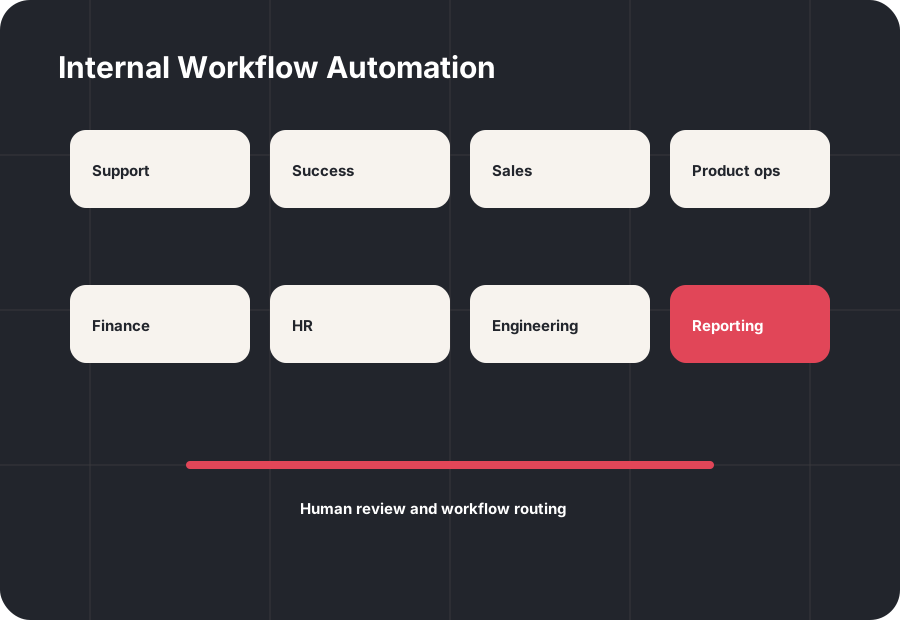
Use AI internally to improve support, success, sales, product operations, finance, HR, engineering knowledge, and reporting workflows.
AI product strategy
Strong AI product strategy connects user value, technical feasibility, governance, GTM readiness, and adoption measurement.
Explore AI Product Coaching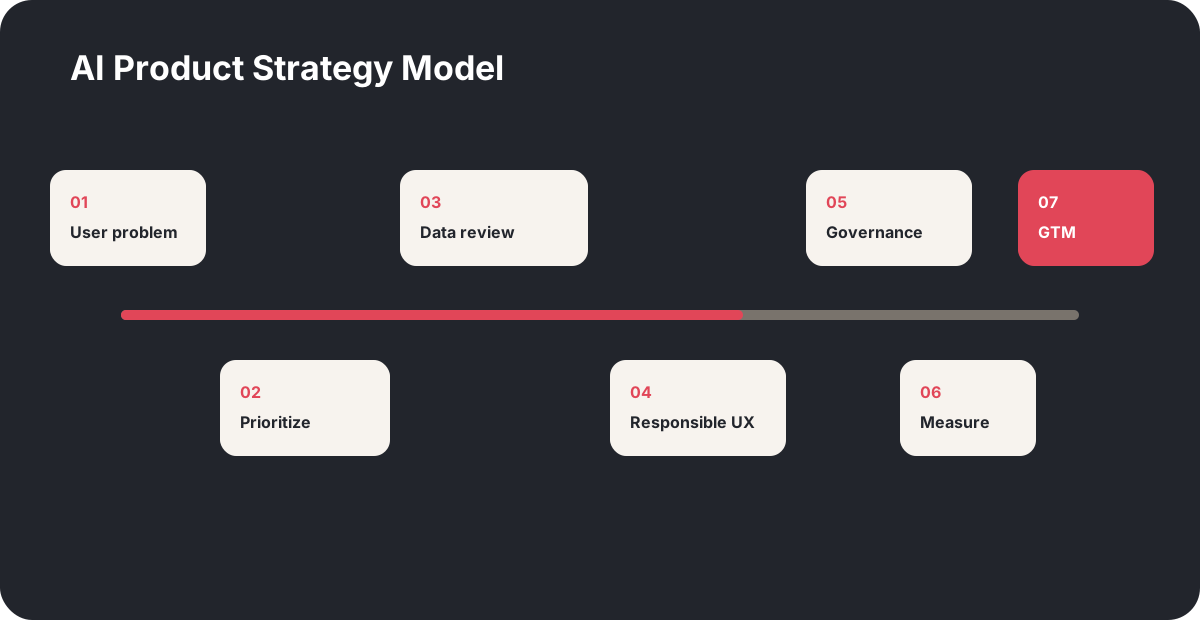
What workflow, friction, decision, or task should AI support?
Which AI ideas have the best value, feasibility, risk, and adoption profile?
What data, integrations, retrieval, models, APIs, and evaluation paths are required?
How will users understand, review, trust, correct, or override AI outputs?
What privacy, security, abuse, bias, vendor/model, and transparency questions need review?
What will prove the feature is useful, adopted, safe, and worth scaling?
How will pricing, positioning, onboarding, and support explain the AI capability clearly?
Architecture readiness
Not every SaaS AI feature needs the same architecture. Some need retrieval. Some need workflow automation. Some need an internal assistant. Some need recommendation logic. Some need product analytics. The right path depends on user value, data, risk, and integration needs.
Explore Custom AI Implementation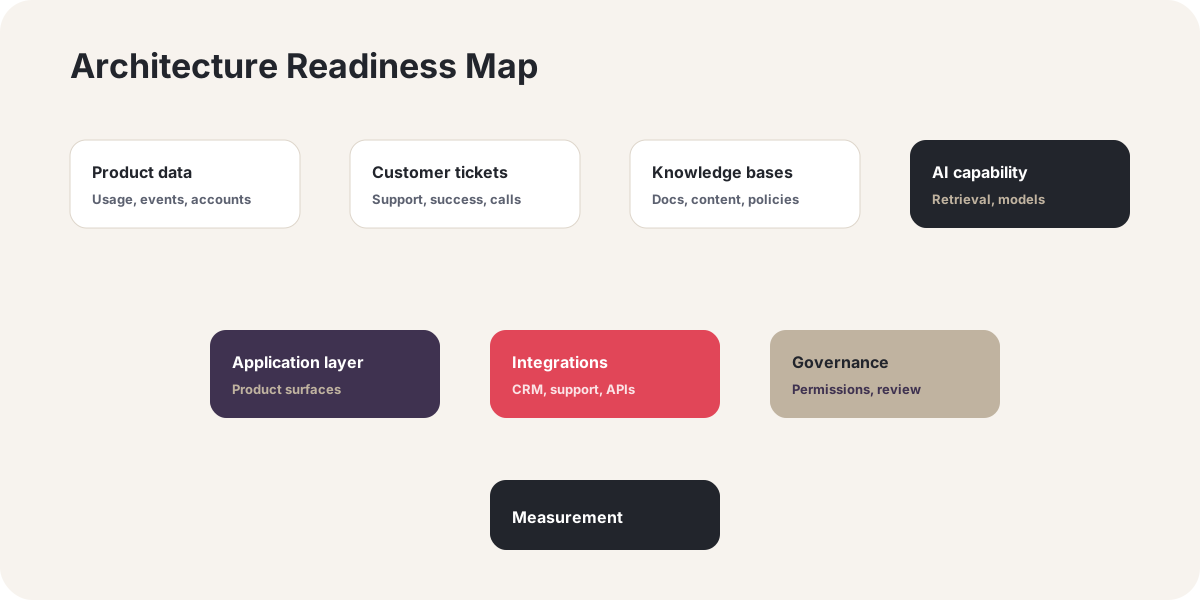
Product usage, customer tickets, account records, documentation, CRM, product analytics, knowledge bases, call notes, content, and event streams.
Retrieval, summarization, classification, recommendations, forecasting, copilots, workflow rules, or custom models.
In-product assistant, search experience, recommendation surface, support workflow, admin dashboard, or internal tool.
APIs, existing SaaS platform, CRM, support tools, data warehouse, customer success systems, analytics tools, and notifications.
Permissions, output review, evaluation, logging assumptions, vendor/model review, user transparency, and escalation.
Activation, retention signals, usage, adoption, quality, feedback, and customer trust.
Product governance and trust
SaaS AI features need trust. Product teams should define data boundaries, output quality expectations, evaluation methods, customer-facing limitations, review paths, escalation, and abuse prevention before launch.
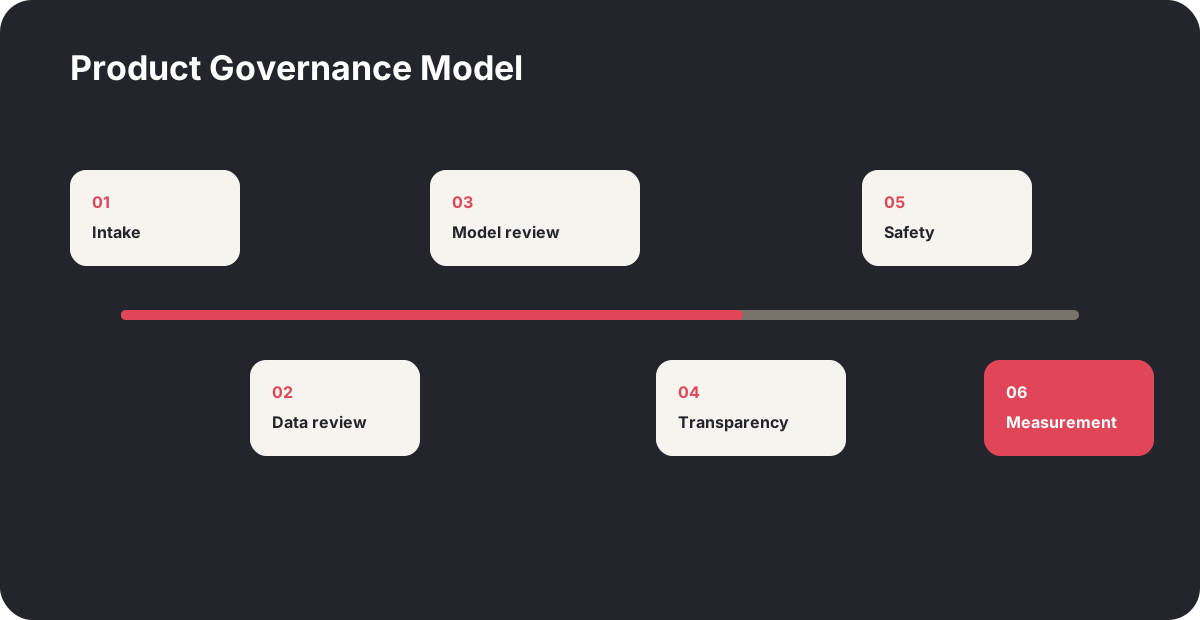
Define user problem, product surface, customer impact, data involved, and business goal.
Clarify user data, account data, product data, internal data, customer permissions, and privacy expectations.
Document model path, vendor use, dependency risk, data processing, evaluation, and fallback assumptions.
Make it clear what AI is doing, where users should review, and how limitations are communicated.
Define error handling, abuse/misuse risks, human review, support escalation, and customer-impact boundaries.
Track adoption, quality, user feedback, errors, trust signals, and whether the feature should scale or be refined.
Pilot design
Strong pilots test whether the AI capability solves a real user problem, fits the product workflow, can be governed, and has a clear path to adoption.
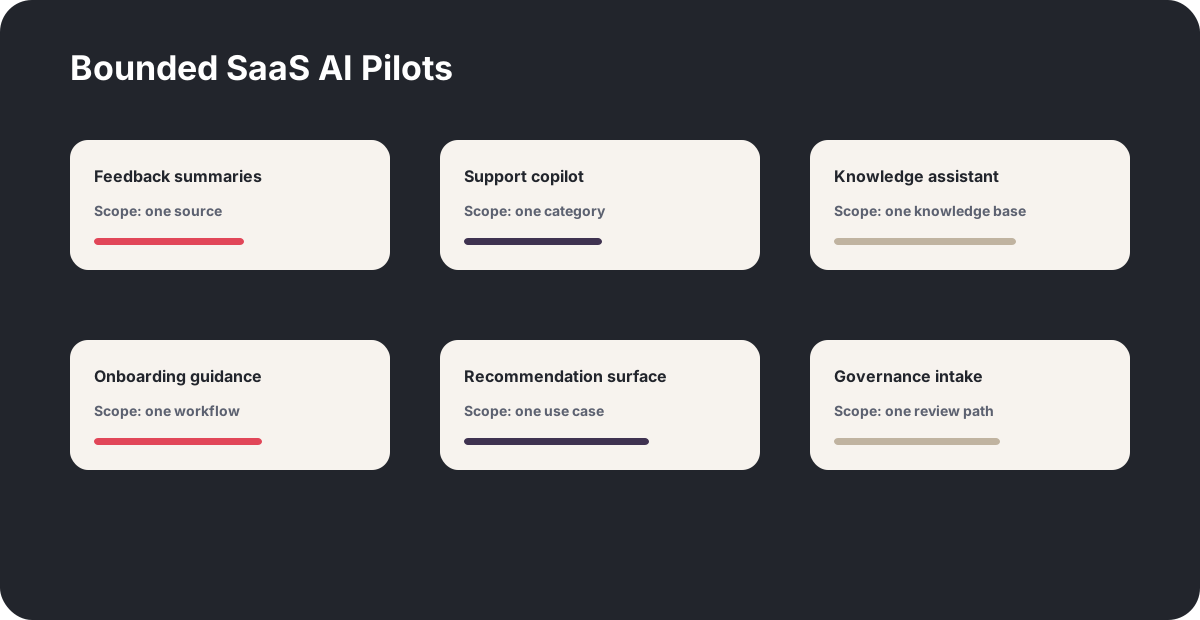
Scope: One feedback source such as support tickets, sales calls, surveys, reviews, or feature requests.
Measures: Insight quality, time saved, prioritization usefulness, PM adoption.
Scope: One support category with suggested responses, knowledge retrieval, and human review.
Measures: Response quality, escalation accuracy, agent adoption, correction rate.
Scope: One internal knowledge base for product, support, sales, or engineering.
Measures: Search time, source accuracy, staff adoption, feedback quality.
Scope: One onboarding or user workflow where AI helps users complete a task.
Measures: Activation signal, completion rate, support deflection assumptions, user satisfaction.
Scope: One recommendation use case such as content, next action, resource, product, or workflow suggestion.
Measures: Click/use rate, relevance feedback, user control, retention/adoption signal.
Scope: One intake process for proposed AI features and internal AI use cases.
Measures: Use-case clarity, risk identification, review consistency, approval readiness.
GTM and monetization
Pricing and packaging AI features requires more than adding an AI label. Product and GTM teams need a clear value hypothesis, usage assumptions, cost awareness, adoption plan, and trust language.
Discuss AI Monetization Strategy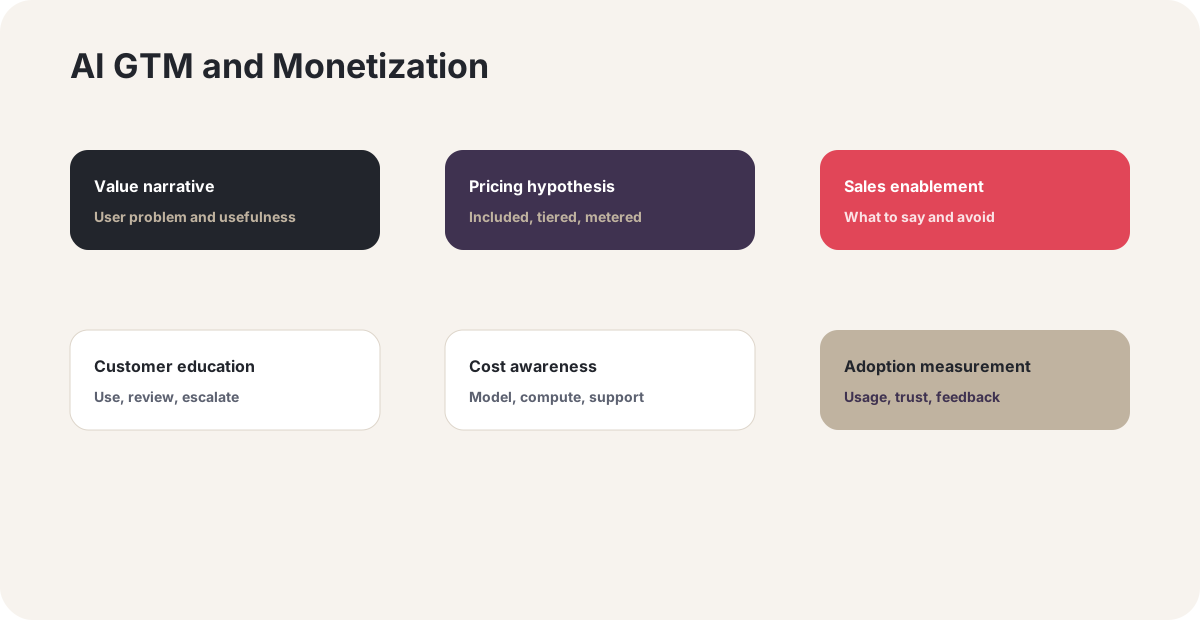
What user problem does the AI capability solve, and how will customers evaluate its usefulness?
Should the capability be included, metered, tiered, usage-based, add-on, or positioned as a workflow upgrade?
What should sales, CS, onboarding, and support teams say, and what should they avoid overclaiming?
How will users learn what the feature does, how to use it, when to review outputs, and when to escalate?
What model, compute, vendor, support, and operational costs affect pricing or packaging?
What signals will show whether the AI feature is useful, trusted, and worth scaling?
Internal operations automation
SaaS companies can also use AI to improve internal workflows across support, success, sales, product operations, finance, HR, legal, and executive reporting.
Explore Workflow Automation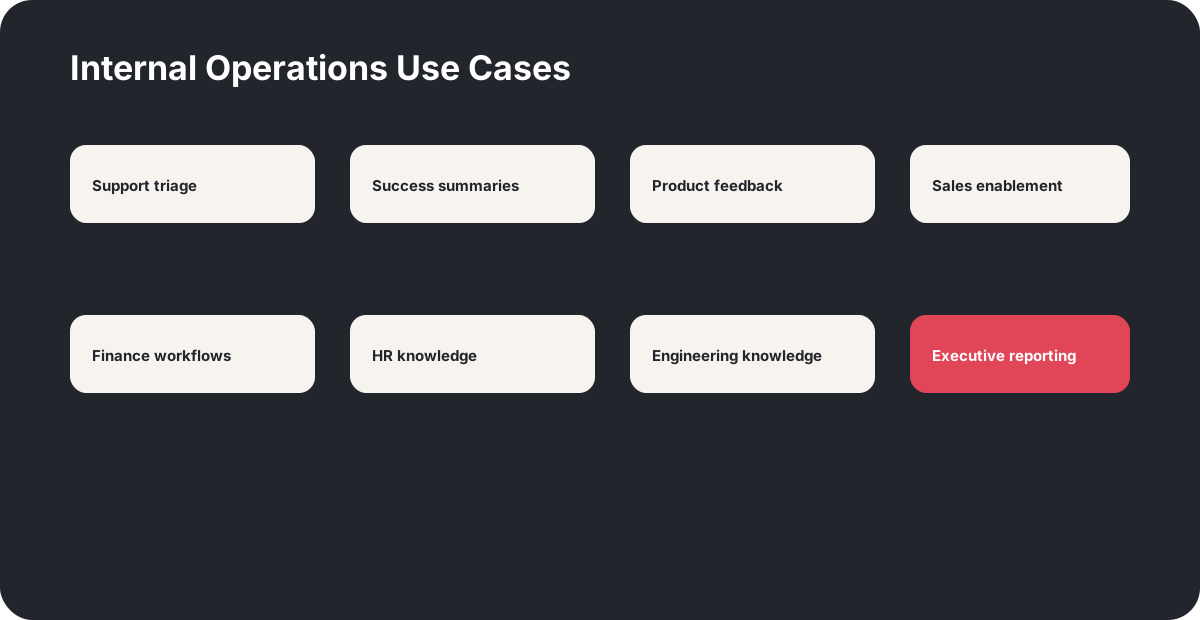
Workflow problem: High-volume tickets need routing and summarization. First pilot: One support category. Review: Agent approval. Workflow Automation
Workflow problem: Account context is scattered. First pilot: One segment. Review: CSM approval. Custom AI
Workflow problem: Feedback is hard to synthesize. First pilot: One source. Review: PM prioritization. Product Coaching
Workflow problem: Reps need relevant content faster. First pilot: One sales motion. Review: GTM approval. Advisory & Training
Workflow problem: Research is repetitive. First pilot: One account list. Review: Sales ops validation. Workflow Automation
Workflow problem: Technical knowledge is hard to find. First pilot: One repository or doc set. Review: Engineer validation. Custom AI
High-review use cases
Some AI product and platform opportunities can affect user trust, customer data, security, legal exposure, pricing, user rights, or high-impact decisions. These should be evaluated carefully.
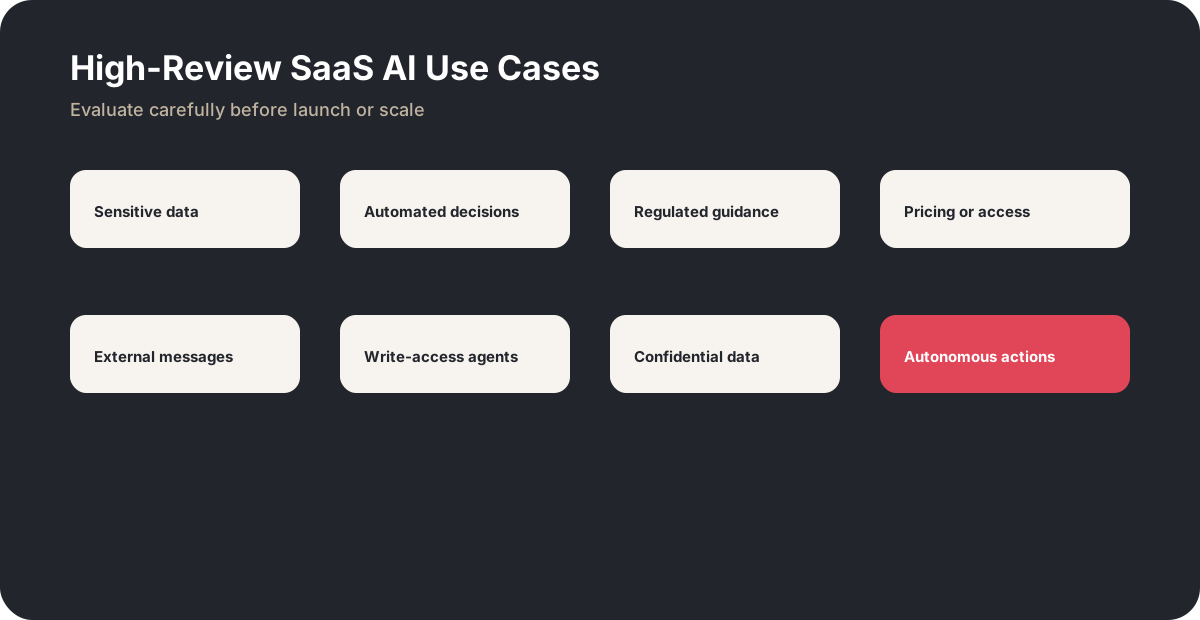
Why review matters: Customer data use can affect trust, privacy, permissions, and contractual expectations.
Recommended first step: Product governance review, data boundary review, security/privacy review, human oversight model, trust and safety review, and pilot-risk assessment.
Discuss Product GovernanceWhy review matters: Automated decisions can affect user rights, access, entitlements, or customer outcomes.
Recommended first step: Data boundary review, human oversight model, and trust and safety review.
Discuss Product GovernanceWhy review matters: Legal, financial, health, or compliance guidance requires careful domain and risk review.
Recommended first step: Product governance review, legal/privacy stakeholder review, and pilot-risk assessment.
Discuss Product GovernanceWhy review matters: Features that change pricing, account status, or entitlements can affect customer rights and revenue operations.
Recommended first step: Human approval model, product risk review, and escalation path.
Discuss Product GovernanceWhy review matters: AI-generated external messages can create trust, accuracy, and legal exposure.
Recommended first step: Approval workflow, tone rules, escalation, and support review.
Discuss Product GovernanceWhy review matters: Action-capable agents can affect customer data, systems, workflows, or external tools.
Recommended first step: Security/privacy review, action boundaries, approval gates, and pilot-risk assessment.
Discuss Product GovernanceWhy review matters: AI trained on or exposed to confidential data requires clear boundaries and customer expectations.
Recommended first step: Data boundary map, vendor/model review, and trust language review.
Discuss Product GovernanceWhy review matters: Autonomous actions without approval can affect rights, money, benefits, obligations, or customer trust.
Recommended first step: Human oversight model and pilot-risk assessment before scope expands.
Discuss Product GovernanceEngagement paths
Each path creates practical decision artifacts before product, workflow, or implementation work expands.
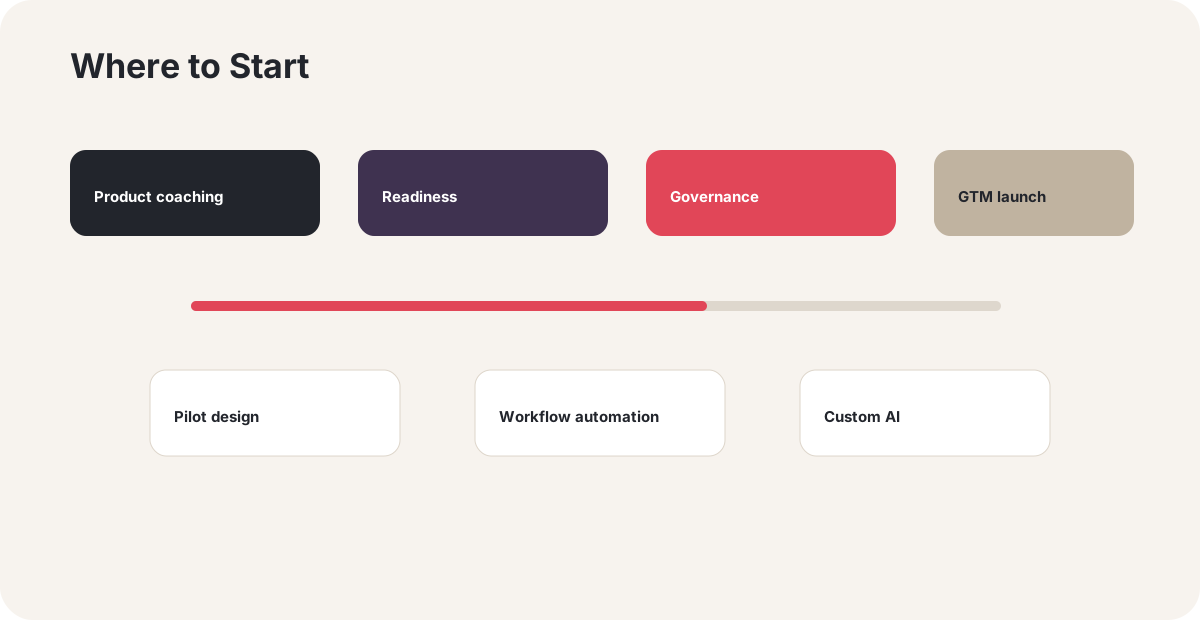
Recommended path: AI Product Coaching or AI Strategy Workshop
Outputs: AI opportunity map, feature prioritization, MVP/pilot candidates, risk questions.
Explore AI Product CoachingRecommended path: AI Readiness Assessment or Custom AI Scoping
Outputs: Data/source review, architecture questions, readiness map, implementation path.
Explore AI ReadinessRecommended path: AI Governance Workshop / Trust Review
Outputs: AI feature review checklist, risk register, data boundary map, oversight model.
Explore AI GovernanceRecommended path: AI Pilot Design Sprint
Outputs: Pilot charter, user workflow, metrics plan, control checklist, scale criteria.
Explore AI Pilot ProjectsRecommended path: Workflow Automation Workshop
Outputs: Workflow map, automation candidates, pilot scope.
Explore Workflow AutomationRecommended path: Custom AI Implementation Scoping
Outputs: Architecture map, prototype path, governance controls, launch plan.
Explore Custom AIRecommended path: Advisory & Training / Product Coaching
Outputs: Pricing/packaging hypothesis, sales enablement narrative, customer education plan.
Explore Advisory & TrainingSaaS solution mapping
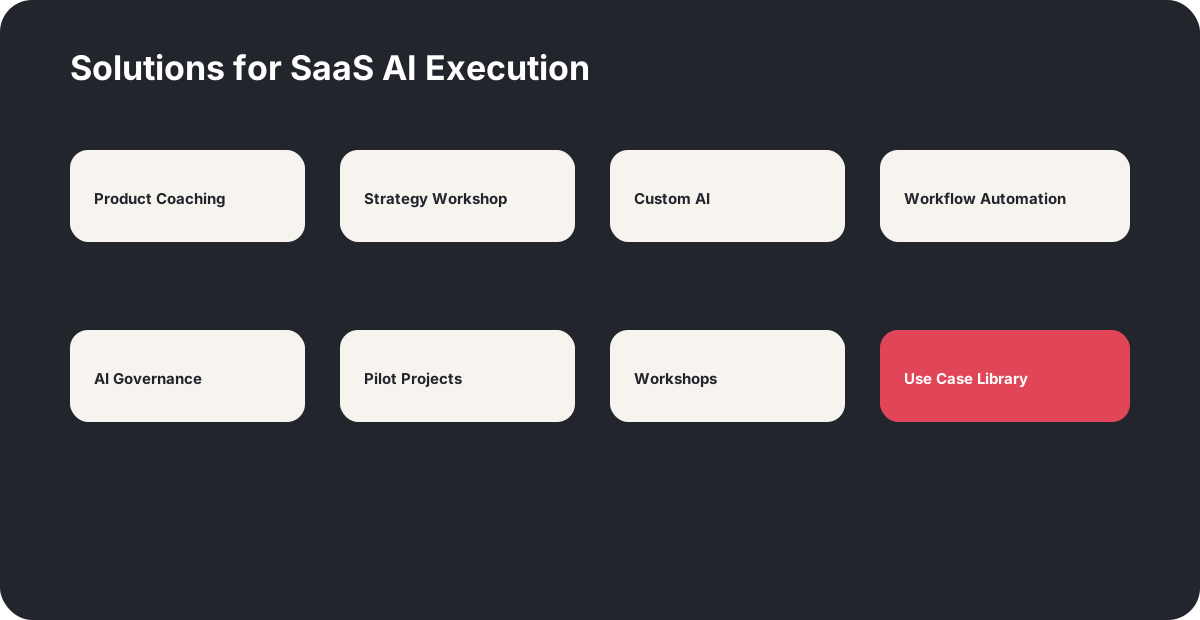
Help product teams identify useful AI capabilities, prioritize features, scope MVPs, and build responsible product adoption paths.
StrategyAI Strategy WorkshopTurn AI ideas into prioritized use cases, feature opportunities, pilot candidates, and roadmap clarity.
BuildCustom AI ImplementationScope and build internal tools, copilots, recommendation systems, document workflows, dashboards, and AI-enabled product capabilities.
WorkflowWorkflow AutomationMap and improve internal workflows across support, success, sales, product operations, finance, HR, legal, and reporting.
GovernanceAI GovernanceCreate practical guardrails for product AI risk, data boundaries, human oversight, vendor/model review, trust, and responsible adoption.
PilotAI Pilot ProjectsDesign measurable, bounded, reviewable pilots with user workflows, metrics, controls, and scale criteria.
WorkshopsWorkshops & BriefingsRun product team workshops, AI strategy sessions, governance workshops, AI literacy training, and pilot-scoping sessions.
Use casesAI Use Case LibraryExplore SaaS, product, and cross-industry AI use-case patterns.
Actionable artifacts
Practical SaaS AI work should produce materials product, engineering, GTM, governance, and leadership teams can use.
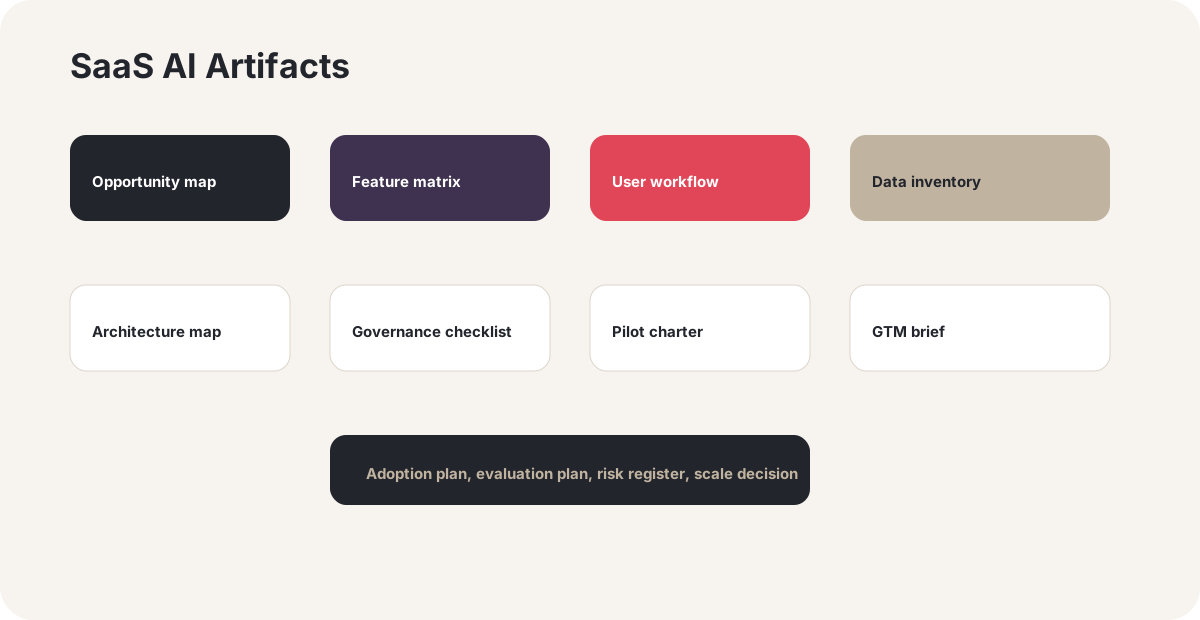
SaaS and Product Proof
Relevant InitializeAI experience
Crowded shows how InitializeAI connected product strategy, data modeling, enterprise UX, AI workflows, and operating execution in a Talent Intelligence platform—rather than treating AI as an isolated feature.
Role requirements, applicant systems, candidate data, spreadsheets, communications, scheduling, and hiring-team feedback created a fragmented operating experience.
Recruiters needed search, matching, outreach, and pipeline tools while hiring managers needed understandable evidence, collaboration, approval states, and decision control.
InitializeAI shaped the product thesis, enterprise UX, job and candidate data models, matching logic, outreach workflows, collaboration, analytics, pipeline management, scheduling support, and architecture.
Explainable fit factors, editable messaging, permissions, review states, approval gates, event history, privacy-aware handling, and fairness considerations keep evaluation and final hiring decisions human-led.
Crowded demonstrates category-level SaaS thinking: a structured data model, useful AI capability, integrated workflow, review controls, analytics, and an adoption path working as one product system. The public case study focuses on the platform and measurement model rather than private customer metrics.
Why InitializeAI?
InitializeAI brings a practical, product-aware approach to AI adoption for teams that need clarity before implementation.
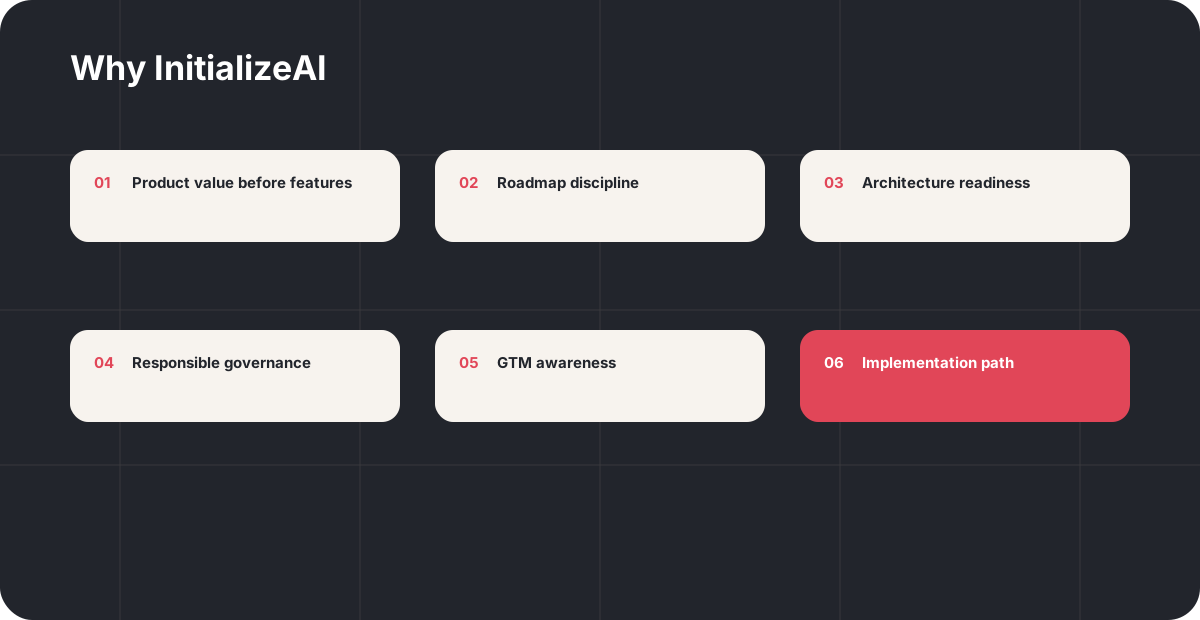
Start with the user problem, workflow, adoption path, and measurable value, not the technology trend.
Prioritize AI opportunities by value, feasibility, risk, data readiness, UX fit, and business model impact.
Clarify source data, retrieval, API/model path, integrations, evaluation, and implementation dependencies before building.
Design data boundaries, product risk review, user transparency, output validation, and escalation into the feature lifecycle.
Connect AI capability to onboarding, sales enablement, pricing hypotheses, customer education, and adoption signals.
Move from idea to pilot, workflow automation, custom AI, or product capability with clear scope and measurable next steps.
AI opportunities are evaluated by value, feasibility, risk, and adoption.
Product, engineering, data, GTM, governance, and implementation stay connected.
Data, integration, and model requirements are defined before build.
Trust considerations are built into product decisions early.
Implementation paths are tied to adoption evidence and scale decisions.
Related resources
Build practical product capability around AI strategy, discovery, prototypes, roadmap decisions, and pilots.
StrategyAI Strategy WorkshopPrioritize AI use cases and feature opportunities.
BuildCustom AI ImplementationScope AI assistants, workflows, dashboards, recommendations, and product capabilities.
GovernanceAI GovernanceDefine responsible AI guardrails for product and internal AI use.
WorkflowWorkflow AutomationImprove internal workflows across SaaS teams.
ROI GuideAI Workflow Automation ROI GuideModel baseline effort, value levers, cost assumptions, and pilot readiness before funding SaaS workflow automation.
PilotAI Pilot ProjectsDesign measurable pilots with users, metrics, and scale decisions.
AssessmentAI Execution Gap AssessmentDiagnose product, workflow, data, governance, and adoption blockers before funding AI work.
MatrixAI Use Case Prioritization MatrixRank AI product and workflow opportunities by value, feasibility, risk, and sponsorship.
ROIAI ROI CalculatorModel savings, payback, adoption assumptions, and value before funding a SaaS AI pilot.
Use casesAI Use Case LibraryExplore product, technology, and cross-industry use cases.
MethodMethodologySee how InitializeAI moves from readiness to measurable execution.
EngagementsEngagement ModelsCompare workshops, pilots, implementation, and advisory support.
TrustTrust CenterReview responsible AI, data boundaries, and review-readiness principles.
Vendor GuideAI Vendor Due Diligence GuideEvaluate embedded AI tools, model providers, data handling, contracts, and vendor risk before rollout.
Related industryRetail & EcommerceExplore recommendation strategy, ecommerce product workflows, support automation, and customer-trust-aware AI planning.
ProofCase StudiesReview available examples and practical implementation patterns.
InsightsBlogRead practical AI product and strategy guidance.
SaaS and technology AI FAQ
Start with use-case and feature prioritization. Evaluate user value, data readiness, architecture, product governance, business model fit, and adoption before investing heavily in AI features.
Prioritize AI features by user value, workflow fit, feasibility, data availability, risk, evaluation approach, GTM readiness, and adoption potential.
Yes. InitializeAI can support AI product coaching, strategy workshops, feature prioritization, MVP/pilot scoping, governance review, and adoption planning.
Yes, depending on scope. InitializeAI can help evaluate data readiness, architecture options, model/vendor paths, integration requirements, workflow design, custom AI implementation, and pilot planning.
SaaS teams should consider data boundaries, customer permissions, output quality, transparency, vendor/model review, abuse/misuse risks, human review, support escalation, evaluation, and monitoring.
Yes, AI can support support workflows such as ticket triage, knowledge retrieval, response drafting, summarization, and escalation when designed with human review and quality controls.
AI monetization should be based on clear user value, usage assumptions, cost awareness, packaging options, customer education, trust language, and adoption evidence. InitializeAI can help develop the strategy, but outcomes depend on product context and market response.
Good first pilots are bounded and measurable, such as product feedback summarization, support copilot, internal knowledge assistant, onboarding guidance, recommendation surface, or AI governance intake workflow.
The SaaS industry page explains AI opportunities for SaaS and product teams. Custom AI Implementation is the service path for building internal tools, copilots, dashboards, document workflows, and other AI-enabled systems.
Yes. InitializeAI can support executive briefings, AI product workshops, AI literacy, responsible-use training, sales enablement guidance, and role-specific playbooks.
SaaS consultation
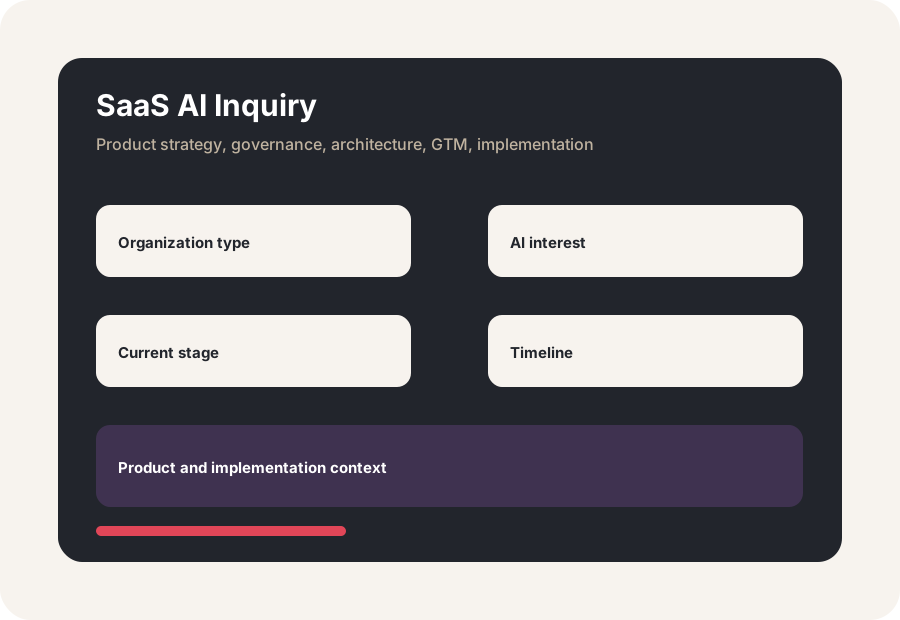
Use this path for AI product strategy, feature prioritization, customer support automation, internal copilots, architecture planning, product governance, monetization strategy, workflow automation, pilot scoping, or custom AI implementation planning.
Product value, governance, adoption
InitializeAI can help your SaaS or technology team prioritize AI opportunities, govern product risk, train teams, scope pilots, automate workflows, plan architecture, and build practical AI capabilities around real user value.