AI ideas need prioritization
Not every AI idea deserves funding. Teams need a disciplined way to evaluate value, feasibility, risk, workflow fit, and readiness.
Our Mission
InitializeAI exists to help organizations move beyond AI hype and into practical, governed implementation that improves workflows, strengthens decisions, builds staff confidence, and creates measurable value.

Our Mission
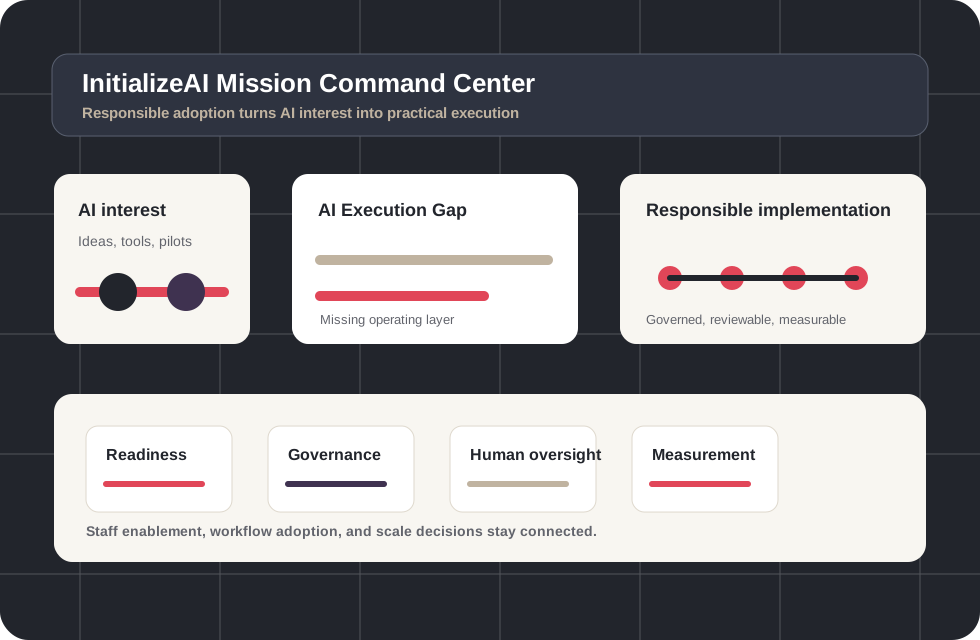
InitializeAI exists to help organizations adopt AI responsibly, practically, and measurably - with the readiness, governance, workflow design, staff enablement, and implementation discipline required to create real value.
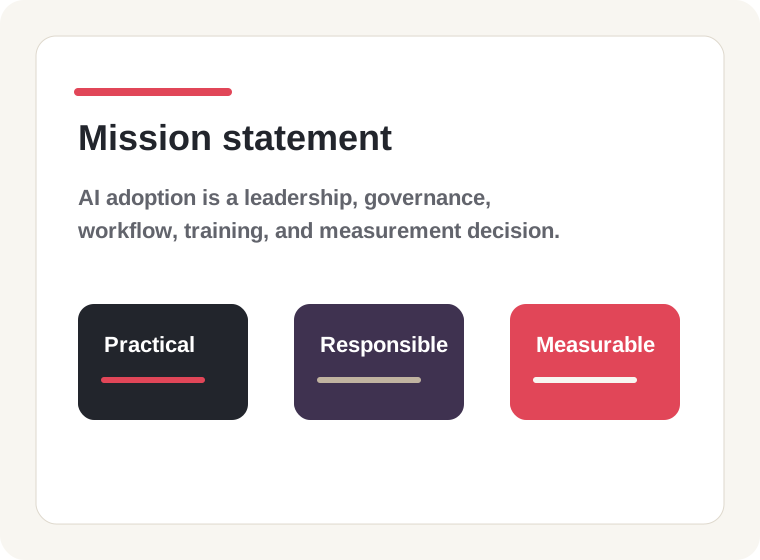
AI adoption is not just a technology decision. It is a leadership, governance, workflow, training, and measurement decision. Our mission is to help teams make those decisions clearly before AI activity becomes expensive, risky, or disconnected from real outcomes.
Why the mission matters
Organizations are experimenting with tools, launching pilots, and asking teams to move faster. But many initiatives stall when use cases are poorly prioritized, data is not ready, governance is unclear, workflows are not redesigned, and adoption is not measured. InitializeAI's mission is to help organizations close that gap.
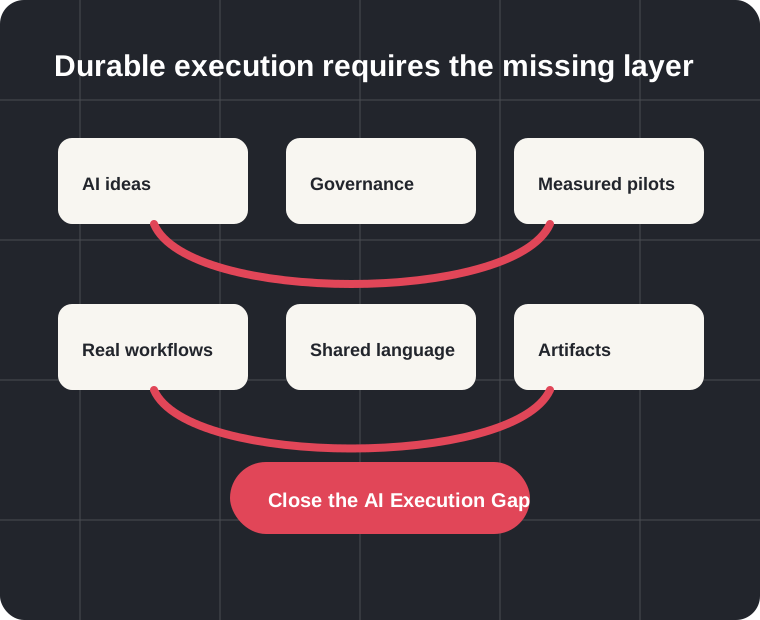
Not every AI idea deserves funding. Teams need a disciplined way to evaluate value, feasibility, risk, workflow fit, and readiness.
Responsible adoption requires data boundaries, human oversight, vendor/model review, acceptable use, privacy, security, and escalation paths.
Pilots need owners, metrics, user feedback, risk controls, and scale/refine/stop decisions.
A demo can be impressive while the workflow remains unchanged. AI must fit how people actually work.
Executives, operators, technical teams, legal, security, and staff need aligned expectations before implementation scales.
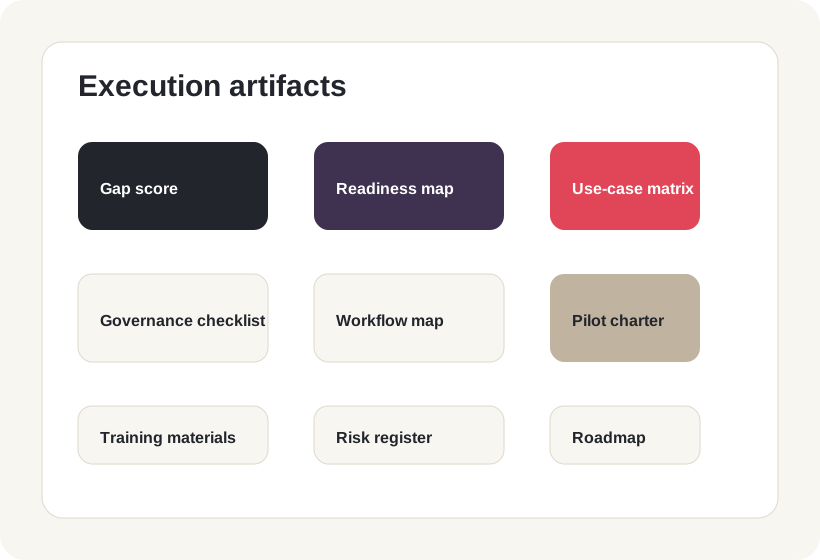
Scorecards, matrices, maps, charters, checklists, playbooks, and roadmaps make AI execution visible and reviewable.
What we believe
These beliefs shape how InitializeAI advises, trains, designs, and implements.
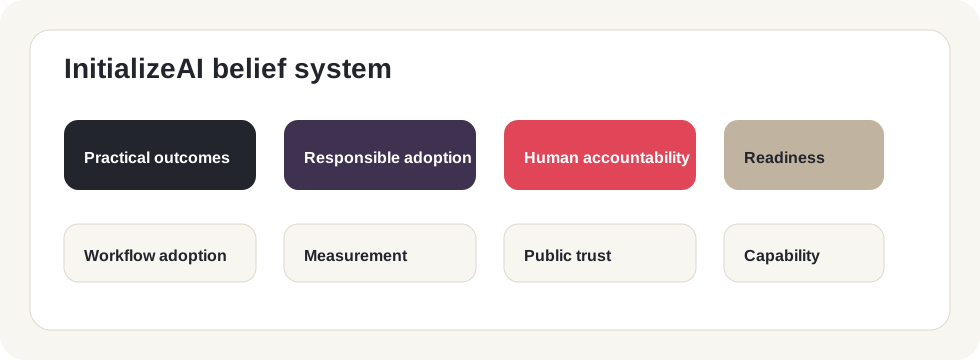
AI work should be judged by whether it improves decisions, workflows, adoption, risk posture, and measurable outcomes - not by how impressive a demo looks.
Governance, privacy, security, human oversight, vendor/model review, data boundaries, and acceptable use should be considered before pilots expand.
AI can support decisions, drafting, analysis, retrieval, and workflows, but people and organizations remain accountable for outcomes and exceptions.
Teams should understand strategy, data, systems, governance, workflows, and adoption capacity before funding tools or implementation.
AI creates value when it fits real work: users, handoffs, systems, decision points, training, and feedback loops.
AI initiatives should define what success, risk, adoption, and scale readiness mean before expansion.
Public-sector, education, nonprofit, healthcare, financial, and other trust-sensitive environments require careful review, documentation, training, and oversight.
The goal is not just to deliver AI work. It is to help teams build the confidence, artifacts, and operating model needed to use AI responsibly.
Our vision for the future
We believe the organizations that benefit most from AI will be the ones that pair ambition with practical execution discipline.

We believe practical AI should be accessible to organizations beyond the largest technology teams - including public-sector, education, nonprofit, operational, and growing organizations that need clear adoption paths.
We believe innovation and responsibility should move together. AI should be explored with clear guardrails, human oversight, data boundaries, and accountability.

We believe the best AI work creates durable operating capability: clearer decisions, better workflows, trained teams, governed pilots, and measurable adoption.
How the mission becomes practical
InitializeAI turns the mission into a practical execution path that teams can review, govern, operate, and measure.
Explore the Methodology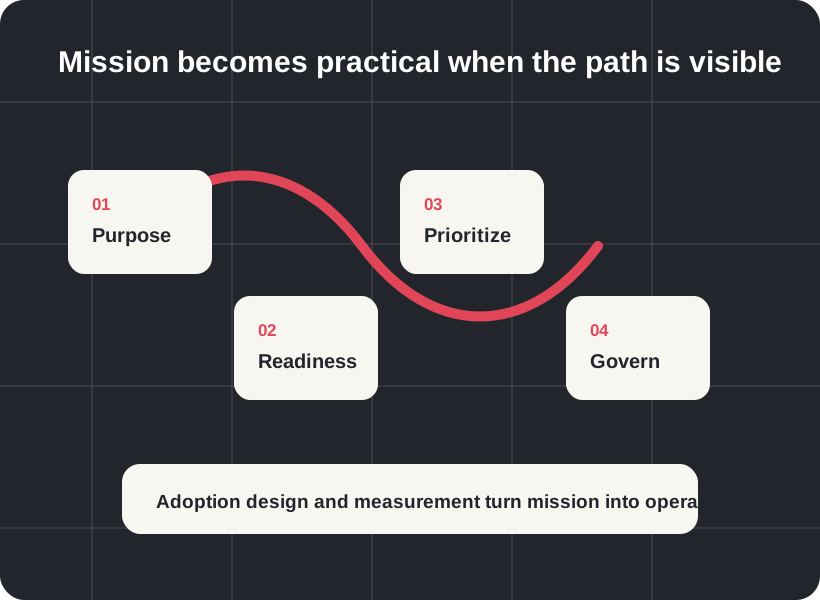
Define the business, mission, operational, or user problem AI should support.
Understand whether the organization has the strategy, data, systems, governance, workflow, and adoption capacity required.
Choose opportunities based on value, feasibility, risk, data readiness, workflow fit, and adoption potential.
Build data boundaries, human oversight, vendor/model review, acceptable use, privacy, security, and escalation into the work.
Map the workflow, train users, define feedback loops, and connect AI to real operating behavior.
Evaluate adoption, quality, risk posture, workflow impact, and whether to scale, refine, pause, or stop.
Human-centered AI
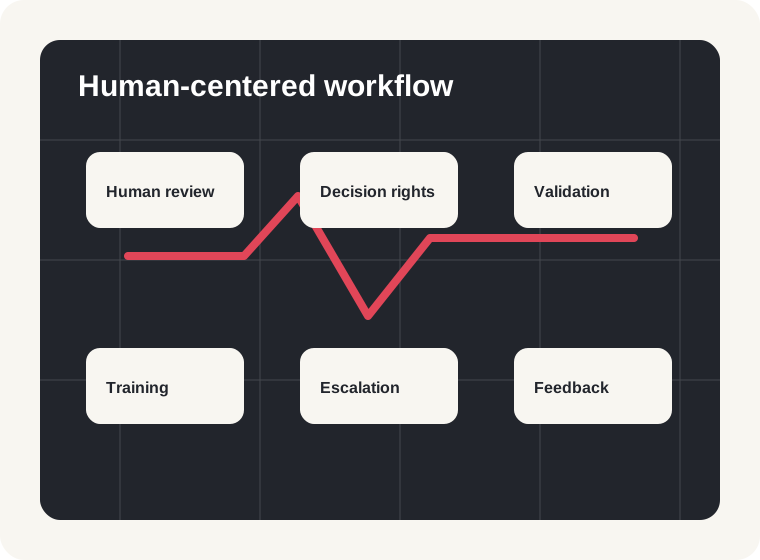
InitializeAI's mission is not to automate for automation's sake. We help organizations design AI-enabled workflows where people understand the system's role, know when to review outputs, can escalate uncertainty, and remain accountable for decisions.
View Trust CenterMission-driven AI
Government, education, workforce, nonprofit, healthcare, financial, and other trust-sensitive environments need AI adoption that is understandable, reviewable, and aligned with the people it affects.

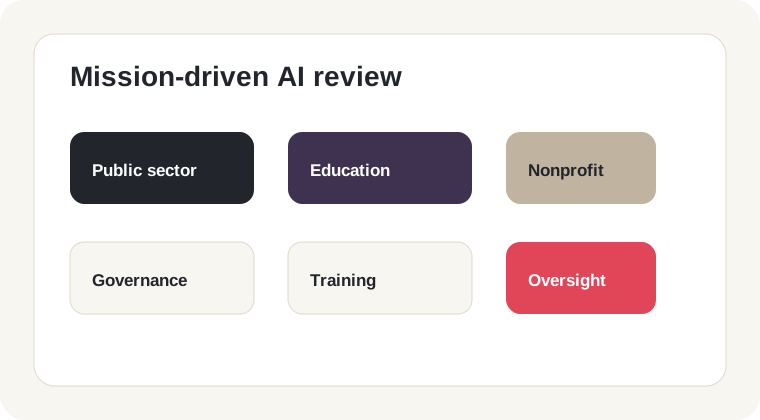
Public-sector teams need AI readiness, governance, staff training, procurement-aware documentation, human oversight, and public trust.
Mission-driven teams need AI literacy, responsible-use guidance, program workflow support, grant reporting help, staff enablement, and practical adoption paths.
Organizations in healthcare, finance, legal, operations, and SaaS need governance, data boundaries, workflow fit, and measurable pilots.
How we make the mission real
InitializeAI supports different kinds of organizations with the same core belief: AI should be practical, responsible, and measurable.

We help growing organizations move from AI curiosity to prioritized use cases, pilot plans, governance questions, and implementation paths they can actually operate.

We help larger organizations align stakeholders, evaluate readiness, govern risk, modernize workflows, and move from scattered pilots to measurable adoption.
We help public-sector and mission-driven teams approach AI with readiness, training, governance, procurement awareness, and public trust in mind.
Honest boundaries
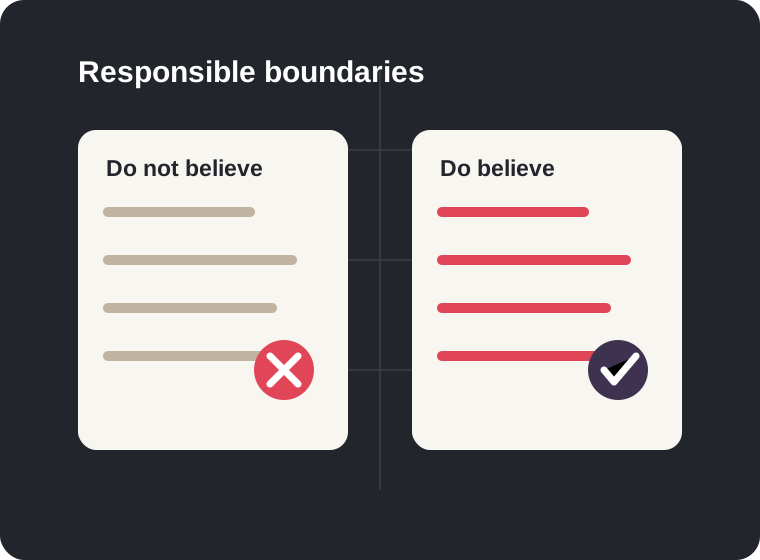
Responsible AI adoption requires clear boundaries and better decision habits.
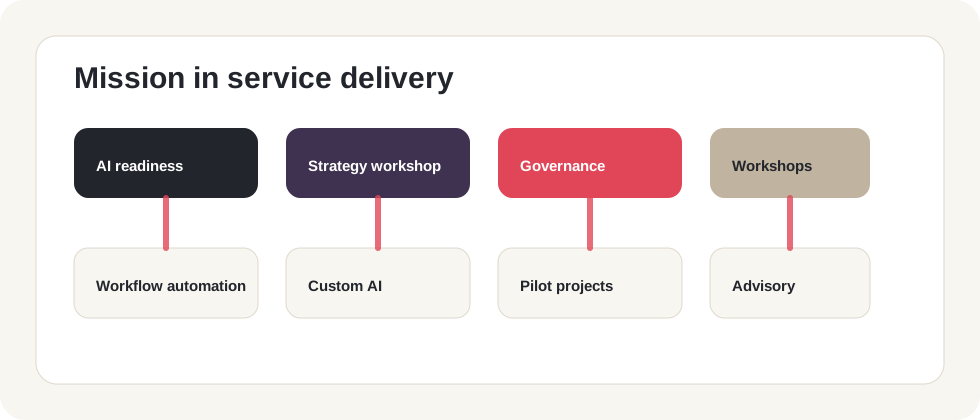
The mission in our services
Each engagement connects a belief to a practical artifact, decision, or implementation path.
Mission artifacts
Responsible, practical AI adoption becomes real through the decisions and artifacts teams use.
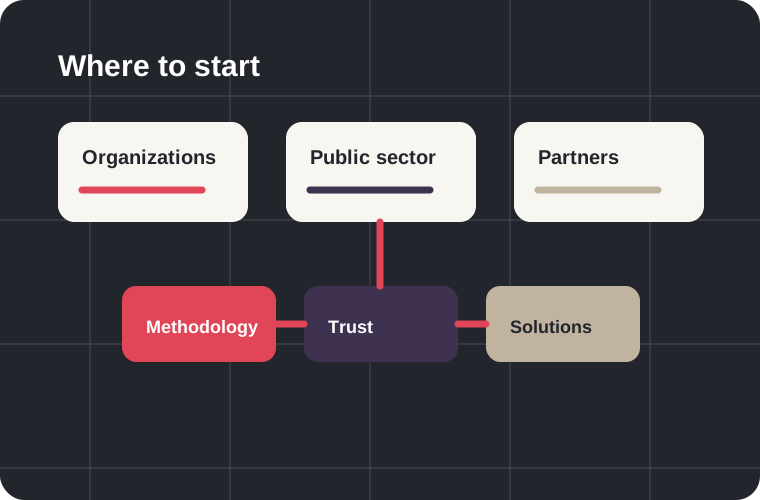
Join us
The future of AI adoption should not belong only to organizations with the largest teams or most experiments. It should belong to organizations that can ask better questions, choose better use cases, govern risk, train people, measure adoption, and improve real workflows.
Related pages
Mission FAQ
InitializeAI's mission is to help organizations adopt AI responsibly, practically, and measurably through readiness, governance, workflow design, staff enablement, pilot design, and implementation discipline.
Responsible AI means considering data boundaries, privacy, security, human oversight, vendor/model review, output handling, fairness, training, documentation, and accountability as part of execution.
The AI Execution Gap is the missing operating layer between AI activity and measurable value. It includes leadership alignment, use-case quality, data and systems readiness, governance, workflow integration, and adoption.
It shapes how InitializeAI scopes engagements: readiness before investment, strategy before tools, governance before scale, workflow adoption before demos, and measurement before expansion.
Yes. InitializeAI supports government, education, workforce, nonprofit, and public-sector teams with readiness, training, governance, workflow modernization, procurement-aware support, and practical implementation planning.
No. InitializeAI supports strategy, readiness, governance, workshops, pilot design, workflow automation, custom AI implementation, advisory, and team training.
Start with the AI Execution Gap Scorecard, AI Readiness Checklist, a Gap Review, or an AI Strategy Workshop depending on how much clarity your team already has.
Practical AI adoption
InitializeAI can help your team assess readiness, prioritize use cases, govern risk, train staff, design pilots, automate workflows, build custom AI, and measure adoption.