AI activity
- Tools
- Pilots
- Demos
- Experiments
- Executive pressure
Methodology
InitializeAI helps leadership teams move from scattered AI ideas and pilots to prioritized use cases, governed workflows, measurable pilots, and adoption plans that can survive real operational conditions.
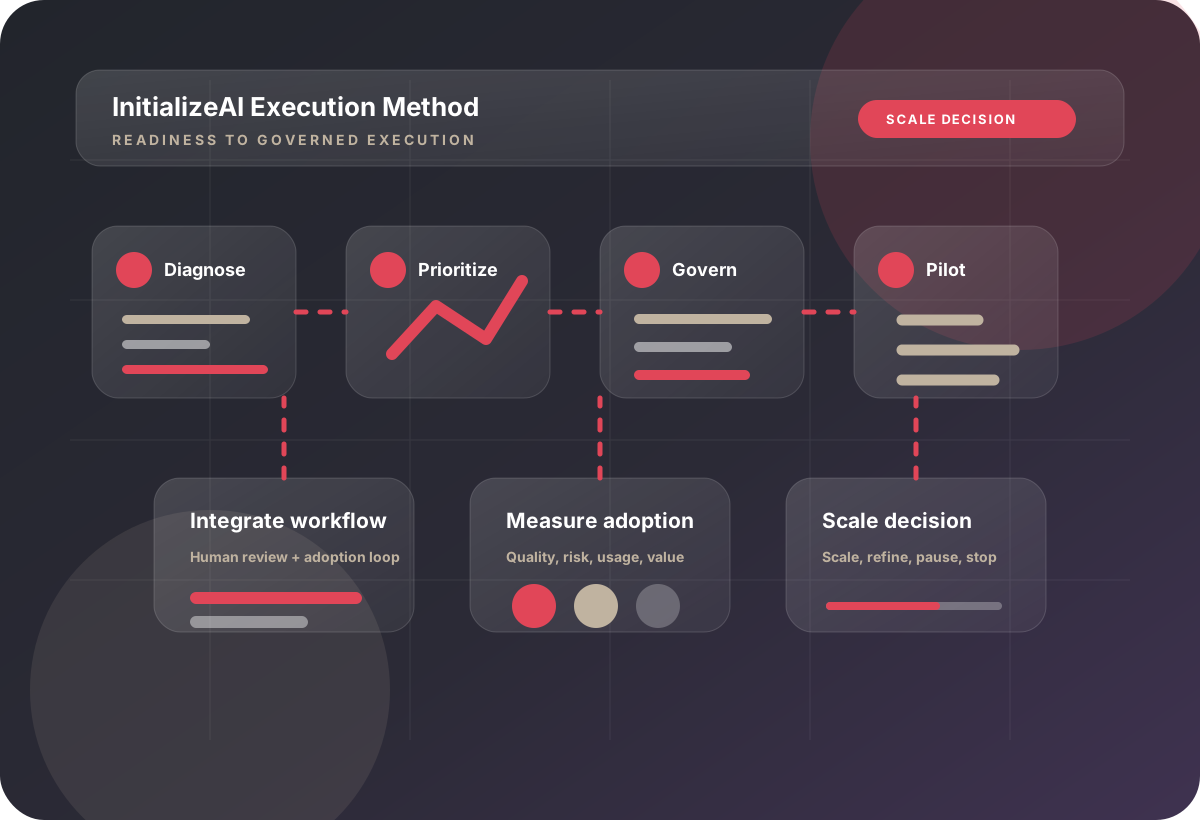
From Activity To Adoption
Most organizations do not lack AI ideas. They lack the operating conditions required to turn AI activity into measurable value: clear ownership, prioritized use cases, data readiness, governance, workflow integration, training, adoption discipline, and a decision path for what should scale.
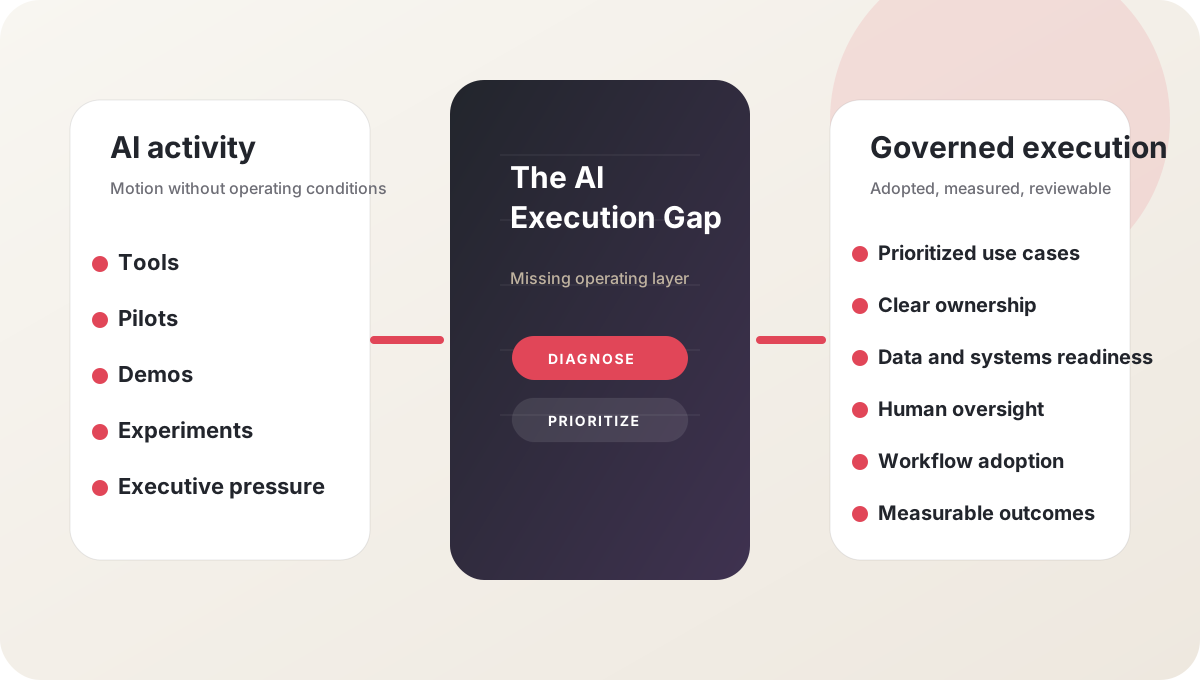
The missing operating layer between AI interest and measurable business value.
The InitializeAI Execution Method
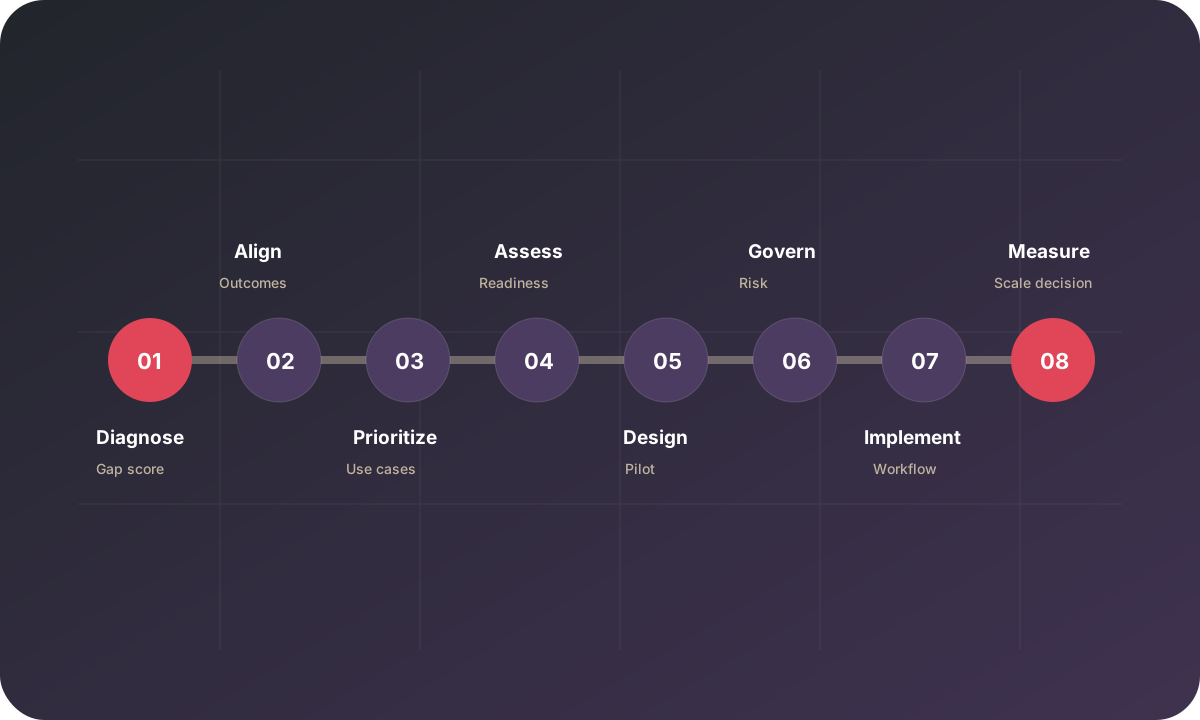
Identify where AI execution is blocked across leadership alignment, use-case quality, data and systems readiness, governance, workflow integration, and adoption.
Clarify the business or mission outcome, executive sponsor, operating owner, users, workflow, and decision rights.
Separate high-value AI opportunities from expensive distractions using value, feasibility, risk, data readiness, workflow fit, and adoption capacity.
Evaluate whether the data, systems, policies, workflows, people, and governance model are ready for the selected use case.
Scope a measurable pilot with a clear user, workflow, owner, data path, success metrics, controls, timeline, and scale decision.
Build privacy, security, vendor/model review, human oversight, acceptable use, output handling, escalation, and auditability into the work.
Move from concept to usable workflow support through training, automation, prototype, dashboard, internal tool, integration plan, or implementation sprint.
Evaluate adoption, workflow impact, quality, risk posture, user feedback, and whether the pilot should scale, refine, pause, or stop.
Execution Dimensions
InitializeAI evaluates AI execution readiness across six dimensions that determine whether an idea can become a governed, adopted, measurable workflow.
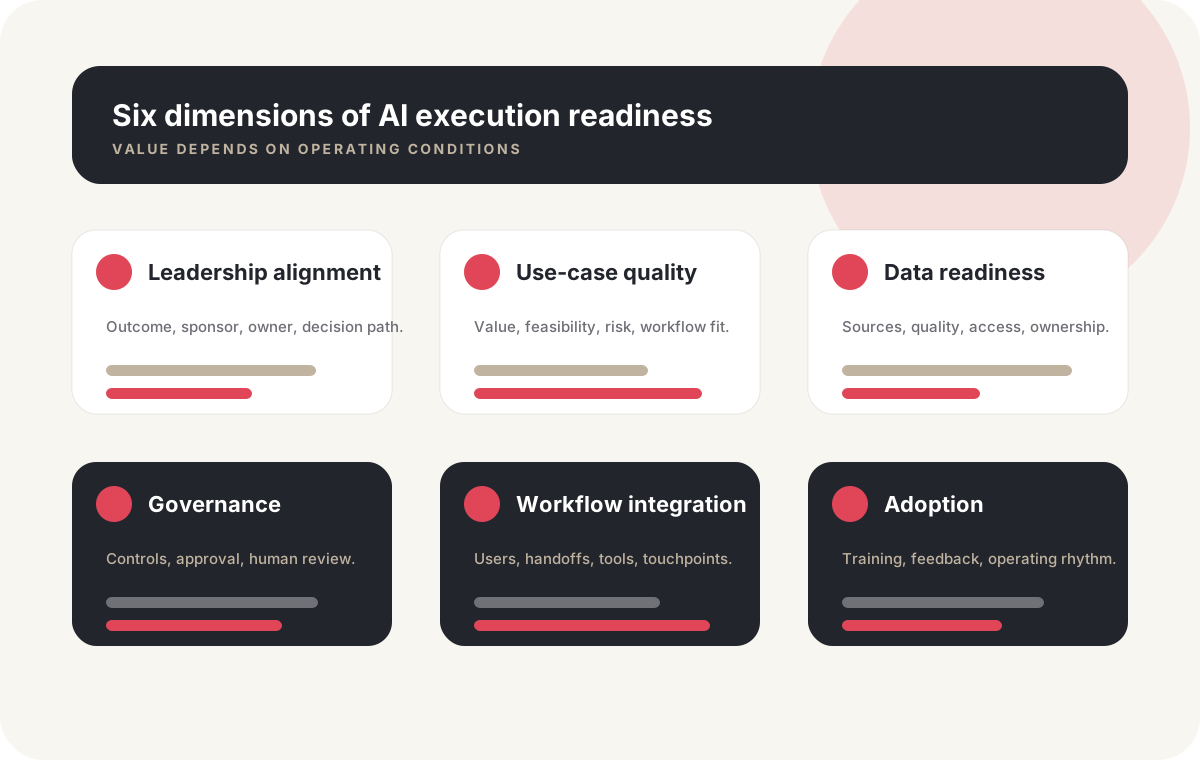
AI priorities connect to business outcomes, sponsorship, ownership, funding logic, and decision rights.
Common blocker Executive pressure exists, but no one owns the operational outcome.
What we clarify Outcome, sponsor, owner, users, decision path.
Opportunities are ranked by value, feasibility, risk, workflow impact, and adoption potential.
Common blocker Use cases are chosen by enthusiasm or tool availability instead of business value.
What we clarify Value, feasibility, risk, data needs, adoption fit.
Required data is accessible, trusted, governed, and connected to the systems where work happens.
Common blocker Data problems appear after the pilot has already started.
What we clarify Data sources, quality, access, ownership, system dependencies.
Privacy, security, vendor review, human oversight, acceptable use, and escalation paths are defined.
Common blocker Governance is treated as a blocker instead of part of the execution design.
What we clarify Risk level, controls, approval path, human review, documentation.
AI fits into real processes, decisions, handoffs, tools, and operating behaviors.
Common blocker The demo works, but the workflow does not change.
What we clarify User journey, handoffs, review points, system touchpoints, adoption path.
Teams have the training, communication, incentives, feedback loops, and operating rhythm required to make AI stick.
Common blocker No one owns adoption after launch.
What we clarify Training, feedback, metrics, communication, scale support.
Methodology Artifacts
We do not stop at strategy slides. The method produces practical artifacts that help teams make decisions, govern risk, and measure adoption. These are example deliverables, not completed client artifacts.
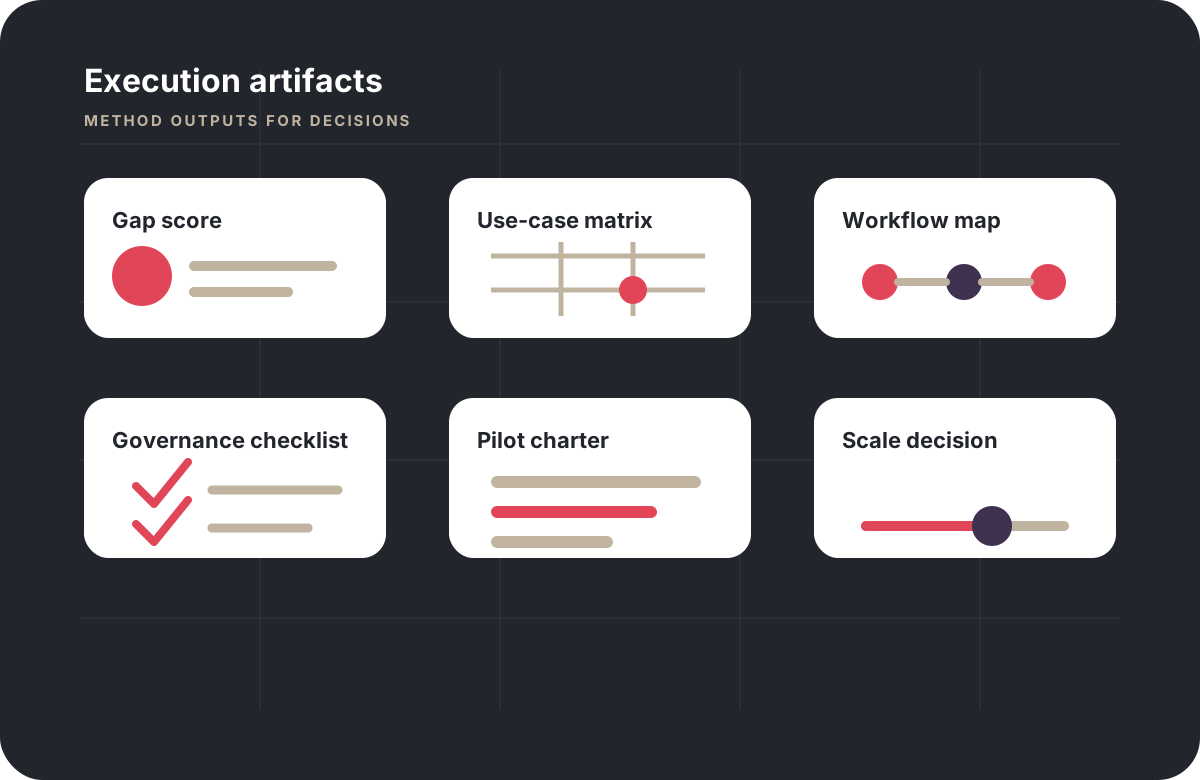
A quick signal across the dimensions blocking AI value.
Used for Initial diagnosis and executive alignment.
A value, feasibility, risk, and readiness model for selecting the right AI opportunities.
Used for Funding decisions and roadmap planning.
A clear view of data sources, access, quality, owners, and system dependencies.
Used for Pilot feasibility and implementation planning.
A before/after view of where AI fits into the real process.
Used for Adoption design and operating model clarity.
A review of privacy, security, human oversight, vendor/model risk, acceptable use, and escalation.
Used for Responsible pilot design.
A focused definition of the user, workflow, owner, timeline, controls, metrics, and scale decision.
Used for Moving from idea to testable execution.
A practical model of expected value, adoption assumptions, costs, risks, and measurement.
Used for Business case and prioritization.
A plan for training, communication, feedback, workflow ownership, and iteration.
Used for Making AI stick after launch.
A documented recommendation to scale, refine, pause, or stop based on evidence.
Used for Post-pilot governance and investment decisions.
Engagement Models
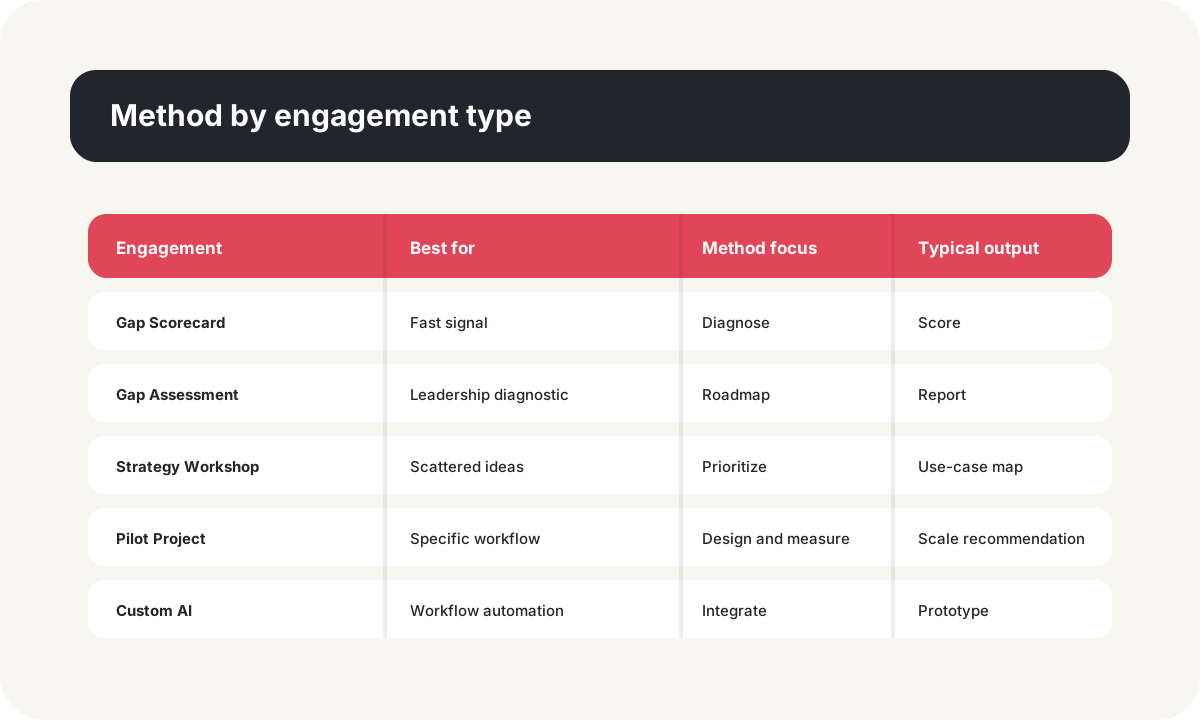
Not every organization needs the same starting point. The InitializeAI method adapts to readiness, urgency, risk, and the type of work required.
Governance-First Execution
Responsible AI execution requires risk review, data boundaries, human oversight, vendor/model review, output handling, training, and documentation before pilots scale.
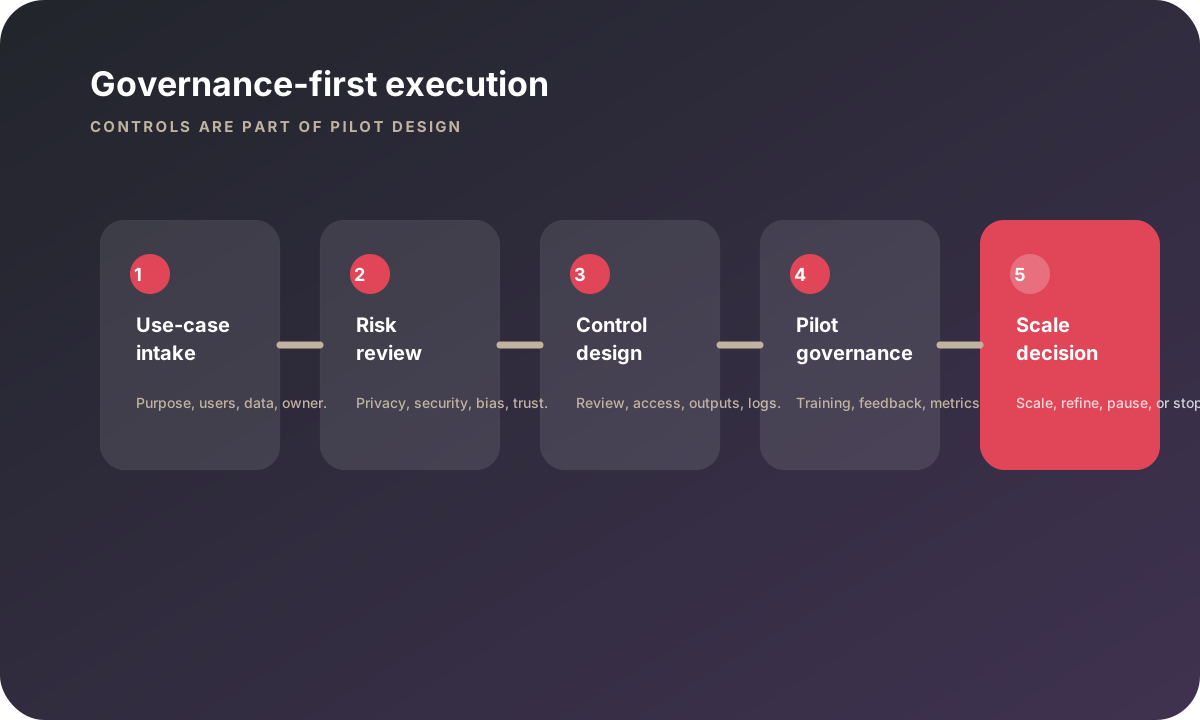
Purpose, users, affected stakeholders, workflow, data, and owner.
Privacy, security, legal, operational, vendor/model, bias, accessibility, and public trust considerations.
Human review, access boundaries, output handling, escalation, monitoring, and documentation.
Training, feedback, metrics, logs, review cadence, and scale criteria.
Evidence-based recommendation to scale, refine, pause, or stop.
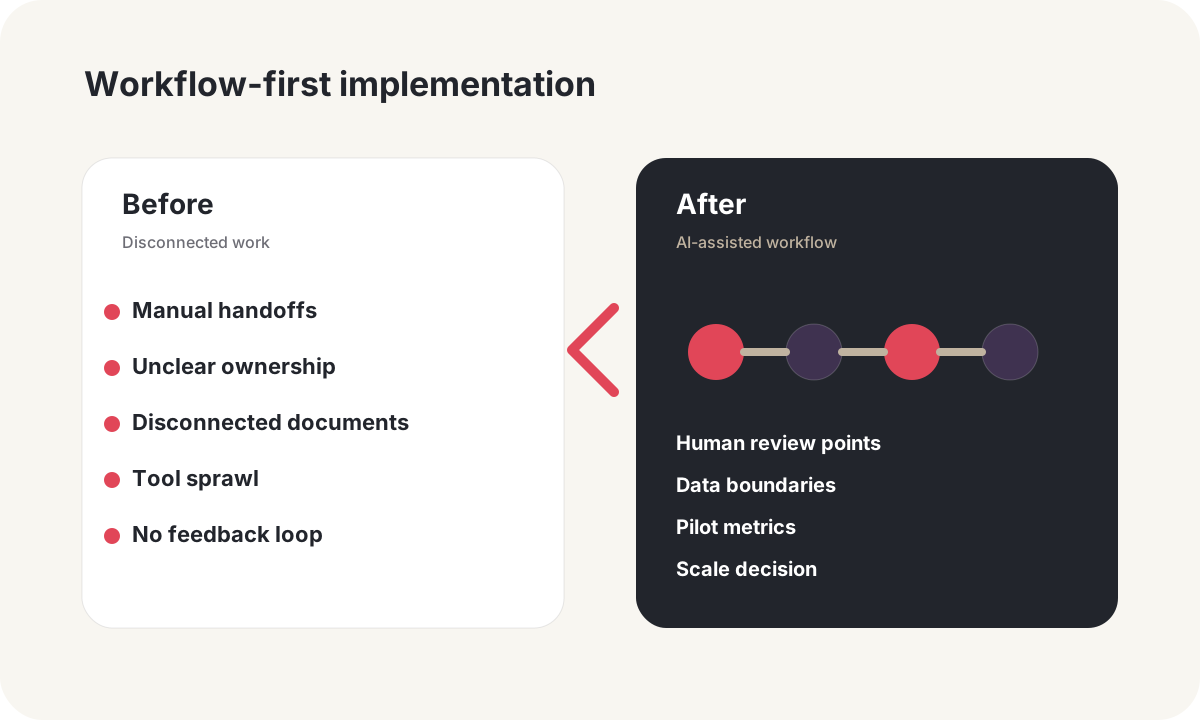
Workflow-First Implementation
InitializeAI starts with the real work: who does it, what decisions are made, what systems are involved, what data is needed, where risk appears, and how adoption will be measured.
Capture users, handoffs, decisions, documents, systems, data, review points, and friction.
Define where AI assists, where humans review, what outputs are trusted, and where escalation happens.
Track usage, quality, time, rework, exceptions, user feedback, and scale readiness.
Enterprise & Public Sector Relevance
Government agencies, regulated teams, and enterprise buyers need more than exciting demos. They need evidence, documentation, governance, training, and adoption planning.
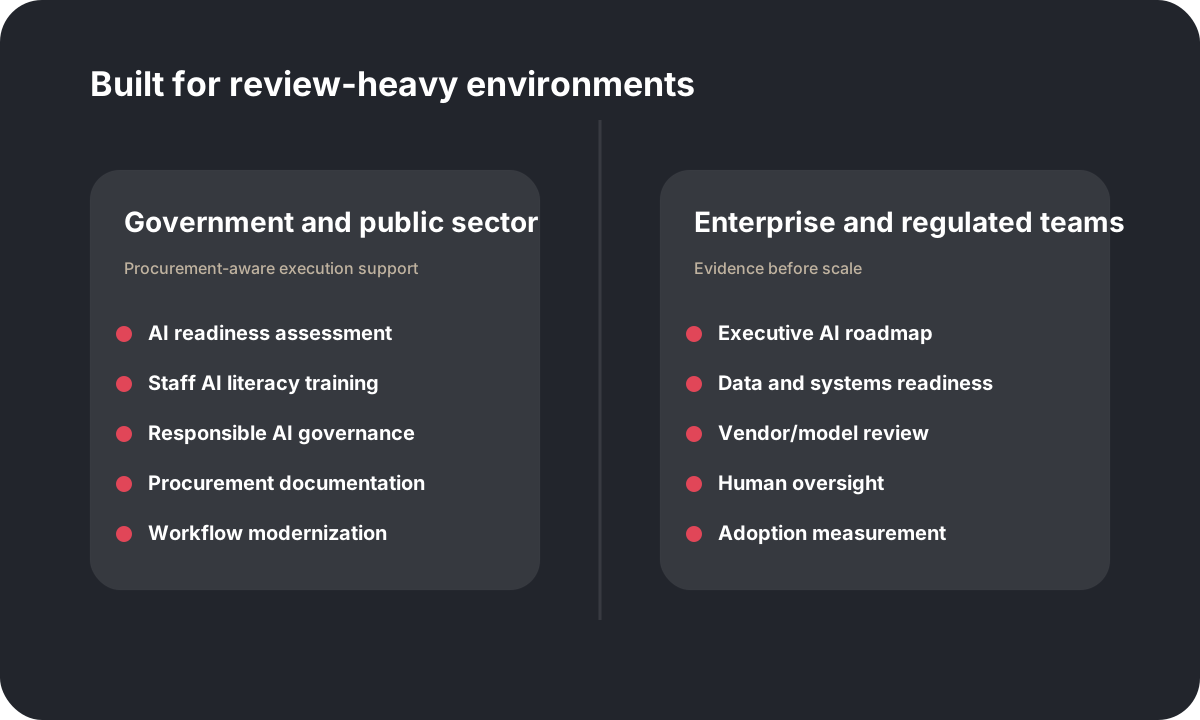
For teams that need procurement-aware documentation, staff enablement, governance, and responsible public-service design.
For organizations that need clear ownership, security review readiness, vendor/model review, and durable workflow adoption.
Illustrative Journey
This sample planning path is illustrative only. It shows how a leadership team might approach a document-heavy operational workflow without presenting it as a completed client case study.
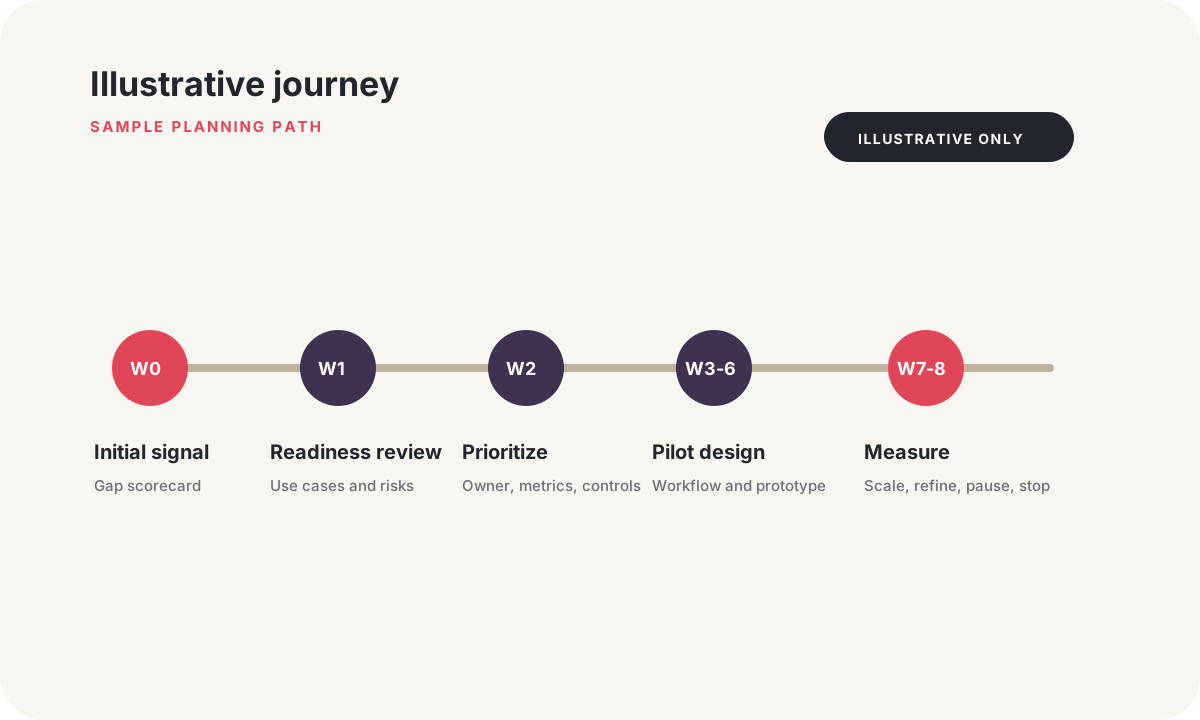
Complete gap scorecard, identify top blockers, and align on the business problem.
Inventory use cases, assess data and workflow readiness, and identify governance considerations.
Rank opportunities, choose the first pilot, and define owner, workflow, metrics, and controls.
Create workflow map, build prototype or automation, train users, and monitor feedback.
Review adoption, risk, quality, and value to recommend scale, refine, pause, or stop.
Proof Points
Technology selection comes after use-case quality, readiness, risk, workflow, and adoption are understood.
Outputs help leaders decide what to fund, fix, pause, stop, or scale.
Risk controls are not separate from implementation. They are part of pilot design.
The method focuses on real processes, handoffs, users, and operating behaviors.
Scorecards, matrices, maps, charters, checklists, and decision records make progress visible.
Success is based on whether AI changes work responsibly and measurably, not whether a demo looks impressive.
Related Pages
FAQ
No. The method is useful whether your team is exploring AI, running scattered pilots, trying to govern tool use, or preparing to scale a specific workflow.
The method connects strategy to execution conditions: ownership, use-case quality, data readiness, governance, workflow fit, adoption, measurement, and scale decisions.
No. Many teams start with a readiness assessment, scorecard, workshop, or use-case prioritization process to identify the strongest starting point.
Governance is built into the method from the beginning. Use cases are reviewed for privacy, security, vendor/model risk, human oversight, output handling, and workflow accountability before pilots scale.
Depending on the engagement, deliverables may include gap scores, use-case matrices, readiness reviews, workflow maps, governance checklists, pilot charters, training materials, ROI models, adoption plans, and scale recommendations.
Yes. The method is especially useful for public-sector teams that need AI readiness, staff training, governance, procurement-aware documentation, and responsible implementation paths.
Start with the AI Execution Gap Scorecard, a private briefing, or an AI readiness/strategy conversation.
Start The Method
Start with a fast signal, a focused assessment, or a practical workshop. InitializeAI can help your team identify the gap, prioritize the right use cases, design governed pilots, and build measurable adoption into real workflows.