Leadership uncertainty
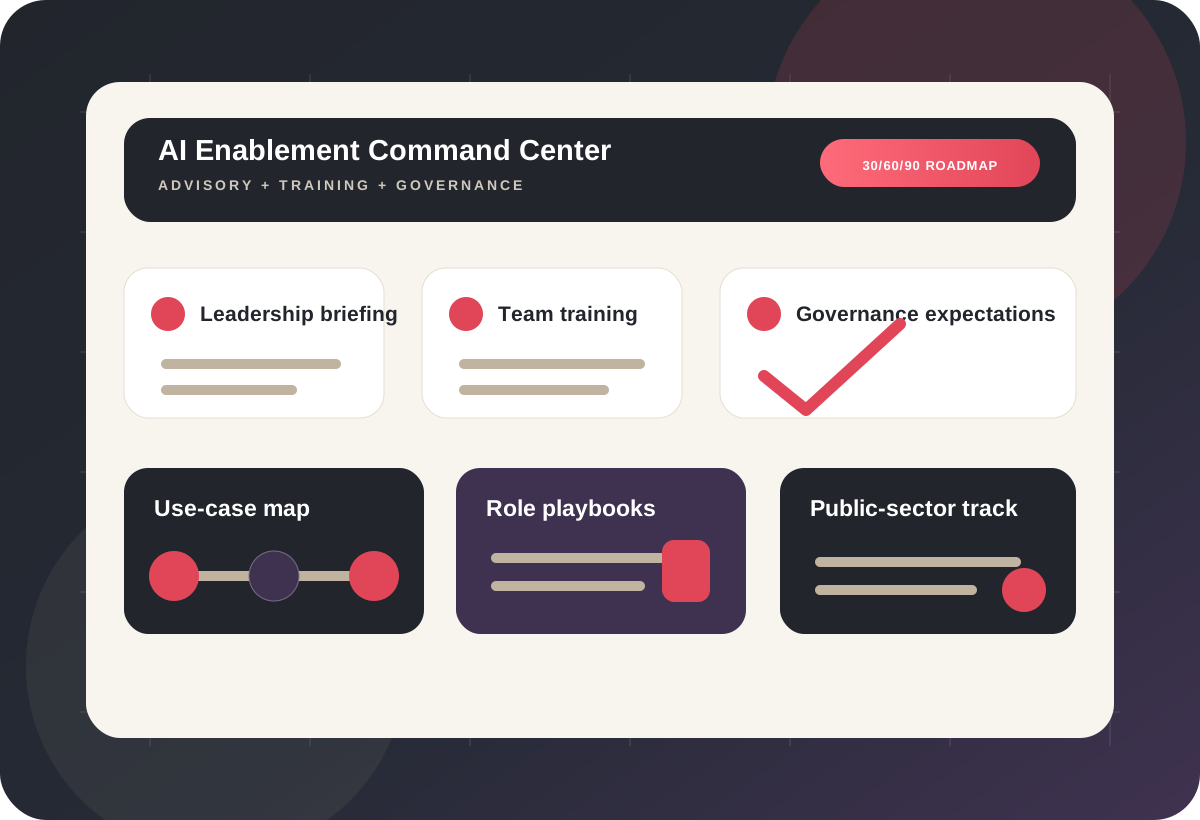
Executives know AI matters, but may not share the same view of where it creates value, where risk appears, or what should be funded first.
AI Advisory & Team Training
InitializeAI helps executives, public-sector leaders, program owners, and cross-functional teams understand practical AI opportunities, govern risk, prioritize use cases, and build the role-specific capability needed for responsible adoption.

Why This Matters
Many organizations already have AI tools, experiments, or pressure to move faster. The harder problem is alignment: leaders need a shared view of opportunity and risk, teams need practical training, governance needs to be understandable, and staff need to know how AI fits into real workflows.
Executives know AI matters, but may not share the same view of where it creates value, where risk appears, or what should be funded first.
Some teams are experimenting aggressively while others are confused, skeptical, or unsure what responsible use looks like.
Policies and risk concerns often exist separately from the day-to-day workflows where AI is actually used.
Teams generate many AI ideas, but lack a practical way to prioritize by value, feasibility, risk, and readiness.
Even good pilots struggle when users are not trained, workflows are not redesigned, and feedback loops are missing.
Awareness alone is not enough. Teams need artifacts, owners, pilot candidates, and a clear path from learning to execution.
Who This Is For
Understand AI opportunities, risks, governance, investment tradeoffs, and where leadership attention should focus.
Prepare staff and program leaders for responsible AI use, public-sector governance, procurement questions, and practical service-delivery workflows.
Support AI literacy, policy conversations, staff enablement, responsible classroom and workforce use, and district-level AI readiness.
Identify workflow automation opportunities, reduce manual friction, and train staff on safe, practical AI usage.
Move from AI feature ideas to responsible product capability, implementation planning, and adoption support.
Build shared language around acceptable use, human oversight, data boundaries, vendor/model review, and risk controls.
Advisory And Training Tracks
InitializeAI can support leadership briefings, role-based training, public-sector enablement, governance workshops, and practical playbook development without turning AI education into generic tool training.

Strategic advisory for leaders who need clarity on where AI creates value, how to prioritize opportunities, and how to govern adoption.

Interactive workshops that turn scattered AI ideas into prioritized use cases, pilot candidates, and next-step roadmaps.

Practical AI education for technical and non-technical teams so staff can understand capabilities, limitations, risk, and responsible use.

Training and advisory support for acceptable use, privacy, security awareness, human oversight, vendor/model review, and governance workflows.

High-level briefings that help boards and senior leaders understand AI strategy, risk, oversight, investment, and execution readiness.

Sessions that bring business, operations, technology, legal, product, and data stakeholders together to evaluate adoption blockers.

Role-specific and department-specific playbooks that translate AI strategy into practical guidance for teams.

Practical training on AI risk, bias, privacy, human oversight, output review, vendor/model concerns, and escalation paths.
Short, high-intensity sessions designed to help executives quickly understand what matters, what does not, and what to do next.
Public-Sector Training
Agencies, municipalities, school districts, workforce boards, and public-sector partners need AI training that is practical, governed, and tied to real service-delivery workflows.
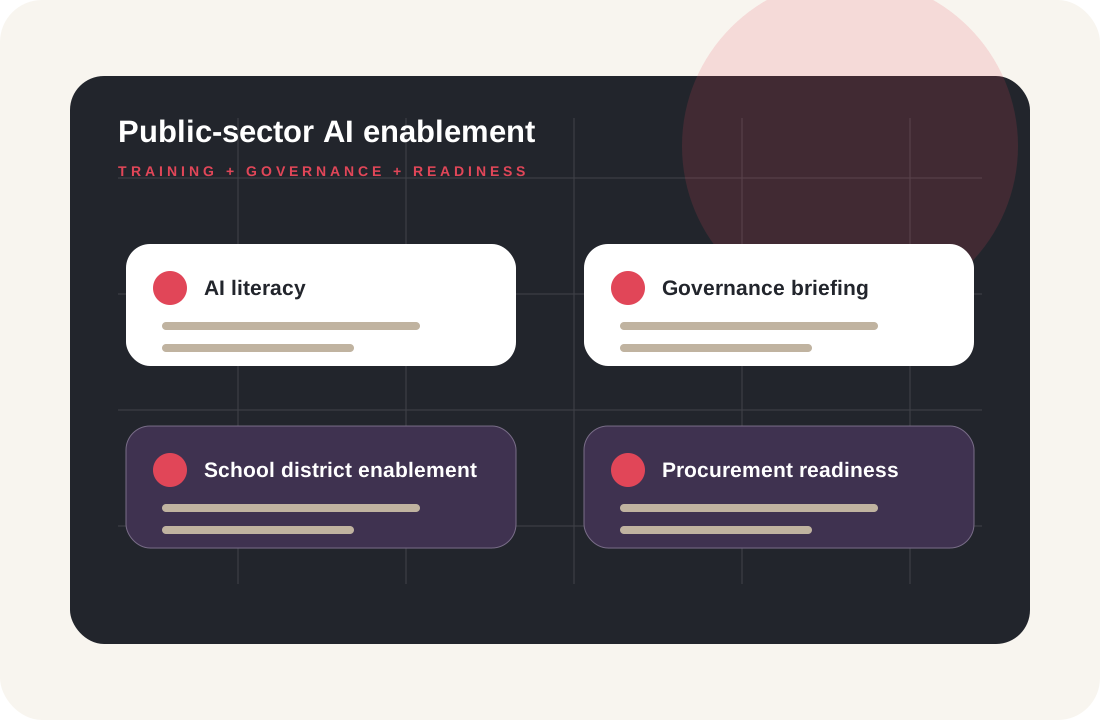
Help staff understand what AI can and cannot do, safe usage expectations, human oversight, privacy, and practical workflow applications.
Support elected leaders, agency heads, executives, and program owners with clear language around AI opportunity, risk, governance, and adoption.
Support AI policy conversations, staff training, responsible-use guidance, and practical education or workforce readiness.
Help teams prepare for AI pilots, vendor discussions, requirements, governance questions, and implementation planning.
Enablement Model
Training works best when it connects education to decisions, governance, workflows, and adoption.
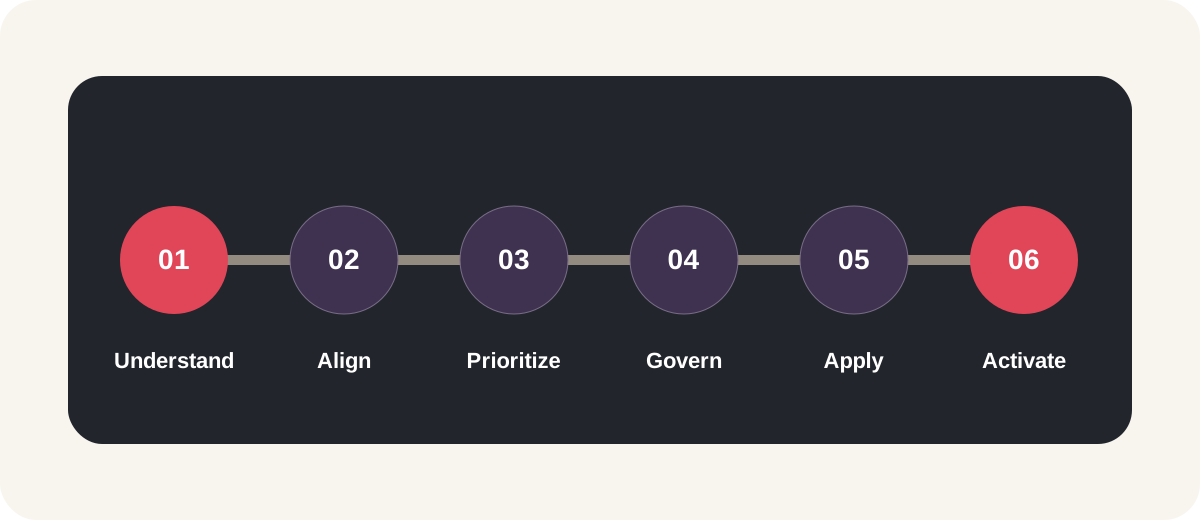
Build shared AI literacy across leadership and teams.
Clarify goals, risks, roles, decision rights, and priority outcomes.
Identify which use cases are worth exploring, funding, or avoiding.
Define responsible-use expectations, human oversight, data boundaries, and review paths.
Use practical exercises, workflow examples, and team-specific playbooks.
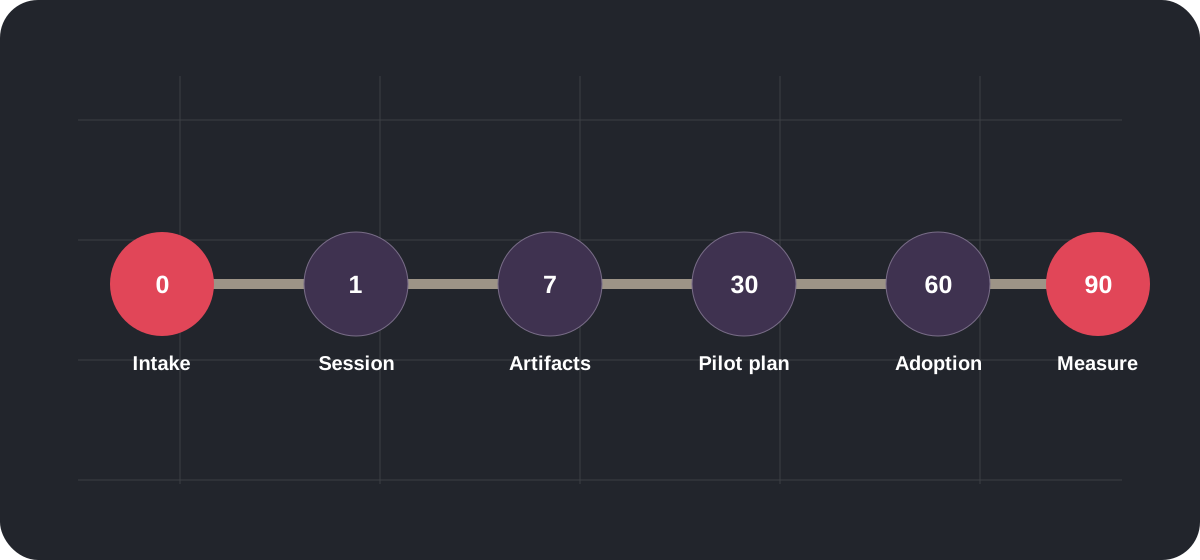
Leave with next steps, pilot candidates, training artifacts, and a 30/60/90-day adoption roadmap.
Training Artifacts
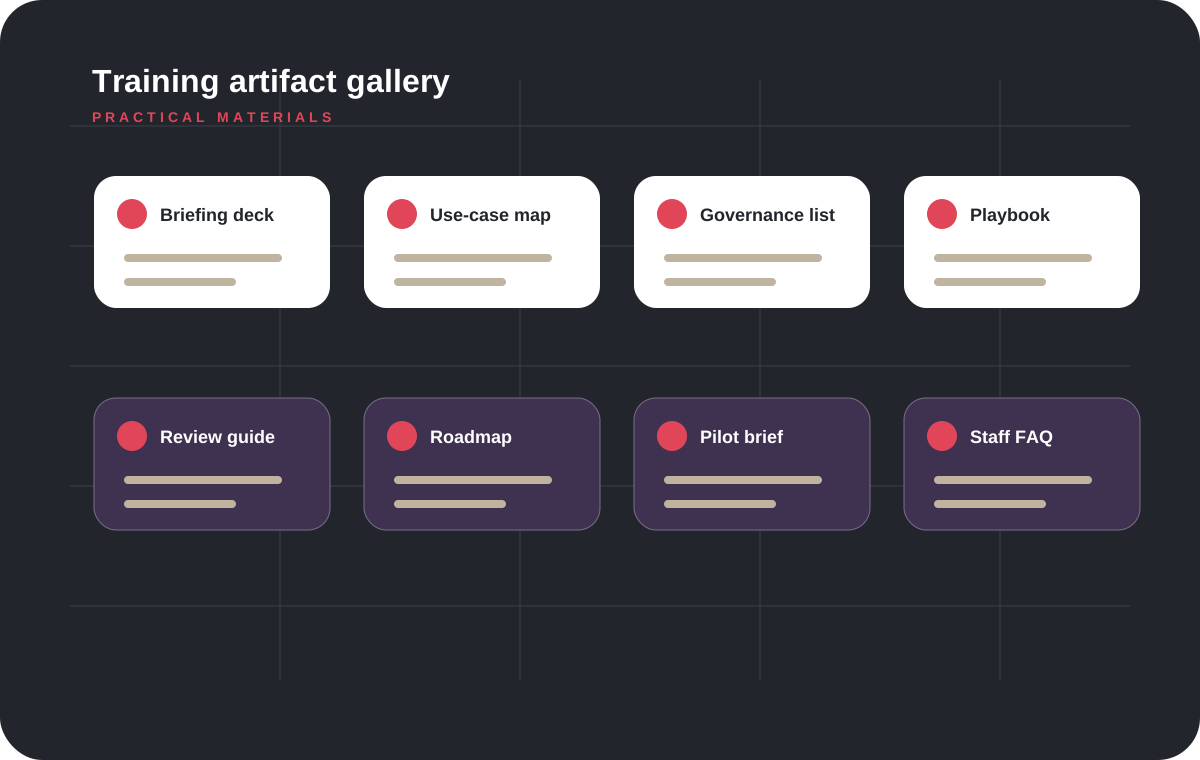
Advisory and training engagements should leave teams with practical materials, not just slides.
What it is: Leadership-ready framing for opportunity, risk, and execution choices.
Who uses it: Executives, boards, and agency leaders.
What it is: A structured view of where AI could support workflows and outcomes.
When used: Early prioritization and roadmap planning.
What it is: A value, feasibility, risk, and readiness model.
Who uses it: Leaders, product teams, operations owners, and program teams.
What it is: Plain-language guidance for responsible AI use.
When used: Staff enablement and onboarding.
What it is: Practical usage guidance, examples, boundaries, and escalation rules.
Who uses it: Managers, staff, governance teams, and implementation owners.
What it is: A review aid for privacy, security awareness, human oversight, and vendor/model questions.
When used: Before pilots expand.
What it is: Role-specific AI guidance tied to a business unit or public-sector function.
Who uses it: Department leaders and frontline teams.
What it is: Practical examples for drafting prompts and reviewing AI outputs.
When used: During staff training and workflow adoption.
What it is: Review questions for third-party AI tools, model paths, and data handling assumptions.
Who uses it: Procurement, IT, legal, and implementation teams.
What it is: A clear model for review, escalation, authority, and accountability.
When used: Pilot design and governance review.
What it is: A practical next-step plan after advisory or training work.
Who uses it: Sponsors, program owners, and cross-functional delivery teams.
What it is: A concise case for a practical AI pilot with owner, workflow, and metrics.
When used: Funding, scoping, and implementation planning.
What it is: A practical companion to AI policies and acceptable-use guidance.
Who uses it: Managers, staff, and training participants.
What it is: A plan for capturing user feedback, training gaps, and improvement signals.
When used: After training or pilot launch.
Role-Based Training
We tailor content to the decisions, workflows, and risks each audience faces.
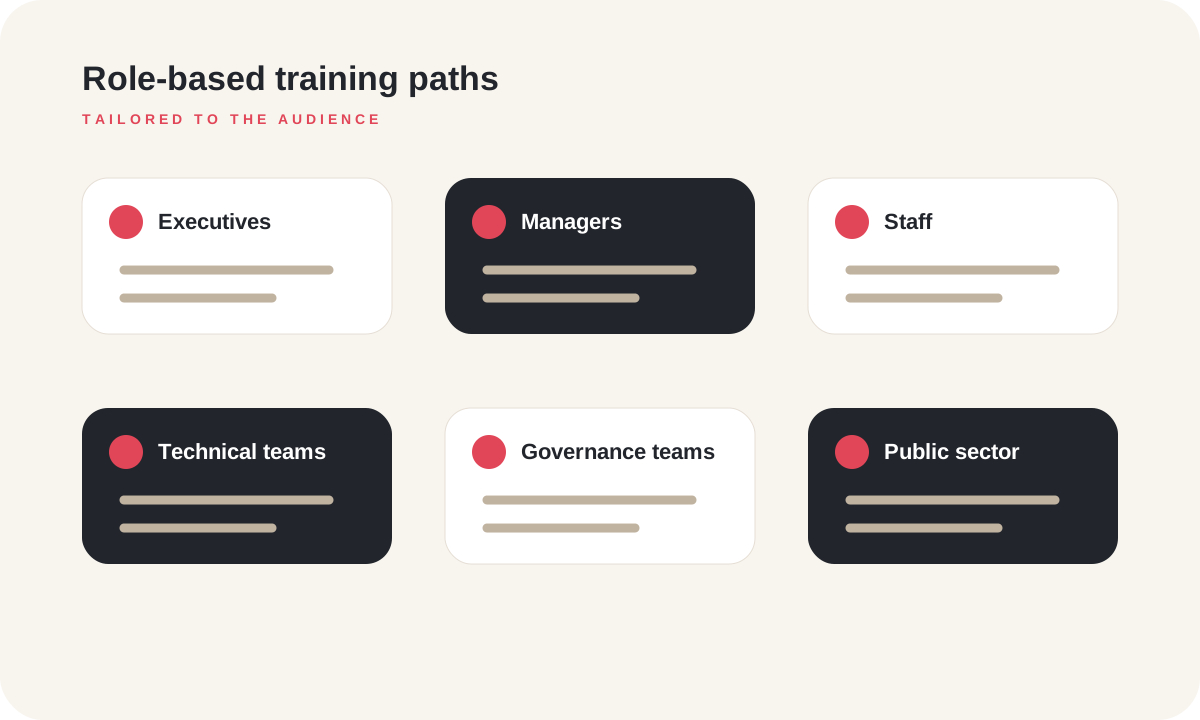
Focus: Strategy, investment, governance oversight, risk, and organizational readiness.
Focus: Use-case identification, workflow improvement, team enablement, and pilot ownership.
Focus: Practical AI literacy, safe usage, output review, data boundaries, and workflow-specific examples.
Focus: Implementation readiness, data, integrations, product requirements, governance, and model/vendor questions.
Focus: Governance model, acceptable use, vendor/model review, privacy, security awareness, human oversight, and documentation.
Focus: Public trust, staff literacy, accessibility, responsible use, policy questions, and procurement-aware AI adoption.
Engagement Formats
Engagement format is scoped around the audience, risk, timeline, training need, and desired output.
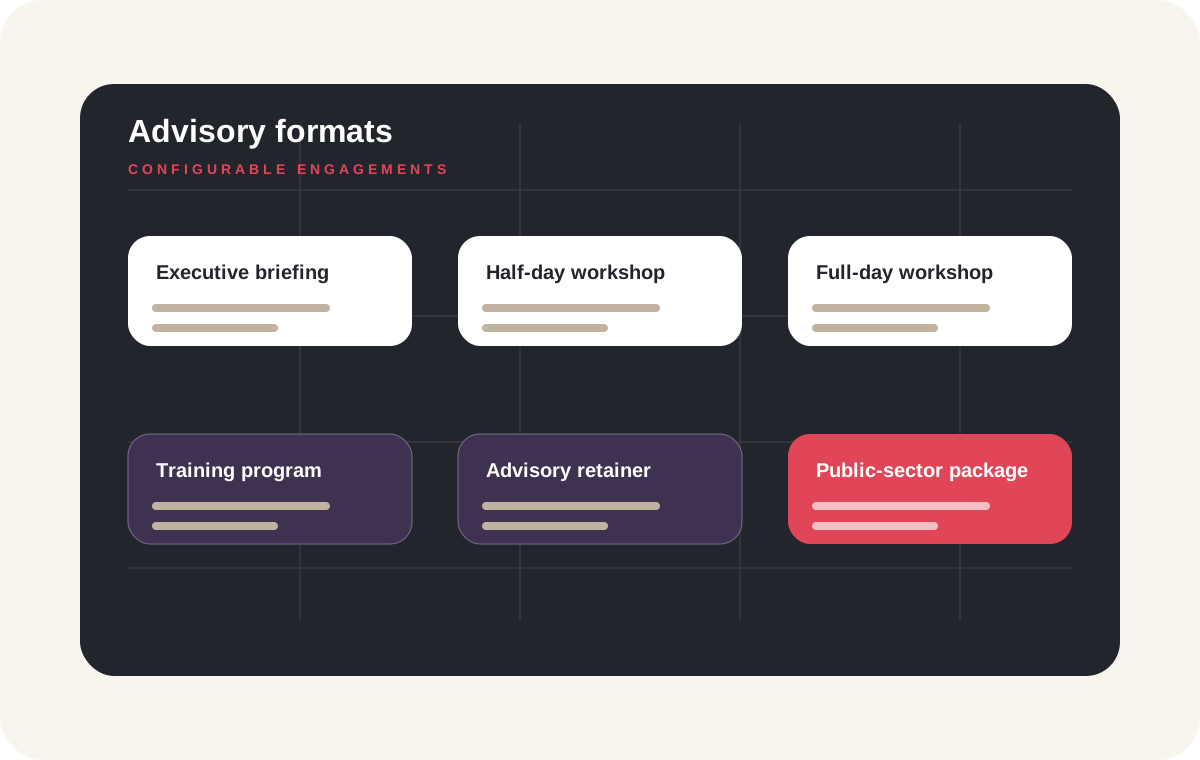
Typical format: 60-90 minutes or custom.
Best for: Fast leadership alignment.
Output: Shared language, opportunity/risk framing, and next-step recommendation.
Typical format: Half day.
Best for: Use-case alignment, readiness discussion, and practical prioritization.
Output: Opportunity map, prioritized use cases, and next-step roadmap.
Typical format: Full day.
Best for: Cross-functional planning, governance review, and pilot scoping.
Output: Workshop artifacts, pilot candidates, governance questions, and 30/60/90-day plan.
Typical format: Series-based.
Best for: AI literacy rollout, staff enablement, governance training, or role-based adoption.
Output: Training materials, playbooks, exercises, and adoption support.
Typical format: Monthly or project-based.
Best for: Ongoing executive support, governance review, pilot selection, and implementation decisions.
Output: Recurring advisory, decision support, roadmap updates, and stakeholder alignment.
Typical format: Scoped by agency, district, or program.
Best for: Government, school district, workforce, or public-service AI readiness.
Output: Training sessions, governance guidance, use-case map, and adoption roadmap.
Governance-First Training
AI training should not only teach people how to use tools. It should teach when not to use them, how to review outputs, where risk appears, and how to escalate concerns.
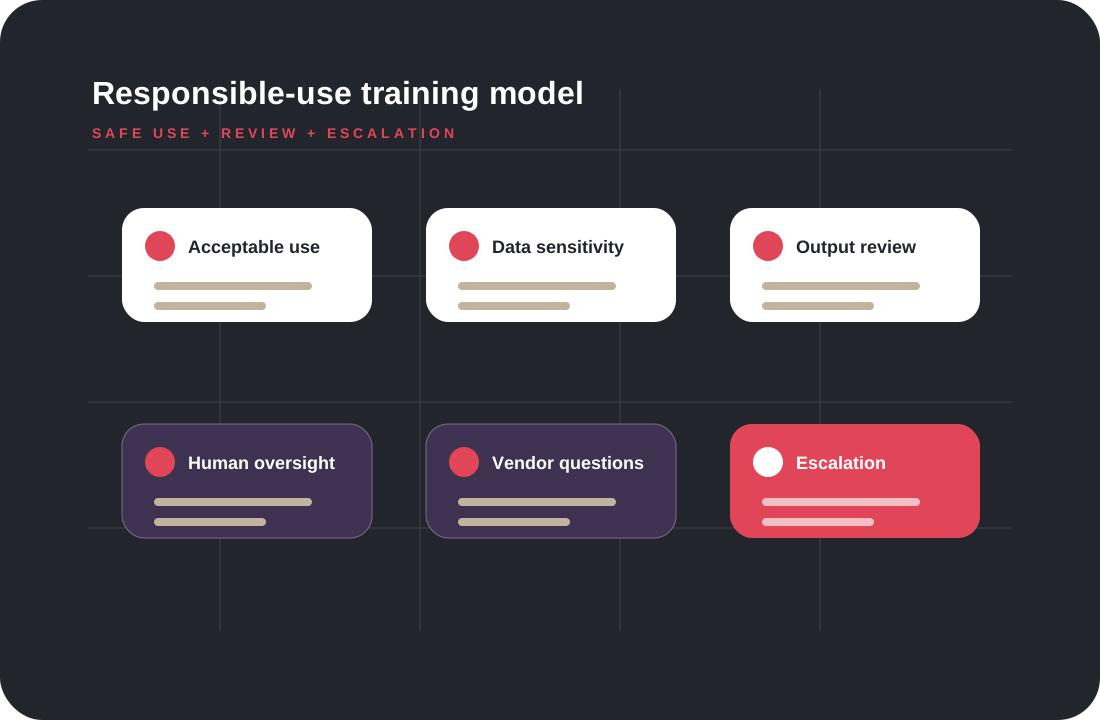
Clarify what use is appropriate, conditional, restricted, or out of scope for the audience.
Teach teams to identify sensitive information and understand when data should stay out of prompts, tools, or workflows.
Build habits for reviewing AI outputs, checking assumptions, and escalating uncertainty.
Define review roles, decision authority, and escalation paths for higher-risk use cases.
Help teams ask better questions about model path, data handling, integrations, and operational risk.
Connect training to decision records, workflow notes, pilot evidence, and governance artifacts.
Training To Action
Training should create momentum. InitializeAI connects advisory and enablement work to a practical next-step plan so leaders know what to fund, what to govern, what to pilot, and what to stop.
Designed Outcomes
Advisory and training should create practical capability, not just awareness.
Leaders leave with clearer language for AI opportunity, risk, investment, and oversight.
Teams understand where AI may support real workflows and where it may not fit.
Ideas are sorted by value, feasibility, risk, data readiness, and adoption potential.
Participants understand data boundaries, output review, escalation, and human oversight.
Guidance is tied to the decisions and workflows each audience actually handles.
Training can surface practical next-step pilots with owners, metrics, and risk questions.
Teams leave with clearer questions for policy, security review, vendor/model review, and approvals.
Examples connect AI concepts to daily work, not abstract technology demos.
People understand how to experiment responsibly and when to pause or escalate.
Leaders have a practical adoption path after the session ends.
Related Services
FAQ
InitializeAI designs advisory and training sessions for executives, boards, program leaders, managers, staff, product teams, technical teams, public-sector teams, school districts, and governance stakeholders.
Some sessions can include technical concepts, but the core focus is practical adoption: use cases, workflows, governance, risk, human oversight, and how teams should use AI responsibly.
Yes. InitializeAI can support public-sector AI literacy, leadership briefings, governance workshops, staff enablement, school district AI readiness, and procurement-aware AI planning.
Depending on the scope, deliverables may include an opportunity map, use-case prioritization matrix, AI readiness findings, governance questions, role-specific playbooks, pilot candidates, and a 30/60/90-day roadmap.
Yes. Training can be tailored for executives, managers, staff, technical teams, governance teams, education teams, public-sector teams, and business units.
Responsible AI is built into the training through data boundaries, output review, acceptable use, human oversight, vendor/model questions, risk awareness, and escalation paths.
Yes. Advisory and training can lead into an AI Execution Gap Assessment, AI Strategy Workshop, governance sprint, pilot design, workflow automation project, or custom AI implementation.
Start The Conversation
Use this path for executive advisory, AI literacy training, governance workshops, public-sector AI training, school district enablement, custom playbooks, or cross-functional AI readiness sessions.