AI ideas without prioritization
Teams see opportunities across assets, field operations, maintenance, reporting, customer service, planning, and reliability, but need a practical way to rank what is valuable and feasible.
AI for Energy & Utilities
InitializeAI helps utility operations, engineering, maintenance, field-service, data, and transformation leaders evaluate and implement AI-supported inspection, maintenance, planning, asset-information, and field workflows. The focus is measurable operating value with reliable data, human review, governance controls, and bounded pilots—not generic AI strategy or autonomous infrastructure.
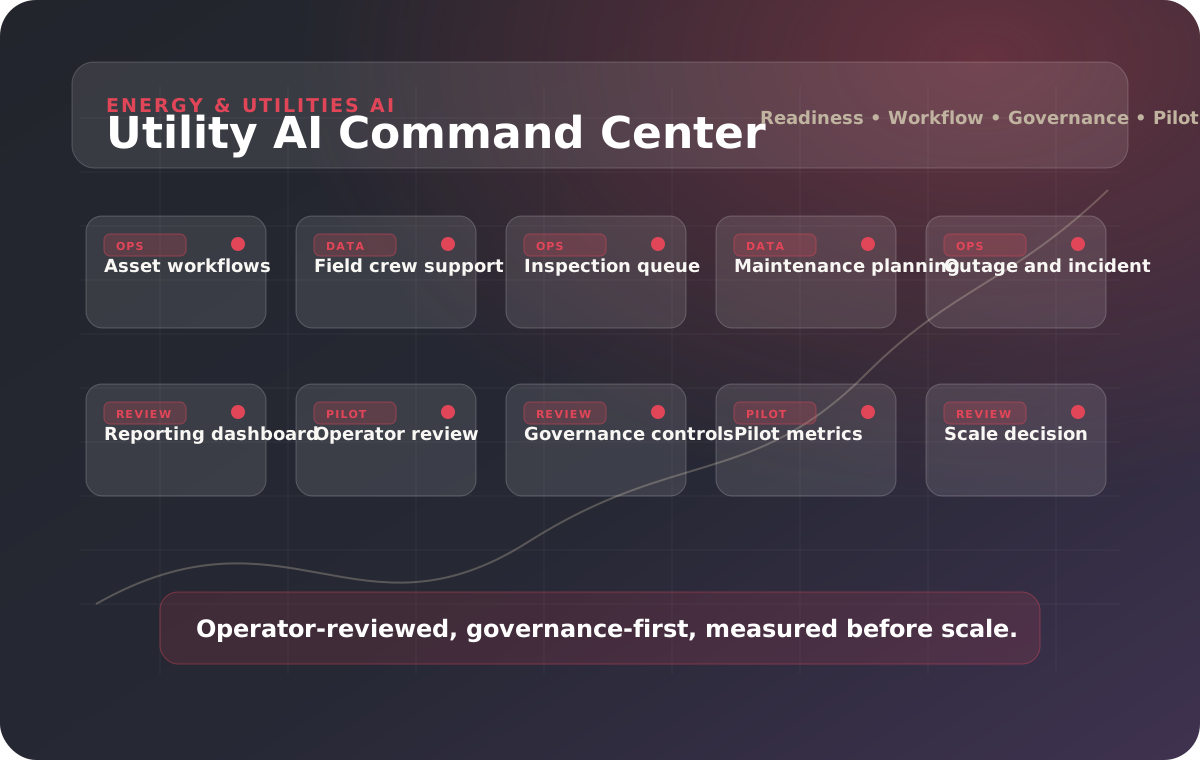
Energy and utilities AI Execution Gap
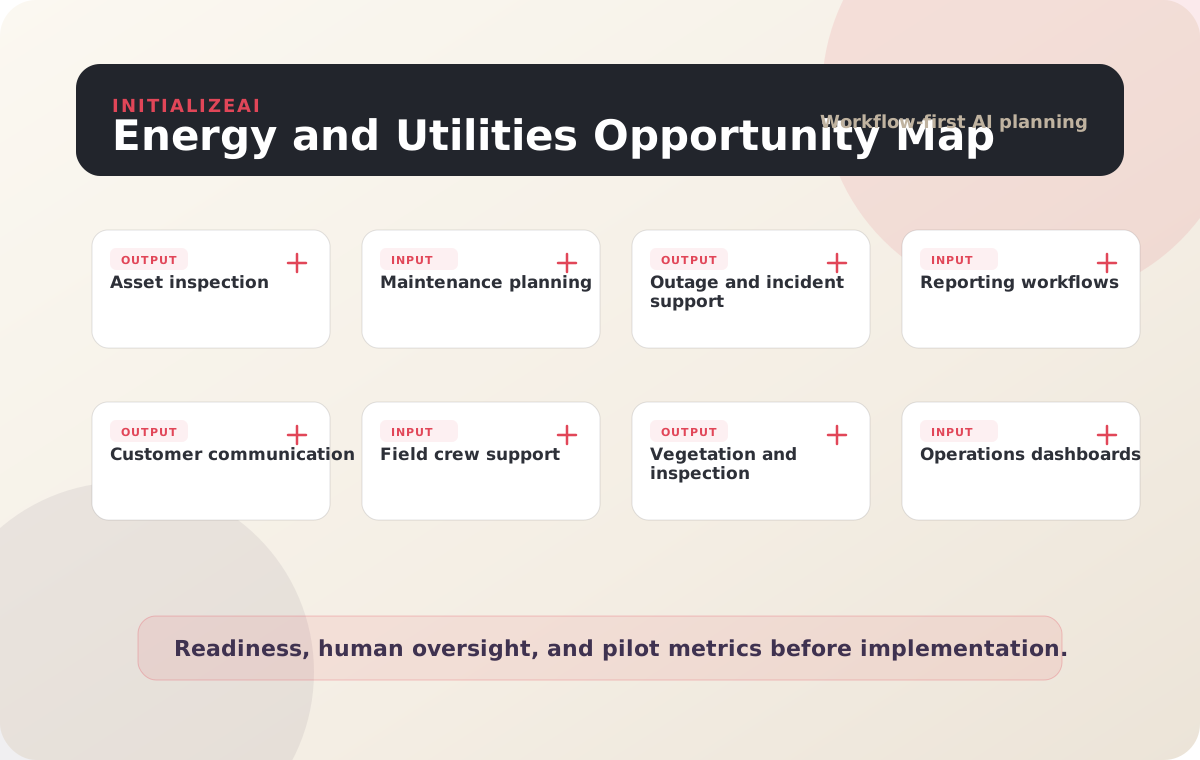
Energy and utility teams have many promising AI opportunities: asset workflows, field documentation, maintenance planning, outage and incident support, reporting, customer communication, work-order triage, vegetation and inspection workflows, and operations dashboards. AI creates value only when the use case is clear, the data is reliable, the workflow is mapped, operators can review outputs, and pilots are measured.
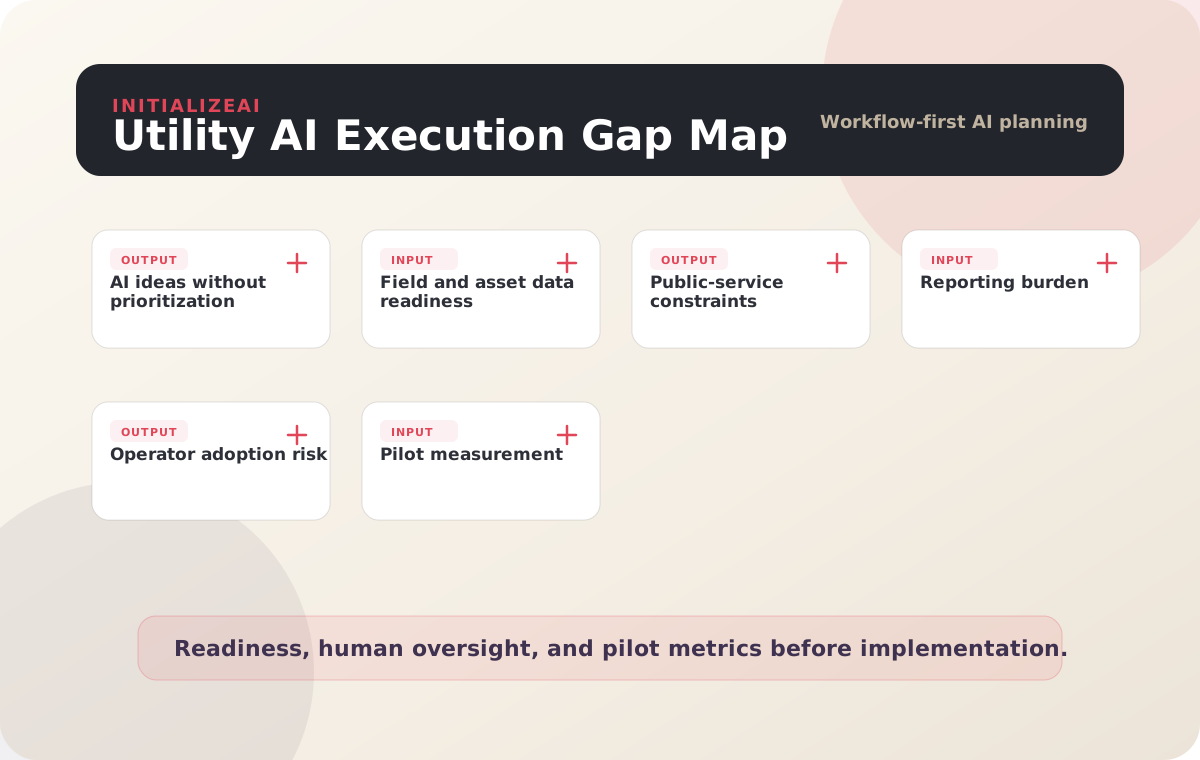
Teams see opportunities across assets, field operations, maintenance, reporting, customer service, planning, and reliability, but need a practical way to rank what is valuable and feasible.
Utility data can live across EAM, CMMS, GIS, OMS, AMI, SCADA/OT systems, inspection records, work orders, spreadsheets, documents, and field notes.
Utility workflows may affect reliability, safety, customers, communities, critical infrastructure, and public trust.
Regulatory, safety, environmental, outage, inspection, asset, and program reporting can create repetitive manual documentation work.
AI tools fail when they add screens, alerts, or recommendations that operators, field crews, supervisors, or compliance teams do not trust or cannot use.
Utility AI pilots should define cycle time, review quality, exception rate, field adoption, risk controls, and scale/refine/stop criteria before launch.
Utility workflow value map
Start with a bounded operating trigger, the data available at that moment, and the person accountable for the decision. Then use AI workflow automation to support the work and AI governance to define review, access, escalation, and evidence requirements.
Inspection workflows
Maintenance workflows
Planning and engineering workflows
Field-service and operations workflows
Operating boundary: These patterns support analysis, documentation, routing, and human review. They do not control grid or plant equipment; make switching, valve, pressure, or voltage decisions; or replace authorized operators in any safety-critical workflow.
Use-case matrix
Start with the workflow, then decide whether the right next step is readiness, governance, pilot design, automation, or custom implementation.
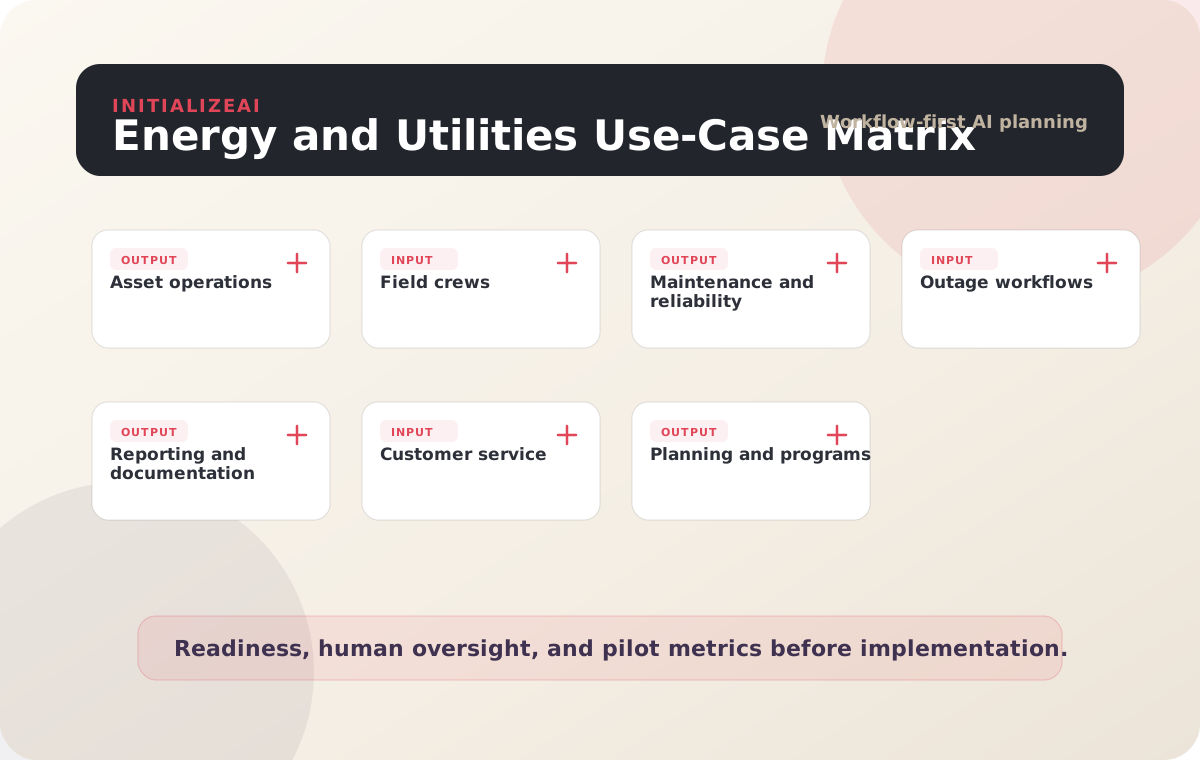
| Function | Use cases | Good first step |
|---|---|---|
| Asset and infrastructure operations | Asset condition summaries, inspection documentation, defect or issue classification, asset history lookup, capital planning support, maintenance risk dashboards. | Asset Workflow Pilot Scoping |
| Field operations and crews | Work-order triage, field documentation, crew SOP assistant, safety checklist support, proof-of-work packets, field exception routing. | Field Workflow Assessment |
| Maintenance and reliability | Maintenance planning support, preventive maintenance reminders, work-order prioritization, parts and asset history support, predictive maintenance readiness, reliability reporting support. | Data Readiness + Maintenance Pilot Scoping |
| Outage, incident, and restoration workflows | Incident summaries, outage communication support, restoration workflow notes, customer-impact updates, internal escalation routing, post-incident documentation. | Governed Workflow Pilot |
| Reporting, compliance, and documentation | Regulatory reporting support, environmental/safety documentation, inspection report assembly, program reporting, audit evidence organization, policy and procedure assistant. | Document Intelligence Scoping |
| Customer and public service operations | Call center support, service request triage, customer communication drafts, FAQ and knowledge assistant, outreach personalization with review, public update workflows. | Workflow Automation Workshop |
| Planning, sustainability, and program operations | Demand/planning support, energy program reporting, grid modernization documentation, sustainability reporting support, program dashboard, stakeholder briefing assistant. | AI Readiness or Strategy Workshop |
How InitializeAI helps
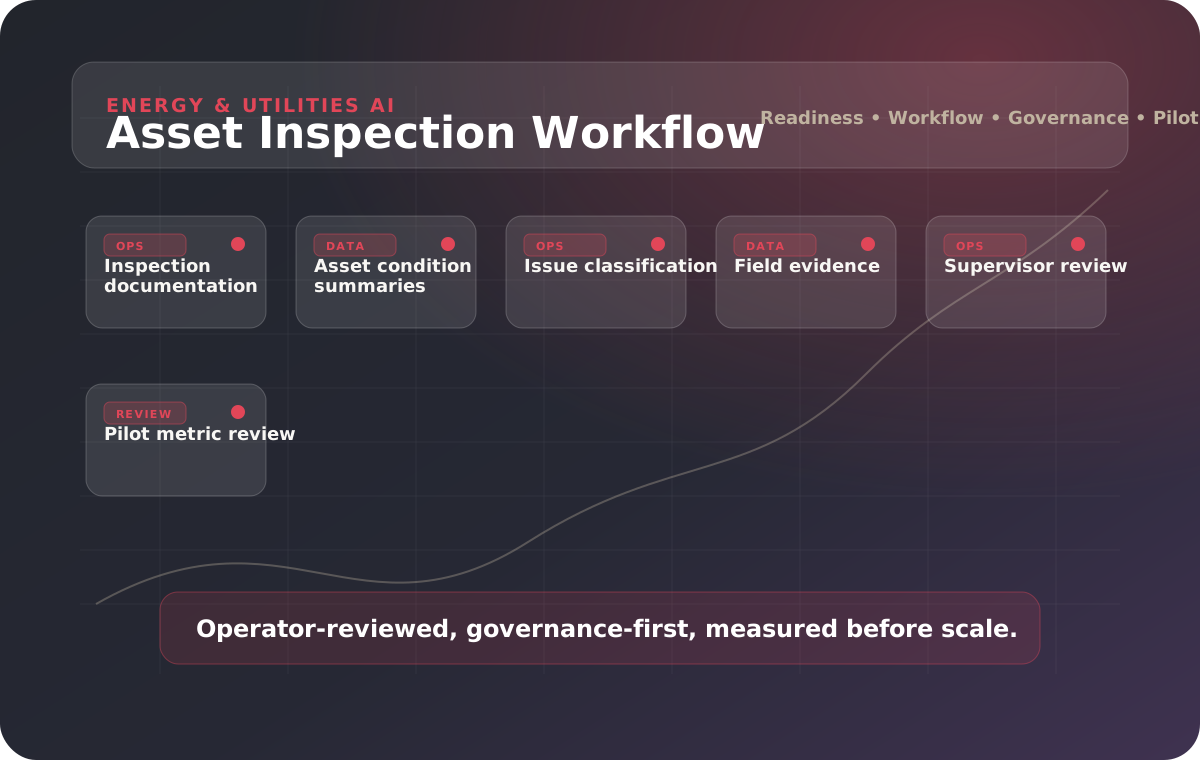
Evaluate AI-enabled asset and inspection workflows with clear evidence requirements, human verification, safety-aware review, and pilot metrics.
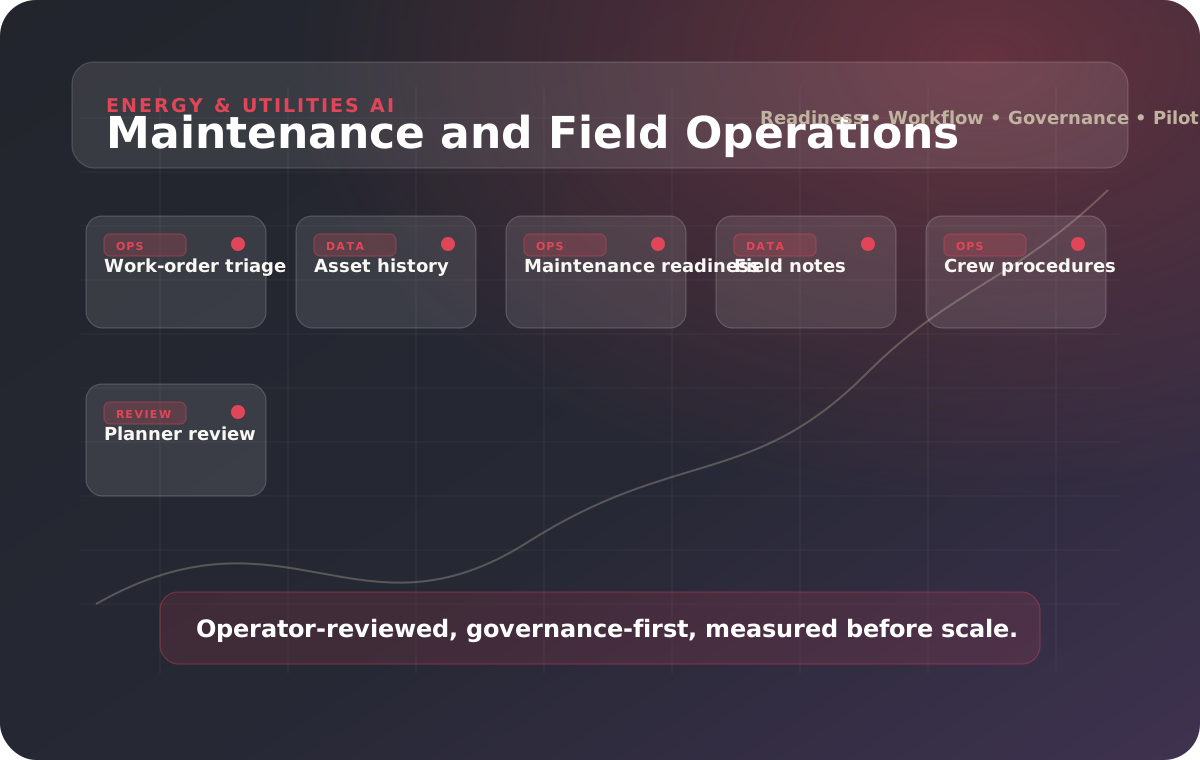
Assess maintenance and field workflows for AI support across work-order triage, asset history, field notes, crew procedures, and maintenance planning.
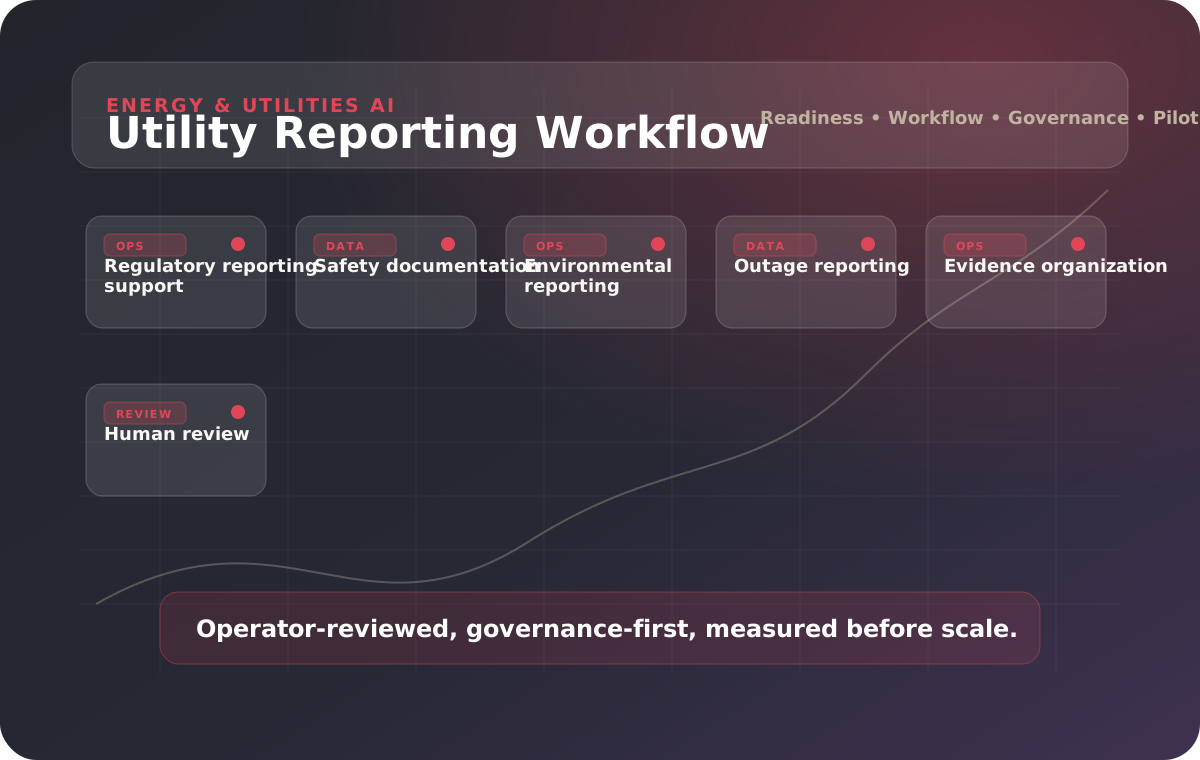
Evaluate AI support for regulatory, safety, environmental, outage, program, and operational reporting workflows.
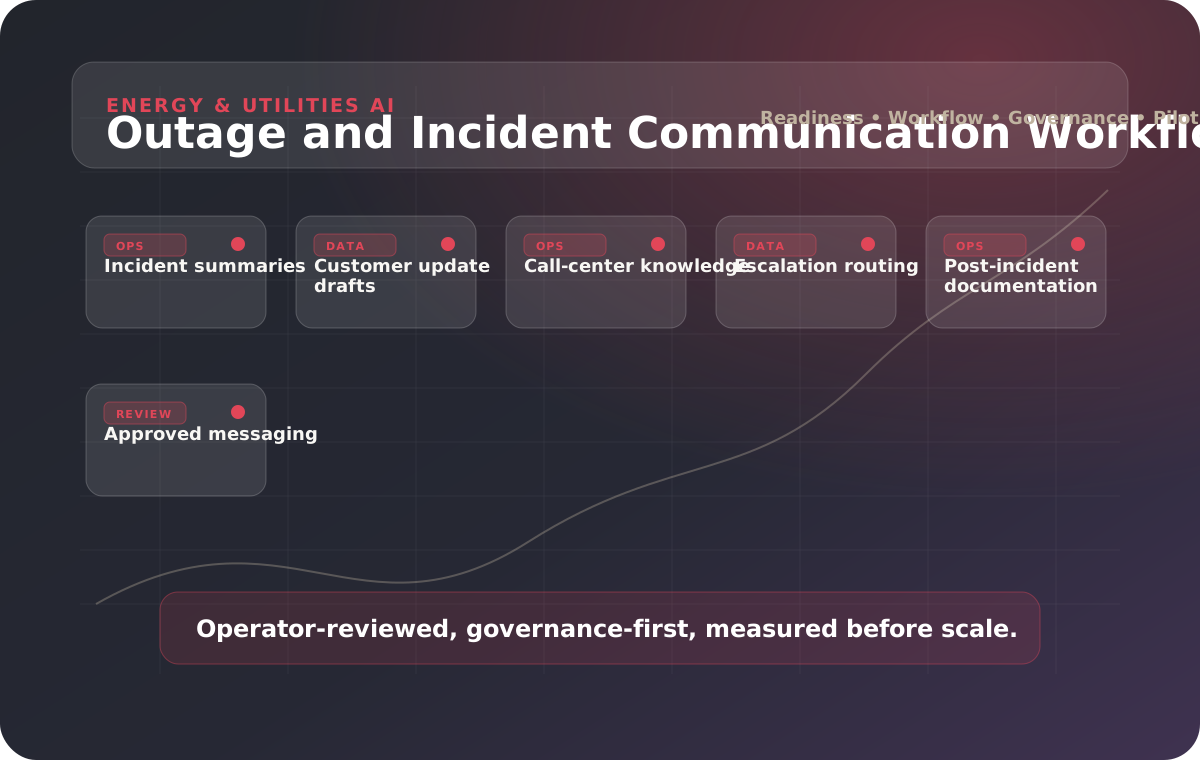
Design communication and workflow support for outage, incident, restoration, customer-impact, and public-update processes with human review and approved messaging.
Public-service context
Energy and utility work often sits at the intersection of operations, safety, public trust, procurement, regulation, infrastructure, and community impact.
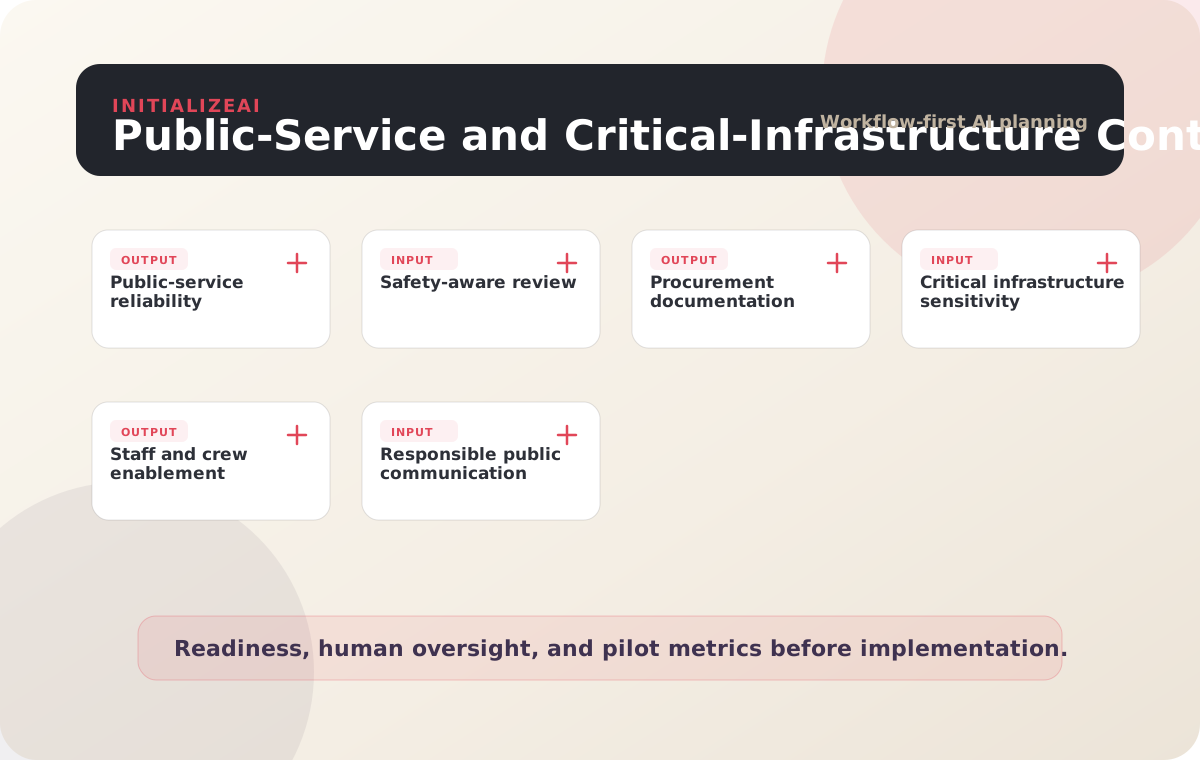
AI use cases should be evaluated against service continuity, reliability, customer impact, and operational authority.
Workflows involving field crews, assets, outages, gas, water, electricity, or infrastructure need careful human review and escalation.
Public utilities and municipal teams often need clear scope, capability materials, governance artifacts, and review-ready pilot plans.
AI work should clarify data boundaries, cyber/security review needs, operational constraints, and affected stakeholders before implementation.
Operators, supervisors, field crews, customer service teams, and program staff need AI literacy and role-specific guidance.
Customer and public communications should remain human-reviewed, accurate, accessible, and aligned with approved messaging.
Data and systems readiness
Utility AI value depends on understanding data quality, access, systems, ownership, timing, security sensitivity, and workflow dependencies before building.
Explore AI Readiness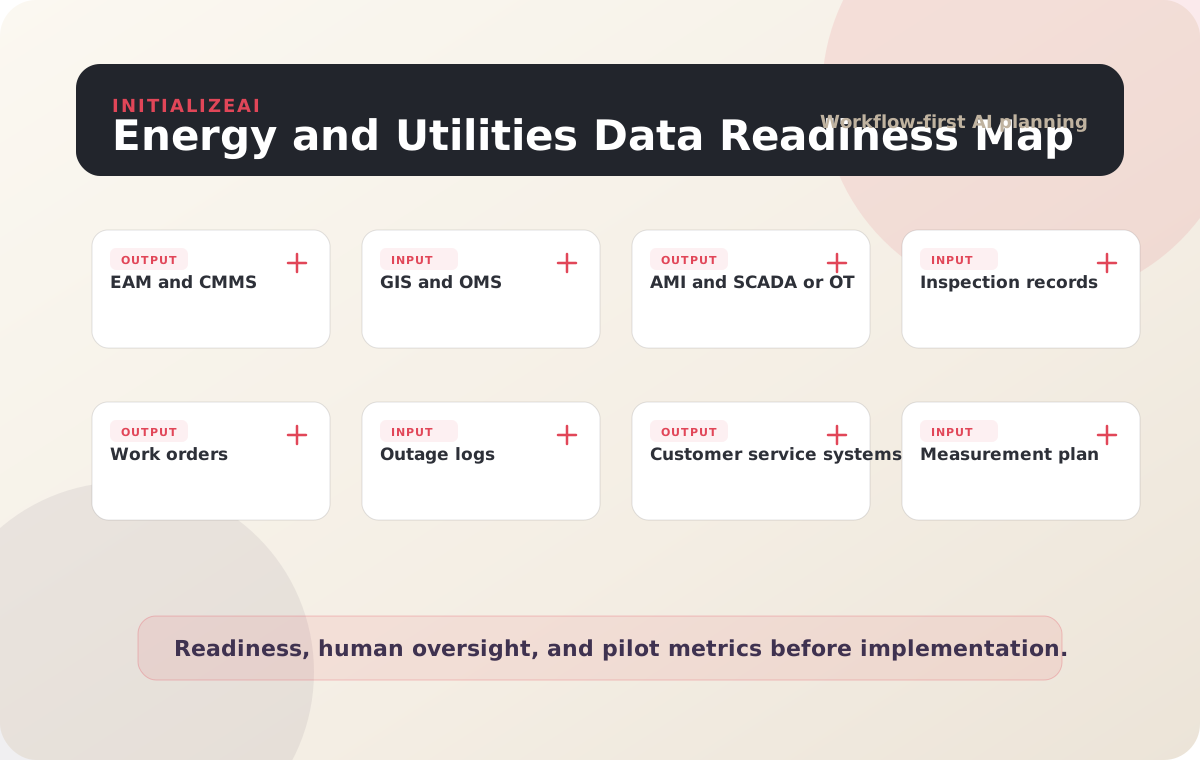
Which data sources are involved: EAM, CMMS, GIS, OMS, AMI, SCADA/OT, inspection records, work orders, customer service systems, outage logs, spreadsheets, documents, or field notes?
Are asset IDs, locations, timestamps, inspection categories, work-order records, customer-impact updates, outage notes, and status data accurate and current enough?
Which systems need to provide inputs or receive outputs, and what integration path is realistic?
Who uses the output: operator, dispatcher, field crew, maintenance planner, compliance reviewer, customer service lead, supervisor, or executive team?
Where should a person review, approve, override, escalate, or validate AI-assisted outputs?
What will be measured: cycle time, documentation quality, review effort, reporting burden, incident response support, crew adoption, or scale readiness?
Workflow automation
Energy and utility teams adopt AI when it reduces friction inside the work they already do: inspection, maintenance, reporting, field documentation, outage updates, customer service, supervisor review, and planning.
Explore Workflow Automation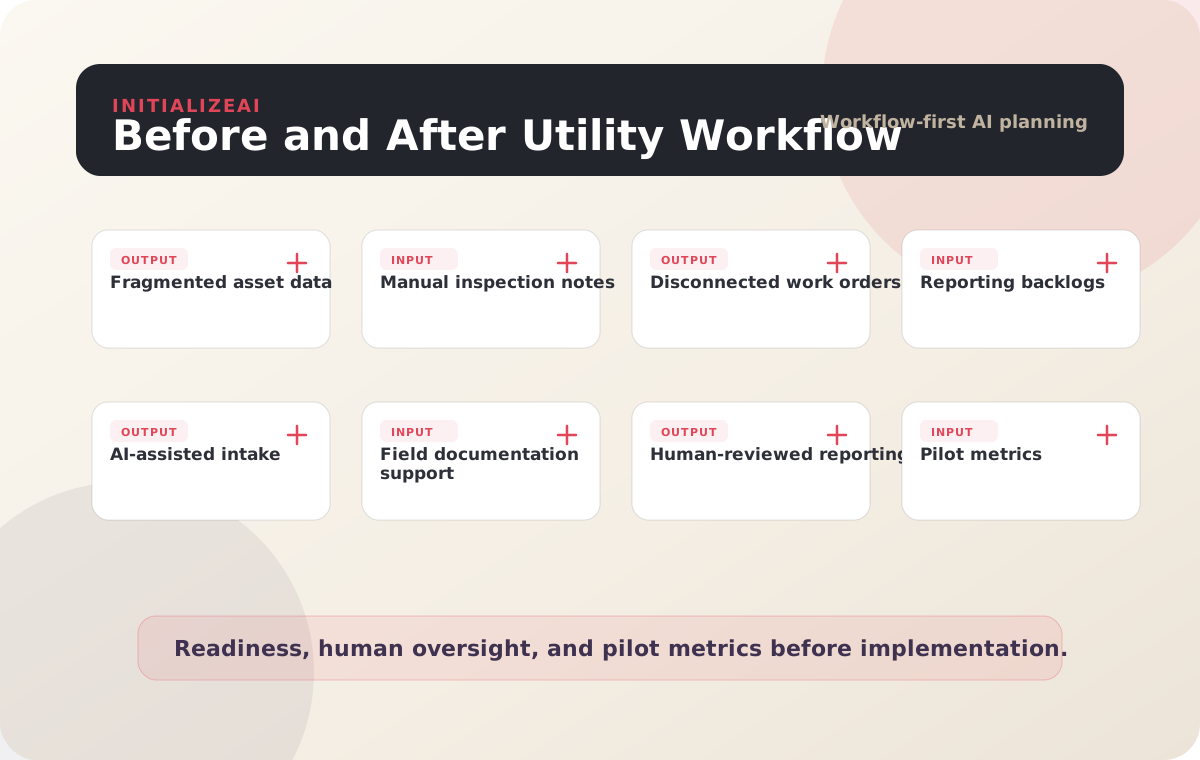
Fragmented asset data, manual inspection notes, disconnected work orders, reporting backlogs, manual outage or incident summaries, SOP lookup delays, unclear escalation, and limited pilot evidence.
AI-assisted intake and triage, field documentation support, asset context retrieval, human-reviewed reporting, incident summary support, supervisor dashboard, governance artifacts, and pilot metrics.
Maintenance and asset readiness
Predictive or proactive maintenance workflows depend on asset context, work-order quality, failure history, inspection records, sensor reliability, crew feedback, and review paths.
Discuss Maintenance Readiness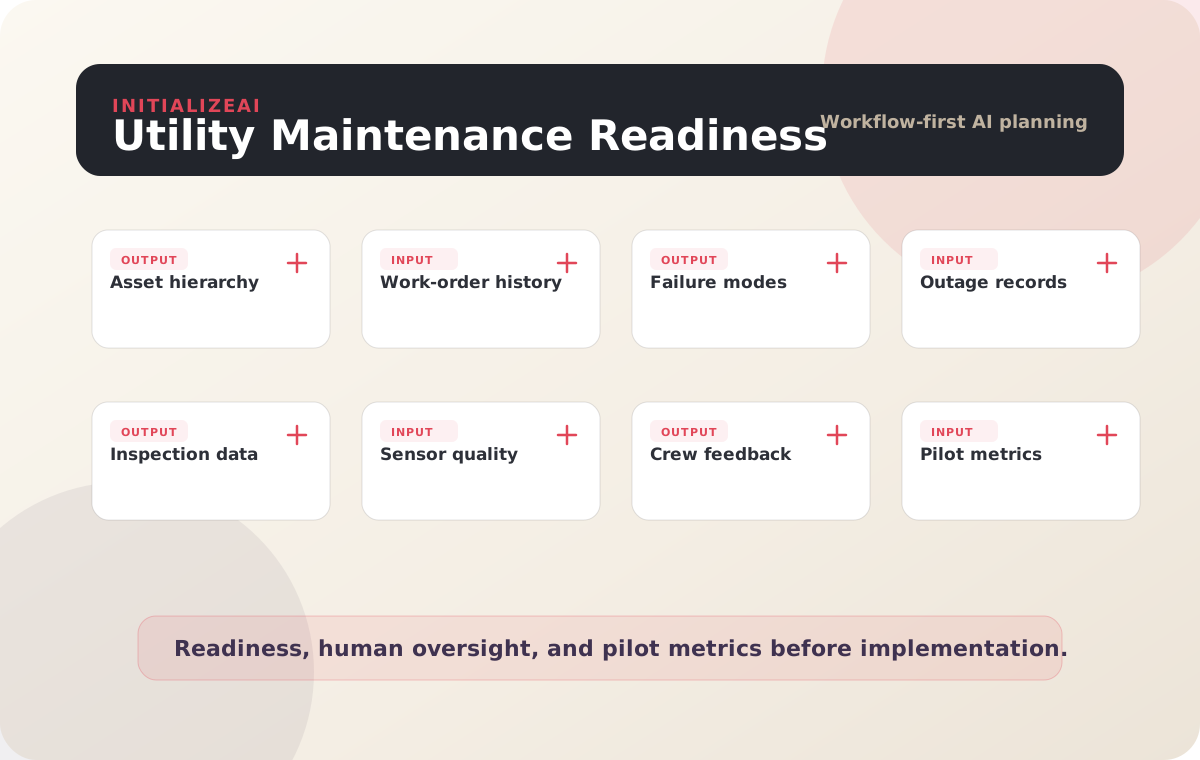
Confirm asset structure, naming, locations, and ownership before connecting AI workflow assumptions.
Review whether work orders, inspections, repair notes, and status changes are complete enough for analysis.
Clarify the maintenance events, failure assumptions, and labels that matter to planners and crews.
Assess whether outage, repair, restoration, and field evidence records can support a bounded pilot.
Evaluate availability, freshness, reliability, and security sensitivity before model or automation planning.
Define planner, supervisor, crew, and operations review before any recommendation affects field action.
One asset class, one failure mode or maintenance workflow, one planner/crew review process, and one measurement model.
Prediction usefulness signal, work-order quality, planner trust, crew feedback, false positives/negatives, review time, and maintenance planning cycle time.
Pilot design
Strong first pilots focus on one workflow, one data path, one review owner, and one adoption metric before scaling.
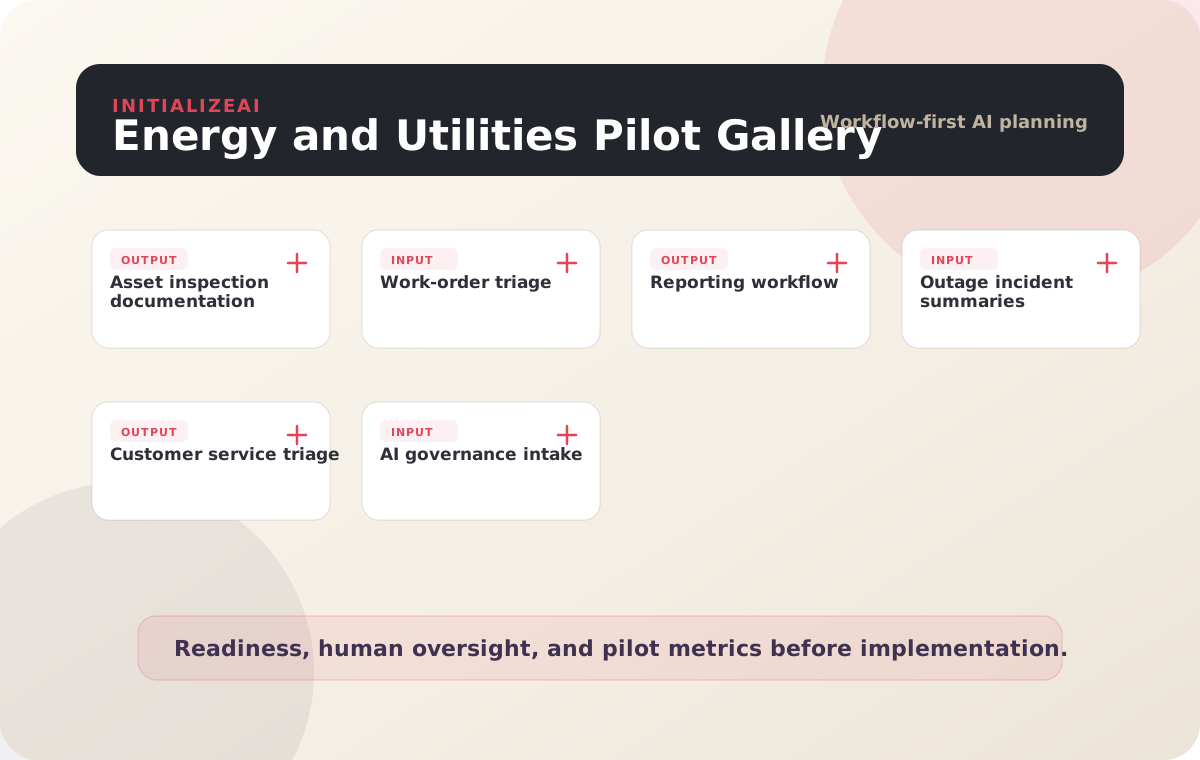
Scope: One asset class, inspection type, or field documentation workflow.
Measures: documentation completeness, review time, issue classification quality, crew/supervisor adoption.Scope: One maintenance request type, field issue category, or asset group.
Measures: routing time, priority quality, planner workload, crew feedback.Scope: One regulatory, safety, environmental, outage, or program reporting workflow.
Measures: assembly time, source traceability, reviewer effort, correction rate.Scope: One outage, incident, or restoration communication workflow with human-approved outputs.
Measures: summary quality, review time, escalation clarity, communication readiness.Scope: One service request or customer communication category.
Measures: routing accuracy, response quality, escalation rate, staff adoption.Scope: One intake and review workflow for proposed AI utility use cases.
Measures: use-case clarity, risk identification, review consistency, approval readiness.AI ROI and EBITDA impact
AI in energy and utilities should be tied to measurable operating levers: manual documentation, field review, reporting burden, maintenance planning, outage or incident workflow time, customer communication, inspection volume, crew adoption, and scale readiness.
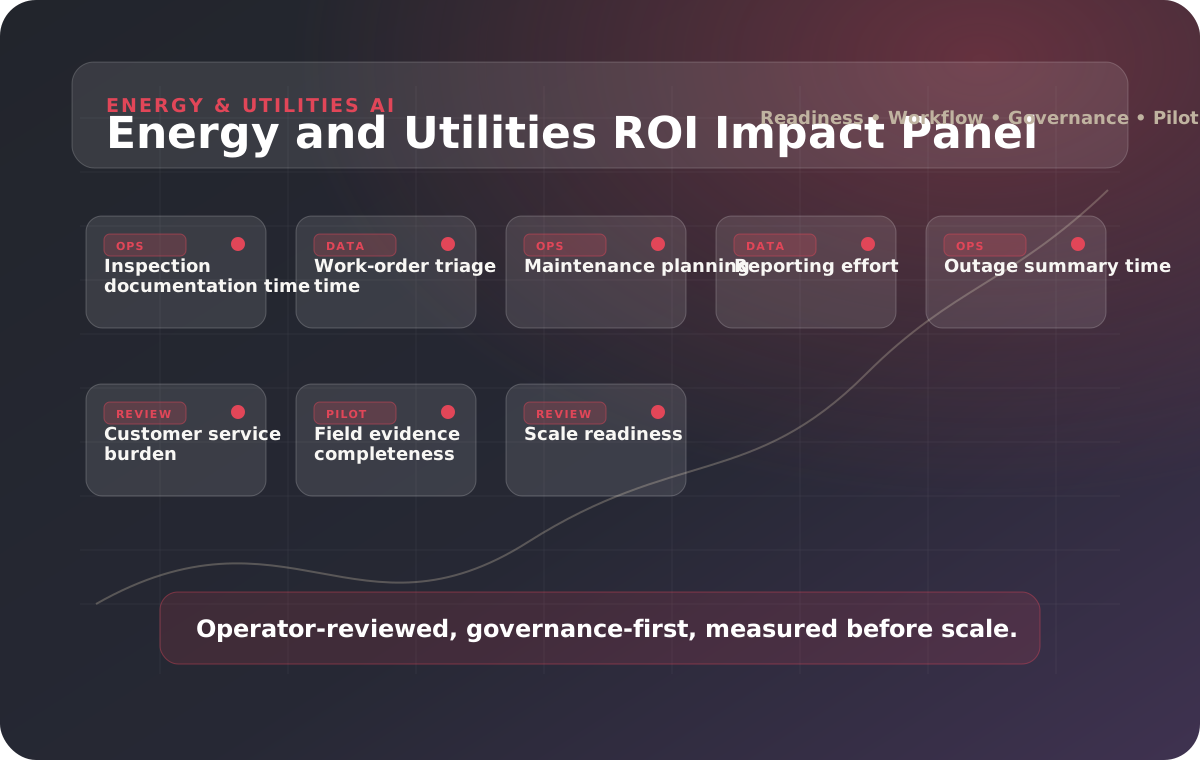
Estimate manual effort around inspection notes, evidence capture, issue classification, and review.
Measure intake, classification, routing, and escalation timing for selected maintenance categories.
Review planning effort, asset context retrieval, prioritization, and crew handoff quality.
Assess documentation gathering, source traceability, reviewer effort, and correction cycles.
Track summary preparation, routing, approval, and post-incident documentation readiness.
Evaluate request classification, FAQ support, escalation, and human-approved communication workflows.
Review whether required photos, notes, timestamps, locations, and signoffs are captured.
Compare adoption, quality, risk, stakeholder review, and operational fit before expansion.
Extra review use cases
Some energy and utility AI opportunities can affect safety, reliability, customers, crews, infrastructure, regulatory obligations, or public trust. These should be evaluated carefully with appropriate operations, safety, legal, regulatory, cyber, privacy, security, and business stakeholders.
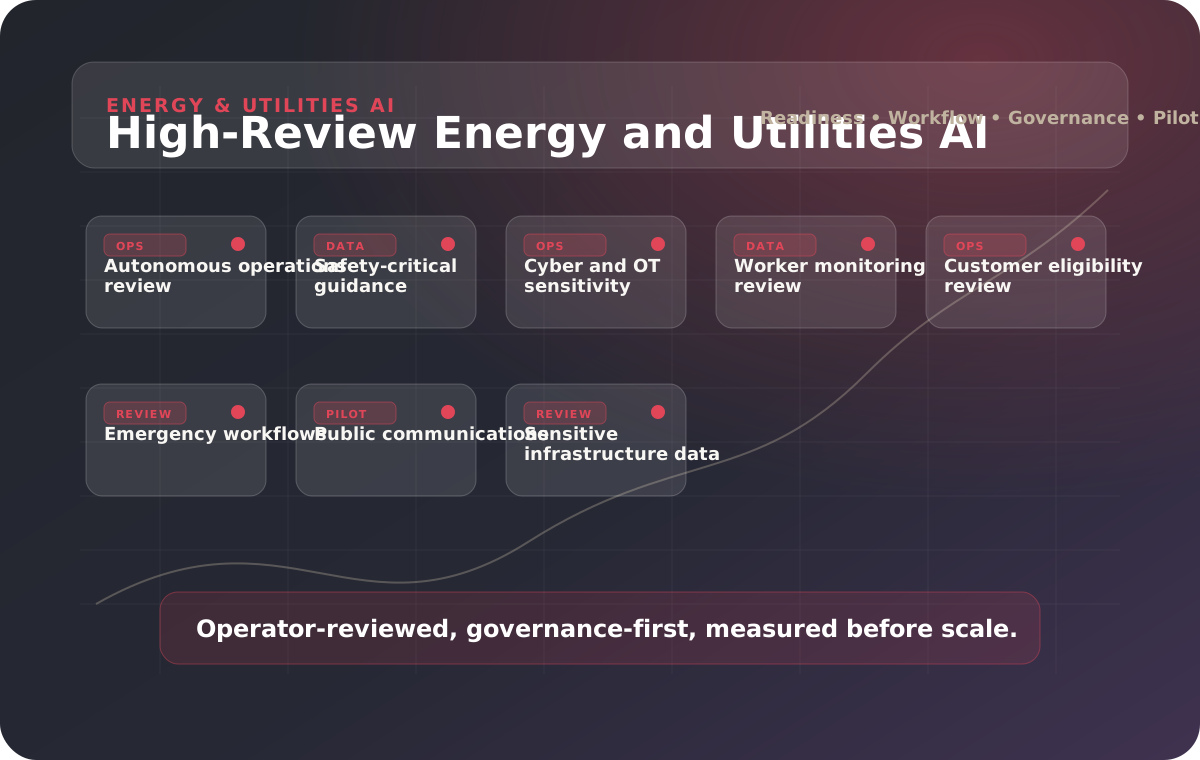
Not a casual first pilot. Control decisions require governance review, human oversight, safety/operations review, cyber/OT review, and legal/regulatory input.
Discuss Governance RequirementsThese workflows can affect safety, reliability, equipment, customers, and public-service obligations and should remain subject to appropriate human authority.
Explore AI GovernanceCrew-facing guidance for electrical, gas, water, emergency, or hazardous workflows should involve qualified safety and operations stakeholders.
View Trust CenterUse cases touching cyber, OT, access, or infrastructure data require additional security, privacy, and operational review.
View Trust CenterUse cases involving worker monitoring, surveillance, facial recognition, or automated performance scoring require careful governance and stakeholder review.
Explore AI GovernanceDecisions affecting access, money, rights, or essential service require legal, regulatory, customer-impact, and human oversight review.
Discuss Governance RequirementsEmergency workflows need clear authority, escalation, safety review, public communication controls, and scope boundaries.
Explore Government AIPublic or customer messages should be human-reviewed, accurate, accessible, and aligned with approved communications.
Explore AI GovernanceEngagement paths
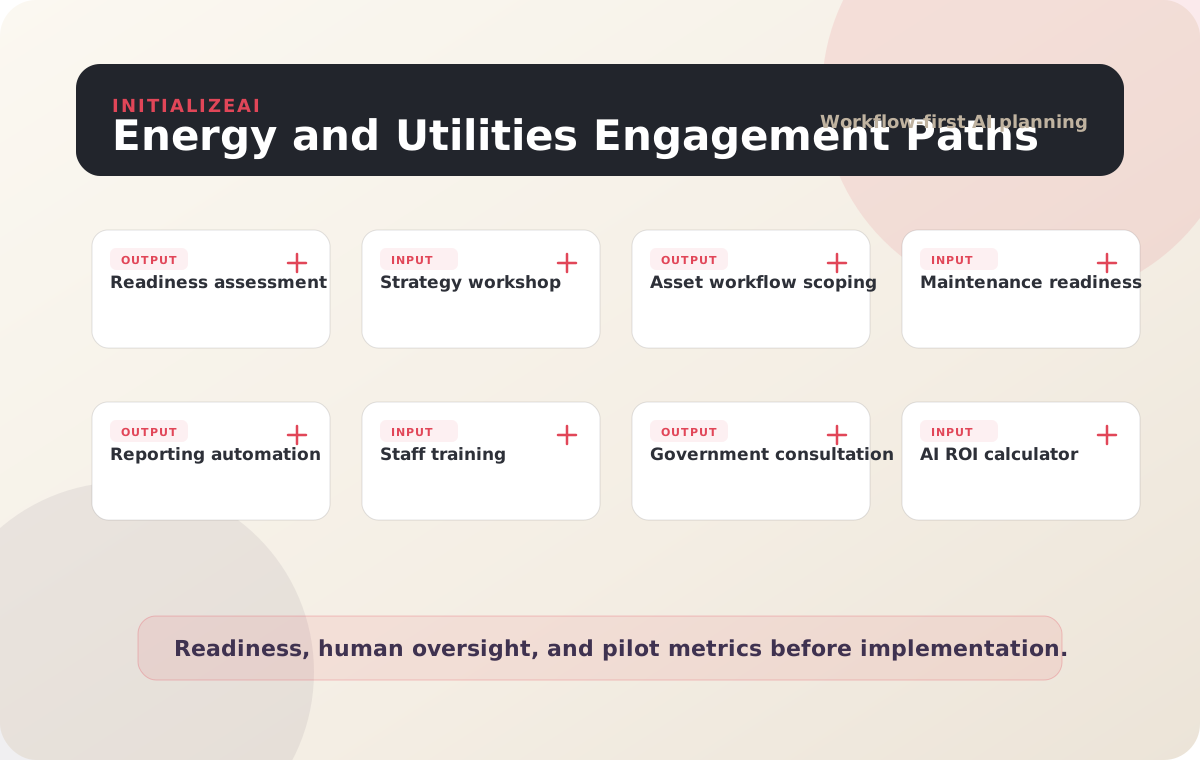
Recommended path: AI Readiness Assessment
Outputs: Readiness map, data/system gaps, use-case priorities, roadmap.
Explore AI ReadinessRecommended path: AI Strategy Workshop
Outputs: Use-case inventory, prioritization matrix, pilot candidates.
Explore Strategy WorkshopRecommended path: Asset Workflow Pilot Scoping
Outputs: Workflow map, inspection data review, human review model, pilot metrics.
Discuss Asset Workflow SupportRecommended path: Data Readiness + Maintenance Pilot Scoping
Outputs: Asset data review, maintenance workflow map, failure-mode assumptions, pilot path.
Discuss Maintenance ReadinessRecommended path: Workflow Automation Workshop
Outputs: Workflow map, document sources, review path, automation candidates.
Explore Workflow AutomationRecommended path: Advisory & Training / Workshops
Outputs: AI literacy training, crew playbooks, responsible-use guidance.
Explore Advisory & TrainingRecommended path: Government AI Consultation
Outputs: Procurement-aware scope, capability alignment, governance questions, workshop path.
View Government ContractingRecommended path: AI ROI Calculator + Gap Review
Outputs: Impact estimate, assumption model, next-step recommendation.
Try the ROI CalculatorEnergy and utilities solution mapping
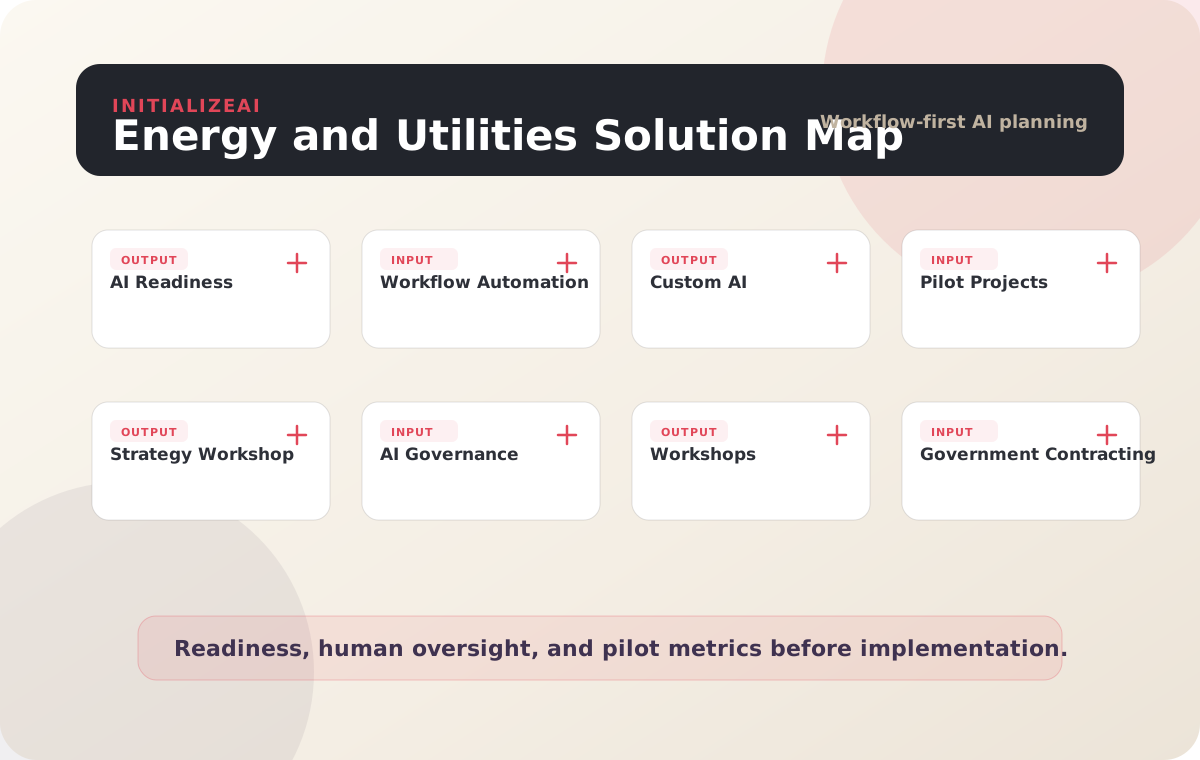
Evaluate readiness across strategy, data, systems, governance, workflows, staff capability, and adoption.
WorkflowWorkflow AutomationMap and improve asset, field, maintenance, reporting, outage, customer service, and back-office workflows.
BuildCustom AI ImplementationScope and build internal assistants, document workflows, inspection support, dashboards, review queues, and AI-enabled utility tools.
PilotAI Pilot ProjectsDesign measurable, bounded, reviewable pilots with owners, metrics, controls, and scale criteria.
StrategyAI Strategy WorkshopPrioritize energy and utility use cases by value, feasibility, data readiness, risk, and workflow fit.
GovernanceAI GovernanceCreate practical guardrails for responsible AI use, human oversight, data boundaries, safety-aware controls, and operational risk review.
WorkshopsWorkshops & BriefingsRun utility AI readiness, public-sector AI, workflow automation, staff training, pilot-scoping, and executive AI workshops.
Public sectorGovernment ContractingReview InitializeAI's public-sector profile, capability statement, NAICS, and procurement-ready materials.
ImpactAI ROI CalculatorEstimate potential AI impact across cost, cycle time, labor, adoption, and EBITDA levers.
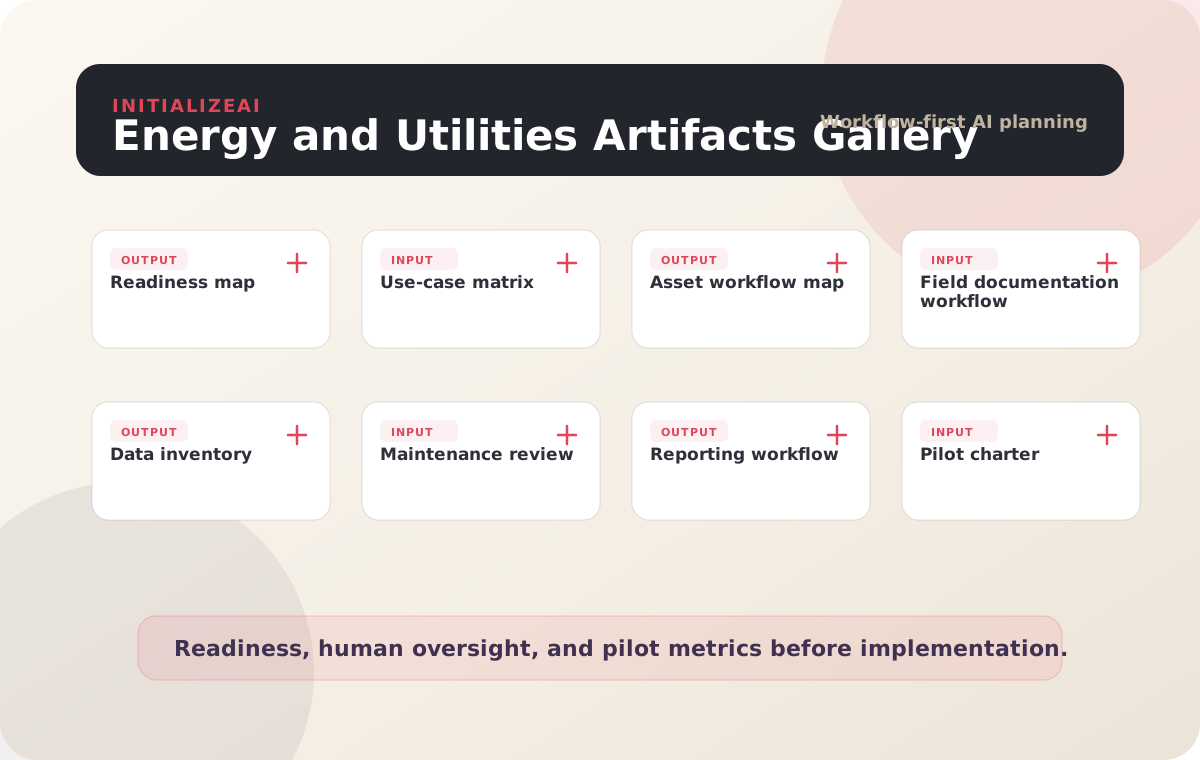
Actionable artifacts
Practical energy and utilities AI work should produce materials operators, field teams, supervisors, compliance reviewers, program leaders, and technical teams can evaluate, discuss, and use.
Why InitializeAI?
InitializeAI brings a practical, workflow-first approach to AI adoption for utility and energy teams that need clarity before implementation.
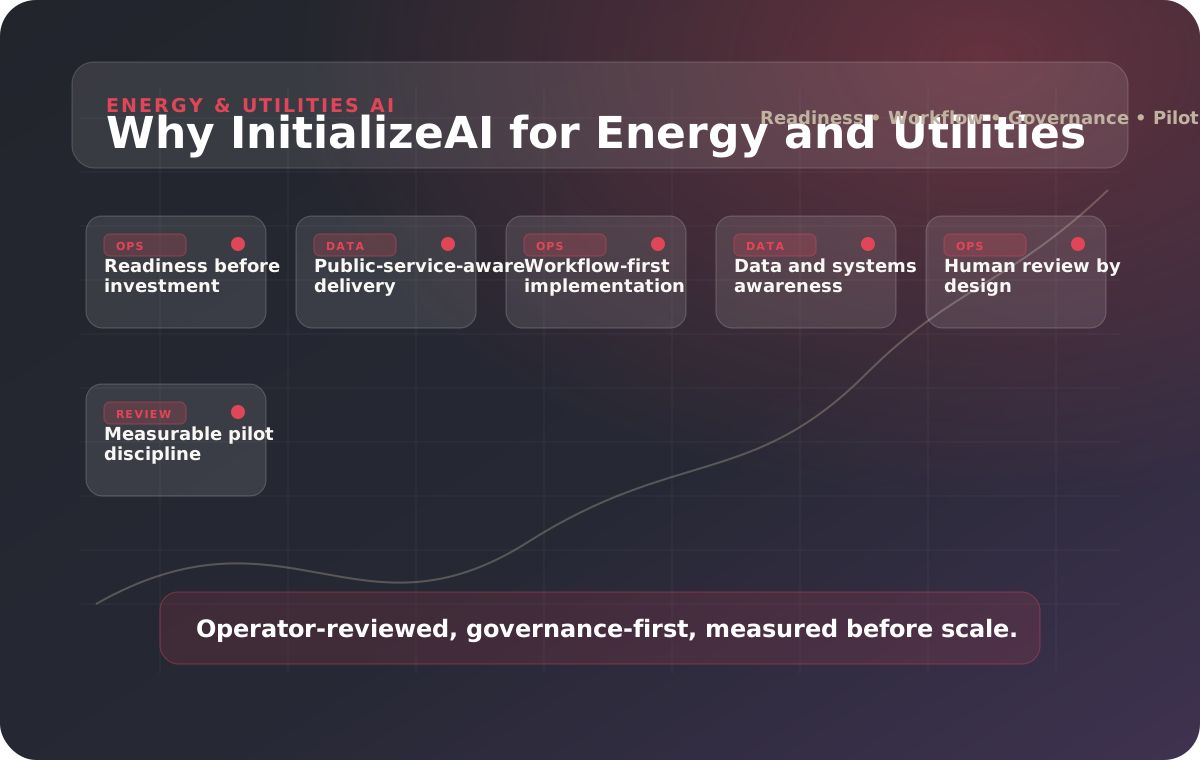
Understand whether the use case, data, systems, workflow, governance, and adoption path are ready before funding AI work.
Frame AI around reliability, customer impact, operational review, public trust, safety, and mission-critical service delivery.
Focus on the real operating process: field crews, operators, planners, supervisors, compliance reviewers, customer service teams, and program leaders.
Clarify source systems, data quality, integration needs, dependencies, security sensitivity, and review requirements before building.
Design review steps, escalation paths, override logic, and accountability into asset, field, maintenance, reporting, and customer workflows.
Define what success, risk, adoption, quality, and scale readiness mean before expansion.
Related resources
Explore practical AI use-case patterns across utility, field, asset, maintenance, reporting, and public-service workflows.
ImpactAI ROI CalculatorEstimate potential AI value across documentation, maintenance, reporting, crew adoption, EBITDA, and capacity levers.
WorkflowWorkflow AutomationMap and modernize asset, field, reporting, outage, customer service, and operations workflows.
BuildCustom AI ImplementationScope internal assistants, document workflows, dashboards, inspection support, and review queues.
ReadinessAI Readiness AssessmentAssess strategy, data, systems, workflows, governance, and adoption capacity.
PilotAI Pilot ProjectsDesign bounded pilots with owners, metrics, controls, and scale criteria.
GovernanceAI GovernanceBuild data boundaries, human review, escalation paths, and acceptable-use guidance.
TrustTrust CenterReview responsible AI, security, privacy, and governance positioning.
Public sectorGovernment ContractingExplore InitializeAI public-sector profile and procurement-ready materials.
CapabilityCapability StatementReview capability details for public-sector and infrastructure-adjacent conversations.
WorkshopsWorkshops & BriefingsAlign leaders, operators, field crews, and program teams around practical AI adoption.
MethodMethodologySee how InitializeAI moves from readiness to pilots, workflow implementation, and measurement.
EngagementsEngagement ModelsCompare workshops, sprints, pilots, implementation, and advisory support.
Public sectorGovernment / Public SectorExplore public-sector readiness, service workflows, responsible use, and governance planning.
Related industryLogistics & OperationsExplore operational AI readiness, workflow automation, exception management, and ROI planning.
Related industryManufacturing & IndustrialExplore quality workflows, maintenance readiness, safety documentation, and industrial operations AI.
Related industryField Services & FacilitiesExplore technician workflows, proof-of-work packets, maintenance routing, and supervisor review.
Related industryReal Estate & ConstructionExplore public works, infrastructure, asset data, field reporting, and capital project workflow planning.
PartnersPartnersReview teaming and collaboration paths for implementation and public-sector opportunities.
ProofCase StudiesReview available examples and practical implementation patterns.
InsightsBlogRead practical AI strategy and workflow automation guidance.
Energy and utilities AI FAQ
Start with readiness and use-case prioritization. Evaluate data, systems, workflows, governance, safety, operators, field crews, public-service impact, adoption, and measurable business value before investing in AI tools or pilots.
Good first pilots are bounded and measurable, such as inspection documentation support, work-order triage, reporting workflow support, outage or incident summaries with human review, customer service triage, internal knowledge assistants, or AI governance intake workflows.
Yes, AI can support asset and maintenance workflows when the data, asset context, review process, safety considerations, and measurement model are clear. Human review and operational oversight should be built into the pilot.
AI can support summaries, routing, draft updates, and documentation workflows, but public or customer communications should remain human-reviewed and aligned with approved messaging and escalation paths.
Data needs depend on the use case. Potential sources include asset records, work orders, inspection records, field notes, outage logs, customer service data, GIS, EAM, CMMS, OMS, AMI, SCADA/OT data, documents, reports, and spreadsheets.
Pilot metrics may include documentation completeness, review time, routing accuracy, reporting effort, field adoption, supervisor confidence, customer communication readiness, incident summary quality, and scale readiness.
Utility AI needs governance: data boundaries, human review, escalation paths, system access, public communication review, privacy/security review, safety-aware review, cyber/OT sensitivity, and accountability for decisions.
Yes. InitializeAI can support public-sector AI readiness, governance workshops, staff training, workflow modernization, procurement-aware pilot scoping, government contracting conversations, and capability statement review.
Yes, depending on scope. InitializeAI can help evaluate, scope, and support custom AI workflows such as internal assistants, document intelligence, asset workflow support, reporting workflows, review dashboards, and workflow automation.
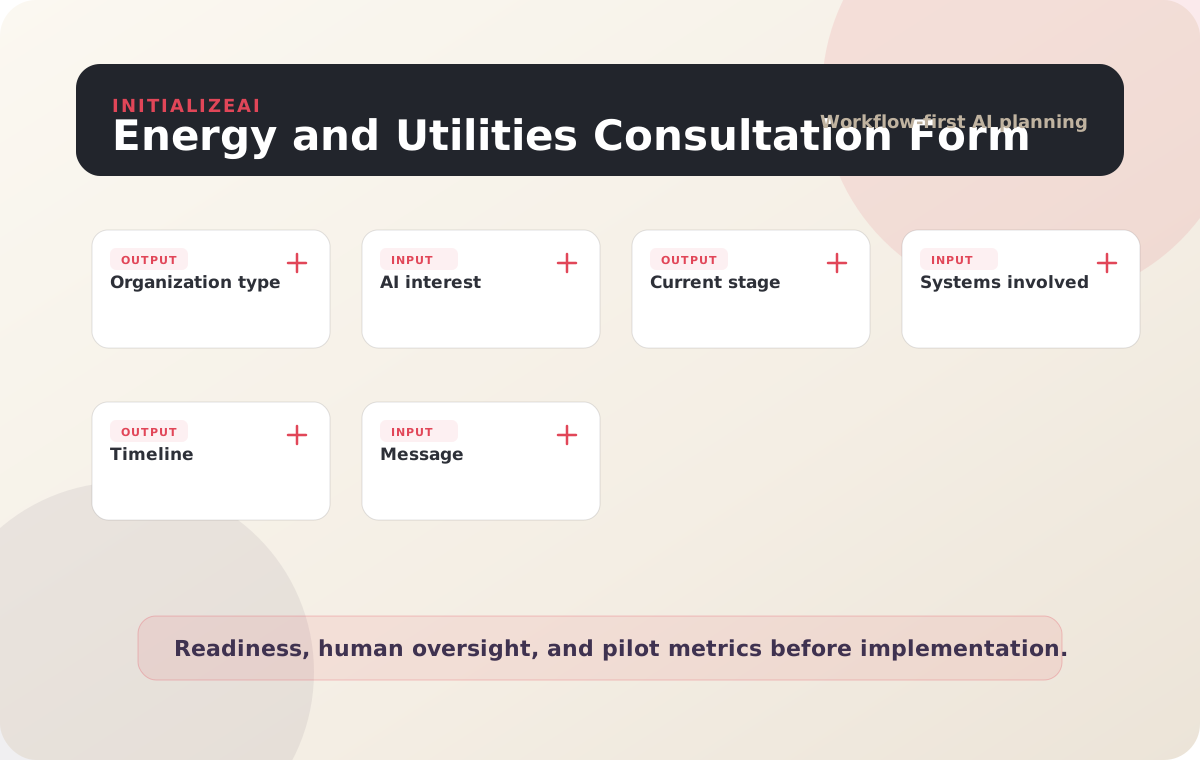
Energy and utilities consultation
Use this path for energy and utilities AI readiness, asset workflows, field operations, maintenance planning, reporting support, outage or incident workflows, customer communication support, workflow automation, pilot scoping, public-sector support, or custom AI implementation planning.
Practical, governed, measurable
InitializeAI can help your energy or utility team assess readiness, prioritize use cases, map workflows, estimate ROI impact, scope pilots, automate workflows, train staff, and plan practical AI implementation around real public-service, field, asset, reporting, and operational constraints.