AI ideas without prioritization
Teams see opportunities across contracts, knowledge, intake, compliance, client service, proposals, and operations, but need a practical way to rank what is valuable, feasible, and reviewable.
AI for Legal & Professional Services
InitializeAI helps legal, compliance, consulting, advisory, and professional services teams evaluate AI opportunities, assess readiness, automate document-heavy workflows, support knowledge management, design governed pilots, and implement practical AI with human review and client-data boundaries built in.
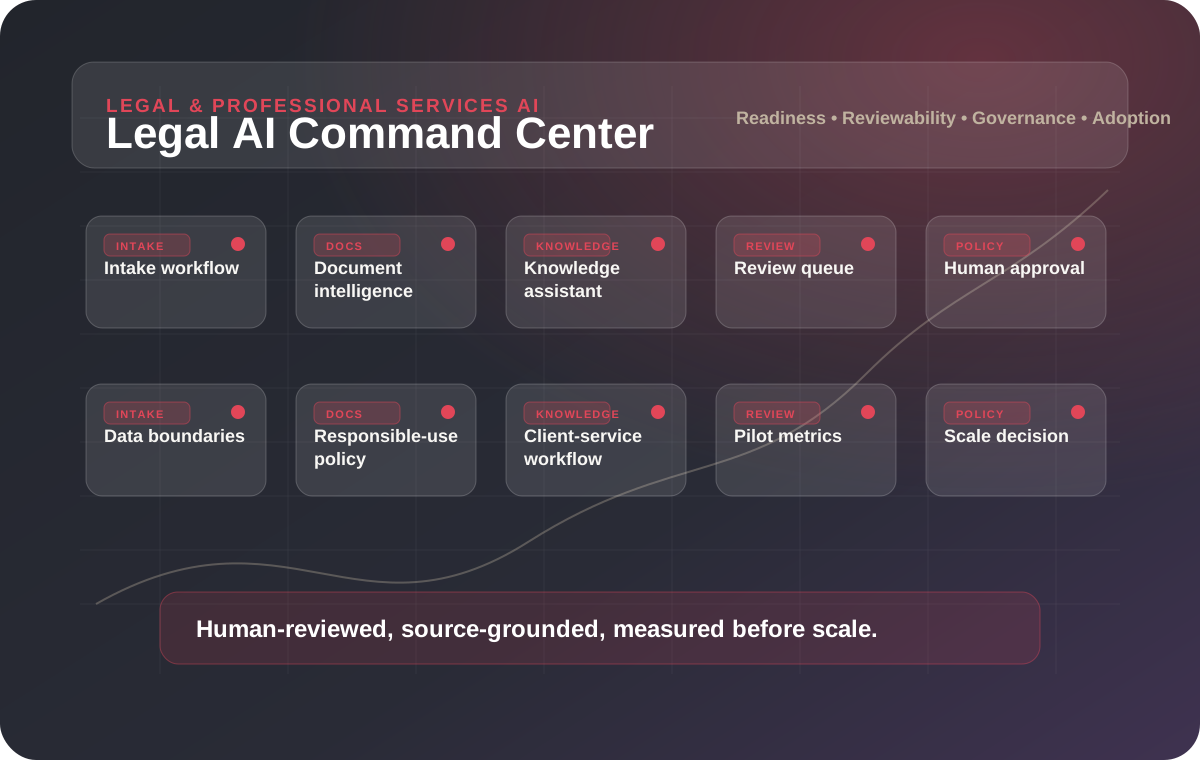
Legal and professional services AI Execution Gap
Legal and professional services teams have many promising AI opportunities: document intelligence, knowledge retrieval, matter intake, contract/document review support, proposal workflows, compliance documentation, client-service operations, and internal productivity. AI creates value only when the workflow is clear, client-data boundaries are defined, professionals review outputs, governance is practical, and pilots are measured.
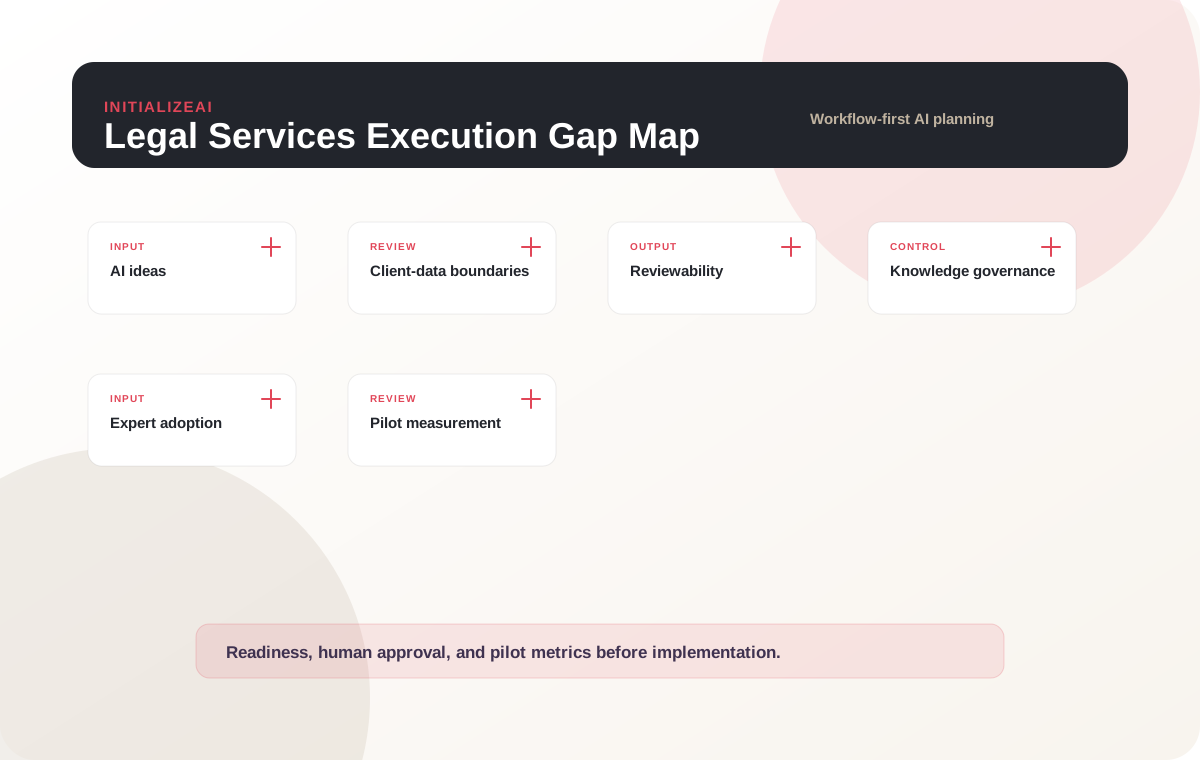
Teams see opportunities across contracts, knowledge, intake, compliance, client service, proposals, and operations, but need a practical way to rank what is valuable, feasible, and reviewable.
Legal and professional workflows may involve client information, privilege-sensitive materials, confidential business data, financial data, personnel records, or regulated information.
AI outputs need clear source references, reviewer roles, approval paths, escalation rules, and professional judgment before use.
Knowledge bases, playbooks, templates, precedents, policies, and client-specific materials must be current, permissioned, and reliable.
Professionals will not adopt AI if it is unclear, untrusted, inaccurate, hard to review, or disconnected from their real work.
Legal and professional AI pilots should define review time, output quality, source accuracy, adoption, risk controls, and scale/refine/stop criteria before launch.
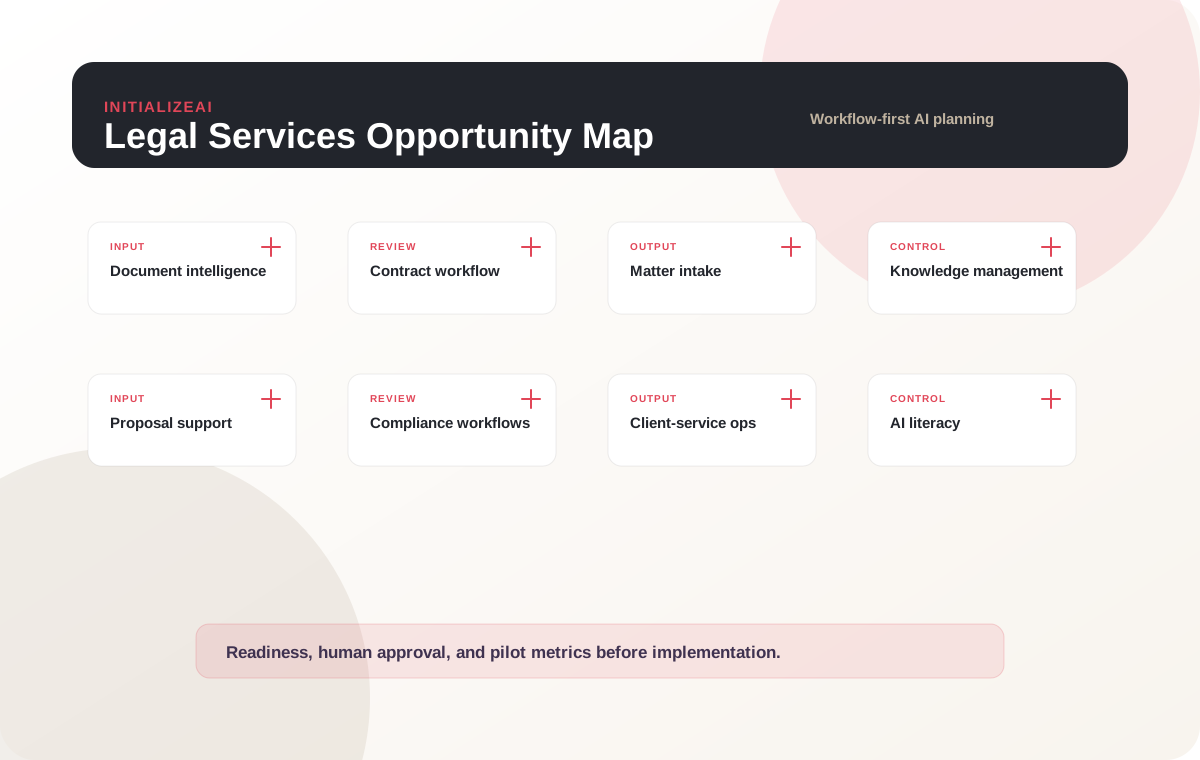
Legal and professional services opportunity areas
InitializeAI focuses on bounded, measurable use cases that can be evaluated, governed, piloted, and adopted inside real document, knowledge, intake, review, and client-service workflows.
Support summarization, classification, comparison, issue spotting support, clause/policy lookup, routing, and review workflows for documents that still require professional approval.
Possible first pilot: One document type, one review workflow, one reviewer group, and clear source-reference requirements.
Governance considerations: Client data, privilege-sensitive materials, source traceability, reviewer approval, output validation, and access control.
Related: Custom AI ImplementationSupport contract intake, policy comparison, playbook lookup, redline triage, obligation tracking concepts, and review queue organization.
Possible first pilot: One contract type or policy workflow with human review and approved playbook references.
Governance considerations: Professional judgment, approval authority, client confidentiality, version control, and source grounding.
Related: Workflow AutomationClassify, summarize, prioritize, and route new matters, client requests, consulting projects, RFPs, compliance questions, or service inquiries.
Possible first pilot: One intake workflow with structured fields, triage rules, and professional review.
Governance considerations: Confidentiality, conflicts/eligibility review where relevant, escalation, reviewer authority, and routing accuracy.
Related: Workflow AutomationHelp teams find precedents, templates, policies, research notes, procedures, engagement materials, FAQs, and institutional knowledge faster.
Possible first pilot: One bounded knowledge base or practice/team resource library with access boundaries and source-grounded answers.
Governance considerations: Permissions, source freshness, client-specific restrictions, hallucination risk, review expectations, and knowledge ownership.
Related: Custom AI ImplementationSupport proposal drafting, RFP response organization, capability summaries, experience library lookup, and service-offering narratives with human review.
Possible first pilot: One RFP/proposal workflow with source-grounded content and review signoff.
Governance considerations: Unsupported claims, confidentiality, source accuracy, approval workflow, and brand/legal review.
Related: Advisory & TrainingAssist with evidence organization, policy mapping, audit support, compliance summaries, regulatory update monitoring, and internal reporting workflows.
Possible first pilot: One compliance evidence or policy update workflow with reviewer approval.
Governance considerations: Legal/compliance review, source traceability, sensitive data, documentation quality, and escalation.
Related: AI GovernanceSupport meeting notes, decision summaries, client updates, status reports, research summaries, project plans, and internal handoff workflows.
Possible first pilot: One recurring client-service or internal operations workflow with human approval.
Governance considerations: Client confidentiality, tone, accuracy, approval, source references, and professional responsibility.
Related: Workflow AutomationEquip lawyers, consultants, advisors, analysts, support staff, and operations teams with practical AI literacy and responsible-use expectations.
Possible first pilot: One practice group, department, or leadership training plus responsible-use checklist.
Governance considerations: Acceptable use, client-data boundaries, output review, escalation, privilege-sensitive workflows, and professional judgment.
Related: Workshops & BriefingsUse-case matrix
Start with the workflow, then decide whether the right next step is readiness, governance, pilot design, automation, training, or custom implementation.
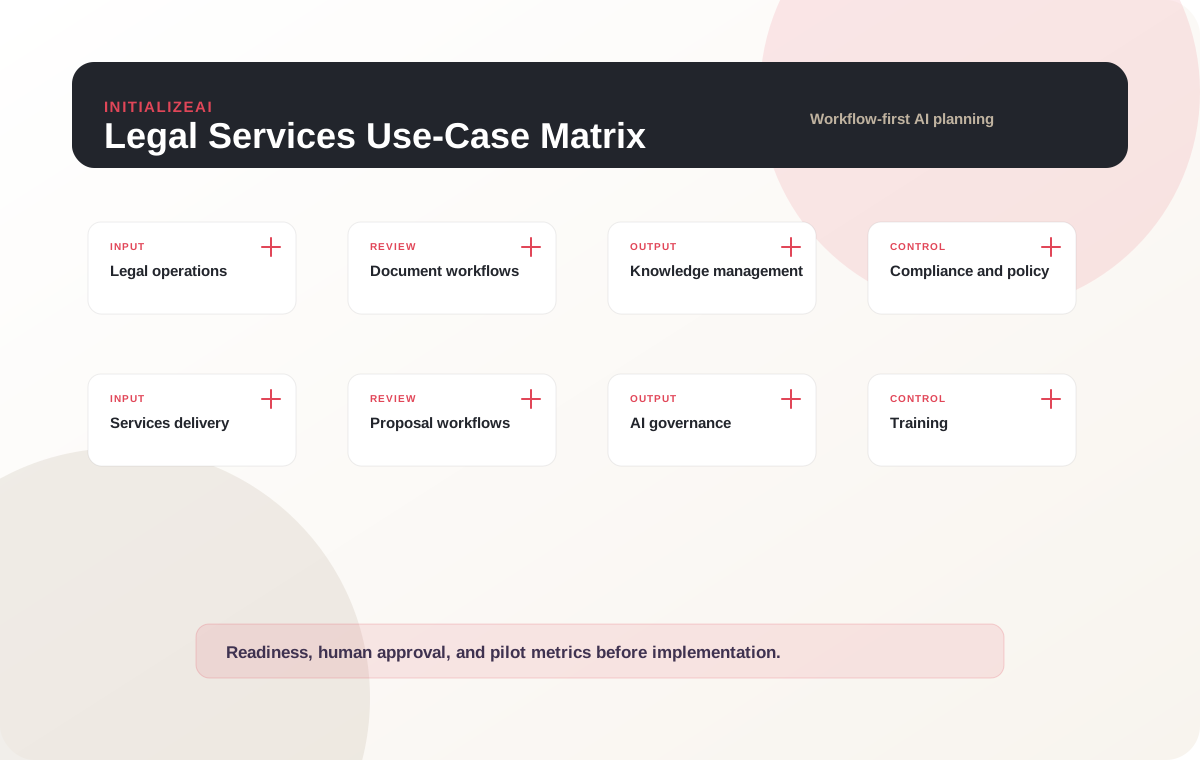
| Function | Use cases | Good first step |
|---|---|---|
| Legal operations and matter intake | Matter/client intake support, request classification, routing and triage, status summary workflows, outside counsel/vendor review support, legal ops dashboards. | Legal Workflow Assessment |
| Contract and document workflows | Contract summarization, clause/playbook lookup, document comparison, review queue support, obligation tracking concepts, policy mapping. | Document Intelligence Scoping |
| Knowledge management | Precedent/template assistant, policy and procedure assistant, practice knowledge assistant, research summary workflow, training library assistant, engagement playbook assistant. | Knowledge Assistant Scoping |
| Compliance, risk, and policy | Compliance evidence organization, policy comparison support, risk register workflow, regulatory update summaries, governance intake workflow, vendor/model review workflow. | AI Governance Workshop |
| Professional services delivery | Project intake triage, client update drafting with review, meeting and decision summaries, deliverable review workflow, consulting knowledge assistant, engagement management dashboard. | Workflow Automation Workshop |
| Business development and proposals | RFP response assistant, experience/capability library, proposal outline support, client research summaries, pitch deck content support, case/example retrieval with approval. | Proposal Workflow Pilot |
| AI governance and training | Responsible-use policy, client-data boundary guidance, staff AI literacy, AI workflow review process, professional responsibility training support, prompt/output review playbook. | AI Literacy + Governance Workshop |
How InitializeAI helps
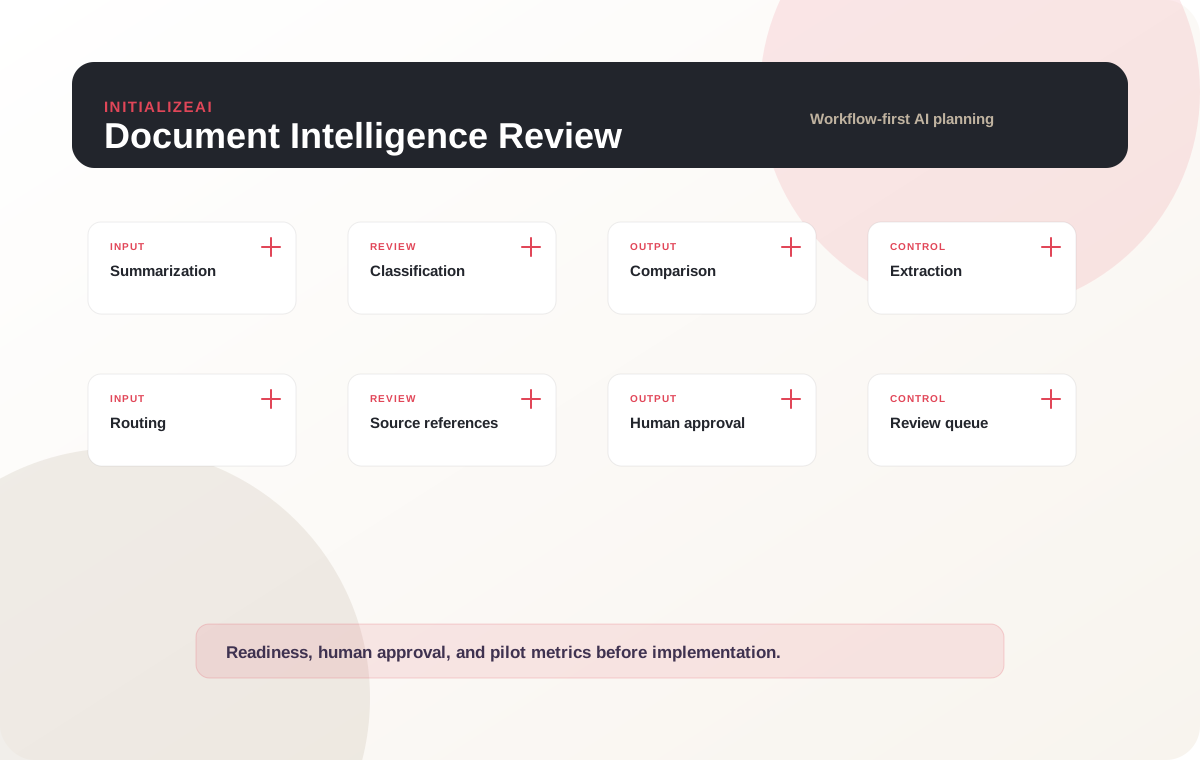
Evaluate AI-enabled document workflows that support summarization, classification, comparison, extraction, routing, and review while preserving human professional judgment.
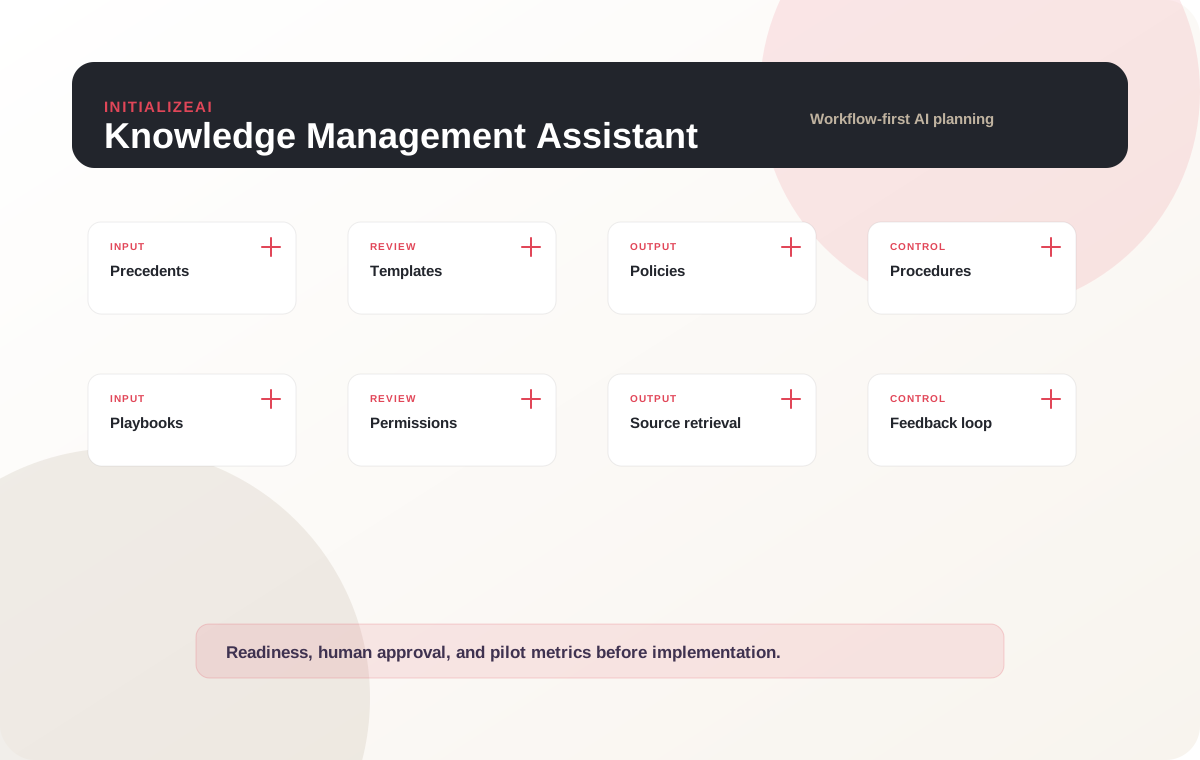
Scope internal assistants that support access to precedents, templates, policies, procedures, training materials, and institutional knowledge.
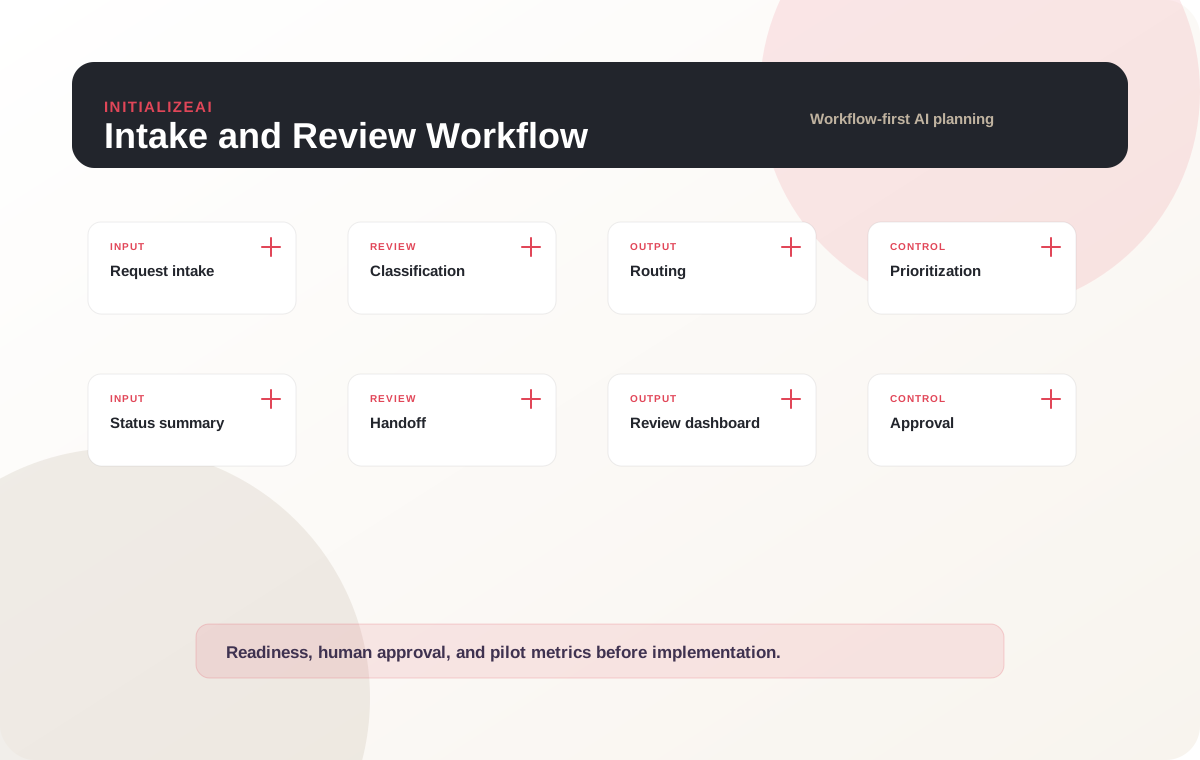
Map and improve matter intake, client-service requests, project triage, review handoffs, status summaries, and internal routing workflows.
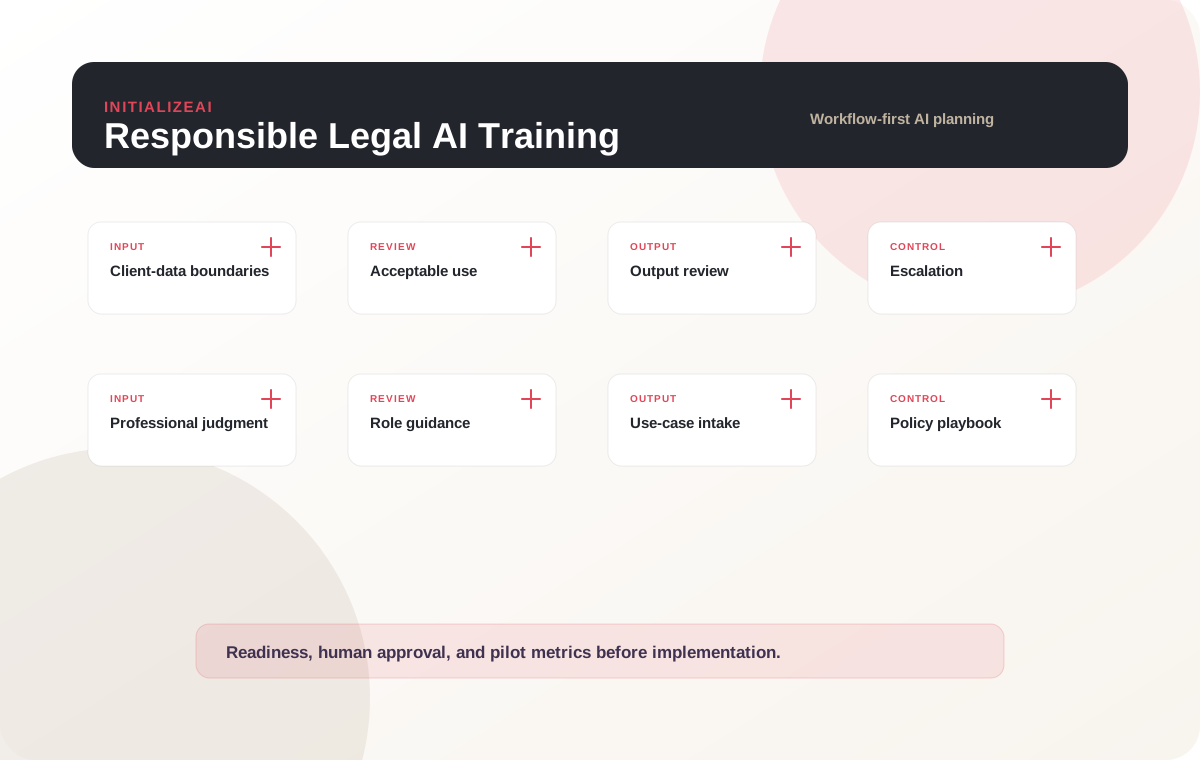
Build responsible-use guidance, client-data boundary practices, output review expectations, and role-specific AI literacy.
Client-data boundaries and reviewability
Legal and professional services AI work should start by defining what data can be used, who can access it, what must stay out of scope, how outputs are reviewed, and who approves final work.
View Trust Center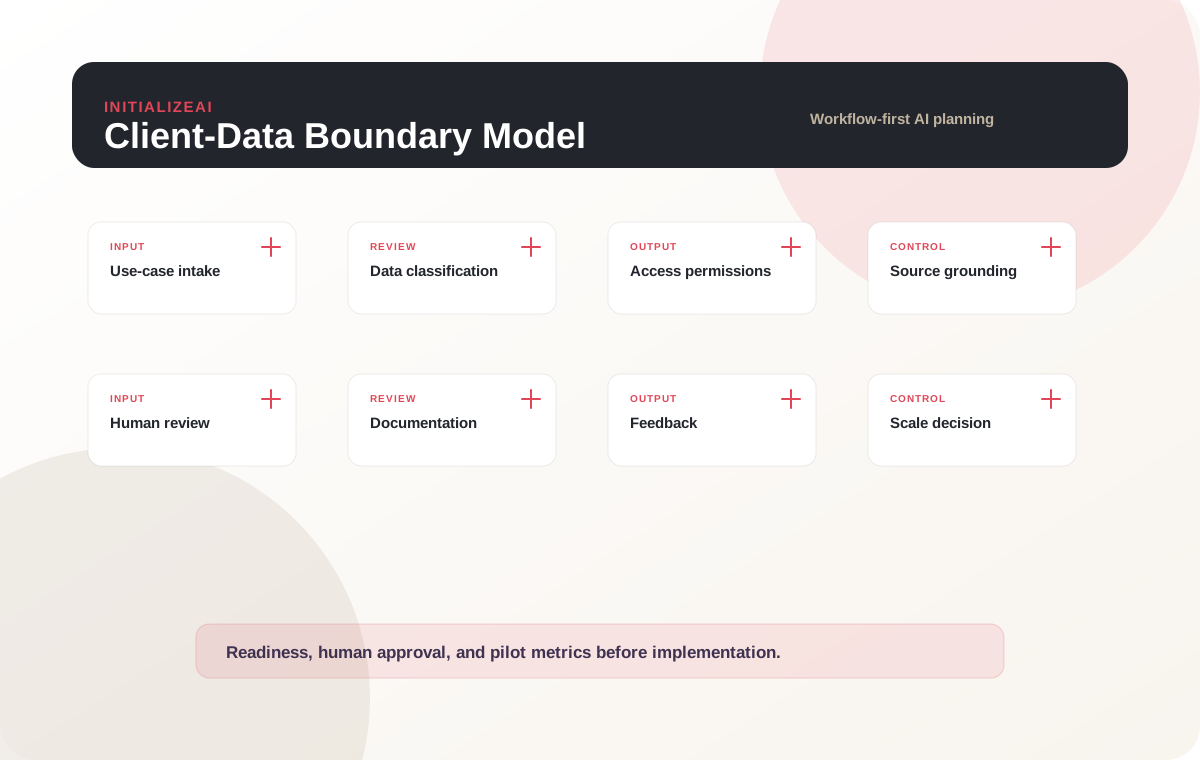
Define purpose, workflow, users, affected clients/stakeholders, materials involved, and expected output.
Identify client data, privilege-sensitive materials, confidential business information, employee data, financial records, or regulated information.
Define who can access inputs, outputs, knowledge bases, documents, and review queues.
Clarify approved sources, playbooks, templates, precedents, policies, and reference materials.
Define reviewer role, approval path, escalation, corrections, and final professional accountability.
Track assumptions, review notes, output issues, user feedback, and scale/refine/stop decisions.
Professional judgment and responsible AI
Legal and professional services teams need AI workflows that make outputs easier to review, not harder to trust.
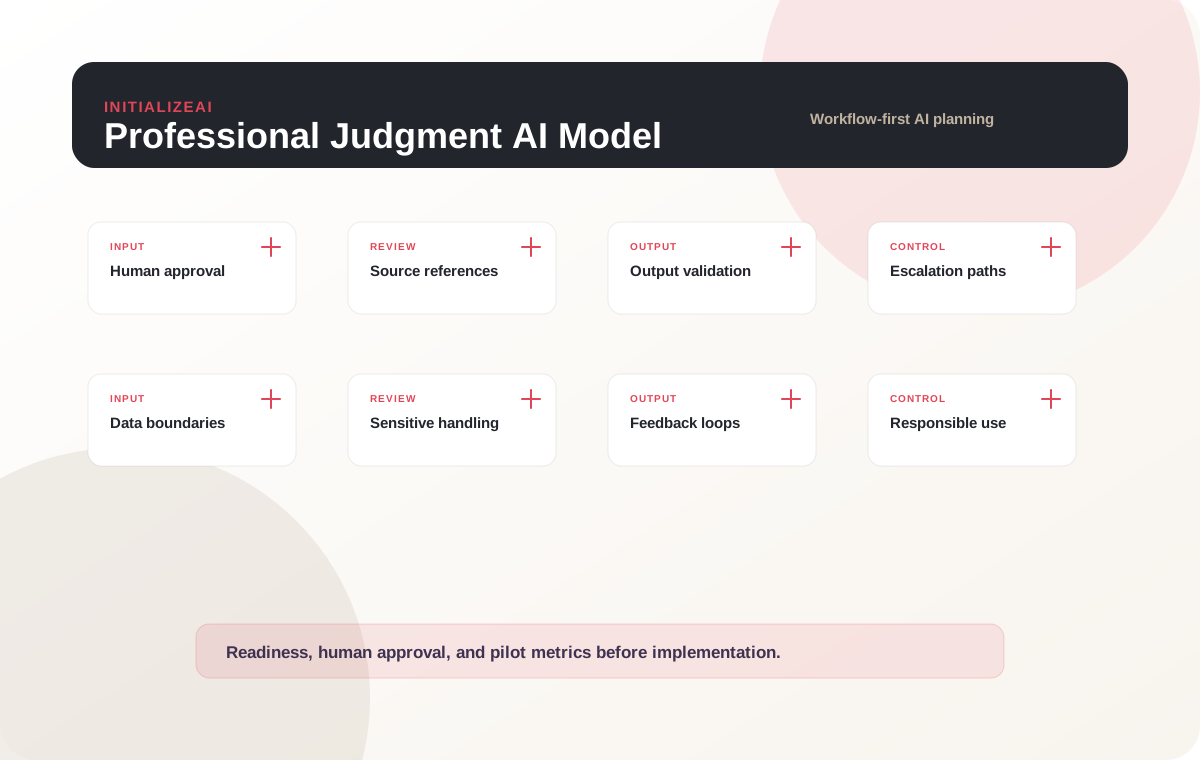
Define where professionals review, approve, correct, or stop AI-assisted output before use.
Make source grounding and reference visibility part of the workflow, not an afterthought.
Plan how reviewers identify errors, missing context, unsupported statements, and escalation needs.
Clarify when a professional, risk owner, client stakeholder, or security/privacy reviewer should be involved.
Scope data handling, permissions, output sharing, and out-of-scope materials engagement by engagement.
Create clear guidance for what professionals can use AI for, what needs review, and what should not be used casually.
Knowledge management
Professional services teams depend on precedents, playbooks, templates, policies, matter history, engagement materials, institutional knowledge, and expert judgment. AI can help retrieve and summarize knowledge when access, source quality, and review expectations are clear.
Discuss Knowledge Assistant Scoping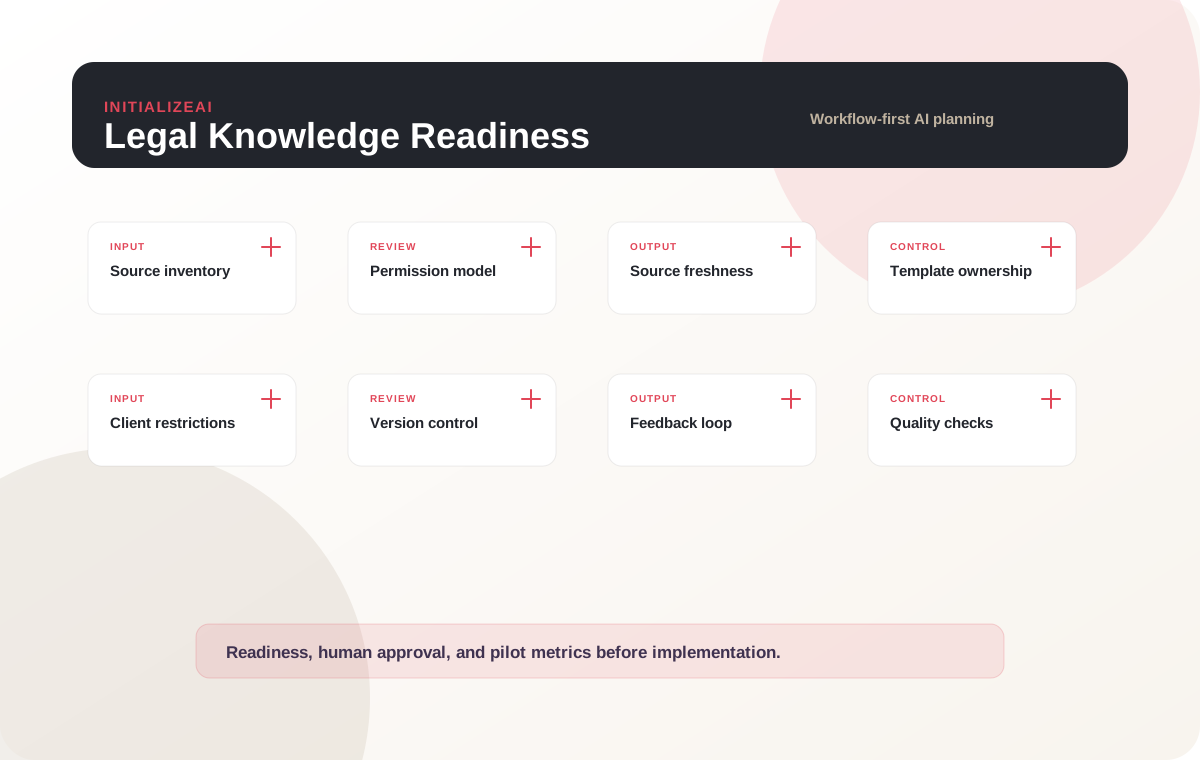
Clarify which precedents, templates, policies, procedures, and knowledge sources are approved for a pilot.
Review who can access each source set and whether client-specific restrictions apply.
Assess whether materials are current enough to support source-grounded answers.
Assign owners for source libraries, updates, feedback, and retirement decisions.
Capture corrections, gaps, and examples that improve the workflow over time.
Define source accuracy, answer usefulness, reviewer confidence, adoption, and correction-rate measures.
One practice group, department, or service-line knowledge assistant using approved sources and human-reviewed outputs.
Search time, source accuracy, answer usefulness, reviewer confidence, adoption, escalation/correction rate, and knowledge gaps identified.
Document intelligence pilot design
Strong first pilots focus on one document type, one workflow, one reviewer group, and one measurement model before scaling.
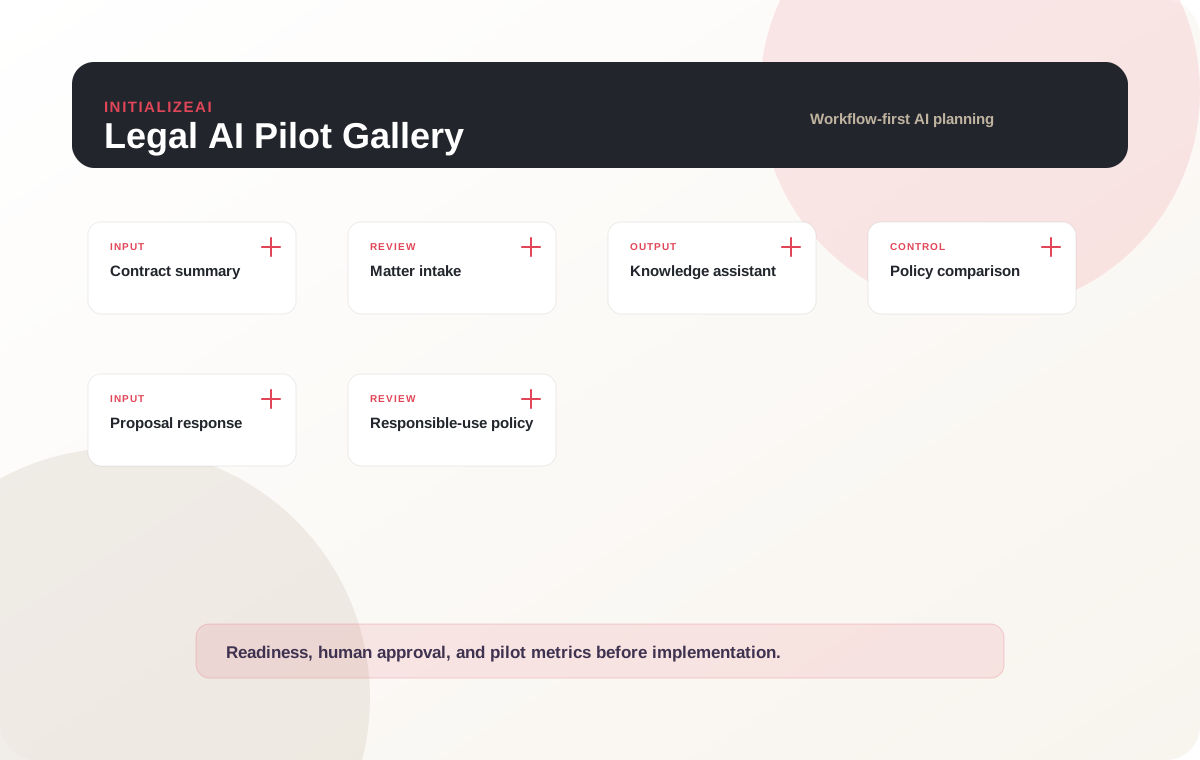
Scope: One contract type, one summary format, one reviewer group, source references required.
Measures: review time, correction rate, completeness, reviewer confidence.Scope: One intake workflow with structured fields, routing rules, and professional review.
Measures: routing time, completeness, triage quality, escalation accuracy.Scope: One source library such as templates, policies, precedents, or service-line materials.
Measures: search time, source accuracy, answer usefulness, adoption.Scope: One policy or compliance documentation workflow with side-by-side comparison and reviewer approval.
Measures: review time, issue identification, source traceability, reviewer confidence.Scope: One proposal workflow using approved source materials and human review.
Measures: drafting time, source quality, approval effort, claim accuracy.Scope: One department or professional group developing AI acceptable-use guidance.
Measures: policy clarity, training completion signal, use-case review consistency, staff confidence.AI literacy and responsible-use training
AI training for legal and professional services teams should be practical, role-specific, and clear about data boundaries, review expectations, acceptable use, and escalation.
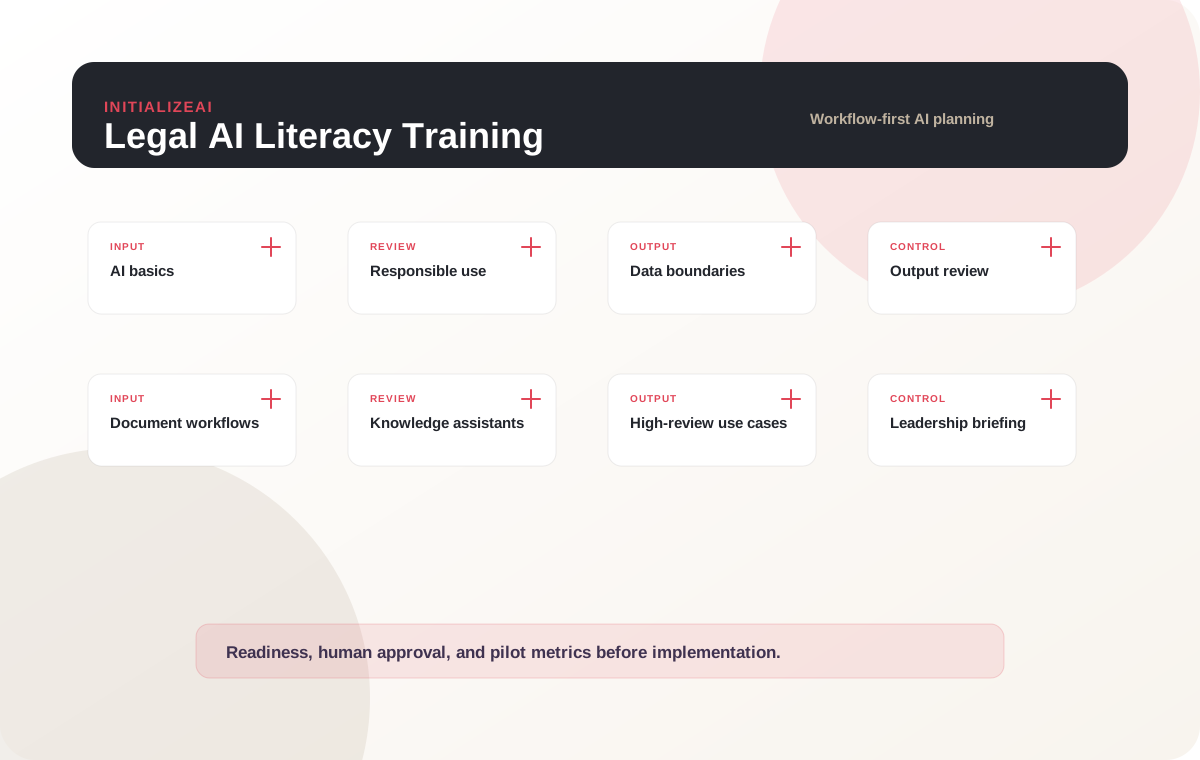
Plain-language training on AI capabilities, limits, and workflow fit.
Guidance for what can be used, what needs review, and what should stay out of scope.
Practical examples for asking better questions and checking responses before use.
Role-specific habits for verifying sources, references, and unsupported statements.
Examples for summarization, comparison, policy lookup, and review queues.
Clear examples of use cases that require additional legal, security, privacy, and professional review.
Extra review use cases
Some AI opportunities may be valuable, but they require stronger governance, professional review, confidentiality controls, legal/security/privacy review, and human approval. They are not casual first pilots and should involve appropriate legal, compliance, security, privacy, professional-responsibility, and business stakeholders.
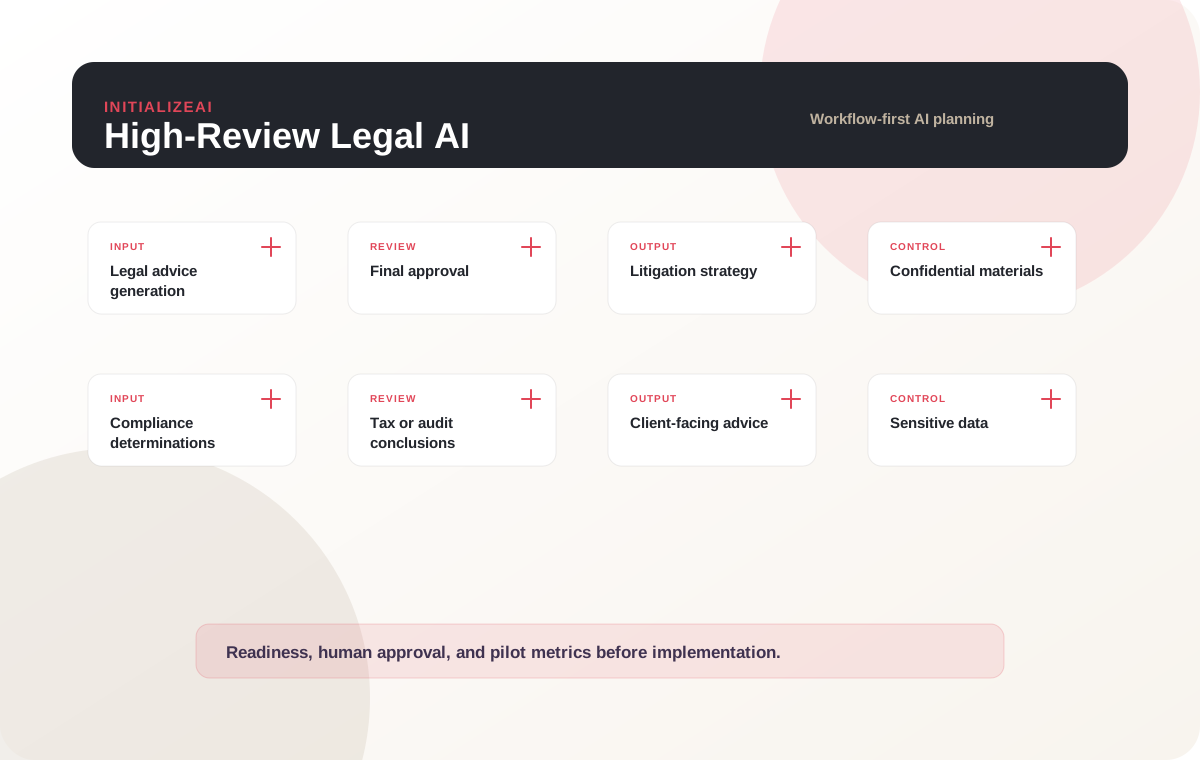
Why review matters: AI output should not be treated as legal advice. Qualified professionals should determine legal meaning, client impact, and final use.
Recommended first step: Governance review, human approval model, and professional responsibility review.
Discuss Governance RequirementsWhy review matters: Approval can affect rights, obligations, money, and client relationships.
Recommended first step: Human approval model, client-data boundary review, and legal/professional review.
View Trust CenterWhy review matters: Strategy and outcome assumptions need careful human professional judgment and confidentiality controls.
Recommended first step: Pilot-risk assessment, legal review, and security/privacy review.
Explore AI GovernanceWhy review matters: Data handling should be reviewed before any workflow touches sensitive client materials.
Recommended first step: Client-data boundary review, security/privacy review, and access control design.
Discuss Trust RequirementsWhy review matters: AI can support evidence organization or summary workflows, but final compliance determinations need qualified review.
Recommended first step: Governance review and legal/compliance stakeholder review.
Explore AI GovernanceWhy review matters: Professional determinations require qualified judgment, review, and accountability.
Recommended first step: Human approval model and professional responsibility review.
View Trust CenterWhy review matters: Client communications can create confusion, risk, or unsupported claims when not reviewed.
Recommended first step: Communications approval workflow and acceptable-use guidance.
Explore Responsible-Use TrainingWhy review matters: Actions affecting rights, obligations, money, or client matters require careful workflow control and professional approval.
Recommended first step: Governance review, data boundary review, and pilot-risk assessment.
Discuss Governance RequirementsEngagement paths
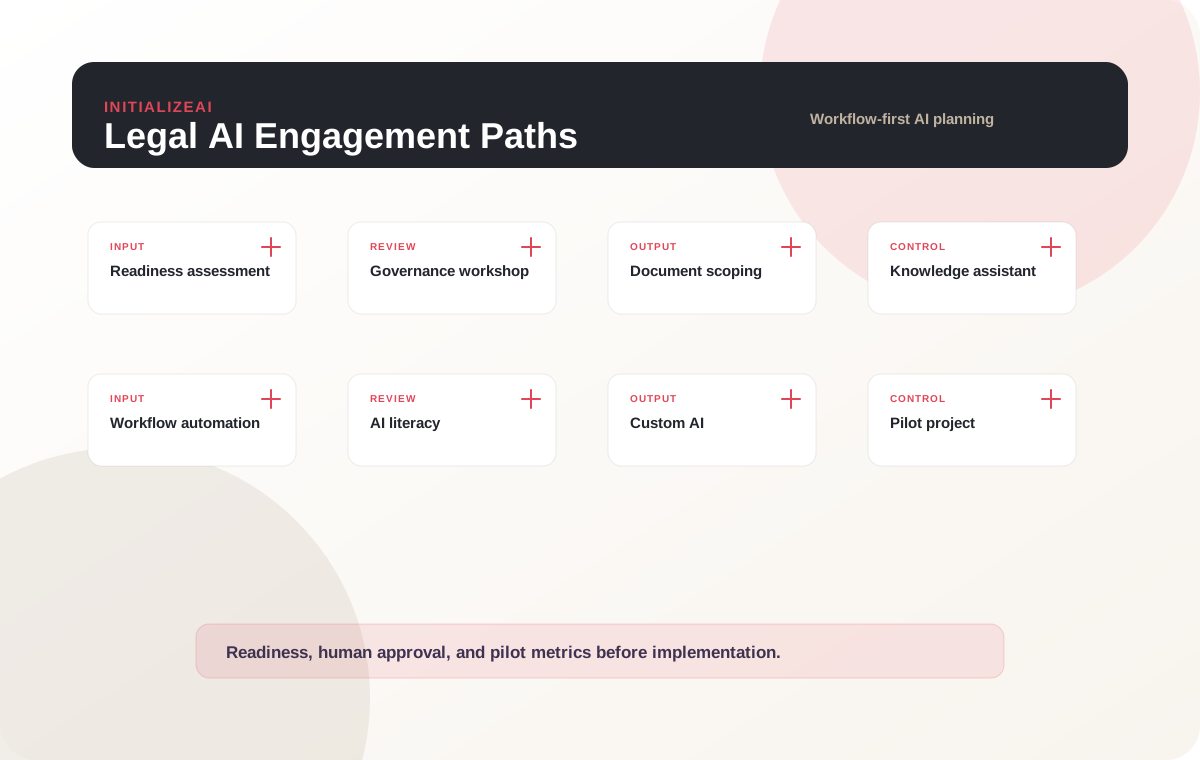
Recommended path: AI Readiness Assessment
Outputs: Readiness map, data/governance gaps, use-case priorities, roadmap.
Explore AI ReadinessRecommended path: AI Governance Workshop
Outputs: Responsible-use guidance, use-case intake process, risk register, review expectations.
Explore AI GovernanceRecommended path: Document Intelligence Scoping
Outputs: Document workflow map, source/data review, human approval model, pilot metrics.
Explore Custom AIRecommended path: Knowledge Assistant Scoping
Outputs: Source inventory, permission model, retrieval plan, feedback loop, adoption plan.
Discuss Knowledge AssistantRecommended path: Workflow Automation Workshop
Outputs: Workflow map, automation candidates, pilot scope.
Explore Workflow AutomationRecommended path: Advisory & Training / Workshops
Outputs: AI literacy session, responsible-use checklist, role-specific playbook.
Explore Advisory & TrainingRecommended path: Custom AI Implementation Scoping
Outputs: Architecture map, prototype path, governance controls, launch plan.
Explore Custom AILegal and professional services solution mapping
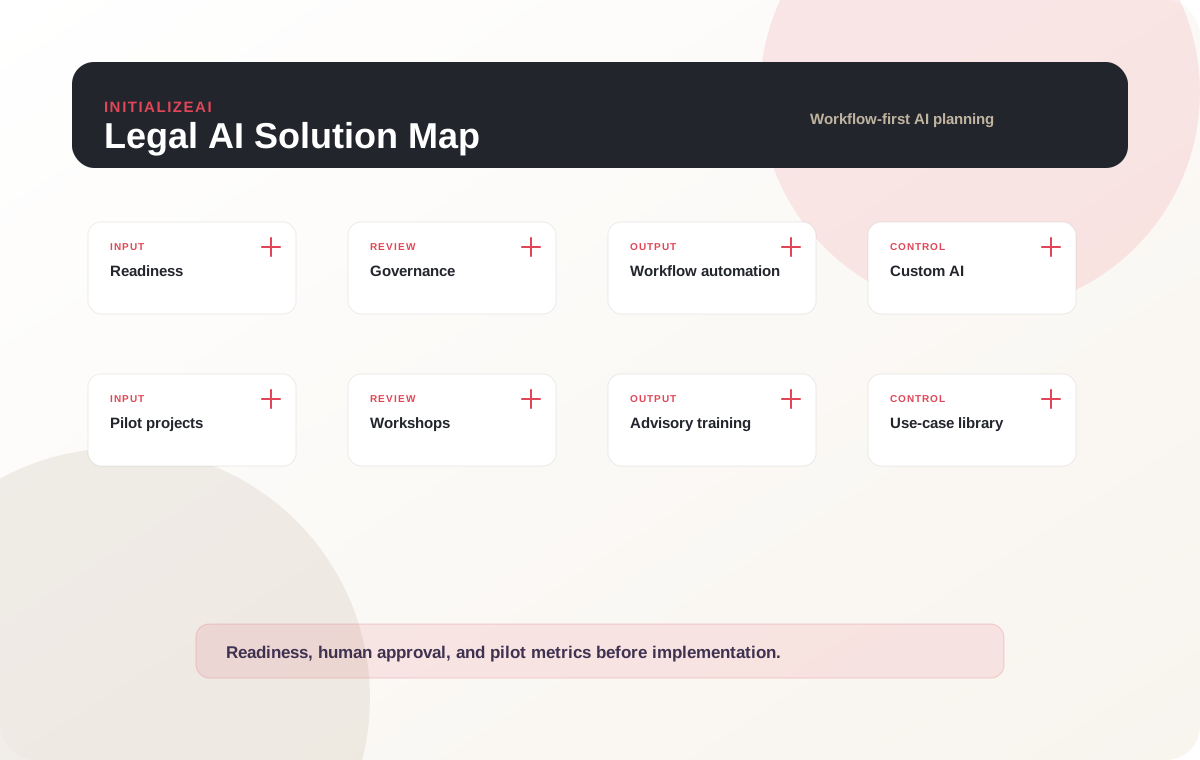
Evaluate readiness across strategy, data, systems, governance, workflows, staff capability, and adoption.
GovernanceAI GovernanceCreate practical guardrails for responsible use, human approval, client-data boundaries, vendor/model review, and reviewable workflows.
WorkflowWorkflow AutomationMap and improve intake, review, client-service, proposal, compliance, knowledge, and back-office workflows.
BuildCustom AI ImplementationScope and build knowledge assistants, document workflows, review queues, proposal assistants, and AI-enabled professional service tools.
PilotAI Pilot ProjectsDesign measurable, bounded, reviewable pilots with owners, metrics, controls, and scale criteria.
WorkshopsWorkshops & BriefingsRun AI literacy, responsible-use, governance, legal operations, and pilot-scoping workshops.
TrainingAdvisory & TrainingBuild leadership alignment and team capability around responsible AI adoption.
Use casesAI Use Case LibraryExplore legal, professional services, document intelligence, and cross-industry AI use-case patterns.
Reviewable artifacts
Practical legal and professional services AI work should produce materials professionals, reviewers, risk leaders, and client-service teams can evaluate, discuss, and use.
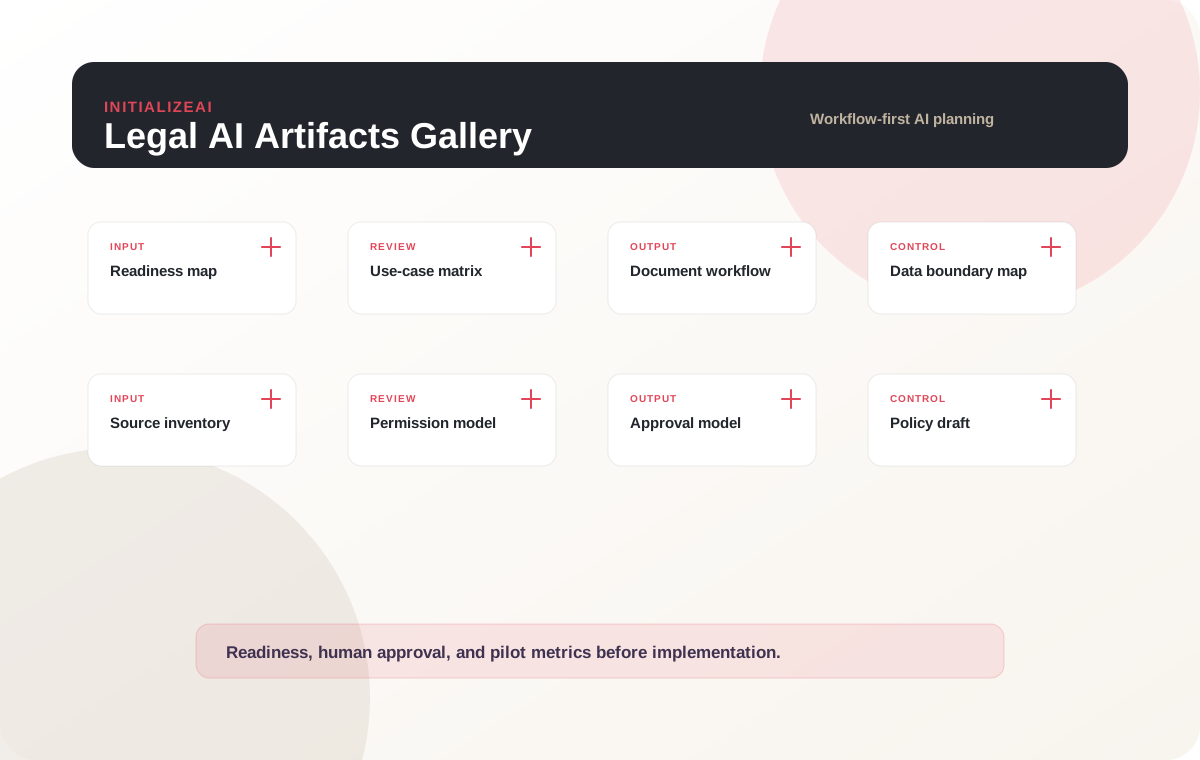
Legal AI Proof
Relevant InitializeAI experience
The public Legal AI build case study shows how InitializeAI developed a product concept and representative platform architecture for document-intensive, knowledge-heavy work where sources, permissions, review, and final professional approval cannot be obscured.
Contracts, matter files, precedents, discovery materials, compliance sources, email, and institutional knowledge created fragmented research and review workflows.
The concept was designed for expert teams that need source-grounded support while qualified professionals retain interpretation, approval, and responsibility for work product.
InitializeAI modeled contract intelligence, litigation support, compliance monitoring, intake, knowledge retrieval, editable drafting support, review states, and a representative integration architecture.
The design includes matter-level permissions, approved sources, citations and provenance, access controls, version history, audit trails, and explicit boundaries around AI-generated work product.
Legal AI illustrates a reviewable operating model for AI-assisted legal and professional workflows: the system can retrieve, organize, summarize, and draft, while a qualified professional checks sources, applies judgment, handles exceptions, and approves the final result.
This public example presents a product concept and representative architecture. It does not claim a customer deployment, guarantee confidentiality or compliance, or provide legal advice.
Why InitializeAI?
InitializeAI brings a practical, governance-aware approach to AI adoption for document-heavy teams that need clarity before implementation.
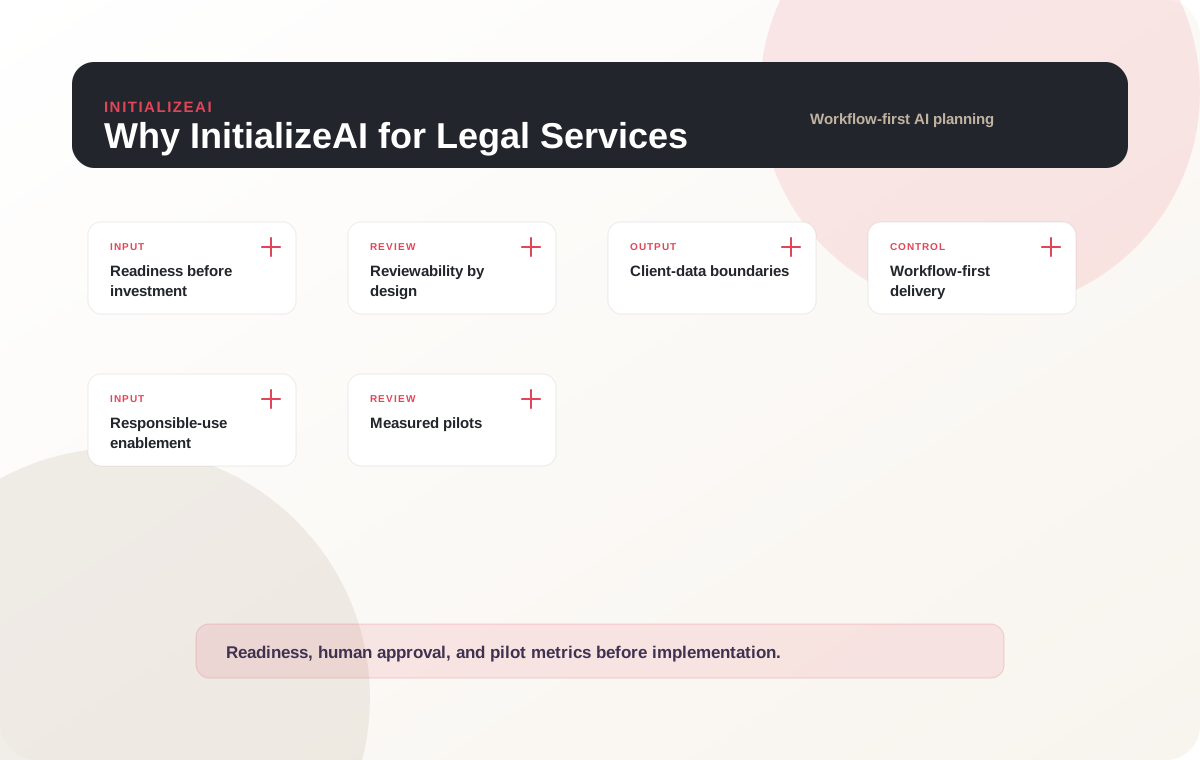
Understand whether the use case, data, systems, workflow, governance, and adoption path are ready before funding AI work.
Design source references, review queues, approval paths, escalation, and professional accountability into the workflow.
Clarify what information can be used, who can access it, what stays out of scope, and how outputs are handled.
Focus on the real process: intake, document review, knowledge retrieval, client updates, proposals, compliance, and professional handoffs.
Help professionals understand AI capabilities, limitations, acceptable use, output review, and escalation expectations.
Define what success, risk, adoption, review quality, and scale readiness mean before expansion.
Related resources
Explore practical AI use-case patterns across document intelligence, knowledge management, intake, and governance.
GovernanceAI GovernanceBuild data boundaries, human review, escalation paths, and responsible-use guidance.
TrustTrust CenterReview InitializeAI's approach to responsible AI, security, privacy, and governance readiness.
BuildCustom AI ImplementationScope knowledge assistants, document workflows, proposal assistants, dashboards, and review queues.
WorkflowWorkflow AutomationMap and modernize intake, review, proposal, compliance, client-service, and back-office workflows.
ReadinessAI Readiness AssessmentAssess strategy, data, systems, workflows, governance, and adoption capacity.
PilotAI Pilot ProjectsDesign bounded pilots with owners, metrics, controls, and scale criteria.
WorkshopsWorkshops & BriefingsAlign leaders, professionals, reviewers, and support teams around practical AI adoption.
TrainingAdvisory & TrainingBuild leadership alignment and team capability around responsible AI adoption.
MethodMethodologySee how InitializeAI moves from readiness to pilots, workflow implementation, and measurement.
EngagementsEngagement ModelsCompare workshops, sprints, pilots, implementation, and advisory support.
Related industryFinancial ServicesExplore governance-sensitive workflows, document intelligence, and human-reviewed financial AI.
Related industryGovernment / Public SectorExplore public-sector readiness, service workflows, responsible use, and governance planning.
Related industryEducation & WorkforceExplore AI literacy, staff enablement, program workflows, and responsible adoption.
ProofCase StudiesReview available examples and practical implementation patterns.
InsightsBlogRead practical AI strategy, governance, and workflow automation guidance.
Legal and professional services AI FAQ
Start with readiness and use-case prioritization. Evaluate client-data boundaries, review workflows, knowledge sources, governance, staff capability, professional judgment, and measurable adoption before investing in AI tools or pilots.
No. InitializeAI provides AI strategy, readiness, governance, workflow automation, training, and implementation support. Legal advice, professional responsibility determinations, and final work-product approval should remain with qualified professionals.
AI can support document-heavy workflows such as summarization, classification, comparison, routing, source lookup, and review queue organization when designed with human approval, source references, and data boundaries.
Client-data boundaries should be defined before AI use. Teams should clarify what information can be used, who can access it, what tools/models are involved, how outputs are reviewed, and what must stay out of scope. Legal, privacy, security, and professional-responsibility stakeholders should review requirements.
Good first pilots are bounded and measurable, such as contract summarization support, matter intake triage, internal knowledge assistants, proposal/RFP response support, policy comparison workflows, or responsible-use training.
Yes. InitializeAI can support responsible-use policy development, use-case intake workflows, AI governance workshops, staff AI literacy, output review playbooks, vendor/model review questions, and human approval models.
No. InitializeAI's approach emphasizes human review, source checking, professional judgment, escalation, and final approval by appropriate professionals.
Data needs depend on the use case. Potential sources include contracts, policies, templates, precedents, client communications, knowledge bases, matter/project records, proposals, RFPs, compliance documents, and internal playbooks.
Yes, depending on scope. InitializeAI can help evaluate, scope, and support custom AI workflows such as knowledge assistants, document review support, intake tools, proposal assistants, review dashboards, and workflow automation.
Legal and professional services consultation
Use this path for legal AI readiness, professional services AI strategy, document intelligence, knowledge management, matter or client intake, responsible AI policies, AI literacy training, workflow automation, pilot scoping, or custom AI implementation planning.
Practical, reviewable, governed
InitializeAI can help your team assess readiness, prioritize use cases, define data boundaries, govern risk, train professionals, scope pilots, automate workflows, and plan practical AI implementation around real document, knowledge, intake, review, and client-service constraints.