Education, Workforce & Nonprofit AI

Responsible AI for mission-driven teams that need trust, training, and measurable execution.

InitializeAI helps school districts, education teams, workforce organizations, nonprofits, and public-service partners assess AI readiness, train staff, govern risk, modernize workflows, and design practical AI pilots that protect trust while improving operations.
AI literacy and staff training Policy and governance readiness Workflow modernization Program operations support Human oversight Responsible adoption
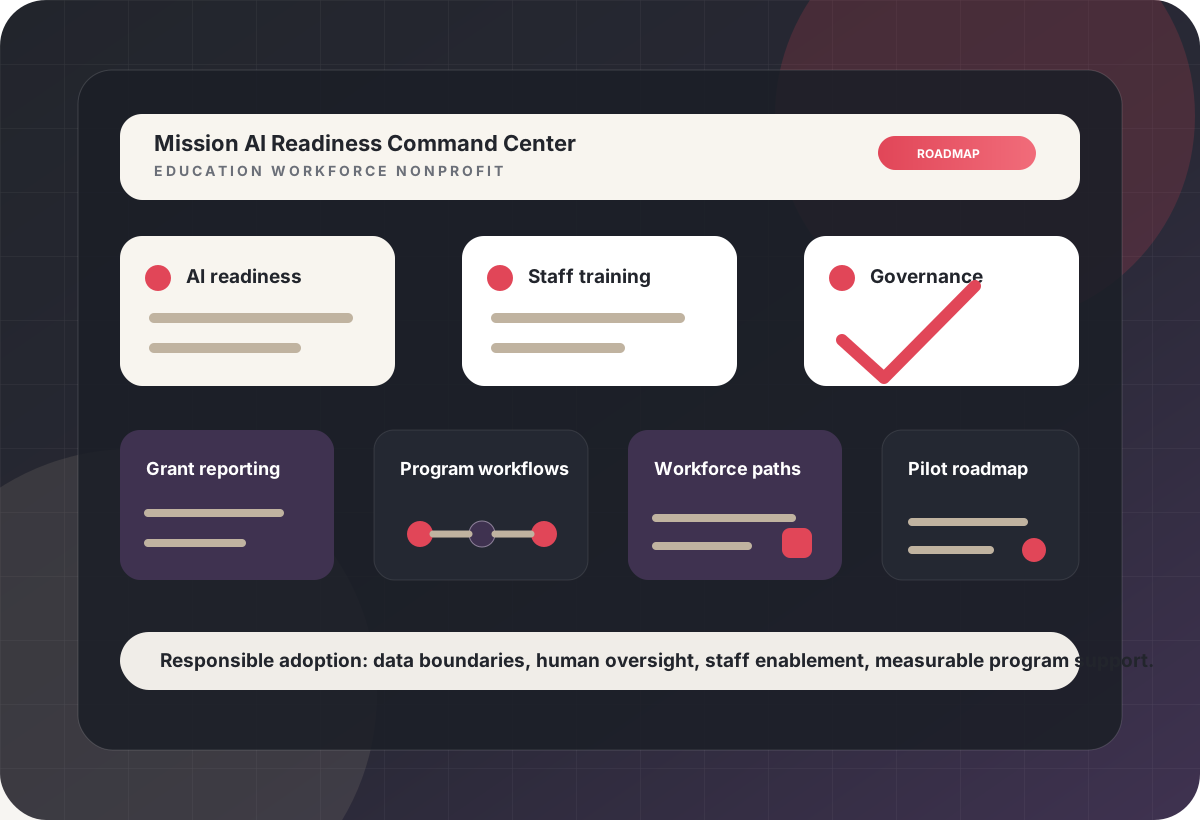
Education, workforce, and nonprofit AI command center showing readiness, staff training, governance, program workflows, grant reporting, workforce pathways, and responsible adoption.

Industry Reality

Mission-driven organizations do not need AI theater. They need responsible adoption that works in real programs.

Education, workforce, and nonprofit teams face the same pressure as large enterprises: use AI to move faster, reduce administrative burden, and improve decision-making. But the constraints are different. These teams must protect trust, support staff, serve diverse communities, respect sensitive data, and make adoption practical for real people.

AI interest without readiness

Leaders are being asked to respond to AI quickly, but may not yet have a clear view of staff readiness, policy needs, data boundaries, use cases, or adoption risks.

Staff uncertainty

Teachers, program managers, caseworkers, operations teams, and nonprofit staff need practical guidance on what AI can do, when it should not be used, and how outputs should be reviewed.

Sensitive data and trust

Education and nonprofit workflows can involve student, learner, participant, donor, staff, financial, and program data that require careful boundaries and human oversight.

Program workflows under pressure

Grant reporting, intake, case notes, student support, workforce services, communications, and administrative work can consume time that teams want to redirect toward mission impact.

Governance before scale

AI policies, acceptable-use guidance, vendor/model review, data handling, and escalation paths should be considered before pilots expand.

Pilots without adoption plans

AI pilots can fail when staff are not trained, workflows are not redesigned, and success metrics are not connected to program operations.

Who This Is For

Built for education, workforce, nonprofit, and public-service teams.

K-12 school districts

AI literacy, staff enablement, policy readiness, responsible-use guidance, administrative workflows, and district-level AI readiness.

Higher education and continuing education

AI readiness, faculty/staff enablement, learner support workflows, operations automation, research/admin workflows, and responsible adoption planning.

Workforce development boards and training organizations

Career pathway support, participant intake, case management, employer engagement, reporting workflows, and AI literacy for staff and learners.

Nonprofits and social-impact organizations

Grant reporting, donor and volunteer workflows, program operations, intake, communications, knowledge management, and responsible AI enablement.

Public-sector education and human-services partners

Procurement-aware AI readiness, staff training, governance workshops, program workflows, and implementation planning.

Foundations and funders

Support for grantee AI readiness, responsible adoption, capacity building, reporting modernization, and program evaluation workflows.

AI Opportunity Areas

Where practical AI can help mission-driven teams.

InitializeAI helps identify use cases that reduce administrative burden, support staff, improve program visibility, and strengthen responsible adoption.
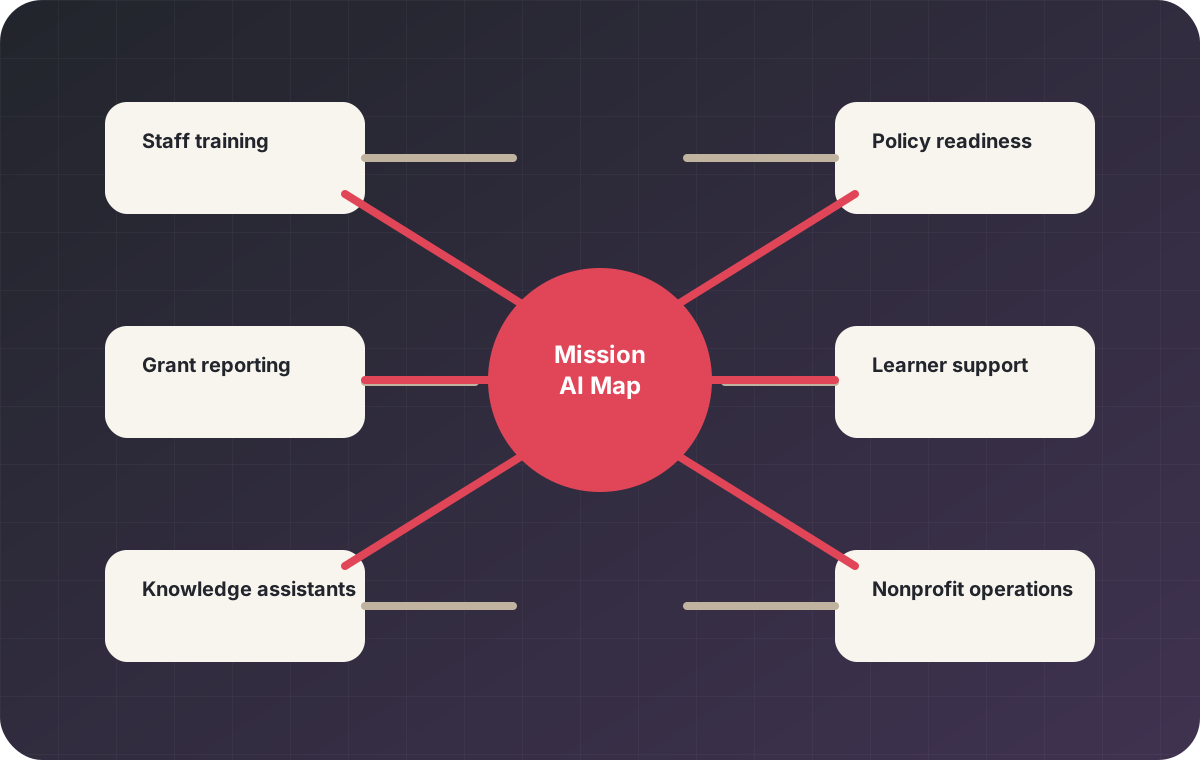
Mission-driven AI opportunity map showing staff training, policy readiness, grant reporting, learner support, workforce pathways, knowledge assistants, and nonprofit operations.

AI literacy and staff enablement

Mission value
Build shared understanding of AI capabilities, limitations, safe use, and review expectations.
Governance considerations
Acceptable use, sensitive data, output review, human oversight, and staff confidence.
First pilot
Role-specific AI literacy workshop plus staff FAQ and responsible-use guide.
Explore Workshops & Briefings

Policy and governance readiness

Mission value
Create clearer guidance before AI use spreads informally across teams.
Governance considerations
Privacy, accessibility, student or participant data, vendor/model questions, human review, and escalation.
First pilot
Use-case intake process and responsible-use checklist.
View Trust Center

Grant reporting and program documentation

Mission value
Reduce manual drafting, evidence collection, report assembly, and documentation burden.
Governance considerations
Source traceability, reviewer approval, data boundaries, and output validation.
First pilot
Human-reviewed grant reporting support for one program.
Explore Workflow Automation

Student, learner, or participant support workflows

Mission value
Help staff organize information, summarize needs, route requests, and follow up consistently.
Governance considerations
Human review, sensitive data handling, fairness, escalation, and access boundaries.
First pilot
Internal staff assistant for a bounded support workflow.
Explore AI Readiness

Workforce pathway and career-service support

Mission value
Support participant intake, skill matching, training recommendations, employer engagement, and case management workflows.
Governance considerations
Fairness, transparency, human review, privacy, and program rules.
First pilot
Caseworker support tool for summarizing intake and identifying next-step resources.
Discuss workforce AI support

Knowledge management and internal assistants

Mission value
Help staff find policies, procedures, grant requirements, program rules, FAQs, and internal resources faster.
Governance considerations
Source grounding, access controls, data freshness, and output review.
First pilot
Internal knowledge assistant for one team or program.
Explore Custom AI

Donor, volunteer, and community operations

Mission value
Improve communications, segmentation, volunteer coordination, reporting, and administrative workflows.
Governance considerations
Donor privacy, messaging review, bias, consent, and relationship context.
First pilot
Volunteer or donor communications workflow with human approval.
Explore nonprofit AI support

Administrative and back-office automation

Mission value
Reduce repetitive work in scheduling, intake, summaries, meeting notes, reporting, finance, HR, and procurement.
Governance considerations
Access controls, output review, auditability, and process ownership.
First pilot
AI-assisted document intake and routing workflow.
Explore Workflow Automation

Program evaluation and dashboards

Mission value
Improve visibility into program activity, service demand, bottlenecks, and resource needs.
Governance considerations
Data quality, interpretation, decision authority, and responsible reporting.
First pilot
Dashboard concept and measurement model for one program.
Explore readiness support

Public-sector AI training and procurement readiness

Mission value
Prepare teams for responsible AI adoption, vendor conversations, training needs, and pilot planning.
Governance considerations
Procurement integrity, policy readiness, staff adoption, documentation, and risk review.
First pilot
AI readiness workshop plus pilot scoping session.
View Government Contracting Profile

Sector Pathways

Different missions, different starting points.

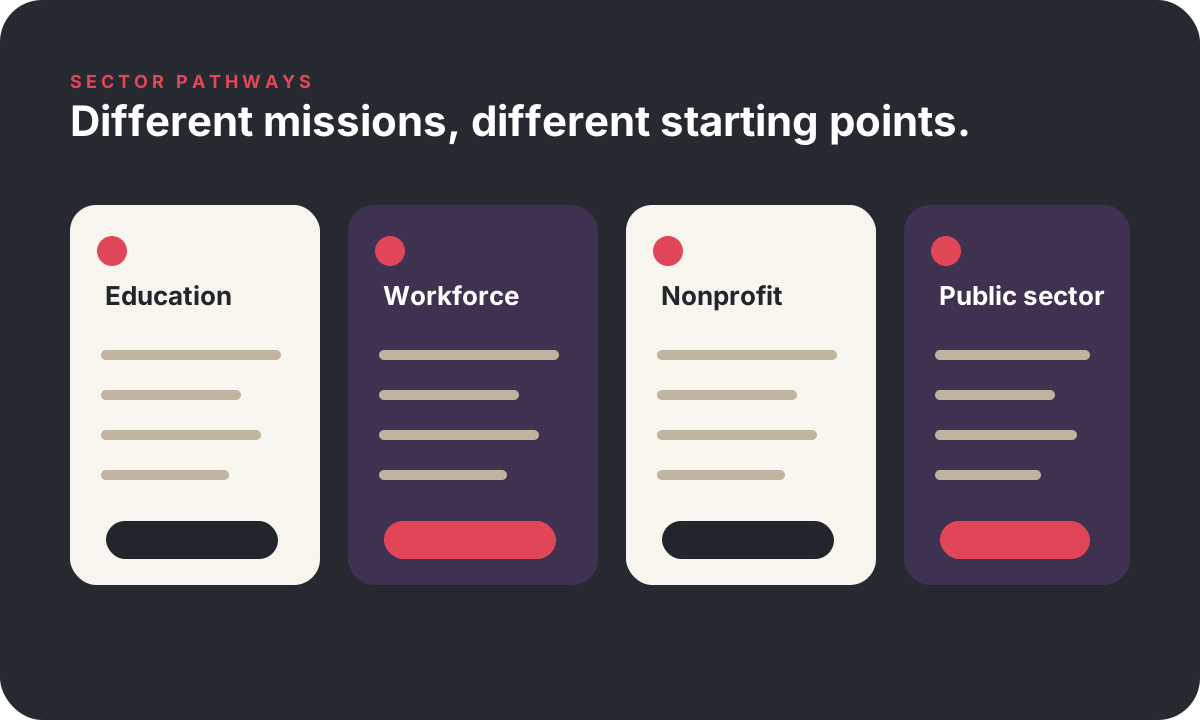
Sector pathways dashboard for education, workforce, nonprofit, and public-sector teams choosing AI readiness, training, governance, and workflow support.

Education pathway

K-12 districts, higher education, continuing education, and learning organizations.

Common needs
  • Staff AI literacy
  • Policy and responsible-use guidance
  • Administrative workflow automation
  • Learner support workflows
  • Knowledge assistants
  • AI readiness and governance
Best first step

AI Readiness Workshop or AI Literacy Training

Explore Education Workshops

Workforce pathway

Workforce boards, training providers, career programs, apprenticeship programs, and public-sector workforce teams.

Common needs
  • Participant intake support
  • Skills and career pathway workflows
  • Employer engagement support
  • Case notes and reporting
  • Grant/program reporting
  • Staff enablement
Best first step

Workflow Automation Workshop or AI Strategy Workshop

Discuss Workforce AI Support

Nonprofit pathway

Nonprofits, foundations, associations, community organizations, and social-impact teams.

Common needs
  • Grant reporting
  • Program operations
  • Donor and volunteer workflows
  • Knowledge management
  • Communications support
  • Responsible-use guidance
Best first step

AI Execution Gap Briefing or Workflow Automation Workshop

Explore Nonprofit AI Support

Public-sector education and human services

Government education offices, workforce agencies, municipalities, school districts, and public-sector partners.

Common needs
  • Procurement-aware readiness
  • Staff training
  • Governance workshops
  • Program workflow modernization
  • Capability statement and teaming support
  • Pilot scoping
Best first step

Government AI Consultation or Public-Sector AI Training

View Government Contracting Profile

AI Literacy And Training

AI literacy that connects policy, people, and workflows.

AI training should not only explain tools. It should help teams understand safe use, sensitive data, output review, human oversight, and where AI fits into their actual work.
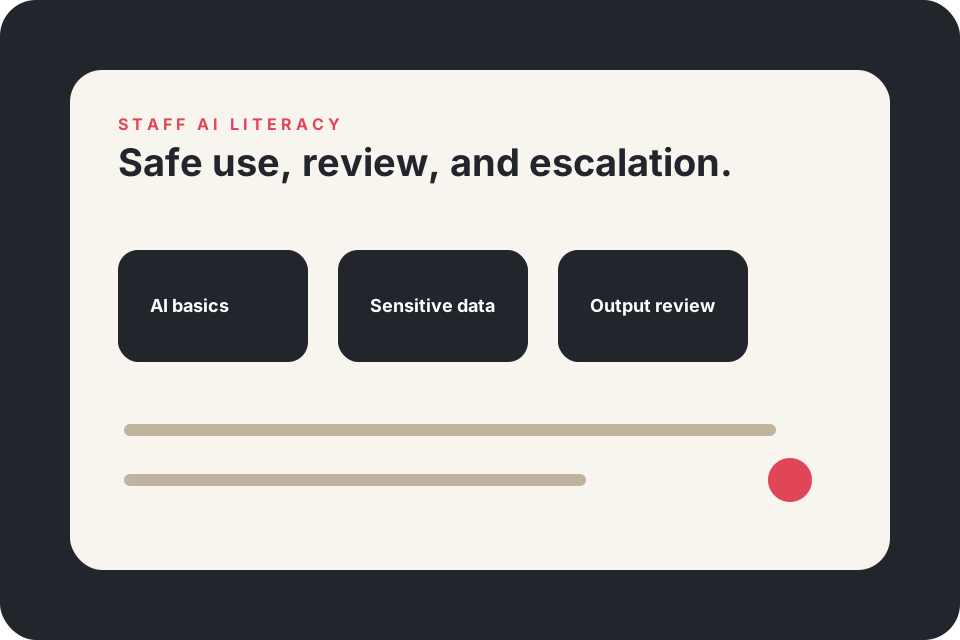

Staff AI literacy training visual showing AI basics, responsible use, sensitive data, output review, and escalation.
AI literacy training session for practical team enablement.
AI literacy and staff enablement
Cross-functional AI readiness workshop with stakeholders reviewing opportunities.
Readiness workshops and use-case alignment
Responsible AI governance training and review planning.
Responsible AI and governance training

Executive and board briefing

Strategic overview of AI opportunity, risk, oversight, investment, and responsible adoption.

Output

Decision questions, readiness signals, recommended next step.

Staff AI literacy

Practical training for non-technical users on AI basics, safe use, output review, sensitive data, and escalation.

Output

Training materials, staff FAQ, responsible-use checklist.

Role-specific playbooks

Guidance for educators, program managers, caseworkers, operations staff, communications teams, fundraisers, and administrators.

Output

Role-specific AI examples, safe-use guidance, workflow prompts, review steps.

Governance and policy workshop

Facilitated working session to clarify acceptable use, review paths, vendor/model questions, and human oversight.

Output

Policy questions, governance checklist, use-case intake model.

Public-sector or district readiness workshop

Readiness session for education, workforce, or public-sector teams preparing for AI adoption.

Output

Readiness map, use-case priorities, 30/60/90-day roadmap.

Governance And Trust

Responsible adoption before scale.

Education, workforce, and nonprofit teams need governance that is practical enough to use and careful enough to protect trust.
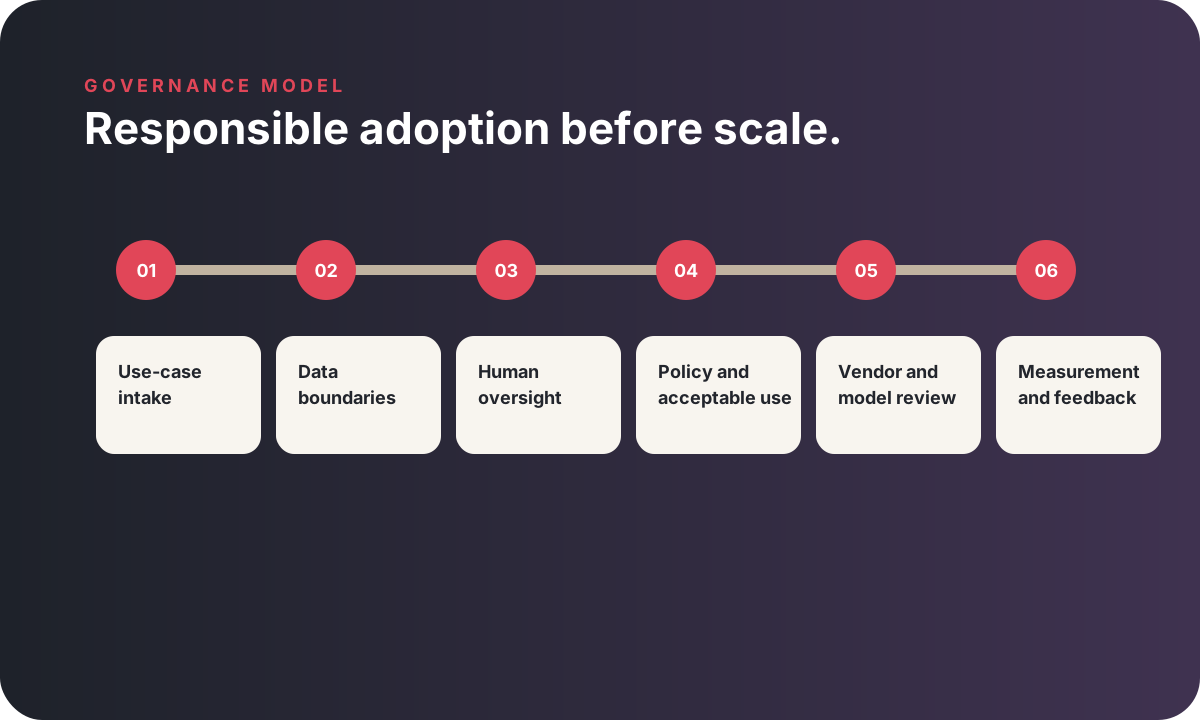
Responsible AI governance model for education, workforce, and nonprofit teams showing use-case intake, data boundaries, human oversight, policy, vendor review, and measurement.
01

Use-case intake

Define purpose, users, affected stakeholders, data, workflow, owner, and expected outcome.

02

Data boundaries

Clarify what data is needed, what should stay out of scope, who can access it, and how outputs are handled.

03

Human oversight

Define review steps, decision authority, escalation paths, and exception handling.

04

Policy and acceptable use

Create clear guidance for staff on what AI can be used for, what it should not be used for, and when approval is required.

05

Vendor/model review

Evaluate tool, model, data-processing, procurement, and integration questions before pilots expand.

06

Measurement and feedback

Track adoption, quality, staff confidence, workflow impact, risks, and improvement needs.

Program Operations

Modernize the workflows that keep programs running.

Mission-driven organizations often carry heavy administrative loads. InitializeAI helps identify where AI and automation can support staff without replacing judgment.
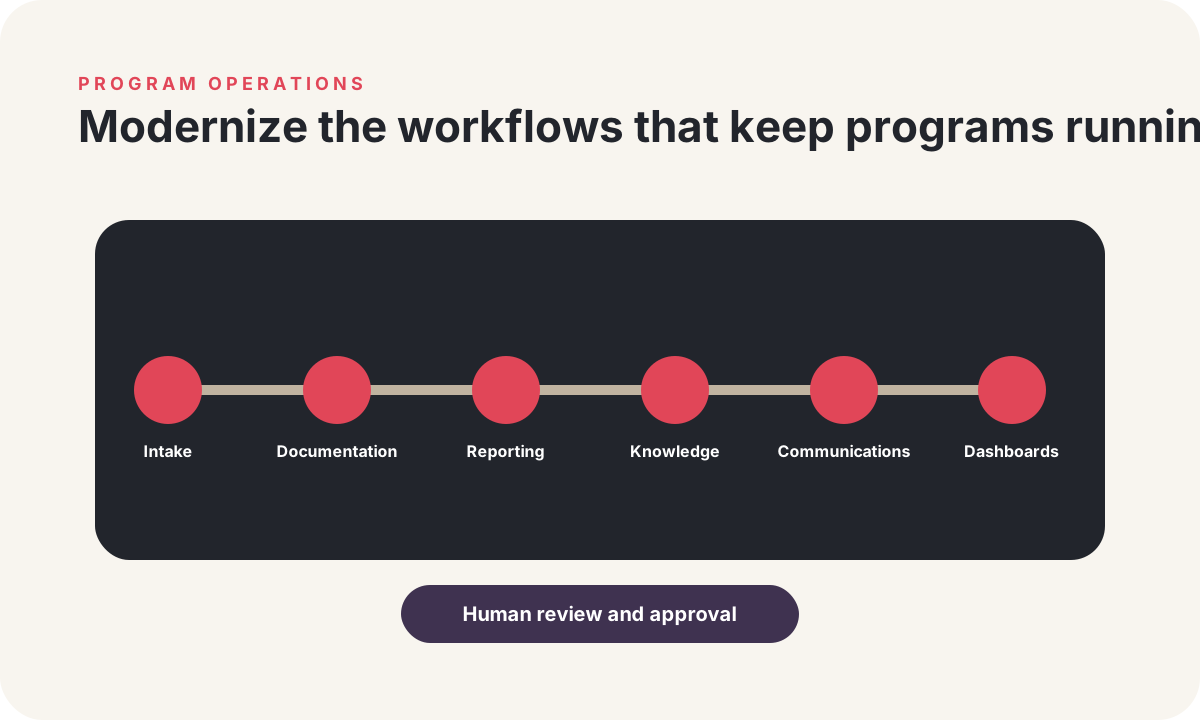
Program operations workflow showing intake, documentation, reporting, knowledge lookup, communications, dashboards, and human review.

Intake and triage

AI can support
Student or participant requests, program applications, service inquiries, volunteer intake, and case routing.
Humans review
Eligibility, exceptions, sensitive context, and final routing decisions.
Good first pilot
Bounded intake summary and triage workflow for one program.

Documentation and summarization

AI can support
Meeting notes, case notes, program updates, grant narratives, and board summaries.
Humans review
Accuracy, tone, source alignment, and sensitive information.
Good first pilot
Human-approved summary workflow for recurring program updates.

Reporting and evidence collection

AI can support
Grant reporting, program outcomes, documentation, funder updates, and internal dashboards.
Humans review
Evidence, interpretation, metrics, and final submissions.
Good first pilot
Grant report assembly support with source review.

Knowledge and policy lookup

AI can support
Staff handbooks, program rules, grant requirements, training materials, and standard operating procedures.
Humans review
Policy interpretation, outdated sources, and exceptions.
Good first pilot
Internal assistant for one approved knowledge set.

Communications and outreach

AI can support
Donor messaging drafts, participant reminders, family/community communications, employer outreach, and volunteer coordination.
Humans review
Relationship context, consent, voice, and sensitive messaging.
Good first pilot
Draft-and-approve workflow for one communication type.

Decision support and dashboards

AI can support
Service demand, program bottlenecks, workforce placement signals, resource planning, and staff workload visibility.
Humans review
Data quality, operational context, and decision authority.
Good first pilot
Dashboard prototype for one service or program workflow.

How InitializeAI Can Help

Support across readiness, training, governance, workshops, workflow automation, and implementation.

AI Readiness & Execution Gap Assessment

Assess whether your organization is ready for AI across strategy, data, systems, governance, workflows, staff capability, and adoption.

Best for
Leaders deciding where to start.
Deliverables
Readiness score, gap summary, use-case priorities, roadmap.
Explore AI Readiness

Workshops & Briefings

Run focused sessions for leadership, staff, educators, program teams, boards, or public-sector stakeholders.

Best for
Building shared language and deciding next steps.
Deliverables
Briefing deck, use-case map, training materials, 30/60/90-day plan.
Explore Workshops

Advisory & Team Training

Provide AI literacy training, role-specific enablement, governance training, and executive advisory.

Best for
Teams that need capability before pilots scale.
Deliverables
Training program, playbooks, responsible-use guidance.
Explore Advisory & Training

AI Governance

Create practical guardrails for responsible adoption, data boundaries, human oversight, vendor/model review, and policy readiness.

Best for
Organizations where trust, privacy, and public confidence are critical.
Deliverables
Governance checklist, acceptable-use guidance, risk register.
Explore AI Governance

Workflow Automation

Map and improve repetitive administrative, reporting, intake, communications, and knowledge workflows.

Best for
Teams under operational pressure.
Deliverables
Workflow map, automation candidates, prototype, implementation plan.
Explore Workflow Automation

Custom AI Implementation

Support internal assistants, document workflows, dashboards, intake tools, and AI-enabled operational systems.

Best for
Teams ready to implement a bounded use case.
Deliverables
Prototype, integration plan, internal tool, review workflow.
Explore Custom AI

AI Pilot Projects

Turn a use case into a measurable, governed pilot with owners, metrics, controls, and scale criteria.

Best for
Teams ready to test responsibly.
Deliverables
Pilot charter, metrics plan, governance controls, scale recommendation.
Explore AI Pilot Projects

Example First Pilots

Good first pilots for education, workforce, and nonprofit teams.

The best first pilots are bounded, useful, reviewable, and measurable.
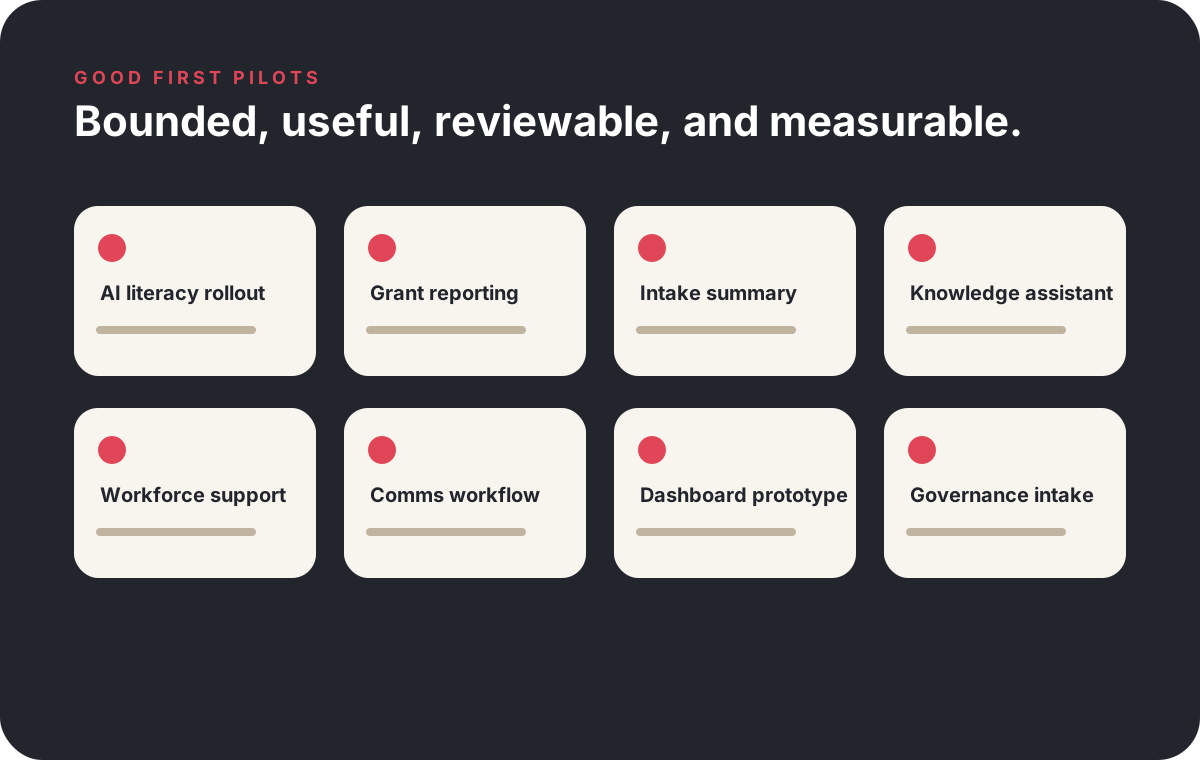
Gallery of first AI pilot ideas for education, workforce, and nonprofit teams including staff training, grant reporting, intake, knowledge assistant, and dashboards.

Staff AI literacy and responsible-use rollout

Pilot scope
Train one leadership group or department and create a staff AI FAQ and responsible-use checklist.
Measures
Staff confidence, usage clarity, policy questions resolved, adoption readiness.

Grant reporting assistant

Pilot scope
Support drafting, evidence organization, and report assembly for one grant or program.
Measures
Cycle time, reviewer effort, source traceability, report quality.

Program intake summarization workflow

Pilot scope
Assist staff with summarizing intake forms and routing requests for one program.
Measures
Routing time, staff workload, completeness, exception rate.

Internal policy and knowledge assistant

Pilot scope
Create a bounded internal assistant for one set of procedures, policies, or training materials.
Measures
Search time, accuracy, staff satisfaction, escalation cases.

Workforce participant support workflow

Pilot scope
Assist caseworkers with intake summaries, next-step resources, and follow-up reminders.
Measures
Caseworker time, consistency, participant follow-up, human review quality.

Nonprofit communications workflow

Pilot scope
Draft donor, volunteer, or community communications with review and approval.
Measures
Drafting time, approval quality, message consistency, relationship risk.

Dashboard and program visibility prototype

Pilot scope
Create a dashboard concept for one program's demand, throughput, bottlenecks, or outcomes.
Measures
Decision usefulness, data quality, reporting time, stakeholder clarity.

AI governance intake workflow

Pilot scope
Create an intake and review process for proposed AI use cases.
Measures
Use-case clarity, risk identification, approval readiness, stakeholder alignment.

Public-Sector And Grant-Funded Environments

Built for public-sector and grant-funded environments.

Education, workforce, and nonprofit organizations often operate with public funding, grant requirements, stakeholder oversight, procurement rules, and community trust obligations. InitializeAI can help teams prepare clear readiness, governance, training, and implementation materials before pilots move forward.
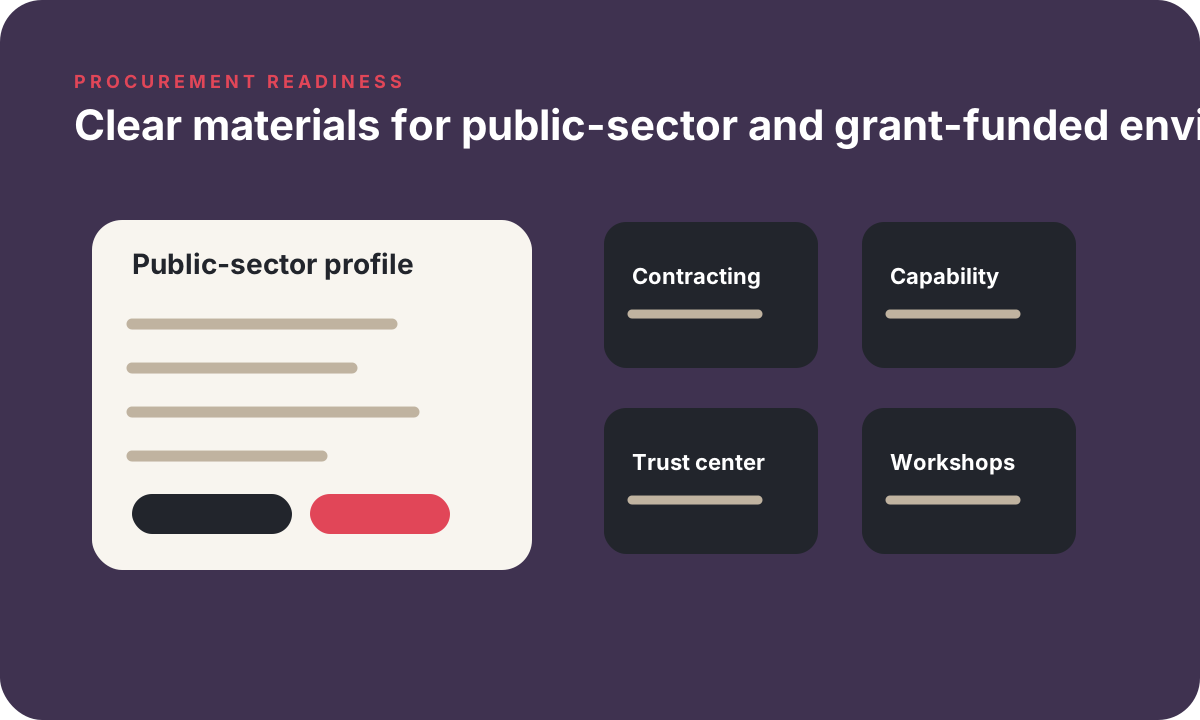
Public-sector education procurement panel showing government contracting profile, capability statement, trust center, workshops, and governance.

Government contracting profile

Procurement-facing profile, identifiers, NAICS, and public-sector positioning.

Capability statement

Capability materials for reviewers, primes, teaming partners, and public-sector buyers.

Trust center

Responsible AI, data boundaries, human oversight, and security review readiness.

Public-sector AI workshops

Readiness, literacy, governance, pilot scoping, and procurement-aware training.

AI governance

Use-case intake, risk review, oversight, acceptable-use guidance, and documentation.

Training and readiness

Staff enablement, role-specific guidance, and practical adoption planning.

InitializeAI Methodology
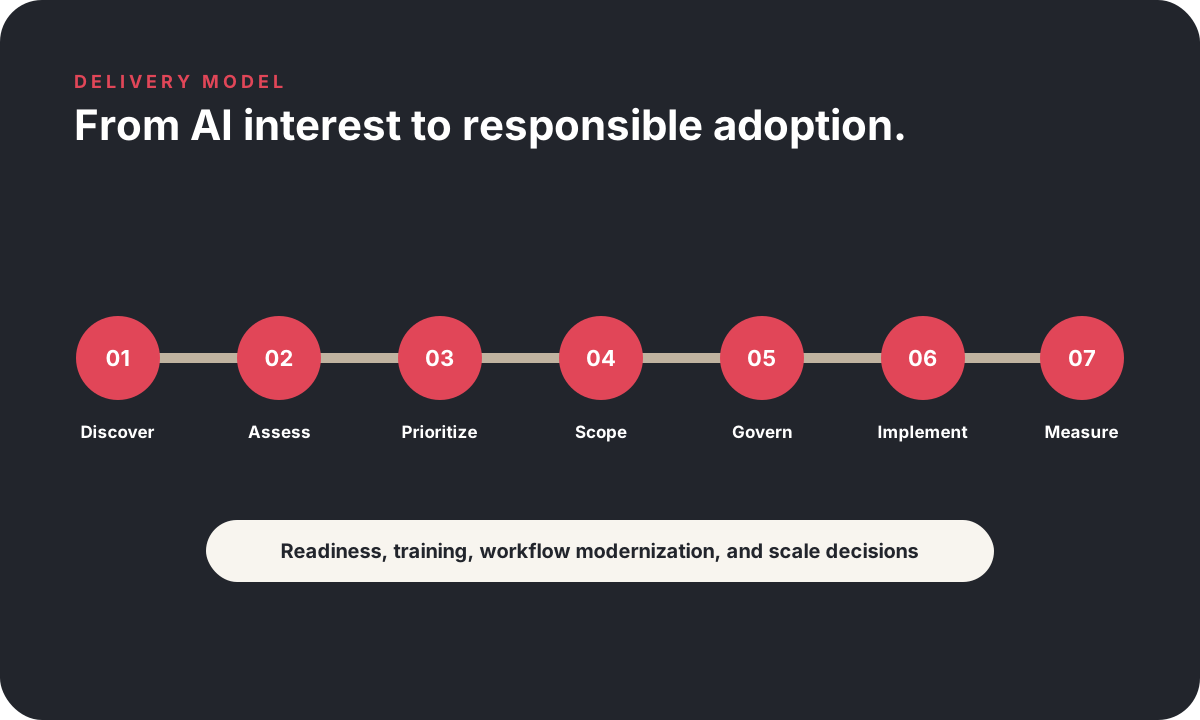
A practical path from AI interest to responsible adoption.

Education, workforce, and nonprofit AI delivery model showing discovery, readiness, use-case prioritization, workshop or pilot scoping, governance, implementation, and measurement.
01

Discover mission need

Clarify the audience, program, workflow, pain point, stakeholders, and risk context.

02

Assess readiness

Evaluate data, systems, policies, governance, staff capability, workflows, and adoption capacity.

03

Prioritize use cases

Rank opportunities by mission value, feasibility, risk, data readiness, and workflow fit.

04

Scope workshop or pilot

Define the session or pilot with audience, owner, deliverables, controls, metrics, and next decision.

05

Govern and train

Prepare staff, define responsible-use guidance, clarify review paths, and establish data boundaries.

06

Implement or recommend next step

Deliver training, roadmap, prototype, workflow automation, dashboard, or implementation plan.

07

Measure and improve

Review adoption, staff feedback, workflow impact, risk posture, and scale readiness.

Artifacts And Deliverables

Artifacts that make responsible adoption practical.

InitializeAI engagements produce materials teams can use after the session or pilot.
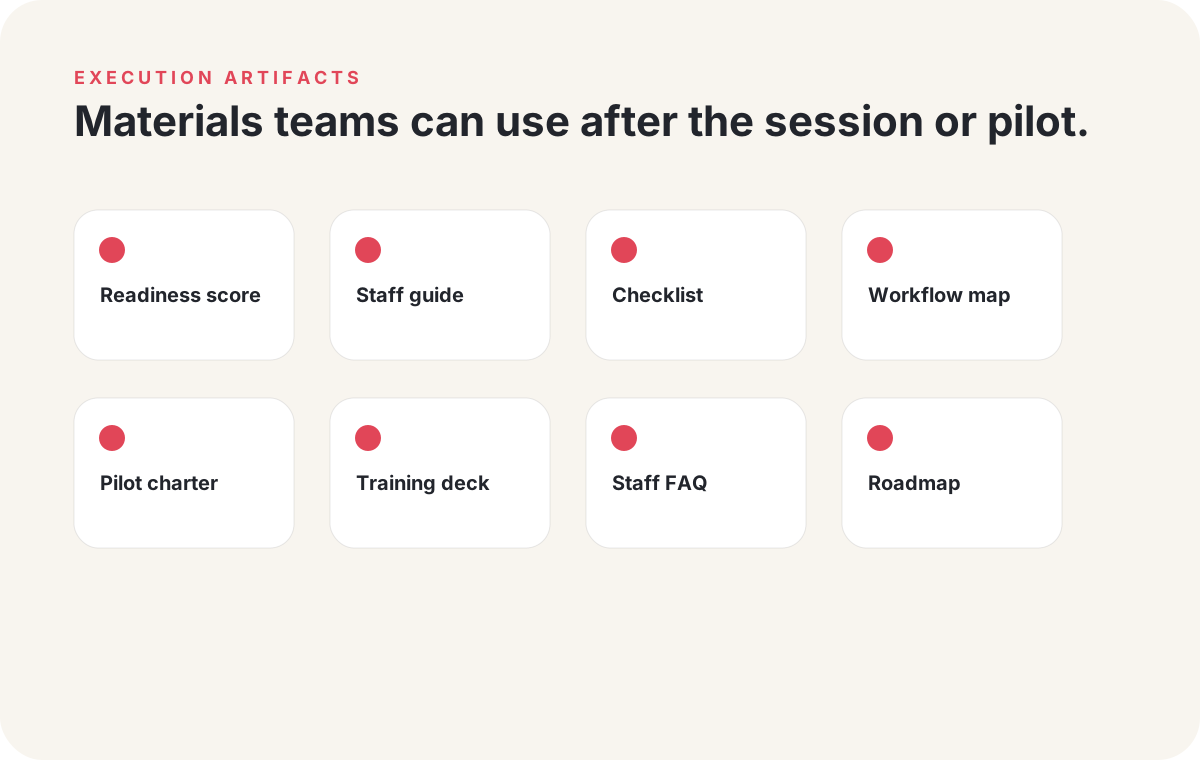
Education, workforce, and nonprofit AI artifacts gallery showing readiness score, staff guide, responsible-use checklist, workflow map, pilot charter, and roadmap.
Execution artifact

AI readiness score

Execution artifact

Staff AI literacy guide

Execution artifact

Responsible-use checklist

Execution artifact

Use-case prioritization matrix

Execution artifact

AI policy question set

Execution artifact

Data boundary map

Execution artifact

Workflow map

Execution artifact

Grant reporting workflow

Execution artifact

Program operations dashboard concept

Execution artifact

Vendor/model review questions

Execution artifact

Human oversight model

Execution artifact

Pilot charter

Execution artifact

Training deck

Execution artifact

Staff FAQ

Execution artifact

30/60/90-day roadmap

Execution artifact

Scale decision record

FAQ

Education, workforce, and nonprofit AI FAQ

Where should an education or nonprofit organization start with AI?

Start by assessing readiness: leadership goals, staff capability, data boundaries, policies, governance, workflows, and a few high-value use cases. A workshop or readiness assessment is often the safest first step.

Can InitializeAI help with staff AI literacy?

Yes. InitializeAI can support AI literacy training, role-specific playbooks, responsible-use guidance, and staff enablement for education, workforce, nonprofit, and public-sector teams.

Can this support school districts?

Yes. InitializeAI can support district AI readiness, staff training, policy conversations, responsible-use guidance, and practical workflow planning.

Can this support workforce development organizations?

Yes. InitializeAI can help evaluate use cases around participant intake, case management, career pathway support, employer engagement, grant reporting, and staff enablement.

Can nonprofits use AI responsibly without large technical teams?

Yes, but the best starting point is a bounded use case with clear data boundaries, human review, staff training, and a practical adoption plan.

How do you approach sensitive student, learner, participant, or donor data?

InitializeAI helps teams define data boundaries, sensitivity considerations, access needs, review paths, and vendor/model questions before piloting AI-enabled workflows.

Can training lead into implementation?

Yes. Training or workshops can lead into readiness assessments, governance sprints, workflow automation, pilot projects, or custom AI implementation.

Can InitializeAI support grant-funded or public-sector opportunities?

Yes. InitializeAI can support readiness, training, governance, workflow modernization, pilot scoping, and procurement-aware documentation for public-sector and mission-driven environments.

Consultation Path

Discuss an education, workforce, or nonprofit AI opportunity.

Use this path for school district AI readiness, staff training, AI literacy, workforce development workflows, nonprofit operations, grant reporting, governance workshops, public-sector training, or responsible AI implementation.
Education, workforce, and nonprofit AI consultation form visual showing organization type, inquiry type, audience, timeline, and message.

Responsible Adoption

Ready to make AI useful, responsible, and practical for your mission?

InitializeAI can help your education, workforce, or nonprofit team assess readiness, train staff, govern risk, modernize workflows, and design AI pilots that fit real program operations.

Education, workforce, and nonprofit AI command center showing readiness, staff training, governance, program workflows, grant reporting, workforce pathways, and responsible adoption.