Field work is hard to verify
Photos, notes, timestamps, customer signoff, exceptions, and technician context often live across camera rolls, forms, emails, and disconnected systems.
AI for Field Services & Facilities Management
InitializeAI helps field service and facilities teams evaluate AI opportunities, map technician workflows, improve field documentation, support maintenance triage, design proof-of-work pilots, and implement practical AI with human review and adoption built in.
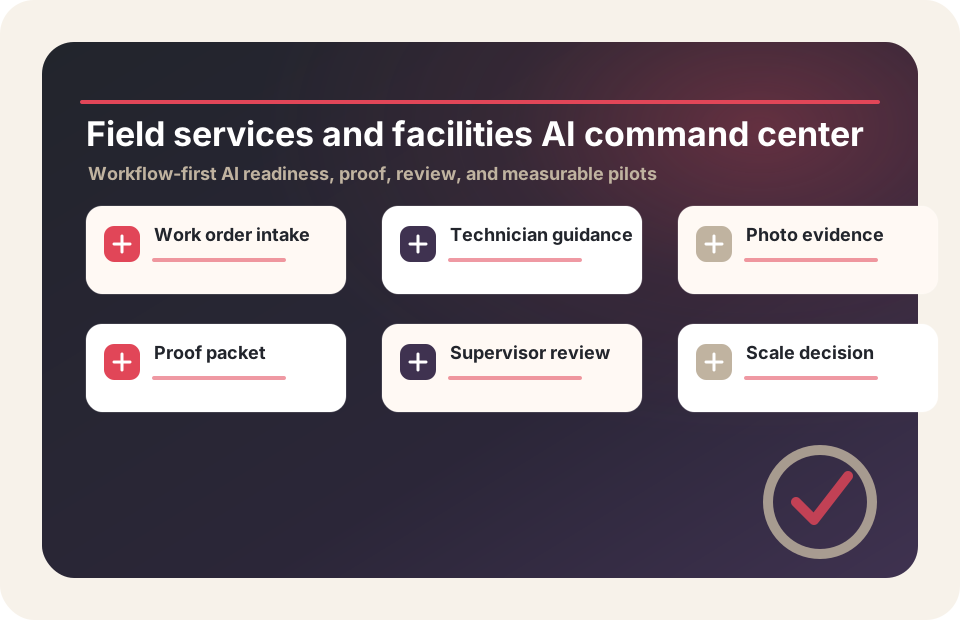
Field Operations AI Execution Gap
Field service and facilities teams have many promising AI opportunities: work-order triage, technician guidance, field documentation, proof-of-work packets, inspection workflows, maintenance routing, facilities request handling, supervisor review, SOP assistance, and customer or warranty documentation. AI creates value only when the workflow is clear, field evidence is captured, supervisors trust the review process, technicians can use it easily, and pilots are measured.
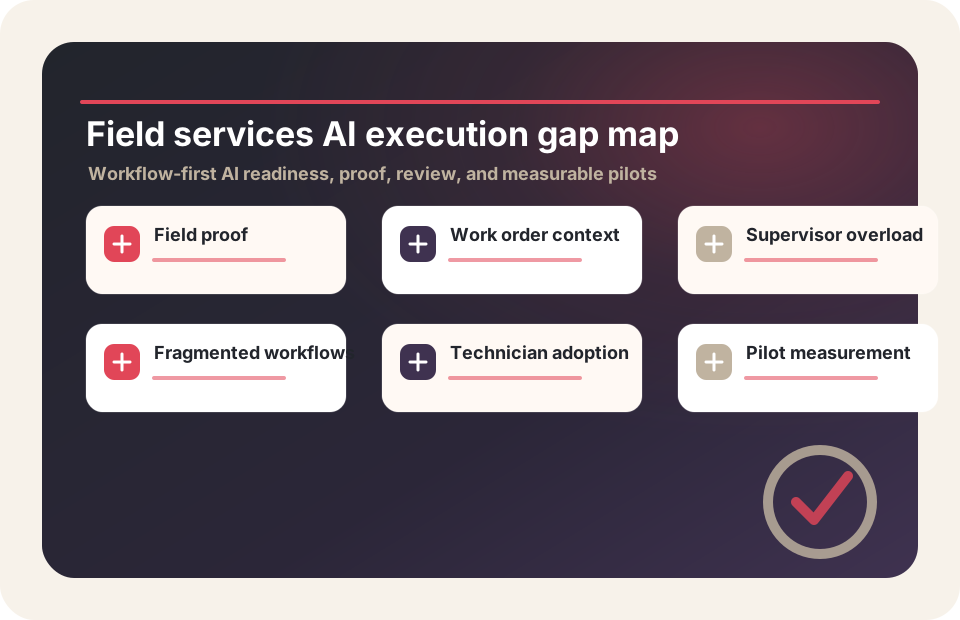
Photos, notes, timestamps, customer signoff, exceptions, and technician context often live across camera rolls, forms, emails, and disconnected systems.
Technicians and supervisors may not have the asset history, prior visits, procedure steps, warranty context, or customer notes needed at the point of work.
Managers and dispatchers often review incomplete close-out notes, missing photos, unclear exceptions, and delayed documentation.
Requests, inspections, maintenance, vendor coordination, assets, and occupant communication often span multiple tools and manual handoffs.
AI fails in the field when it adds friction, extra screens, unclear steps, or guidance that does not fit the work environment.
Field AI pilots should define proof completeness, close-out quality, review time, repeat-visit signals, technician adoption, and scale/refine/stop criteria before launch.
Field service and facilities opportunity areas
InitializeAI focuses on bounded, measurable use cases that can be evaluated, governed, piloted, and adopted inside real field, facilities, maintenance, and supervisor workflows.
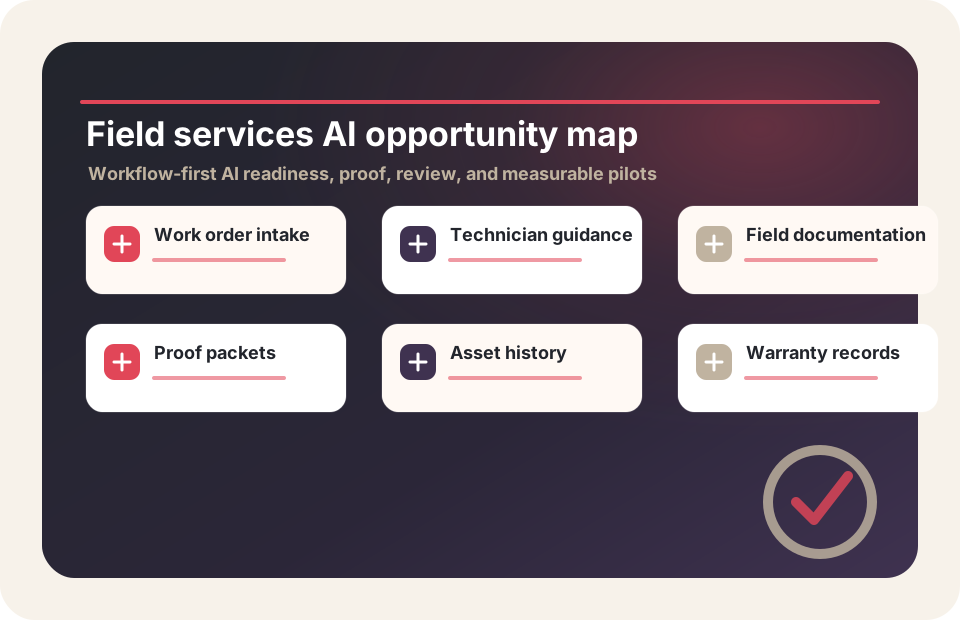
Classify, summarize, prioritize, and route service requests, facilities tickets, maintenance issues, and field work orders.
Possible first pilot: One request category or facility workflow with dispatcher/supervisor review.
Governance considerations: Escalation rules, false positives, safety sensitivity, customer or tenant data, review authority, and audit trail.
Related: Workflow AutomationHelp technicians access procedures, checklists, troubleshooting steps, asset context, and safety reminders inside a bounded workflow.
Possible first pilot: One repeatable procedure or asset type with human-reviewed guidance and technician feedback.
Governance considerations: Safety warnings, source freshness, procedure versioning, technician judgment, and escalation.
Related: Custom AISupport structured capture of photos, notes, timestamps, exceptions, materials, customer signoff, and supervisor-ready close-out records.
Possible first pilot: One close-out workflow with required proof fields and supervisor review.
Governance considerations: Privacy, photo handling, customer or tenant data, approval steps, and documentation quality.
Related: AI Pilot ProjectsOrganize field evidence into review-ready packets for supervisors, customers, warranty teams, reviewers, or internal records.
Possible first pilot: One service type or inspection workflow that produces a proof packet.
Governance considerations: Evidence integrity, access permissions, customer visibility, review quality, and retention expectations.
Related: Custom AI ImplementationHelp teams retrieve, summarize, and use asset history, prior work, inspection notes, parts information, and maintenance context.
Possible first pilot: One asset class or facility system with work-order history and technician review.
Governance considerations: Data quality, asset IDs, source grounding, technician review, and escalation rules.
Related: AI ReadinessSurface incomplete documentation, exceptions, high-risk jobs, repeat issues, and review queues for managers and supervisors.
Possible first pilot: One supervisor review workflow with proof quality and exception metrics.
Governance considerations: Review authority, fairness, employee trust, escalation, and performance-management boundaries.
Related: AI GovernanceSupport facilities teams with intake, classification, routing, status updates, vendor coordination, and occupant communication drafts.
Possible first pilot: One building, location, or request category with human-approved communications.
Governance considerations: Tenant or occupant privacy, message accuracy, escalation, access permissions, and service expectations.
Related: Workflow AutomationSupport warranty documentation, evidence, customer reports, before/after records, and internal review trails.
Possible first pilot: One warranty or documentation workflow with source evidence and reviewer signoff.
Governance considerations: Evidence quality, source traceability, customer visibility, legal or compliance review, and retention.
Related: AI GovernanceUse-case matrix
Start with the workflow, then decide whether the right next step is readiness, governance, pilot design, automation, or custom implementation.
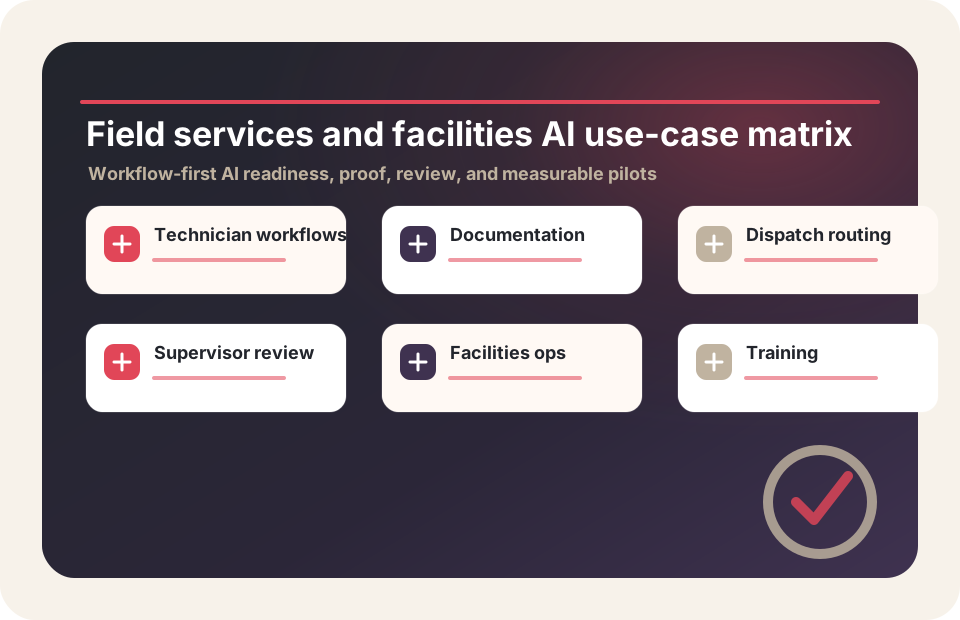
| Function | Use cases | Good first step |
|---|---|---|
| Technician workflows | Step-by-step procedure support, SOP and troubleshooting assistant, asset context retrieval, safety checklist support, job close-out guidance, materials and parts notes. | Technician Workflow Pilot Scoping |
| Field documentation and proof | Photo evidence capture, notes and timestamp organization, proof-of-work packets, customer signoff workflows, warranty documentation, before/after report generation. | Proof-of-Work Workflow Pilot |
| Dispatch, intake, and routing | Service request classification, work-order triage, facilities ticket routing, vendor or technician assignment support, escalation alerts, service-level risk signals. | Workflow Automation Workshop |
| Supervisor and manager review | Incomplete close-out detection, exception review queues, repeat-issue summaries, proof completeness review, technician feedback loops, supervisor dashboard. | Supervisor Review Workflow Scoping |
| Facilities operations | Occupant request triage, preventive maintenance reminders, inspection checklist support, vendor coordination, asset documentation, building operations dashboards. | Facilities Workflow Assessment |
| Customer, warranty, and documentation | Customer service reports, warranty evidence packet, compliance documentation, audit trail support, before/after summaries, claim or dispute support. | Document Intelligence Scoping |
| Training, onboarding, and knowledge | Technician onboarding assistant, SOP training assistant, troubleshooting knowledge base, field safety training, scenario-based learning, service playbook assistant. | AI Literacy + Custom AI Scoping |
How InitializeAI helps
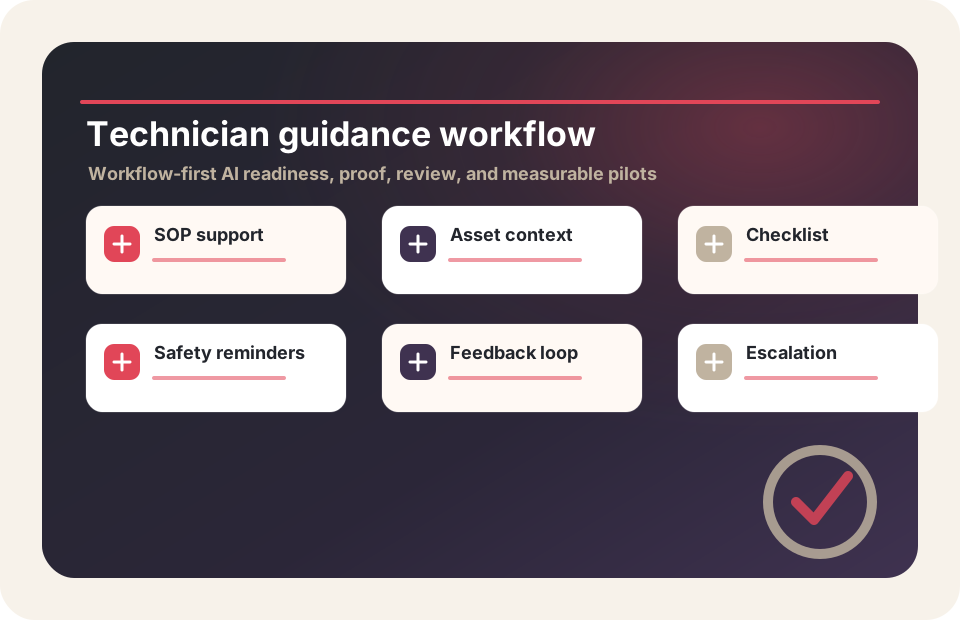
Evaluate AI-enabled technician workflows that provide procedure support, asset context, safety reminders, troubleshooting guidance, and close-out structure without replacing technician judgment.
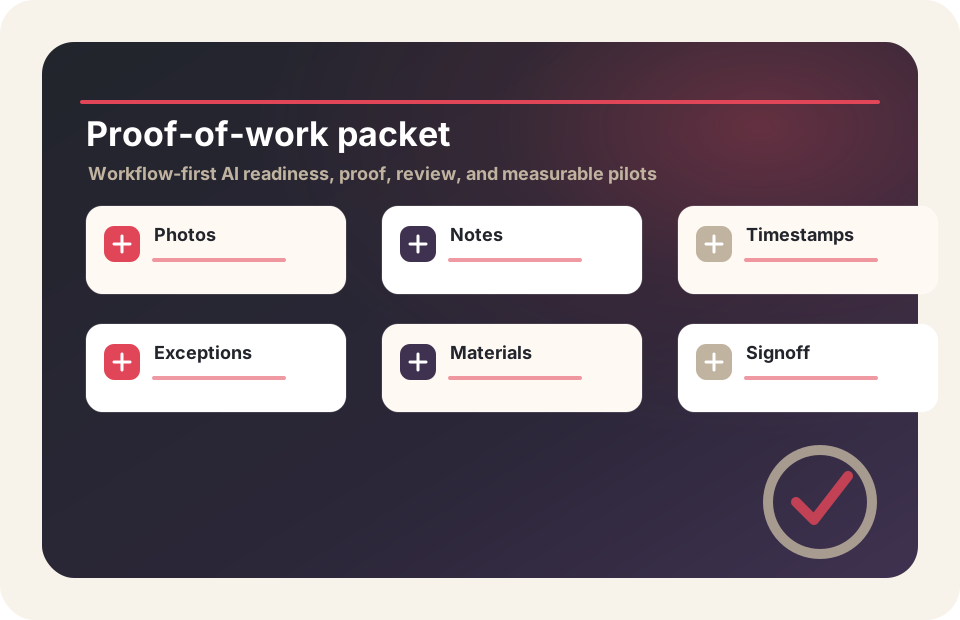
Design field documentation workflows that organize photos, notes, timestamps, exceptions, materials, customer signoff, and before/after evidence into review-ready proof packets.
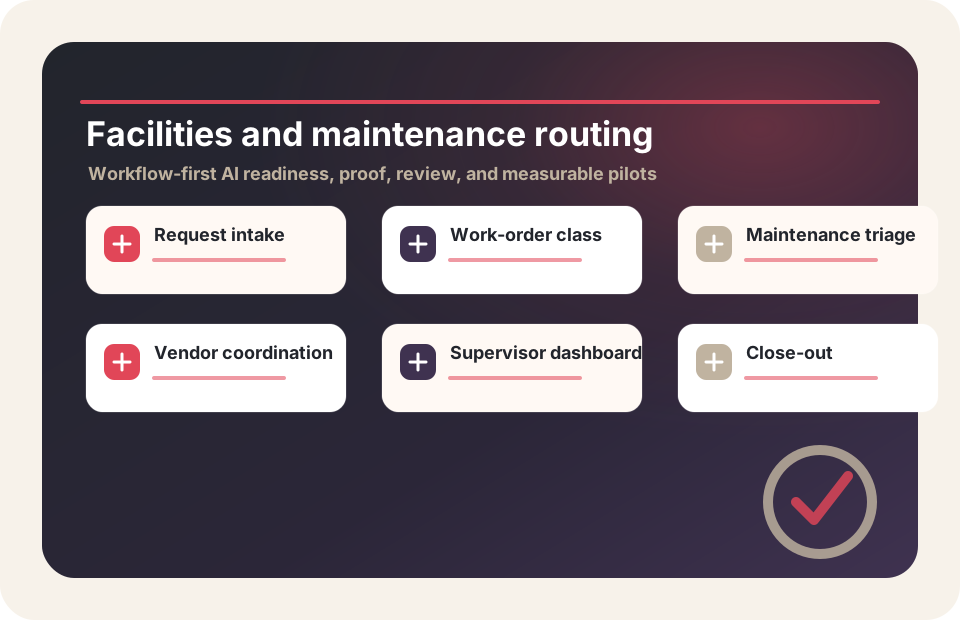
Identify AI opportunities across service requests, work-order triage, inspections, preventive maintenance, vendor coordination, and dashboarding.
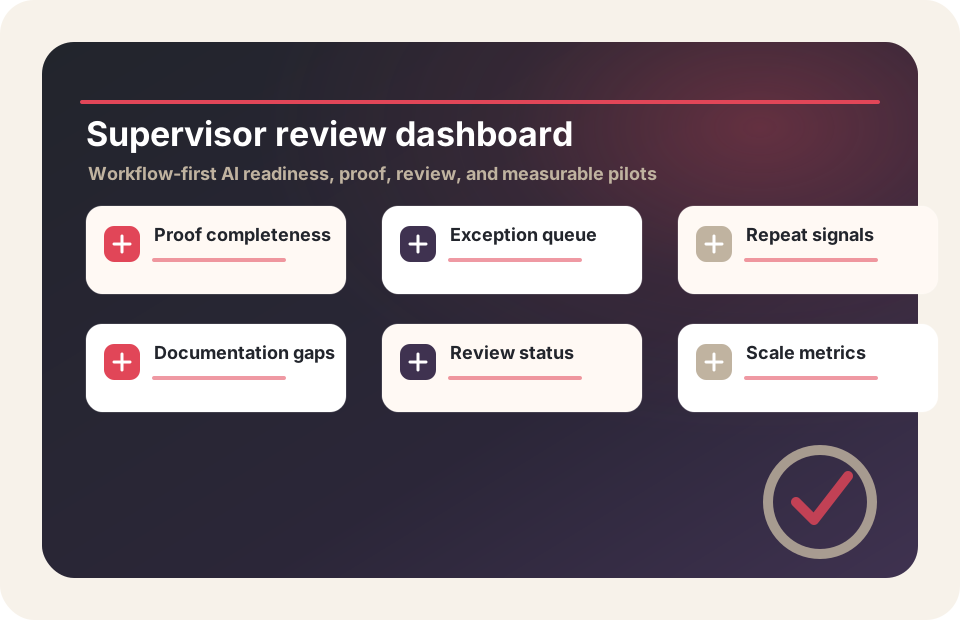
Design review workflows that surface incomplete proof, exceptions, repeat issues, documentation gaps, and operational signals for managers and supervisors.
Proof-of-work model
Field AI is most useful when it improves the quality, completeness, and reviewability of the work record.
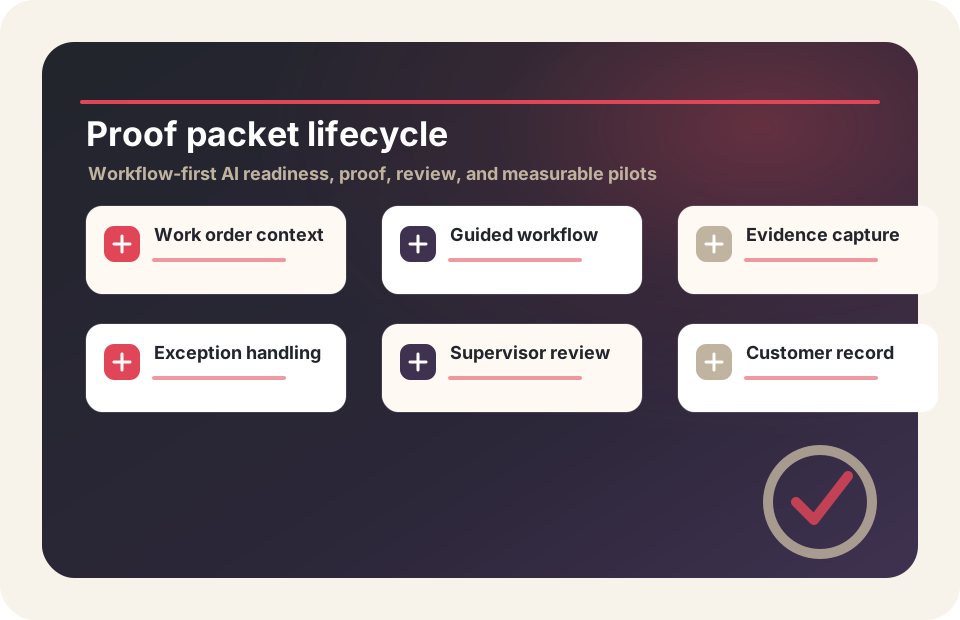
Job details, asset history, customer or tenant notes, previous visits, procedure, and safety context.
Technician steps, checklist, procedure support, exception prompts, and materials notes.
Photos, timestamps, notes, measurements, asset condition, before/after proof, and signoff.
Escalation, incomplete proof, blocked work, missing parts, safety issue, or supervisor question.
Proof completeness, documentation quality, exception review, and approval path.
Review-ready packet for customer communication, warranty support, compliance, or internal quality.
Data and systems readiness
Field AI value depends on understanding work orders, assets, locations, technicians, photos, notes, procedures, permissions, systems, and review requirements before building.
Explore AI Readiness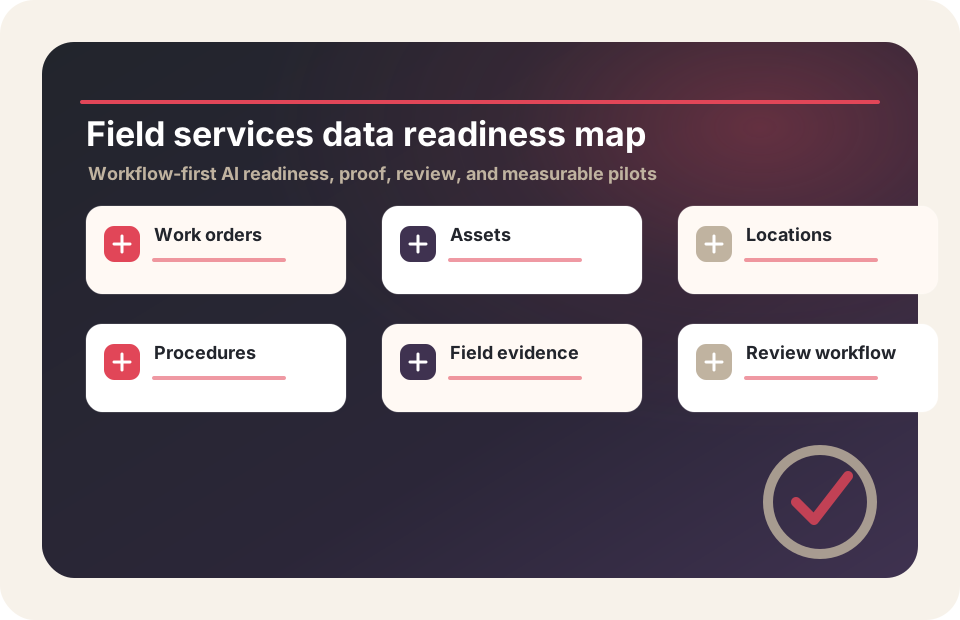
Which fields are available: issue type, priority, location, asset, customer or tenant, technician, notes, photos, materials, time, and status?
Are asset IDs, locations, service history, warranty status, equipment type, and maintenance records accurate enough?
Which SOPs, checklists, manuals, troubleshooting guides, safety instructions, and training materials should be used?
How are photos, timestamps, notes, measurements, signoffs, and exceptions captured and stored?
Which systems are involved: FSM, CMMS, EAM, property management, ticketing, CRM, ERP, document storage, or mobile apps?
Who reviews outputs: technician, dispatcher, supervisor, customer, warranty team, facilities manager, or compliance reviewer?
Workflow automation
Field teams adopt AI when it fits the work: intake, dispatch, procedure support, proof capture, exceptions, close-out, supervisor review, and customer documentation.
Explore Workflow Automation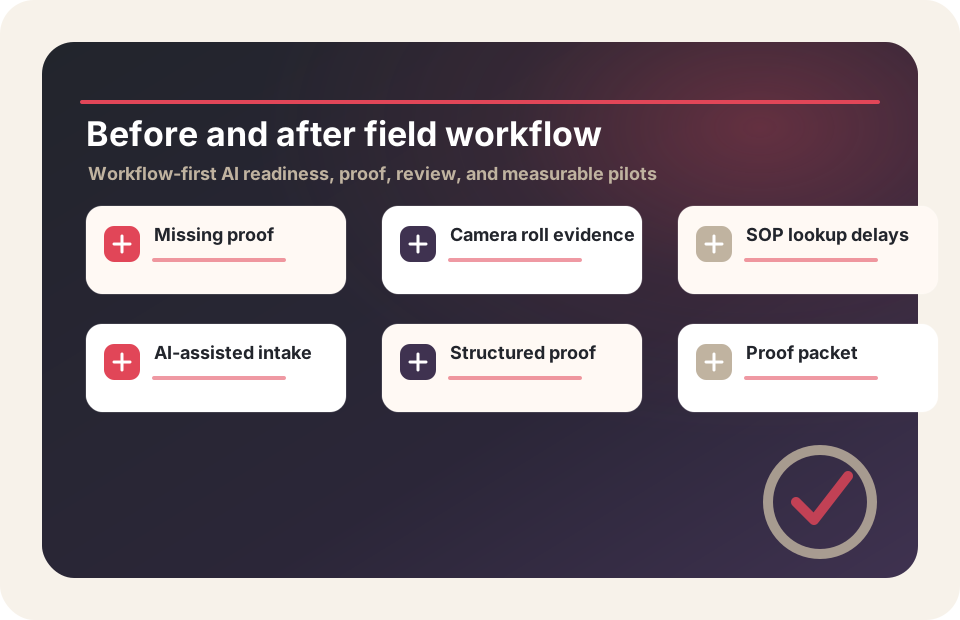
Incomplete work orders, missing photos, camera roll evidence, paper or SOP lookup delays, unclear exceptions, delayed close-out, supervisor rework, and warranty documentation gaps.
AI-assisted intake, procedure support, structured proof capture, human-reviewed exceptions, supervisor dashboard, proof packet, customer or warranty record, and scale decision.
Facilities management
Facilities teams need visibility across requests, inspections, assets, vendors, preventive maintenance, occupant communication, and service quality.
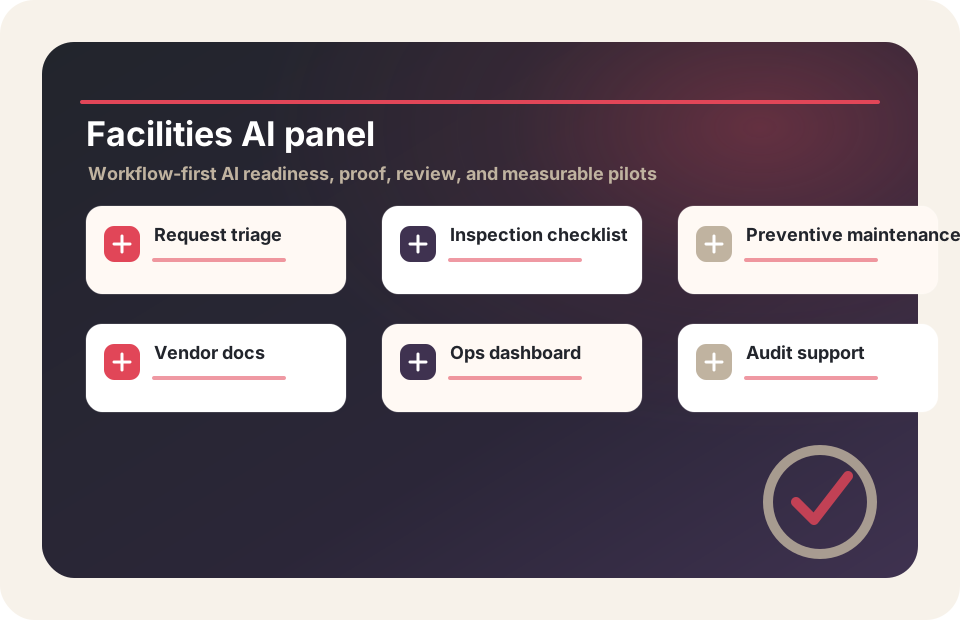
Classify and route facilities requests with escalation and human review.
Support recurring inspection workflows with structured documentation and review.
Organize maintenance schedules, asset context, work history, and exception notes.
Summarize work, collect proof, organize invoices, and support supervisor review.
Surface trends across request volume, asset issues, service quality, and open work.
Organize documentation, evidence, checklists, and signoff records for review.
Pilot design
Strong first pilots focus on one repeatable workflow, one technician group, one review process, and one set of proof metrics.
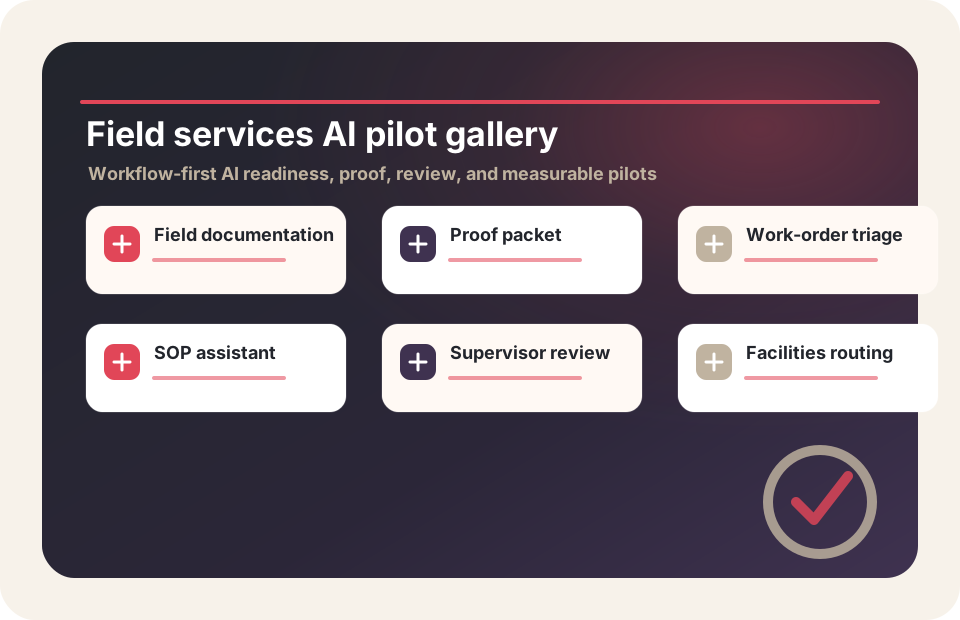
Scope: One repeatable service or inspection workflow with photos, notes, timestamps, exceptions, and supervisor review.
Measures: proof completeness, close-out quality, review time, technician adoption.Scope: One customer, warranty, inspection, or compliance report workflow.
Measures: documentation completeness, rework, supervisor approval quality, customer or warranty readiness.Scope: One request category, asset group, facility type, or dispatch queue.
Measures: routing time, priority quality, escalation accuracy, dispatcher or supervisor adoption.Scope: One set of procedures, troubleshooting guides, or maintenance instructions.
Measures: search time, answer usefulness, source accuracy, escalation cases.Scope: One close-out or exception review workflow for a manager or supervisor group.
Measures: review time, missing proof rate, exception clarity, repeat-issue visibility.Scope: One building, location, or service category.
Measures: request routing time, communication quality, closure consistency, occupant or service feedback.AI ROI and EBITDA impact
AI in field services and facilities should be tied to measurable operating levers: technician time, close-out quality, repeat visits, callback friction, supervisor review, documentation completeness, warranty support, request routing, and adoption.
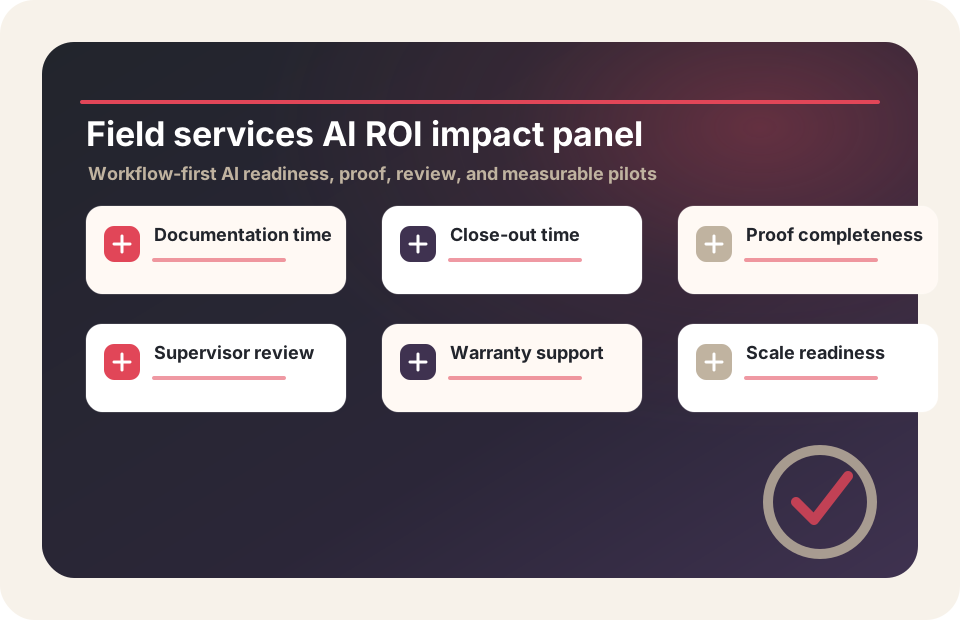
Estimate the manual effort attached to field notes, photos, close-out, and proof capture.
Define the time from field completion to supervisor-ready documentation.
Track whether required evidence is captured and reviewable.
Measure review burden and exception handling without overclaiming productivity impact.
Evaluate signals that may relate to incomplete proof, unclear notes, or workflow gaps.
Assess whether records support review, customer communication, and warranty workflows.
Measure intake, classification, routing, and escalation timing for selected request categories.
Compare adoption, quality, risk, and operational fit before expanding the pilot.
Extra review use cases
Some field service and facilities AI opportunities can affect safety, employees, customers, tenants, equipment, utilities, compliance, or contractual obligations. These should be evaluated carefully.
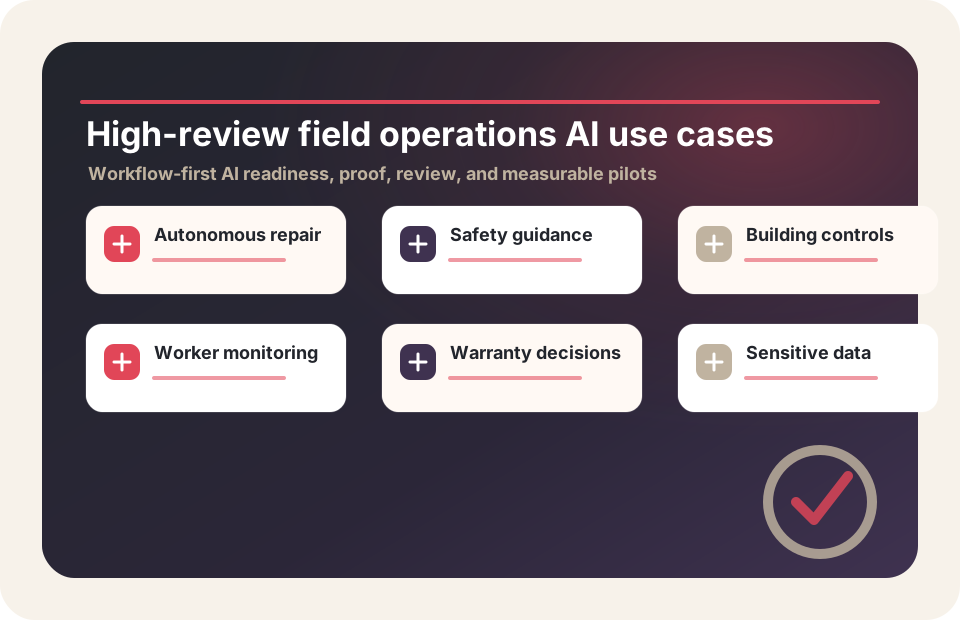
Requires additional review because repair choices can affect safety, equipment, customer obligations, and accountability.
Discuss Governance RequirementsElectrical, gas, fire, life-safety, hazardous-material, and utility workflows should involve qualified safety and operations stakeholders.
Explore AI GovernanceAI should not control equipment, building systems, alarms, utilities, or machinery without appropriate human approval and review.
Discuss Governance RequirementsUse cases involving worker monitoring, surveillance, facial recognition, or automated performance scoring require careful governance and stakeholder review.
View Trust CenterExternal messages, warranty statements, service commitments, or tenant communications should be human-reviewed where risk is material.
Explore AI GovernanceFinancial, legal, or contractual outcomes should involve qualified business, legal, and review stakeholders.
Discuss Governance RequirementsPublic-service and infrastructure field decisions need additional safety, privacy, security, and operational review.
Explore Government AIEmployee, customer, tenant, location, facility, and asset data should be scoped with clear access boundaries and retention expectations.
View Trust CenterEngagement paths
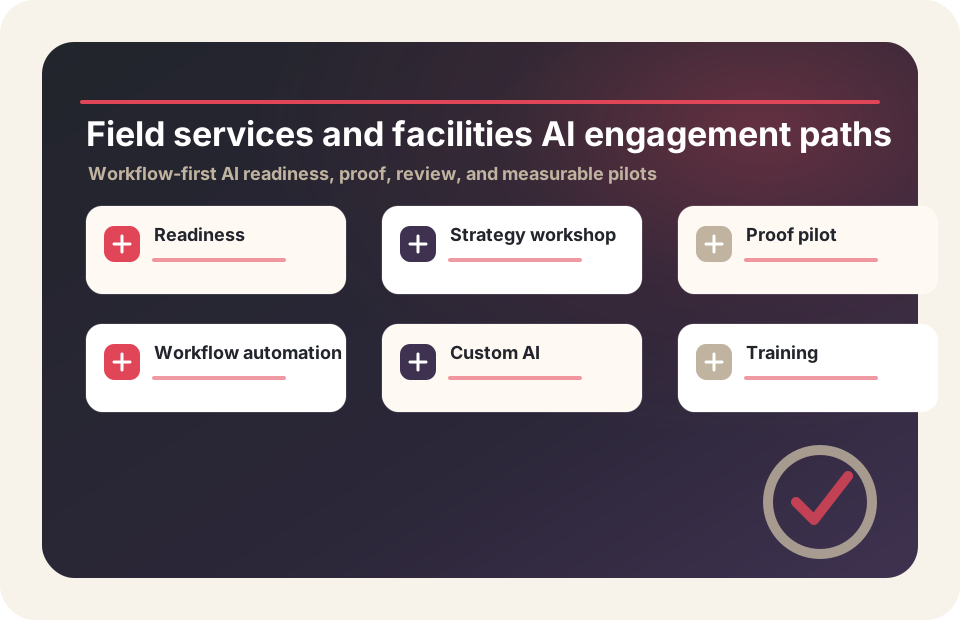
Recommended path: AI Readiness Assessment
Outputs: Readiness map, data/system gaps, use-case priorities, roadmap.
Explore AI ReadinessRecommended path: AI Strategy Workshop
Outputs: Use-case inventory, prioritization matrix, pilot candidates.
Explore Strategy WorkshopRecommended path: Proof-of-Work Pilot Scoping
Outputs: Workflow map, proof requirements, supervisor review model, pilot metrics.
Discuss Proof-of-Work PilotRecommended path: Workflow Automation Workshop
Outputs: Workflow map, automation candidates, pilot scope.
Explore Workflow AutomationRecommended path: Custom AI Implementation Scoping
Outputs: Knowledge source review, assistant scope, human review model, adoption plan.
Explore Custom AIRecommended path: AI Pilot Project
Outputs: Review dashboard concept, metrics plan, proof quality model, scale criteria.
Explore Pilot ProjectsRecommended path: Advisory & Training / Workshops
Outputs: AI literacy training, technician playbooks, responsible-use guidance.
Explore Advisory & TrainingRecommended path: AI ROI Calculator + Gap Review
Outputs: Impact estimate, assumption model, next-step recommendation.
Try the ROI CalculatorField services solution mapping
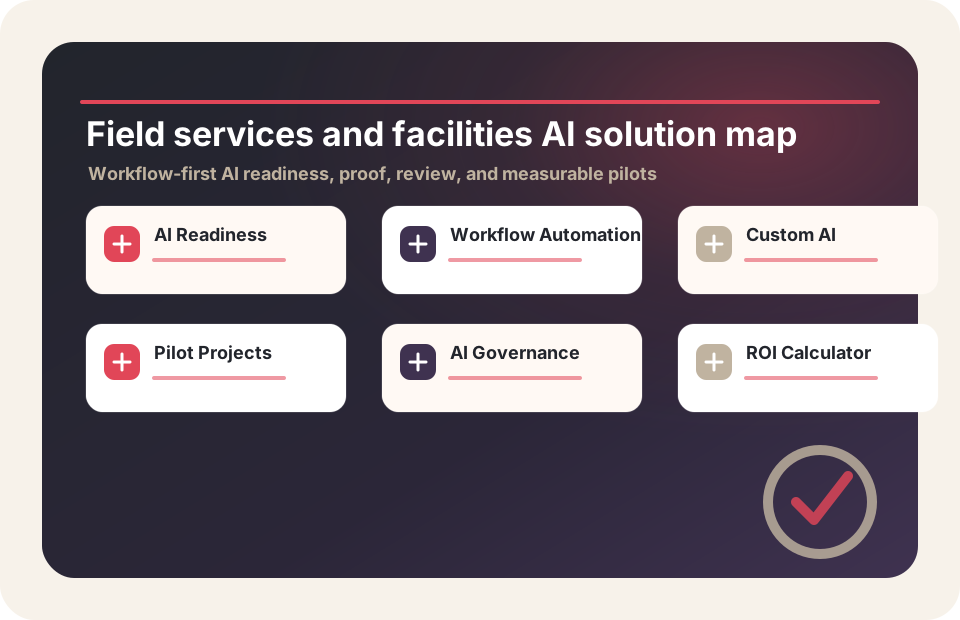
Evaluate readiness across strategy, data, systems, governance, workflows, staff capability, and adoption.
WorkflowWorkflow AutomationMap and improve request intake, work-order routing, documentation, close-out, supervisor review, facilities, and back-office workflows.
BuildCustom AI ImplementationScope and build internal assistants, proof packet workflows, field documentation systems, dashboards, review queues, and AI-enabled field tools.
PilotAI Pilot ProjectsDesign measurable, bounded, reviewable pilots with owners, metrics, controls, and scale criteria.
StrategyAI Strategy WorkshopPrioritize field service and facilities use cases by value, feasibility, data readiness, risk, and workflow fit.
GovernanceAI GovernanceCreate practical guardrails for responsible AI use, human oversight, data boundaries, safety-aware review, and operational risk controls.
WorkshopsWorkshops & BriefingsRun field operations AI readiness, workflow automation, staff training, pilot-scoping, and executive AI workshops.
ImpactAI ROI CalculatorEstimate potential AI impact across cost, cycle time, labor, adoption, and EBITDA levers.
Actionable artifacts
Practical field operations AI work should produce materials technicians, supervisors, dispatchers, facilities leaders, and operations teams can evaluate, discuss, and use.
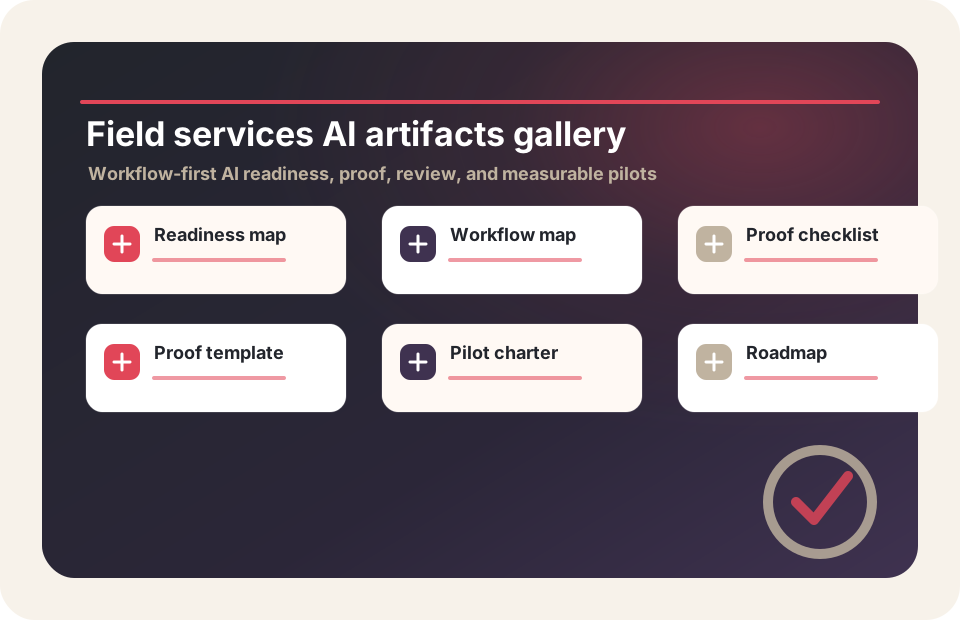
Related build case study
See the featured build case study for a proof-first field operations product pattern: guided technician workflows, photo and timestamp capture, proof packets, supervisor review, pilot scope, governance questions, and measurement signals without unsupported outcome claims.
View the CoSkip Case Study
Why InitializeAI?
InitializeAI brings a practical, workflow-first approach to AI adoption for distributed operations teams that need clarity before implementation.
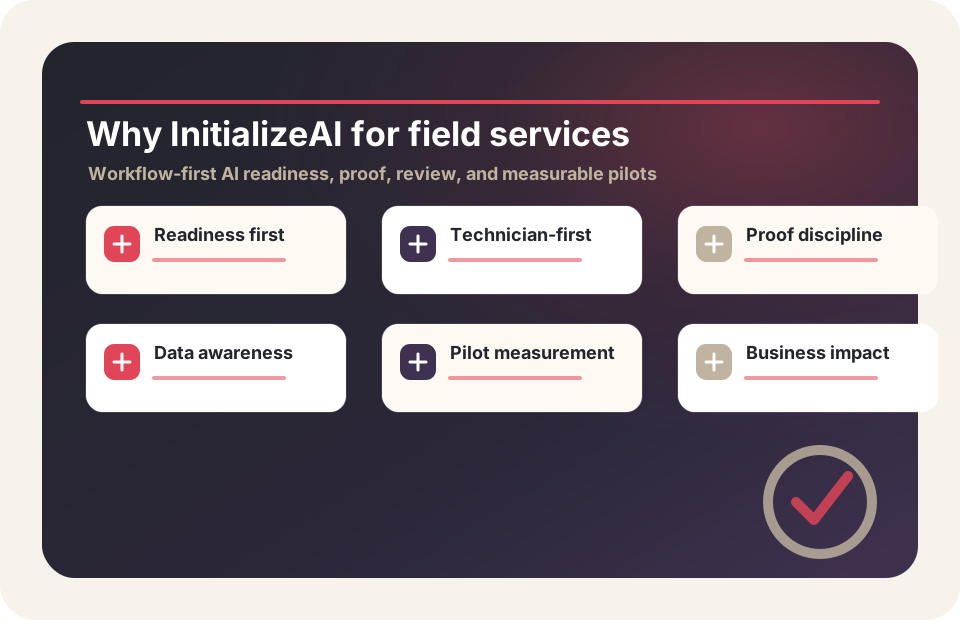
Understand whether the use case, data, systems, workflow, governance, and adoption path are ready before funding AI work.
Focus on the real field process: technicians, dispatchers, supervisors, facilities leaders, customers, tenants, vendors, and warranty teams.
Design field documentation, proof packets, exceptions, and supervisor review into the workflow.
Clarify source systems, asset records, work-order data, permissions, integration needs, and review requirements before building.
Define what success, risk, adoption, proof quality, and scale readiness mean before expansion.
Connect AI use cases to operating levers such as close-out time, documentation quality, supervisor review, repeat-visit signals, warranty support, and service consistency.
Related resources
Explore practical AI use-case patterns across field operations, maintenance, facilities, support, and documentation workflows.
ImpactAI ROI CalculatorEstimate potential AI value across productivity, proof quality, rework signals, EBITDA, and capacity levers.
WorkflowWorkflow AutomationMap and modernize intake, routing, documentation, proof, supervisor review, and facilities workflows.
BuildCustom AI ImplementationScope internal assistants, proof packet workflows, dashboards, documentation support, and review queues.
ReadinessAI Readiness AssessmentAssess strategy, data, systems, workflows, governance, and adoption capacity.
PilotAI Pilot ProjectsDesign bounded pilots with owners, metrics, controls, and scale criteria.
GovernanceAI GovernanceBuild data boundaries, human review, escalation paths, and acceptable-use guidance.
WorkshopsWorkshops & BriefingsAlign leaders, technicians, supervisors, and operators around practical AI adoption.
MethodMethodologySee how InitializeAI moves from readiness to pilots, workflow implementation, and measurement.
EngagementsEngagement ModelsCompare workshops, sprints, pilots, implementation, and advisory support.
Related industryLogistics & OperationsExplore operational AI readiness, workflow automation, exception management, and ROI planning.
Related industryManufacturing & IndustrialExplore quality workflows, maintenance readiness, safety documentation, and industrial operations AI.
Related industryEnergy & UtilitiesExplore asset workflows, field operations, reporting support, outage workflows, and governed utility AI pilots.
Related industryReal Estate & ConstructionExplore project documentation, permitting support, field reporting, asset data, and facilities workflow planning.
Public sectorGovernment AIExplore public-sector readiness, service workflows, responsible use, and governance planning.
ProofCase StudiesReview available examples and practical implementation patterns.
InsightsBlogRead practical AI strategy and workflow automation guidance.
Field services and facilities AI FAQ
Start with readiness and use-case prioritization. Evaluate work orders, assets, field evidence, systems, workflows, governance, technician adoption, supervisor review, and measurable business impact before investing in AI tools or pilots.
Good first pilots are bounded and measurable, such as field documentation support, proof-of-work packets, work-order triage, SOP assistants, supervisor review workflows, or facilities request routing.
AI can support technicians with procedure lookup, asset context, checklist guidance, troubleshooting support, documentation structure, and close-out prompts when designed with human judgment, safety review, and escalation in mind.
AI can support proof-of-work workflows by organizing photos, notes, timestamps, exceptions, signoff, and before/after evidence into review-ready packets. Human review and approval should be part of the process.
AI may help teams evaluate workflows that affect documentation quality, close-out completeness, review consistency, and technician support. Specific callback or repeat-visit impact depends on the workflow, data, adoption, and pilot results.
Data needs depend on the use case. Potential sources include work orders, asset histories, locations, technician notes, photos, timestamps, customer or tenant information, SOPs, manuals, checklists, service history, and supervisor review records.
Pilot metrics may include proof completeness, close-out quality, review time, documentation gaps, routing time, exception quality, technician adoption, supervisor confidence, repeat-issue signals, and scale readiness.
Field AI still needs governance: data boundaries, human review, escalation paths, system access, privacy/security review, safety-aware review, customer communication standards, and accountability for decisions.
Yes, depending on scope. InitializeAI can help evaluate, scope, and support custom AI workflows such as proof packet systems, field documentation tools, internal assistants, review dashboards, and workflow automation.
Field operations consultation
Use this path for field operations AI readiness, technician workflows, proof-of-work packets, facilities request routing, maintenance triage, supervisor review, SOP assistants, workflow automation, pilot scoping, or custom AI implementation planning.
Practical, measurable, adopted
InitializeAI can help your field service or facilities team assess readiness, prioritize use cases, map technician workflows, estimate ROI impact, scope pilots, automate workflows, and plan practical AI implementation around real field, asset, maintenance, and review constraints.