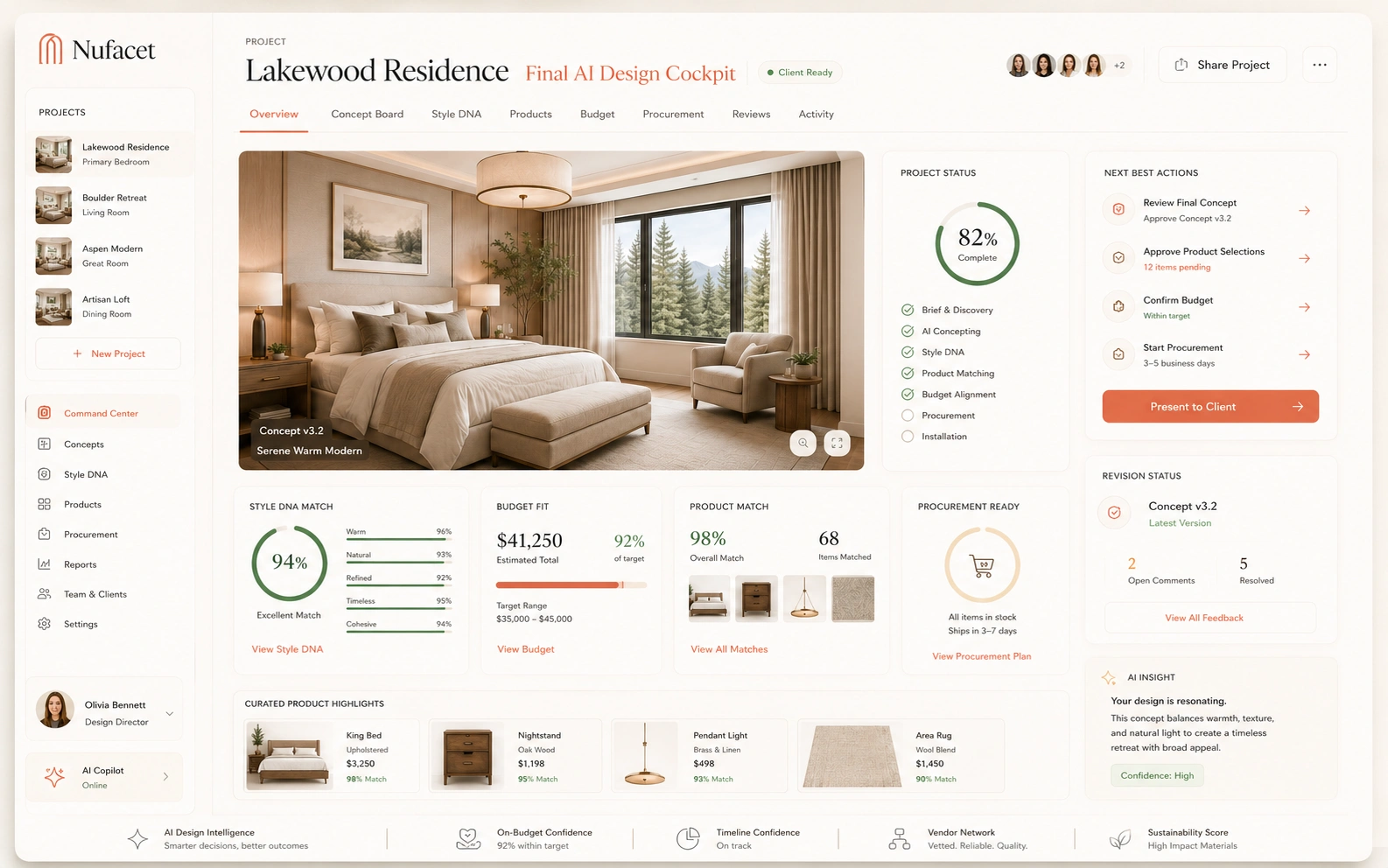
FEATURED ARTIFACT
What Nufacet produces: a client-ready room board.
The value of Nufacet is not a generic generated image. It is the structured room package behind the design: brief, style direction, product selections, vendor fit, budget allocation, alternates, approvals, and procurement readiness.
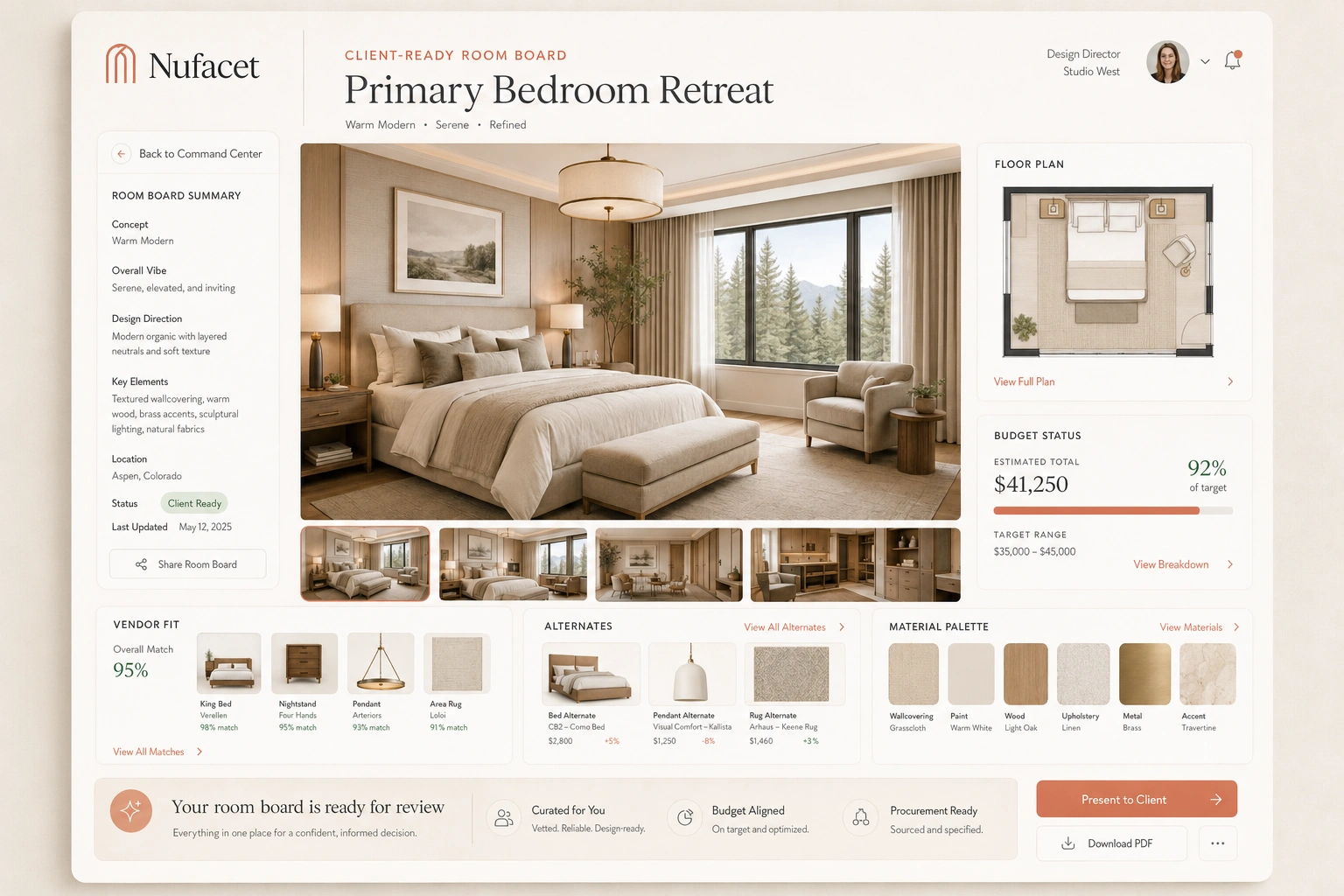
Interior design workflows are constrained by fragmented room measurements, client preferences, budgets, vendor availability, lead times, procurement, and revision cycles.
An AI-assisted design platform that turns design goals and constraints into coordinated room concepts, shoppable product selections, and client-ready outputs.
Full-stack interior design SaaS platform, room brief intake, style intelligence, layout logic, vendor inventory matching, budget allocation, presentations, procurement, and review.
A faster path from client goals to viable room concepts while preserving designer control, taste, and review.
Great interior design is constraint management: space, budget, style, timeline, inventory, quality, and client confidence.
THE BUILD STORY
Interior design is beautiful on the surface — and operationally complex underneath.
Interior design is often treated as a visual problem, but the real workflow is much deeper. A beautiful room only works when the pieces fit the space, the budget works, the lead times align, the materials belong together, the client understands the vision, and the designer can move from concept to procurement without rebuilding the plan from scratch.
Nufacet was created around that complexity. The platform was designed to take room specs, design intent, layout constraints, budget, and vendor inventory — then turn those inputs into a coordinated room concept that a designer can review, refine, present, and execute.
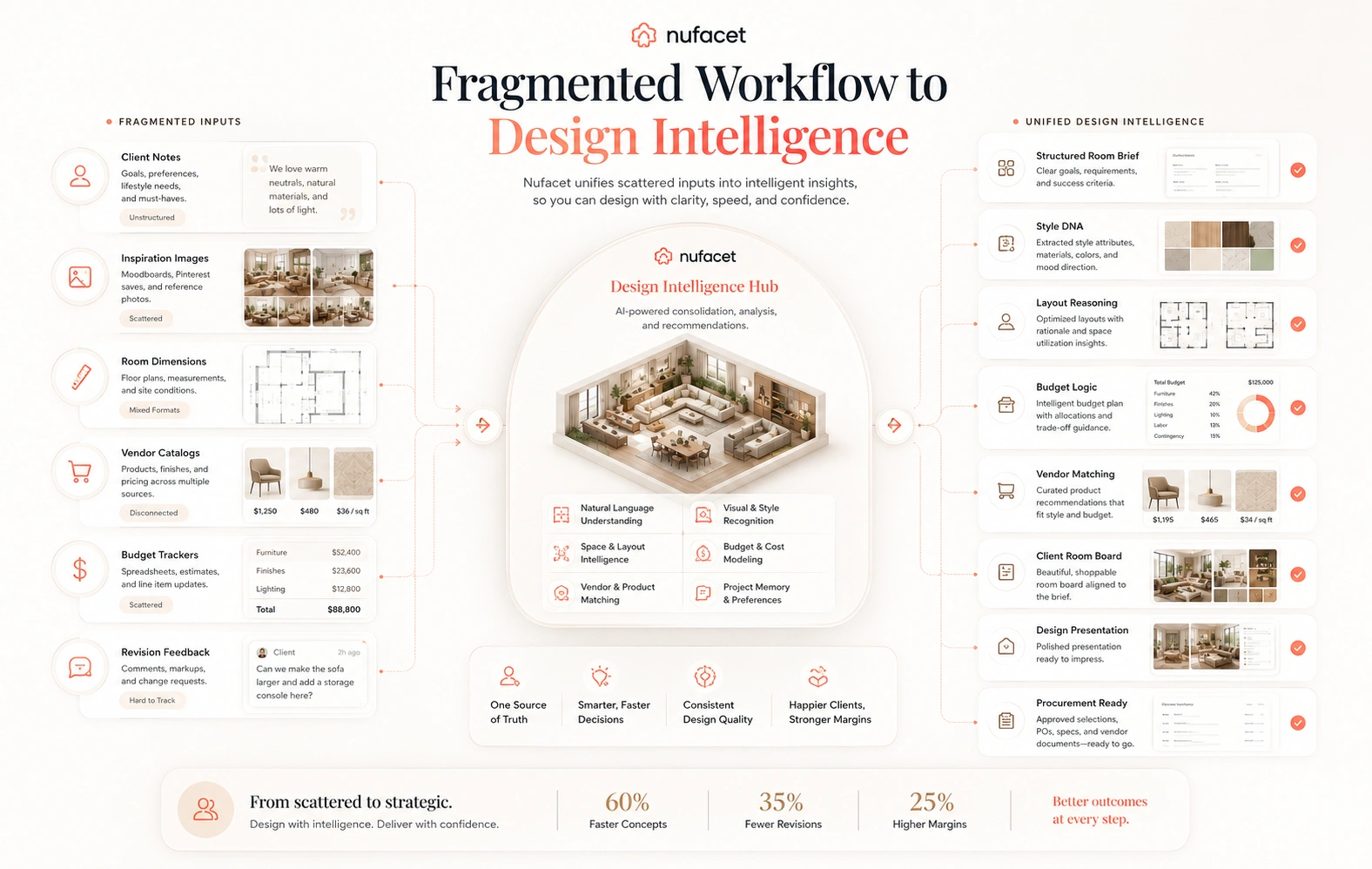
Design briefs are hard to operationalize
Client goals, inspiration, budget, dimensions, and style preferences often live in separate notes, images, and conversations.
Room layouts require spatial judgment
Furniture has to fit, circulation needs to work, and scale has to feel right.
Budgets break when selections disconnect
A beautiful concept fails if pieces exceed budget or ignore delivery, installation, and contingency.
Vendor inventory changes constantly
Availability, lead times, discontinued items, and substitutions can derail a design plan.
Presentations take too long
Designers often rebuild mood boards, product boards, shopping lists, and client decks manually.
Revisions create downstream chaos
Changing one sofa can affect layout, palette, budget, vendor source, delivery timing, and the room concept.
PRODUCT THESIS
From design automation to Interior Design Intelligence.
Nufacet is not a room-image generator. It is an Interior Design Intelligence platform that understands the brief, the room, the budget, the design direction, the available inventory, and the downstream workflow required to move from concept to procurement.
Understand the room
- Room specs
- Layout constraints
- Dimensions
- Function and use case
- Existing pieces
- Architecture and circulation
- Natural light and focal points
Understand the design intent
- Design theme
- Style DNA
- Client preferences
- Inspiration references
- Palette direction
- Materials and finishes
- Comfort and lifestyle needs
Generate an executable plan
- Furniture selection
- Budget allocation
- Vendor inventory match
- Substitutions
- Client-ready presentation
- Procurement list
- Designer review and refinement
PRODUCT SYSTEM
A complete Interior Design Intelligence system.
Nufacet connected brief intake, room geometry, style language, budget logic, product catalogs, presentation workflows, revisions, and procurement into a serious SaaS product system.
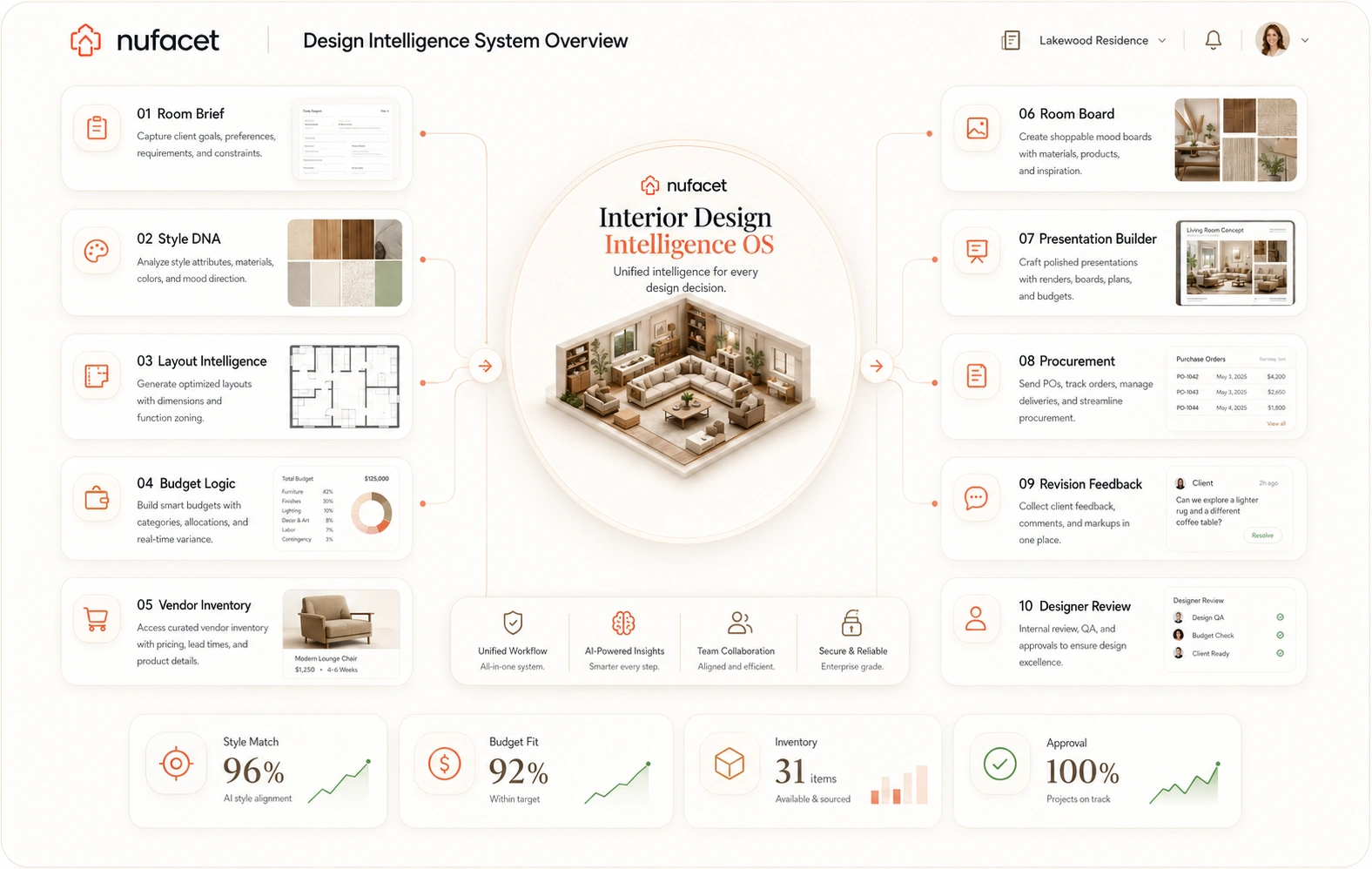
Room Brief Intake
A structured intake flow for dimensions, use case, design goals, budget, timeline, requirements, and preferences.
Build elements:Brief schema, room templates, preference model, measurement capture, constraint normalization, intake UX.Style DNA Engine
A style layer translating themes into palettes, materials, forms, proportions, and selection logic.
Build elements:Style taxonomy, design-language mapping, palette rules, material associations, designer controls.Layout Intelligence
A space planning workflow for room shape, furniture dimensions, circulation, focal points, windows, rug scale, and zones.
Build elements:Room geometry model, placement rules, clearance logic, layout states, spatial validation.Budget-Aware Design
A recommendation layer keeping the concept aligned with category budgets, contingency, delivery, and installation assumptions.
Build elements:Budget model, category allocation, constraints, substitution logic, warnings, approval states.Vendor Inventory Matching
Vendor-aware product selection based on style fit, dimensions, availability, lead time, price, finish, and compatibility.
Build elements:Catalog model, inventory states, product attributes, lead-time logic, vendor data ingestion concepts.Furniture + Decor Recommendations
A room-level system coordinating anchor pieces, supporting furniture, lighting, rugs, textiles, art, and accessories.
Build elements:Room composition logic, compatibility scoring, item bundling, rationale, alternates, designer controls.Material + Palette Builder
A finish workflow for coordinated colors, woods, metals, fabrics, stone, paint, and texture families.
Build elements:Material taxonomy, color relationships, finish compatibility, mood board UI, warmth indicators.Shoppable Room Board
A client-ready board showing selected items, price, vendor, lead time, dimensions, rationale, alternates, and approval status.
Build elements:Product board UX, item metadata, approval toggles, totals, substitution states, presentation logic.Procurement Planner
A downstream workflow turning approved designs into purchasing, delivery, and installation plans.
Build elements:Procurement status model, order checklist, vendor tracking, delivery windows, install sequence.Client Presentation Builder
A presentation layer for room concepts, mood boards, item boards, rationale, budgets, and approvals.
Build elements:Deck builder, presentation states, comments, approvals, designer notes, export-ready structure.Revision Intelligence
A system that understands consequences when one item changes budget, layout, palette, lead time, and procurement impact.
Build elements:Dependency mapping, impact analysis, replacement recommendations, version history, approval trail.Designer Review Loop
A human-in-the-loop workflow to accept, reject, refine, lock, or override AI-generated recommendations.
Build elements:Designer controls, edit states, rationale, item locking, review history, expert override UX.ROOM WORKFLOW
From room specs to designer-ready concept.
The platform connects the interior design journey: intake, style DNA, layout, budget allocation, vendor matching, product recommendations, client presentation, revision handling, approval, and procurement planning.
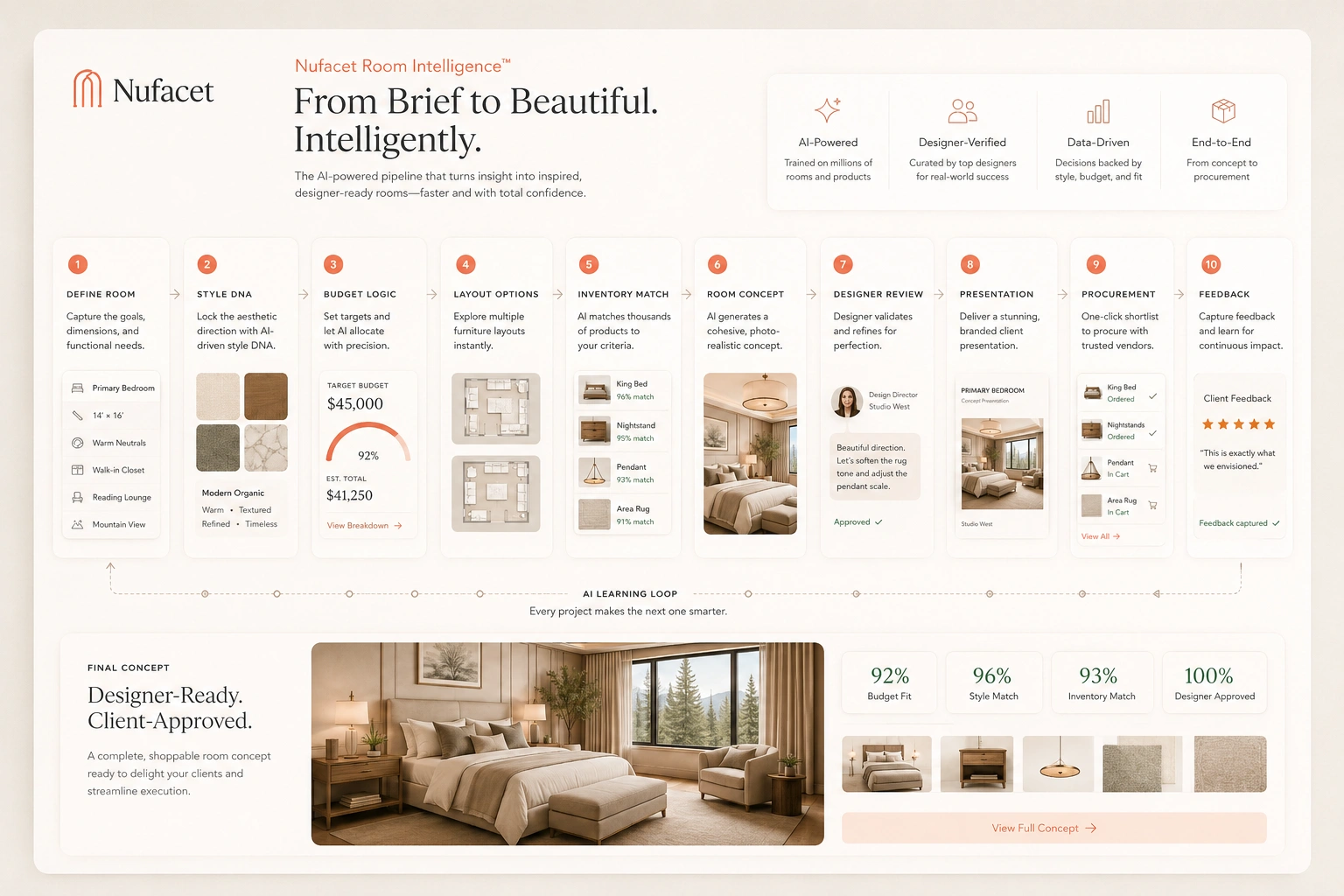
Enter dimensions, room type, constraints, existing pieces, timeline, and functional needs.
Select theme, inspiration, palette, materials, lifestyle requirements, and goals.
Allocate spend across categories and flag design tradeoffs.
Propose arrangements and validate scale, circulation, and zones.
Find products that fit style, dimensions, budget, and timeline.
Assemble furniture, lighting, textiles, decor, palette, and rationale.
Designer edits selections, locks items, requests alternatives, and tunes the room.
Create a client-ready board with rationale, items, costs, and approvals.
Move approved selections into sourcing, order tracking, delivery, and install sequencing.
Use feedback, substitutions, approvals, and purchasing outcomes to improve future recommendations.
BEFORE / AFTER
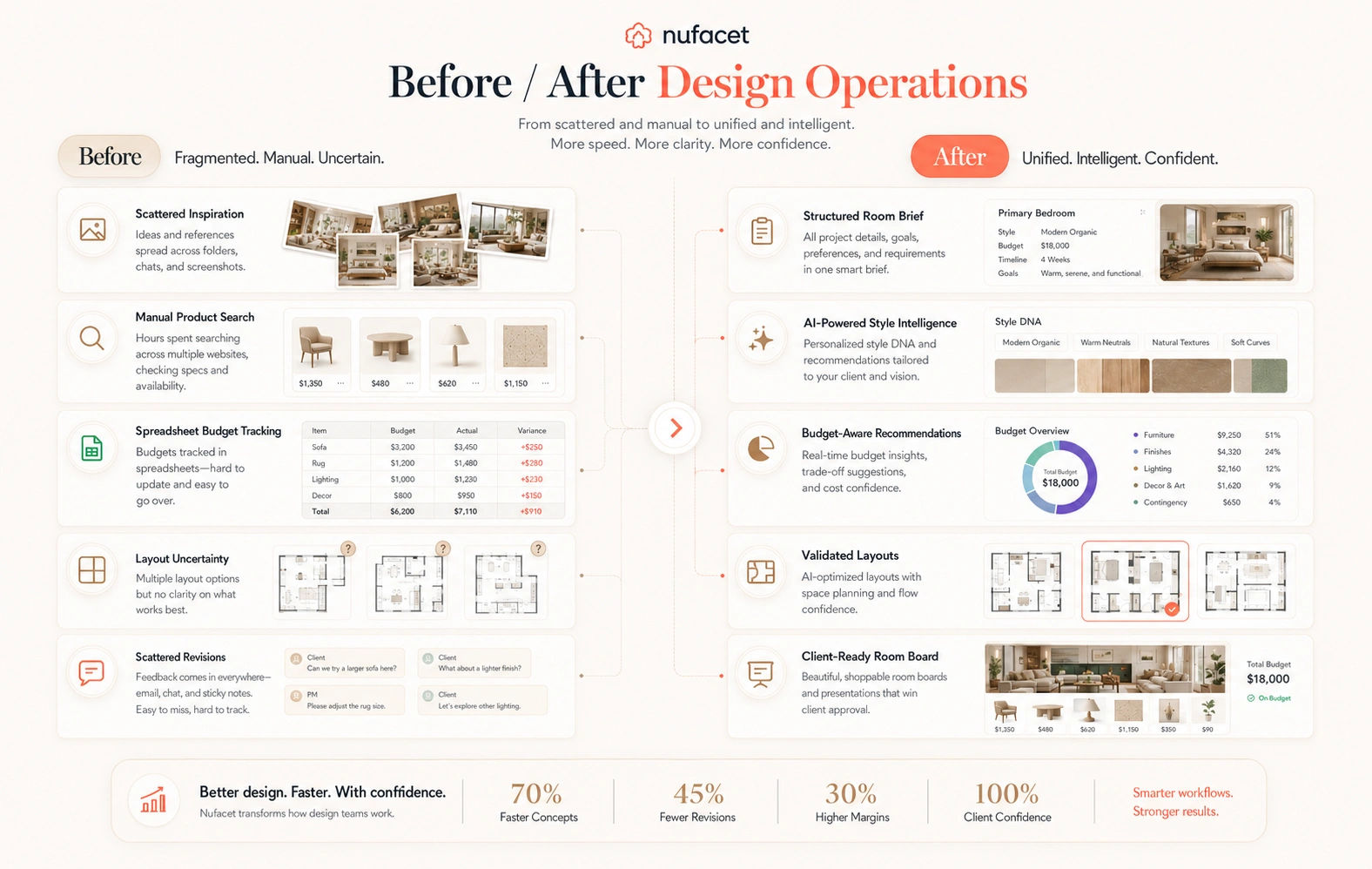
From manual design assembly to AI-assisted design operations.
Before Nufacet
- Client notes, inspiration images, and measurements are scattered
- Designers manually translate style direction into product searches
- Furniture dimensions and room scale are checked repeatedly
- Budgets drift as selections evolve
- Vendor inventory and lead times are hard to manage
- Mood boards and product boards are manually assembled
- Revisions create cascading work across budget, sourcing, and presentation
- Procurement plans are disconnected from the concept
After Nufacet
- Room goals and constraints become structured design intelligence
- Style DNA guides palette, materials, furniture, and direction
- Layout logic validates scale and circulation
- Budget-aware recommendations stay inside constraints
- Vendor inventory is matched to design intent
- Client-ready room boards are generated faster
- Revisions update budget, alternates, and procurement impact
- Approved designs flow into sourcing and installation planning
AI EXECUTION GAP
How Nufacet closes the AI Execution Gap in interior design workflows.
Nufacet shows how AI becomes valuable when it is integrated into the real operating path: brief, layout, sourcing, presentation, approval, procurement, and review.
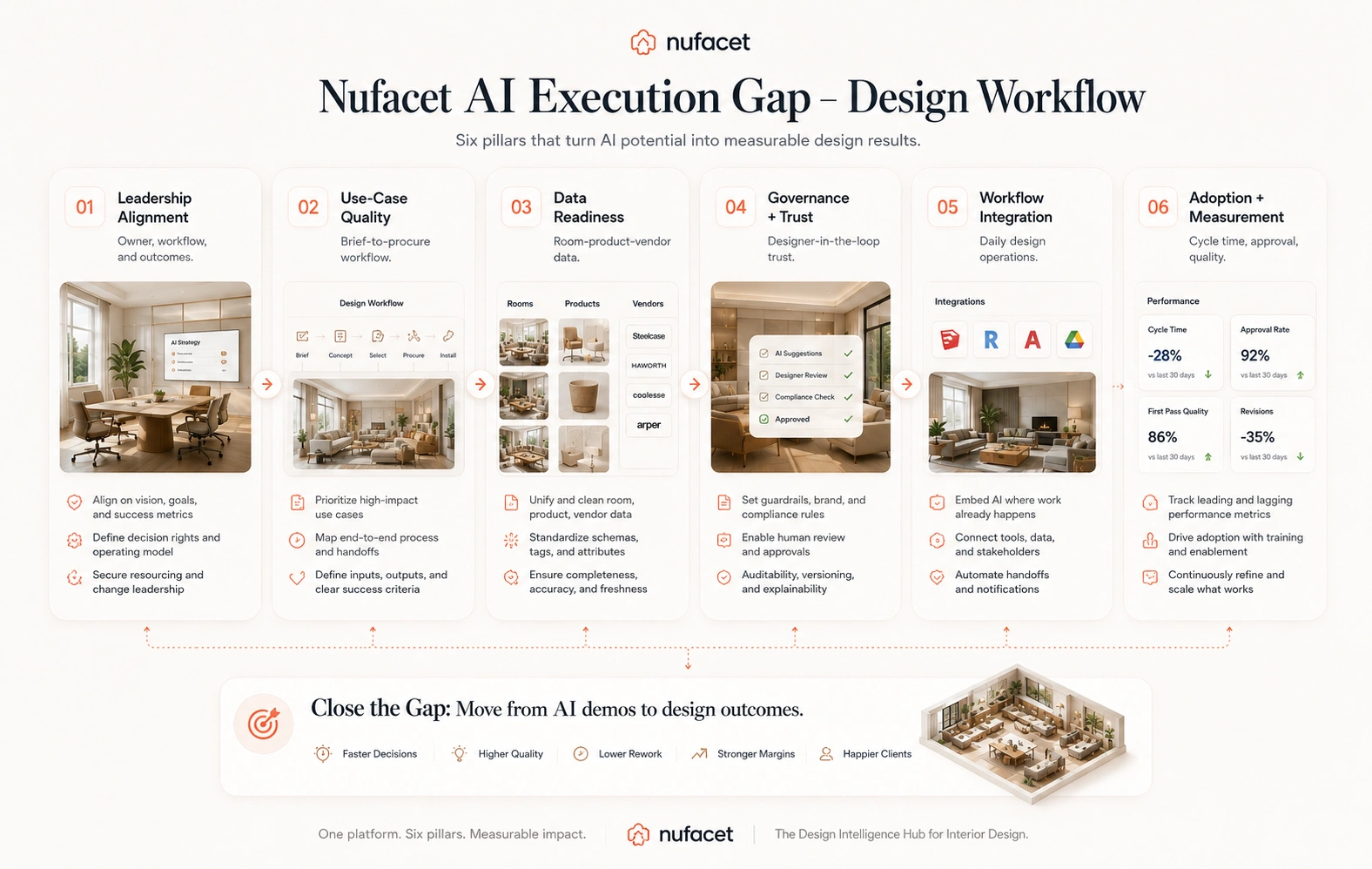
Leadership alignment
Define the user, buyer, workflow owner, design quality bar, and business objective.
Use-case quality
Focus on room brief, layout, vendor matching, budget-aware design, presentation, and procurement.
Data and systems readiness
Structure room specs, furniture dimensions, vendor catalogs, style taxonomies, budget rules, milestones, and feedback.
Governance and trust
Preserve designer judgment with editable outputs, item locking, substitution approvals, and client-facing transparency.
Workflow integration
Connect AI to intake, concept, sourcing, presentation, approval, purchasing, and installation.
Adoption and measurement
Measure concept speed, revision cycles, budget alignment, item approval, sourcing readiness, and satisfaction signals.
BUILD ARTIFACTS
Artifacts behind the build.
Nufacet required product artifacts that could translate subjective design judgment into structured data, workflow states, review paths, and client-ready outputs.
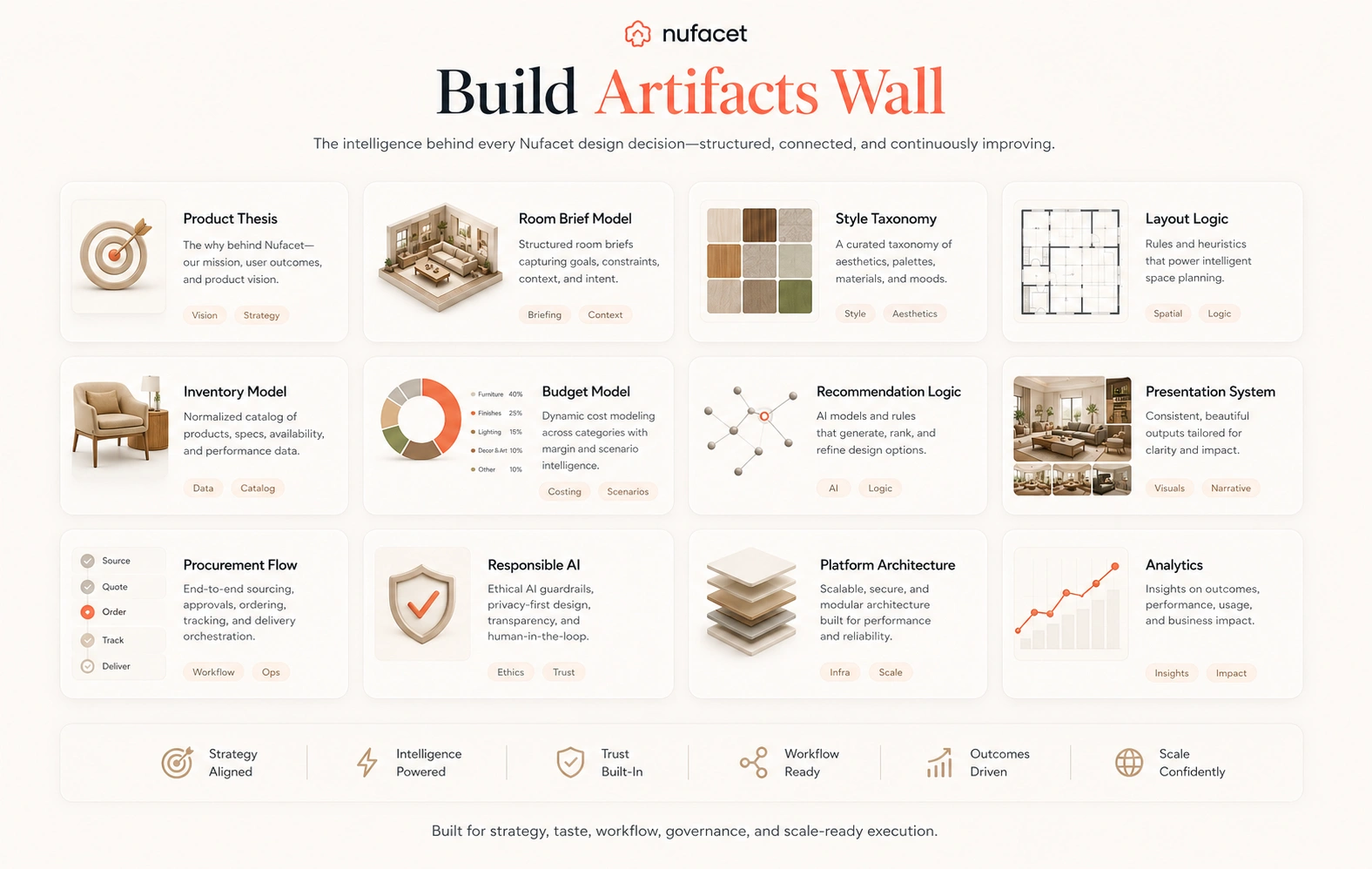
Product thesis brief
Interior Design Intelligence for design teams, retailers, and homeowners.
Room brief model
Dimensions, use case, constraints, furniture, budget, style, timeline, and priorities.
Style taxonomy
Themes, palettes, materials, forms, finishes, texture families, and design language.
Layout logic map
Room geometry, placement, circulation, focal points, rug scale, lighting zones, and clearances.
Vendor inventory model
Attributes, pricing, availability, dimensions, lead time, finish, category, brand, and substitutions.
Budget allocation model
Category budgets, tradeoffs, contingency, delivery/install assumptions, warnings, and approvals.
Recommendation logic
Style fit, dimensional fit, budget fit, inventory fit, lead-time fit, and room compatibility.
Presentation system
Mood boards, room boards, product cards, design rationale, alternates, and approvals.
Procurement workflow
Approved items, purchasing status, vendor tracking, delivery windows, install sequencing, and exceptions.
Responsible AI checklist
Designer review, editable recommendations, explainable rationale, privacy, data boundaries, and client-safe presentation.
Platform architecture
Frontend, backend, AI workflows, catalogs, room data, vendor data, analytics, presentation builder, and project workflow.
TECHNICAL ARCHITECTURE
Built as a design intelligence platform, not a single-purpose generator.
This representative architecture shows the kind of platform thinking required for Nufacet: user experiences, room data, catalog logic, AI workflows, presentation creation, procurement state, and analytics working together.
Integration planning depends on vendor data, deployment scope, customer requirements, and available product sources.
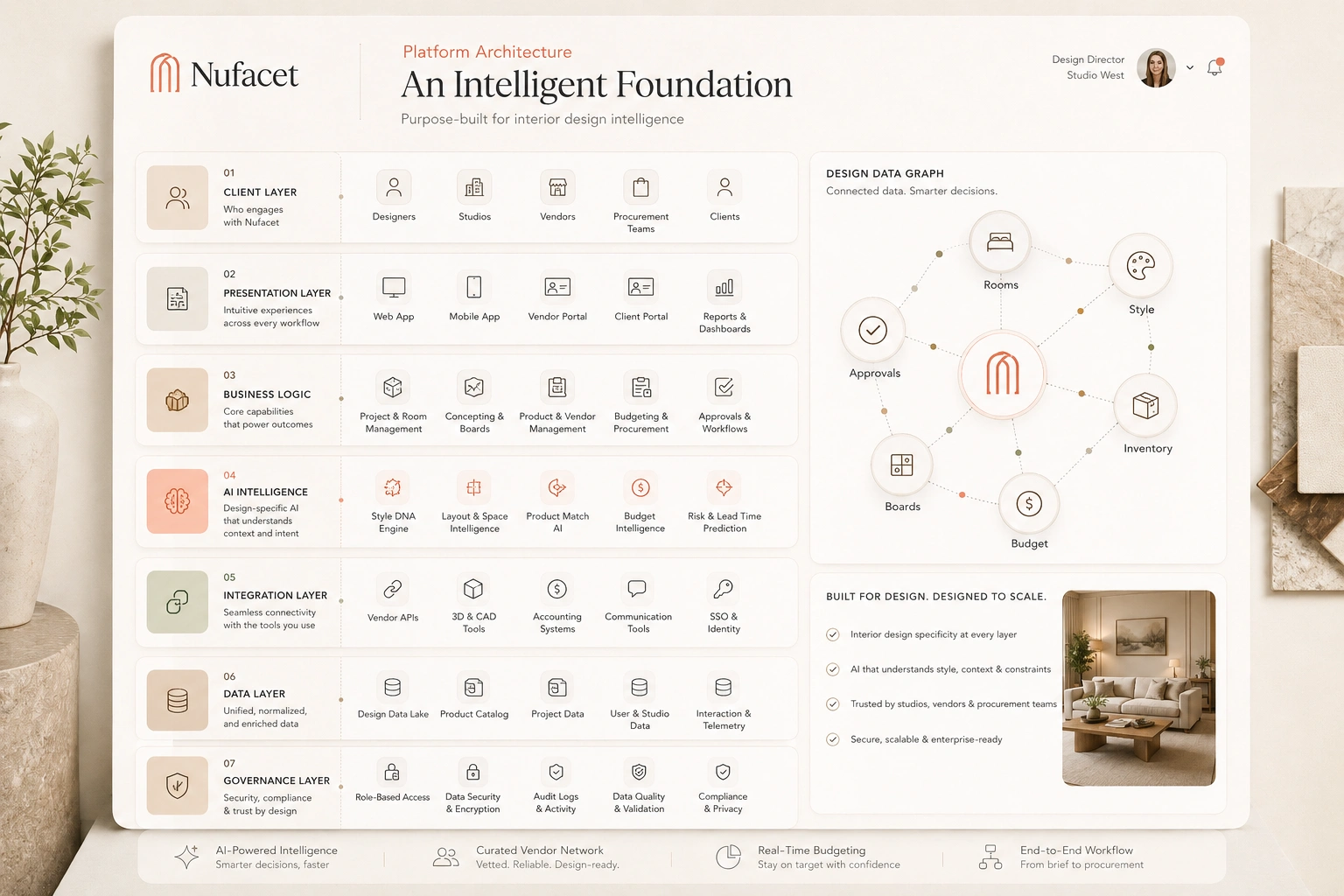
Client layer
Web application for designers, clients, design operations teams, retailers, and administrators.
Presentation layer
Room brief intake, floor-plan mockups, product cards, mood boards, client presentations, procurement dashboards, and project views.
Business logic layer
Room profile creation, style mapping, layout validation, recommendation orchestration, budget allocation, revisions, presentation creation, and procurement state.
AI / intelligence layer
Design intent extraction, style DNA mapping, concept generation, recommendations, substitutions, layout reasoning, rationale, and summaries.
Integration layer
Vendor catalogs, inventory feeds, ecommerce systems, product data, project milestones, analytics, authentication, and design-tool exports where applicable.
Data layer
Room specs, project briefs, client preferences, products, vendors, materials, layouts, budgets, presentations, approvals, procurement items, comments, and versions.
DESIGNER-LED AI
Interior design AI should amplify taste — not replace judgment.
Interior design is an expert workflow. Nufacet's model is AI-assisted and designer-led: the system accelerates concepting, sourcing, and planning while designers retain control over taste, quality, client communication, and final decisions.
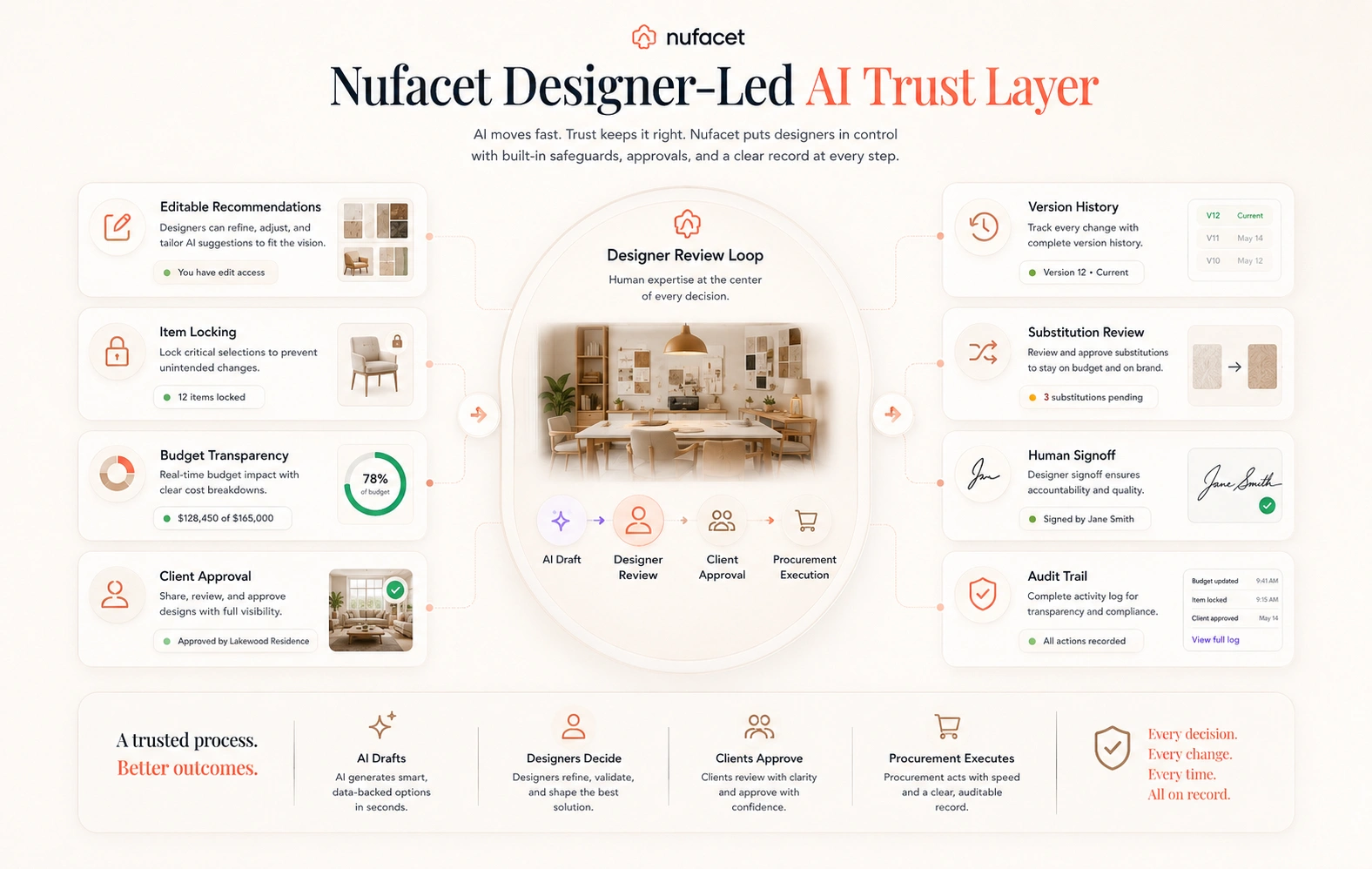
Designer-in-the-loop review
Designers can evaluate and refine recommendations before client presentation.
Editable recommendations
Generated outputs are starting points, not locked decisions.
Explainable design rationale
Selections can include why they fit the brief, room, palette, and budget.
Item locking and overrides
Designers can preserve anchor pieces and override AI suggestions.
Budget transparency
Category-level tradeoffs make budget decisions visible.
Vendor substitution review
Alternates stay reviewable when availability changes.
Client approval trail
Approvals and revisions can be tracked through the design workflow.
Version history
Design evolution remains understandable across revisions.
Client project privacy
Client context and project details require careful data boundaries.
Recommendation vs. final decision
The system suggests, while designers and clients approve.
Quality control before procurement
Purchase-ready outputs require review before execution.
Human approval before purchase
Procurement should remain governed by explicit approval states.
Interior Design Intelligence should accelerate the design process while preserving the designer's authorship, taste, and accountability.
PRODUCT GALLERY
Inside the Nufacet product experience.
These product views show the kinds of workspaces Nufacet needed: room intake, style DNA, layout, budget, inventory, recommendations, presentation, revision, and procurement.
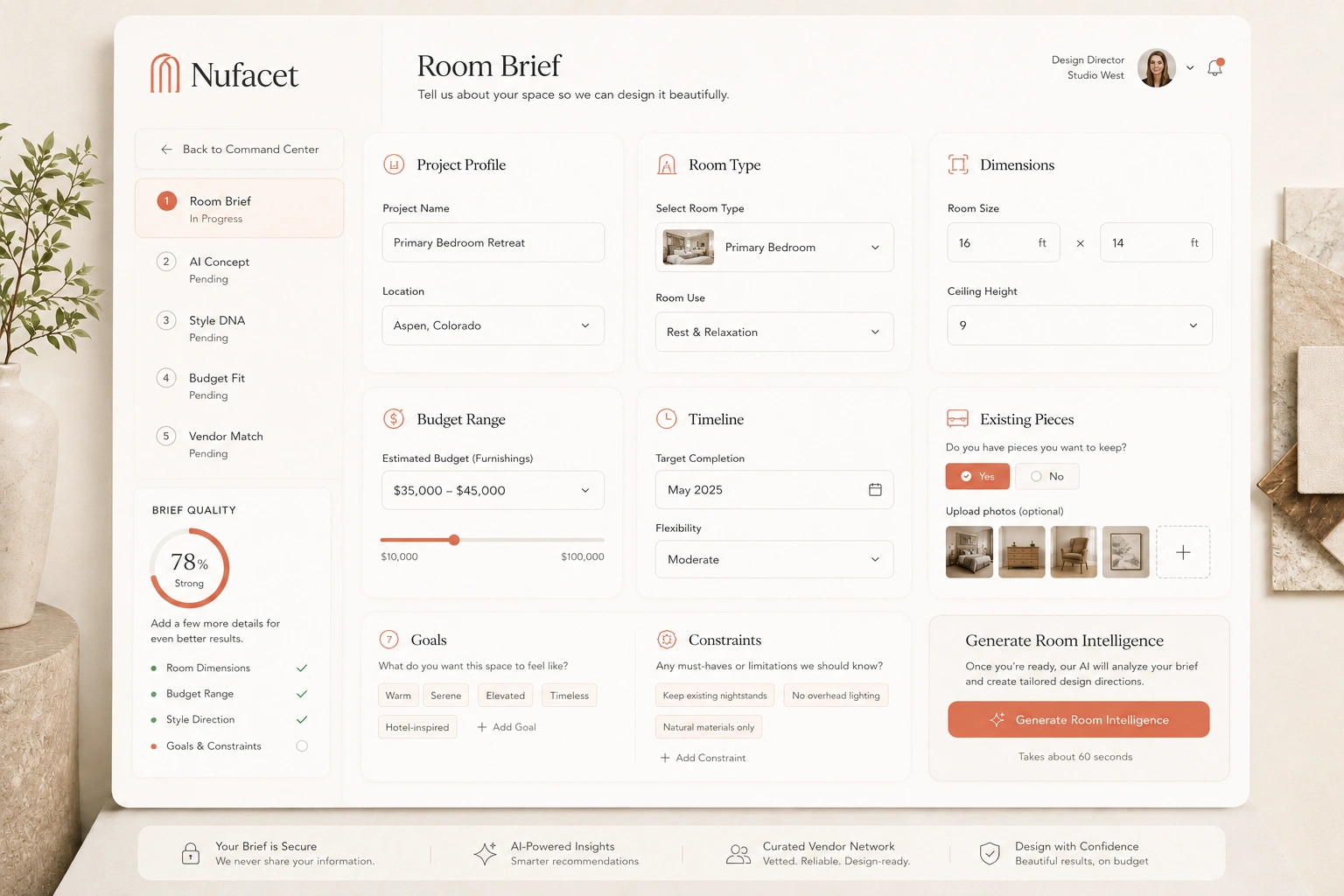
Room Brief Intake
Room type, dimensions, budget, timeline, goals, existing pieces, and constraints.
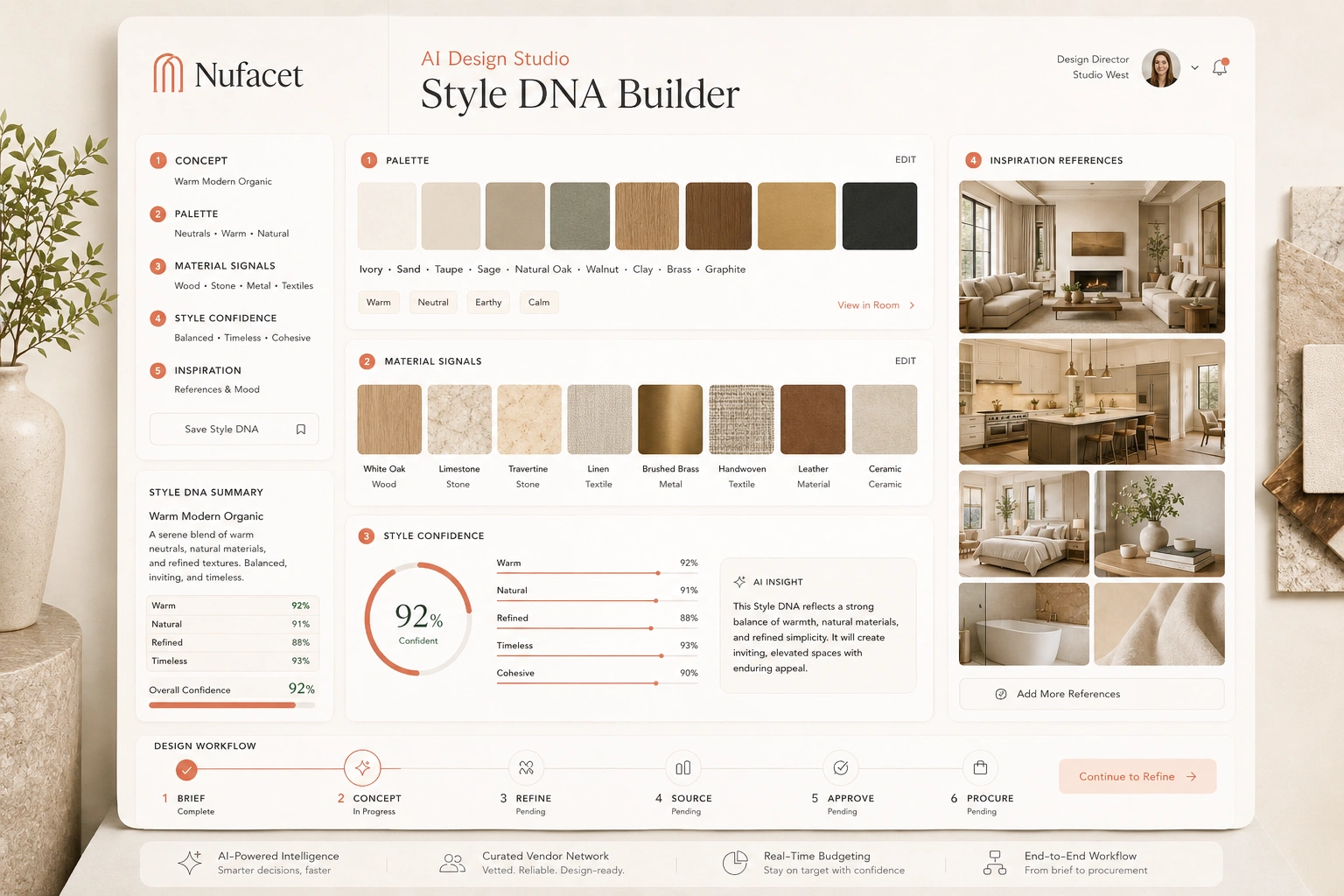
Style DNA Builder
Theme chips, palette swatches, material textures, inspiration references, and style confidence.
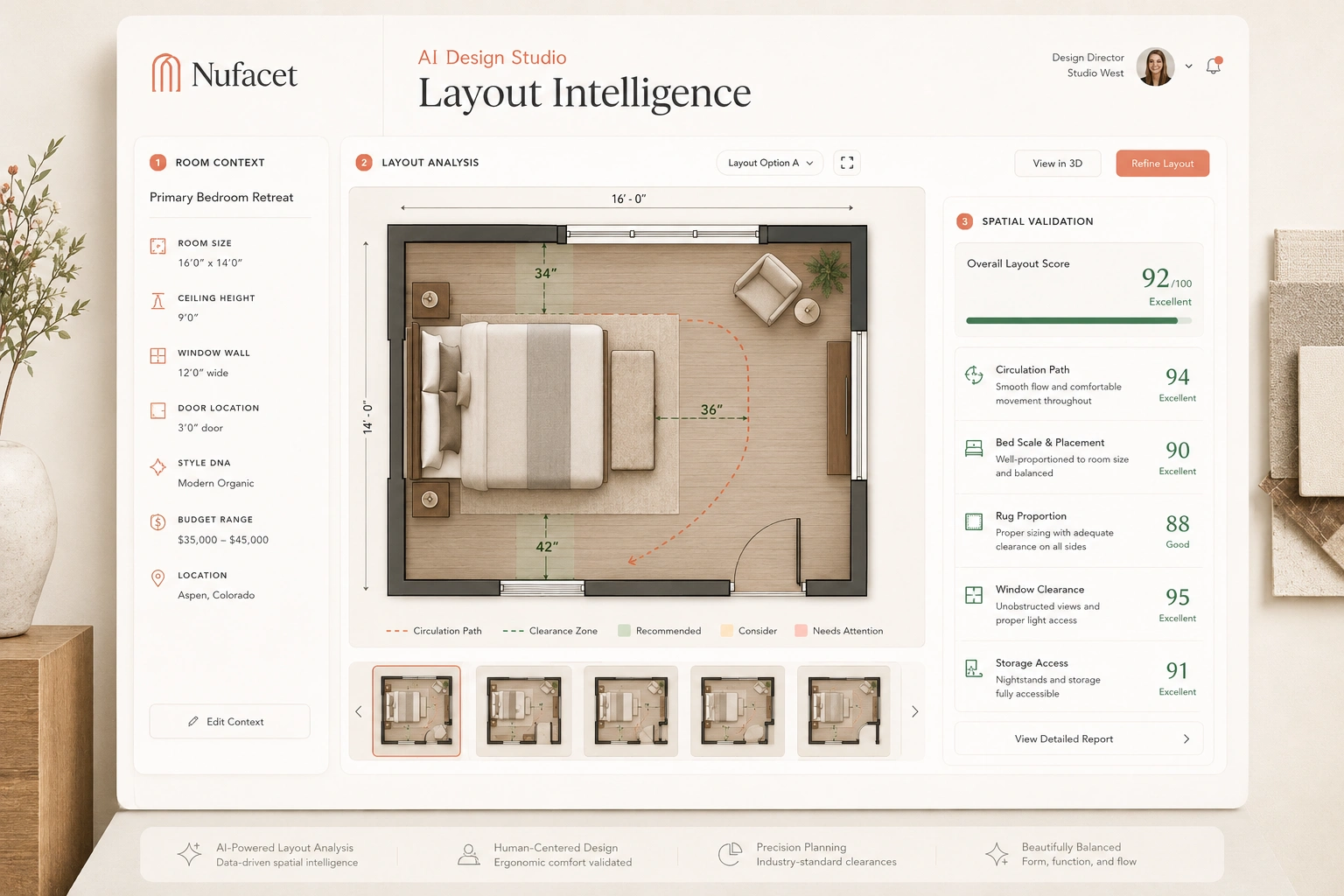
Layout Intelligence
Floor plan with furniture placement, circulation paths, clearance indicators, and room zones.
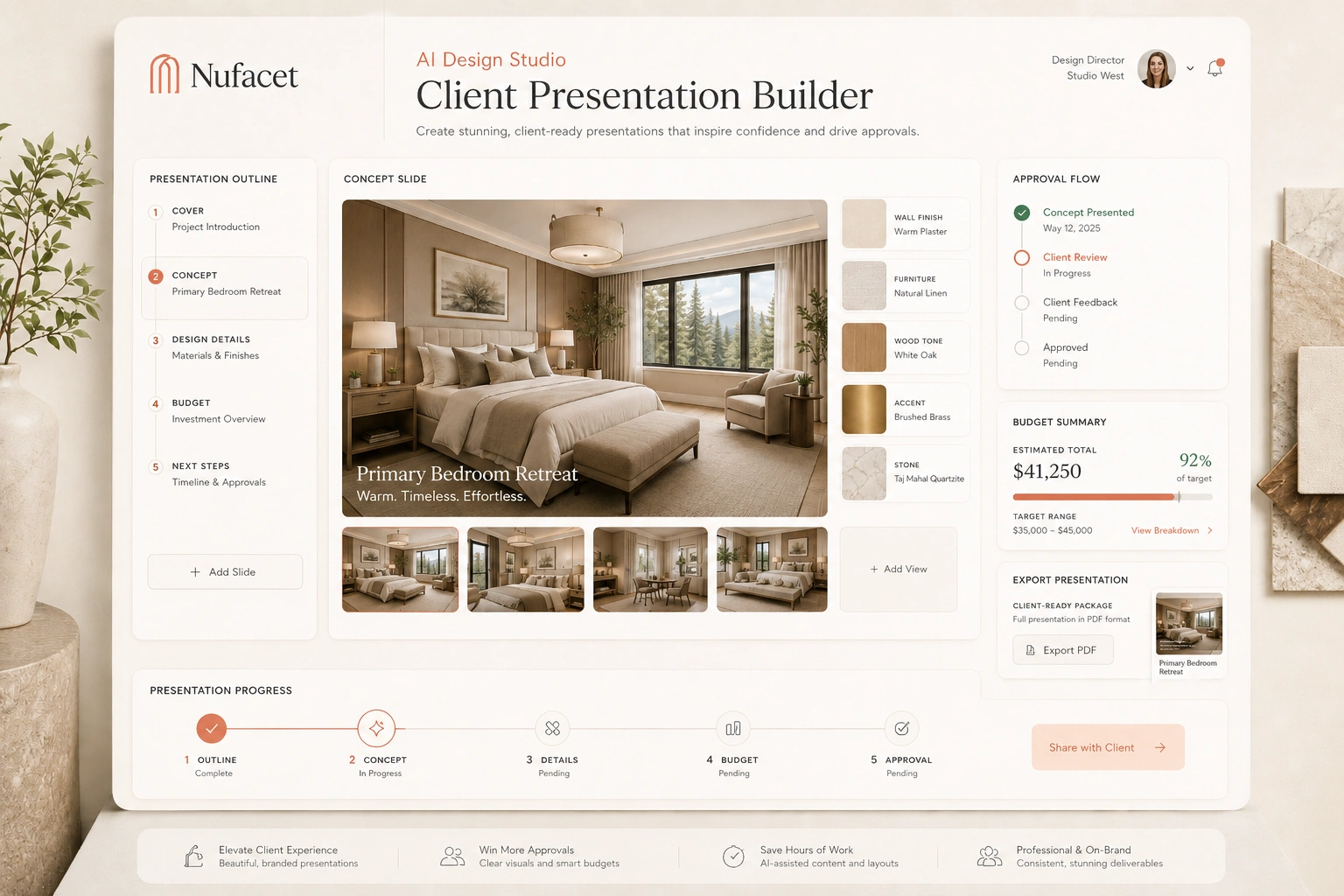
Client Presentation Builder
Room concept slide with narrative, mood board, selections, budget, and approval buttons.
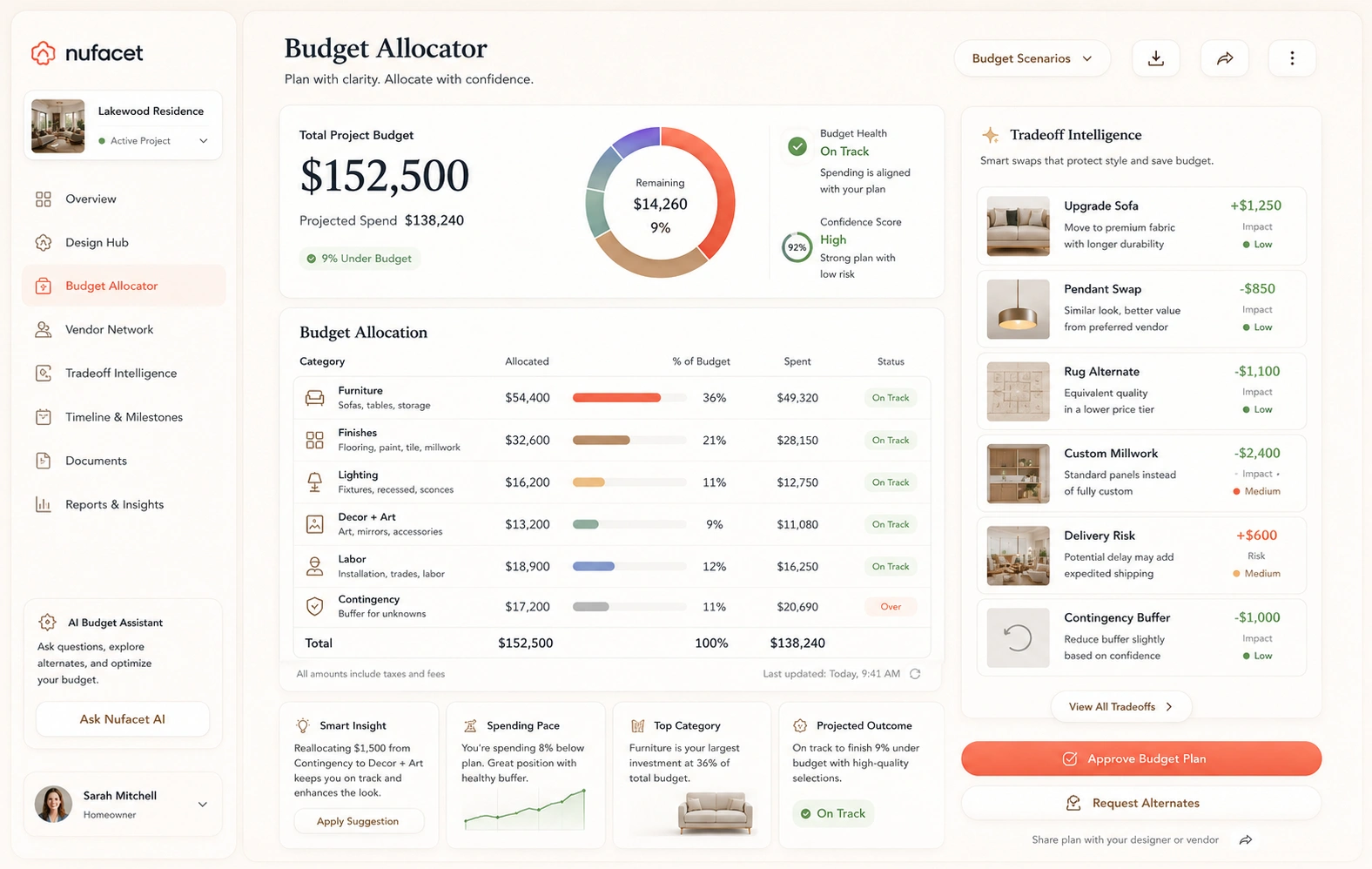
Budget Allocator
Category spend across furniture, lighting, textiles, decor, delivery, install, and contingency.
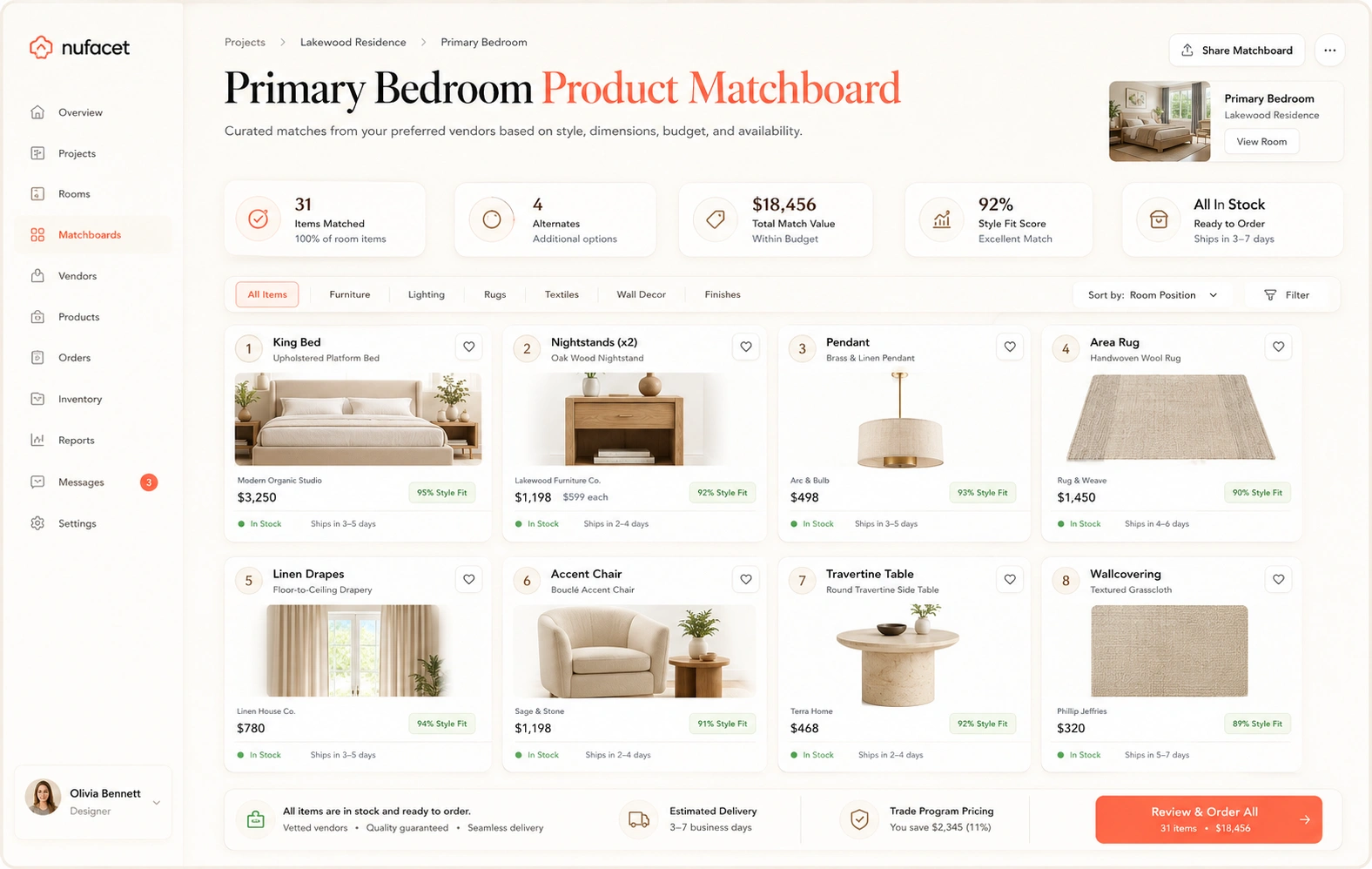
Vendor Inventory Match
Product cards with vendor, price, lead time, availability, dimensions, finish, and fit score.
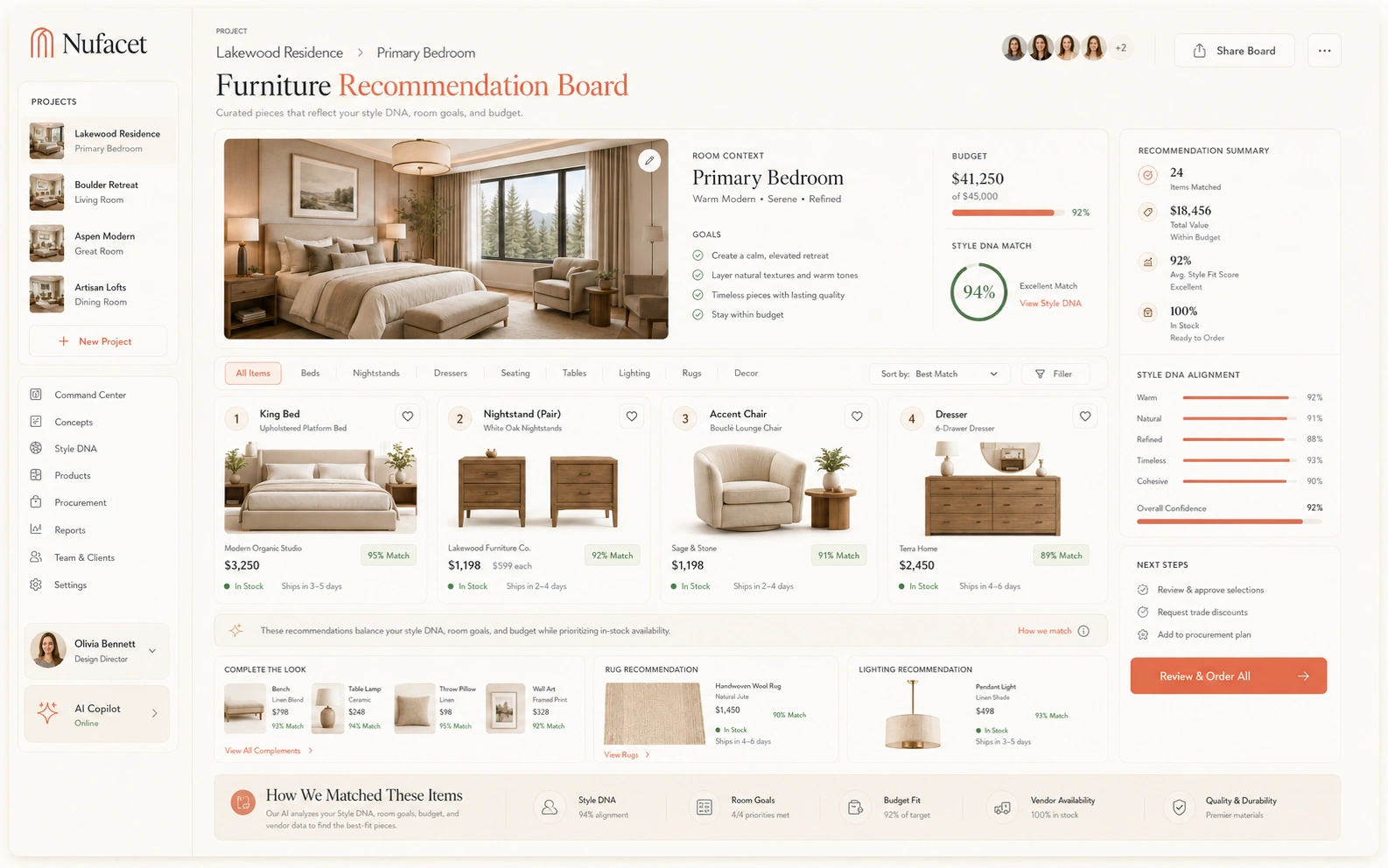
Furniture Recommendation Board
Coordinated sofa, chair, table, rug, lighting, and art with compatibility indicators.
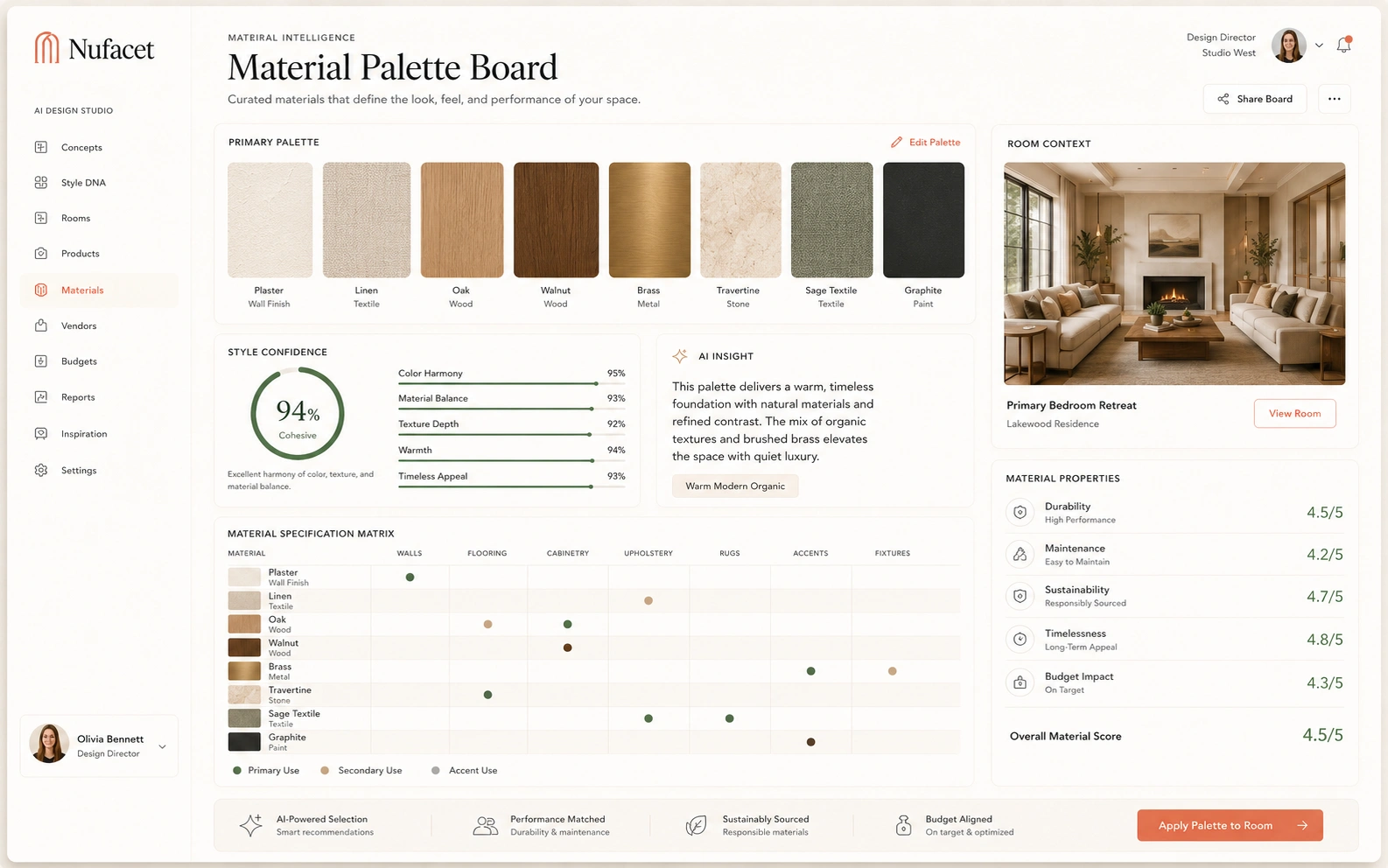
Material + Palette Board
Paint, wood, metal, fabric, stone, texture, warmth score, and recommended pairings.
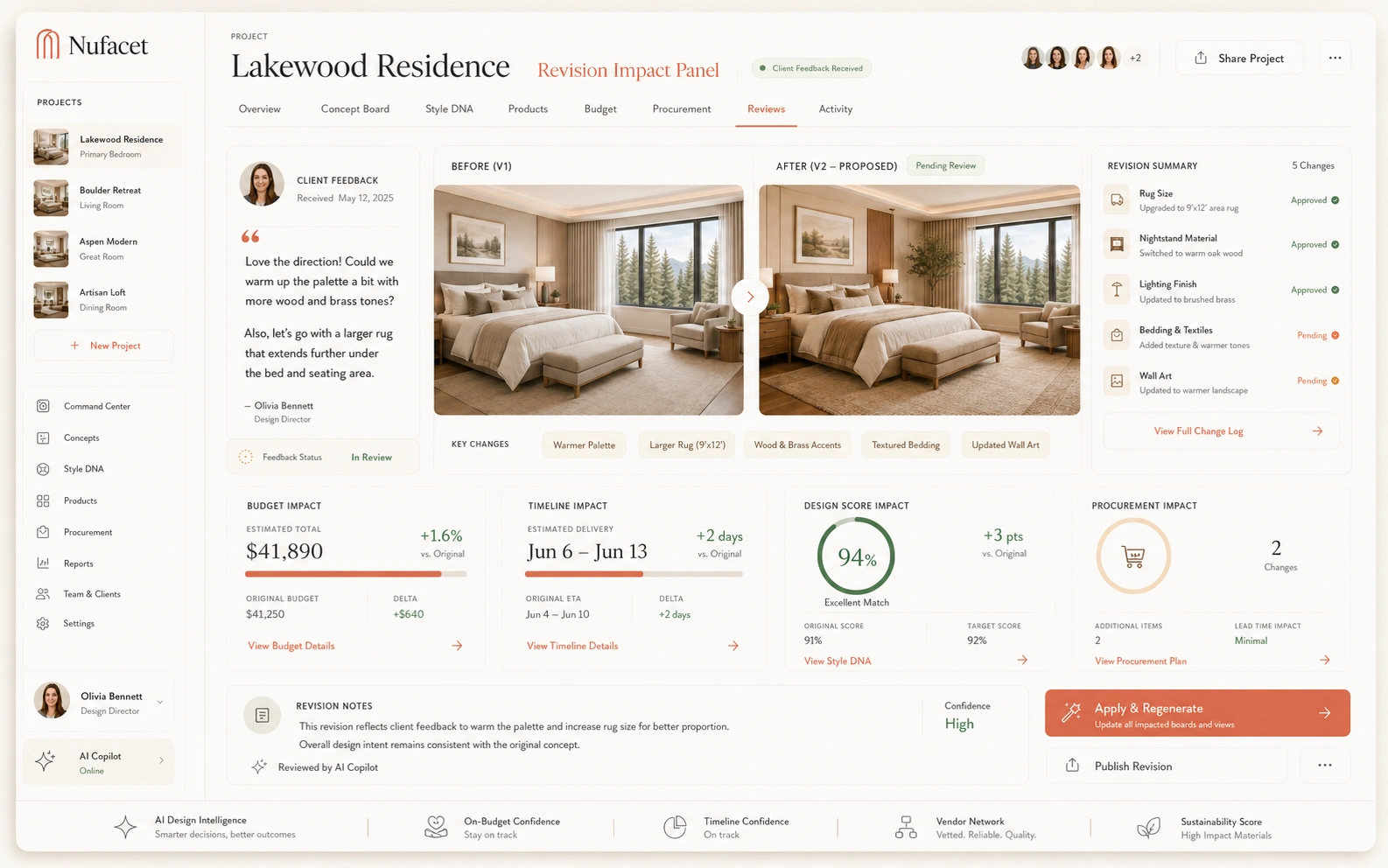
Revision Impact Panel
Replace-sofa action showing impact on budget, lead time, layout, palette, and inventory.
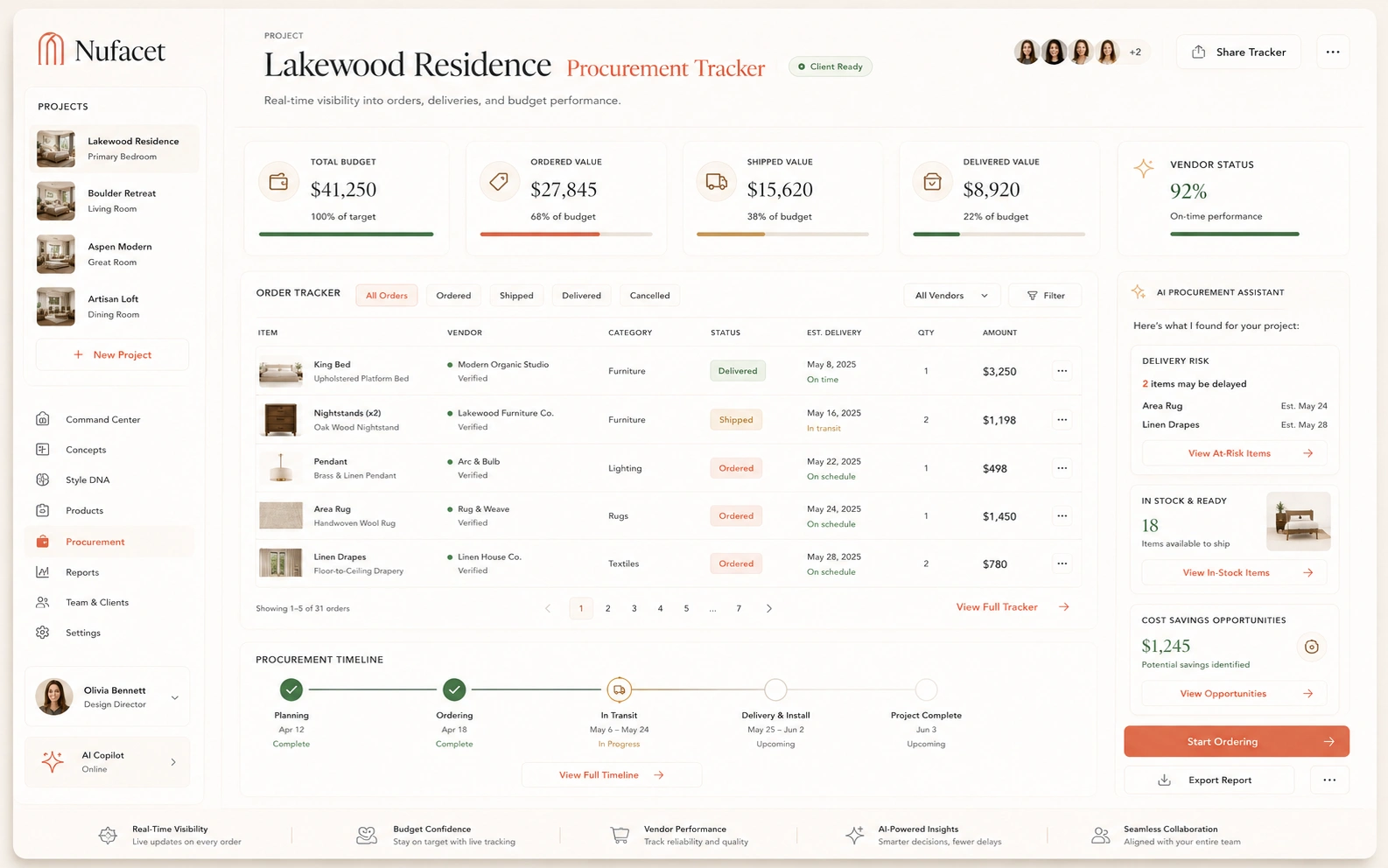
Procurement Tracker
Approved items, order status, delivery window, install dependency, and exception alerts.
MEASUREMENT MODEL
What a serious Interior Design Intelligence platform should measure.
Nufacet should be designed around measurable product and workflow signals, not private performance claims.
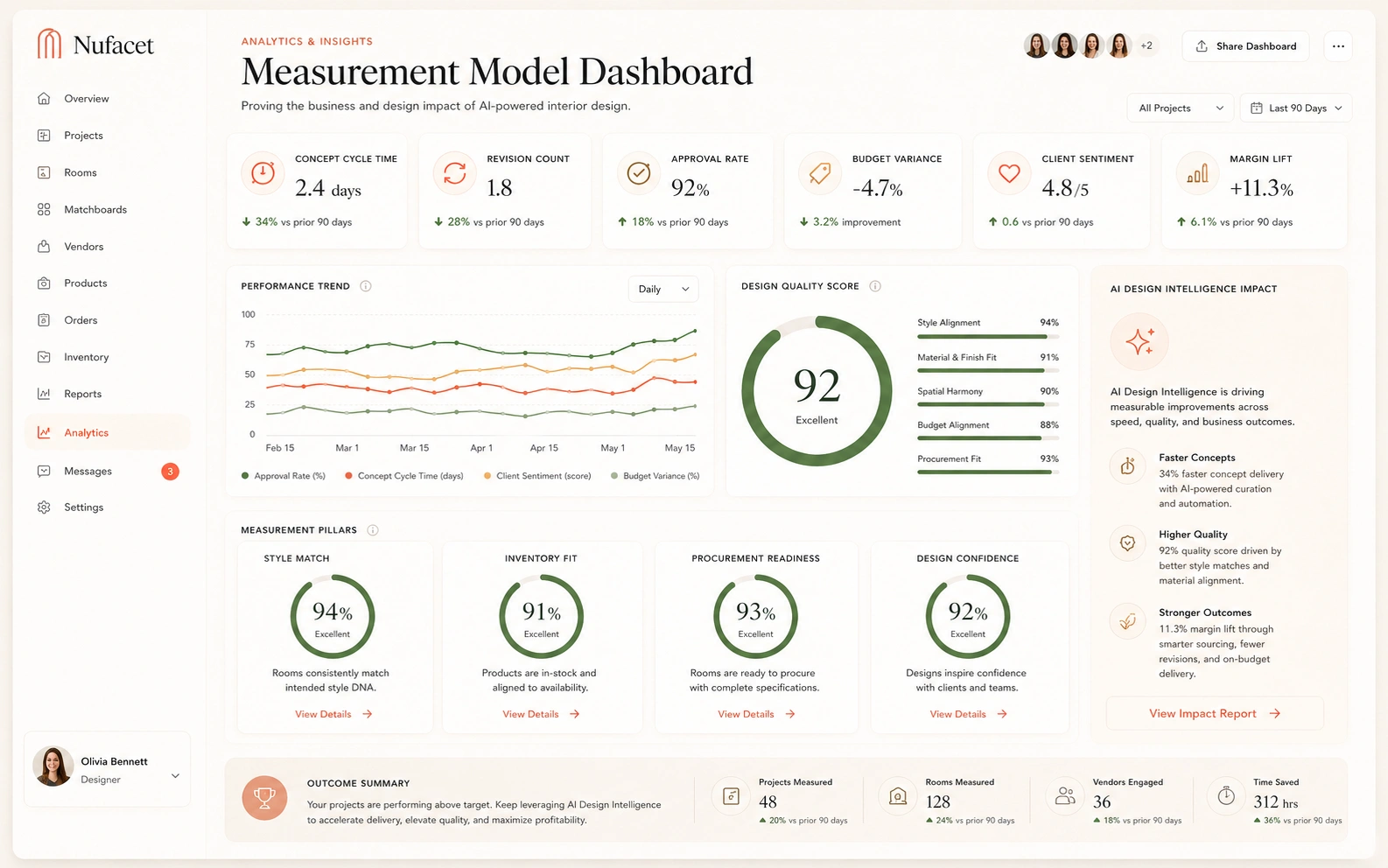
Because this is a public build case study, this page does not claim private customer metrics. It focuses on the measurement model and platform readiness.
USE-CASE EXPANSION
Where the Nufacet pattern can expand.
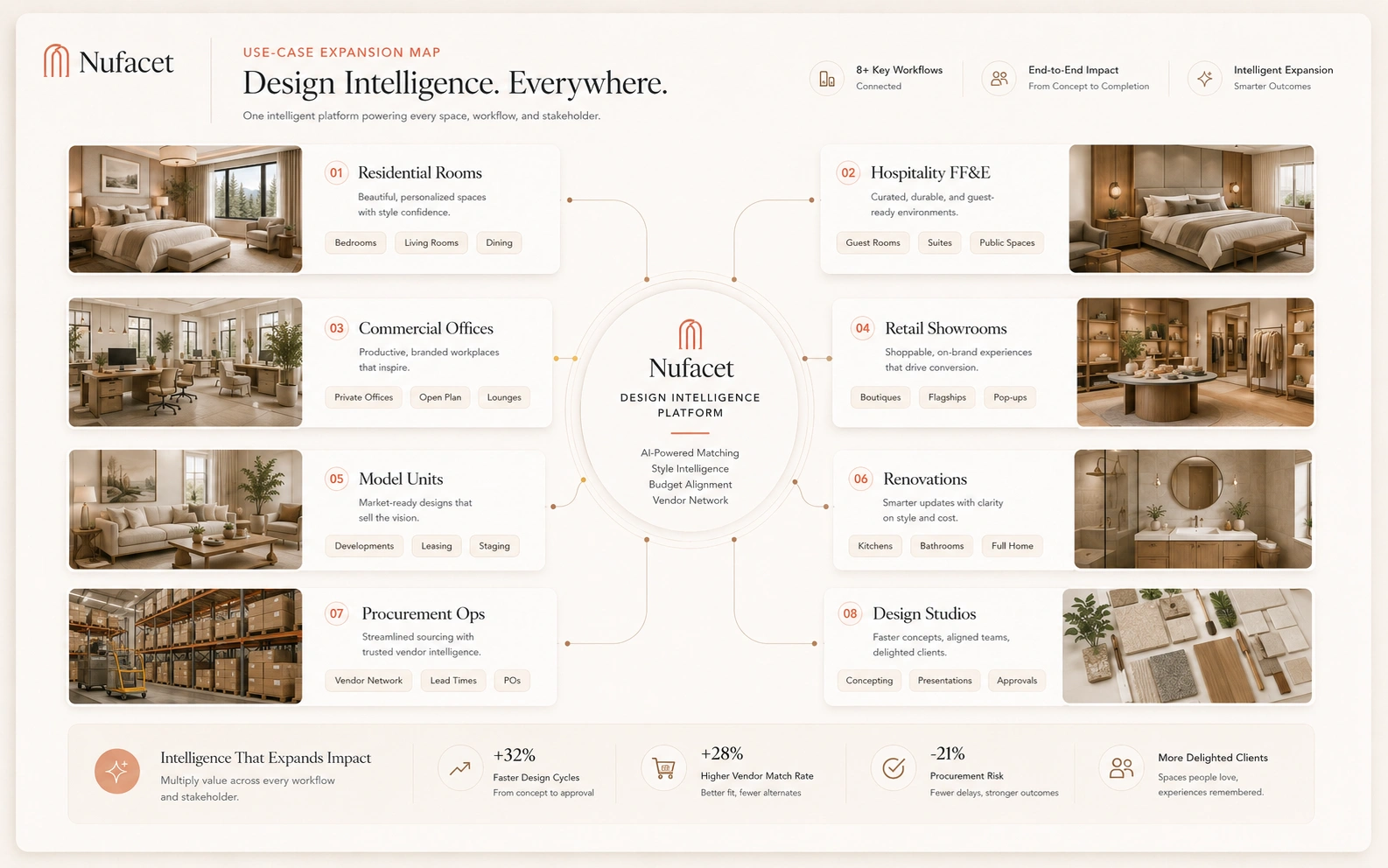
Interior design firms
Faster concept development, presentation creation, sourcing, and revision management.
Furniture retailers
Room-level product bundles, shoppable designs, inventory-aware recommendations, and higher-confidence purchases.
Real estate developers
Model apartment packages, finish palettes, staged-room concepts, and buyer/renter presentation materials.
Home renovation companies
Room planning tied to budget, finishes, installation milestones, and client approvals.
Hospitality design
Repeatable room packages, brand-consistent palettes, procurement coordination, and rollout planning.
Ecommerce marketplaces
AI-generated room bundles, style-driven shopping, substitutions, and room-based merchandising.
WHY IT IS IMPRESSIVE
Why Nufacet is a powerful example of InitializeAI's build capability.
It turns expert taste into structured workflow
Nufacet converts subjective design goals into structured briefs, style direction, layout logic, and product selection.
It connects creative and operational constraints
The platform balances aesthetics with space, budget, availability, lead time, and procurement.
It goes beyond image generation
Nufacet is a workflow platform: brief, layout, products, budget, presentation, revisions, and sourcing.
It supports human expertise
Designer review, overrides, rationale, and approvals keep the process human-led.
It requires real data modeling
Room specs, furniture attributes, materials, vendors, budgets, style taxonomies, and project states all need structure.
It shows InitializeAI can build AI for expert verticals
Interior design is complex, visual, operational, and judgment-driven — exactly where thoughtful AI product design matters.
INITIALIZEAI BUILD LESSON
What this case study shows about InitializeAI.
Nufacet demonstrates the kind of applied AI execution InitializeAI brings to expert workflows. The work was not simply "generate a room image." It required mapping how designers actually think, how rooms are specified, how budgets are managed, how vendor inventory changes, how clients approve decisions, and how concepts move into procurement. InitializeAI's role was to turn that complex workflow into a structured AI product system.
FAQ
Nufacet case study FAQ
What is Nufacet?
Nufacet is an AI-powered Interior Design Intelligence platform built to help users turn room specs, style goals, budgets, layouts, and vendor inventory constraints into designer-grade room concepts, product selections, presentations, and procurement-ready plans.
Was Nufacet built by InitializeAI?
Yes. InitializeAI created Nufacet as a full AI-enabled design automation and interior design intelligence platform, spanning product strategy, user experience, design workflow modeling, AI recommendation logic, vendor inventory concepts, presentation workflows, and platform architecture.
Is Nufacet just an AI room image generator?
No. Nufacet should be positioned as a design intelligence workflow platform. It supports room briefs, layout intelligence, style direction, budget-aware recommendations, vendor inventory matching, client presentations, revisions, and procurement planning.
What kinds of inputs can Nufacet use?
Nufacet can be positioned around room dimensions, design goals, room type, budget, style/theme, functional requirements, existing pieces, layout constraints, vendor inventory, timeline, and client preferences.
What kinds of outputs can Nufacet generate?
Nufacet can generate room concepts, layout options, furniture recommendations, material palettes, budget allocations, vendor-sourced product boards, alternate selections, client-ready presentations, and procurement planning artifacts.
Does Nufacet replace interior designers?
No. Nufacet is AI-assisted and designer-led. The platform accelerates research, concepting, sourcing, presentations, and procurement planning while preserving designer judgment, authorship, review, and final approval.
Who could use a platform like Nufacet?
Nufacet's model can support interior design firms, furniture retailers, ecommerce marketplaces, real estate developers, renovation companies, hospitality design teams, and product teams building AI-enabled design workflows.
What does this case study show about InitializeAI?
It shows InitializeAI's ability to build full AI-enabled SaaS platforms for complex expert workflows, including data modeling, product design, AI workflow architecture, human-in-the-loop review, analytics, and implementation.
Can InitializeAI build similar platforms for other creative or operational workflows?
Yes. InitializeAI can help organizations design and build AI-powered platforms for design, retail, ecommerce, real estate, construction, HR, field operations, professional services, education, and other complex workflows.
BUILD WITH INITIALIZEAI
Ready to turn an expert workflow into an AI-powered platform?
Nufacet shows what InitializeAI does best: take a complex workflow, map the decisions and constraints behind it, design AI around the real operating process, and build a product experience that helps teams move faster without losing quality, control, or trust.