AI ideas without prioritization
Teams see opportunities across product, merchandising, support, marketing, inventory, operations, and personalization, but need a practical way to rank what is valuable and feasible.
AI for Retail & Ecommerce
InitializeAI helps retail and ecommerce teams evaluate AI opportunities, assess product and customer data readiness, improve recommendation and merchandising workflows, automate customer support and product-content operations, design measurable pilots, and implement practical AI with human review and customer trust built in.
Retail AI Execution Gap
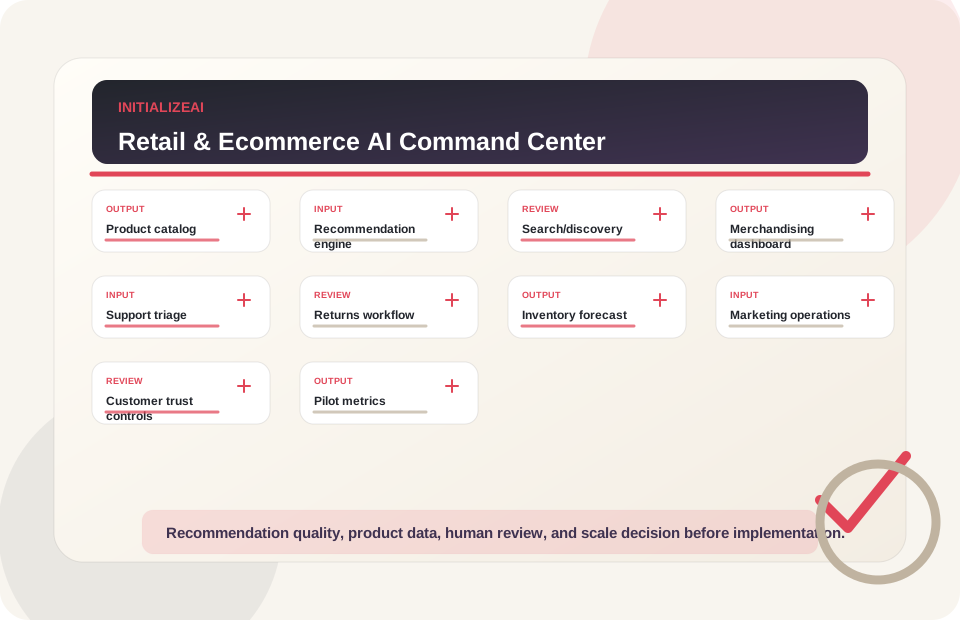
Retail and ecommerce teams have many promising AI opportunities: recommendations, product discovery, merchandising support, customer service triage, returns workflows, product content generation, inventory forecasting, marketing operations, review summarization, and personalization. AI creates value only when the use case is clear, product and customer data are usable, content is reviewed, personalization is trustworthy, and pilots are measured.
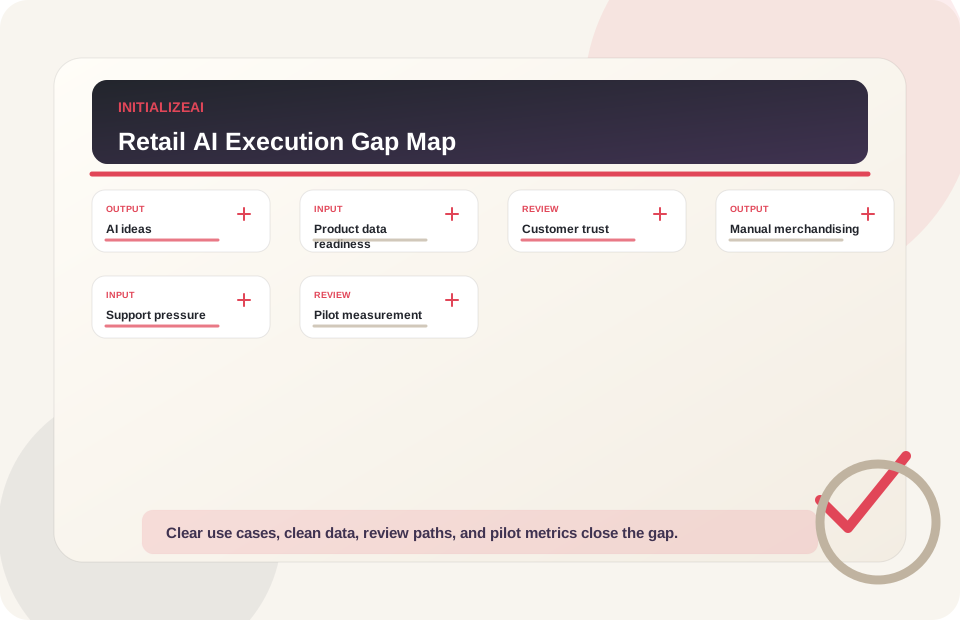
Teams see opportunities across product, merchandising, support, marketing, inventory, operations, and personalization, but need a practical way to rank what is valuable and feasible.
Recommendations, search, product content, merchandising, and personalization depend on clean product data, taxonomy, attributes, inventory, pricing, and customer-behavior signals.
Personalization, recommendations, product content, customer support, and marketing workflows need privacy-aware planning, transparency, and review.
Product descriptions, categorization, enrichment, promotions, collections, substitutions, and merchandising decisions often depend on repetitive manual workflows.
Customer questions, returns, order issues, warranty questions, delivery problems, and escalation workflows can overwhelm support teams.
Retail AI pilots should define adoption signals, review quality, support quality, customer trust, inventory implications, risk controls, and scale/refine/stop criteria before launch.
Retail and ecommerce opportunity areas
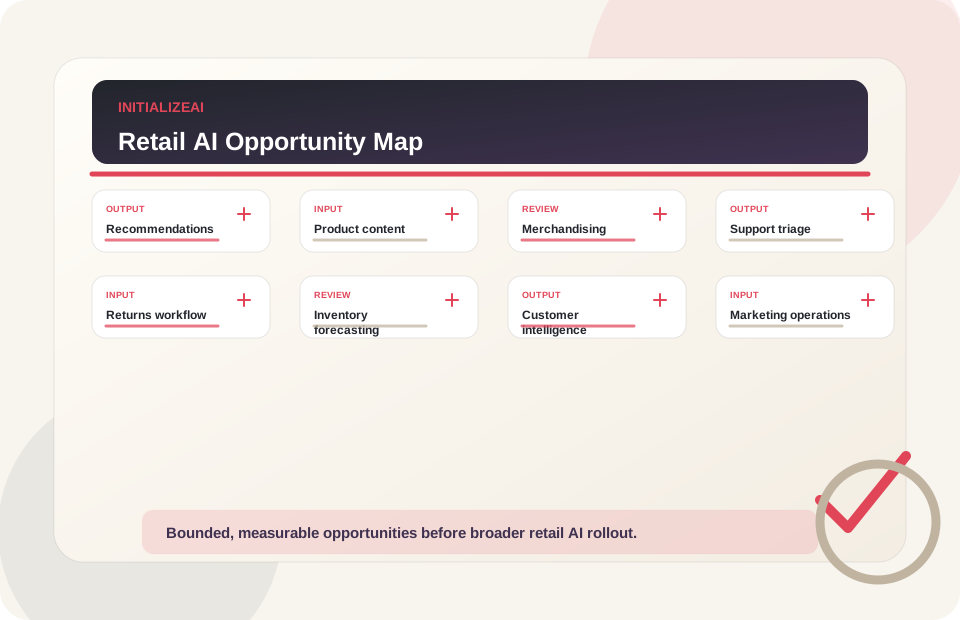
InitializeAI focuses on bounded, measurable use cases that can be evaluated, governed, piloted, and adopted inside real product, merchandising, customer, support, inventory, and marketing workflows.
Support product recommendations, search improvements, related products, next-best-action concepts, content discovery, and personalized experiences.
Possible first pilot: One recommendation surface or discovery workflow with a clear user-value hypothesis and feedback loop.
Governance considerations: Customer trust, bias, privacy, user control, data quality, evaluation, and measurement.
Related: Custom AI ImplementationAssist with product descriptions, attribute enrichment, categorization, SEO metadata, product comparison, translations, and content review.
Possible first pilot: One product category or content workflow with human review and brand guidelines.
Governance considerations: Accuracy, claims review, brand voice, regulatory/product constraints, accessibility, and approval.
Related: Workflow AutomationSupport collection building, product grouping, promotion planning, substitution concepts, and merchandising analysis.
Possible first pilot: One merchandising workflow with buyer/merchant review and defined success signals.
Governance considerations: Pricing/promotion assumptions, customer impact, inventory availability, fairness, and review authority.
Related: AI Strategy WorkshopClassify, summarize, route, and draft responses for customer questions, order issues, returns, warranty requests, and service escalations.
Possible first pilot: One support category with human-reviewed outputs and escalation rules.
Governance considerations: Customer data, tone, accuracy, refund/return authority, escalation, and approved messaging.
Related: Workflow AutomationSupport returns triage, reason-code summarization, warranty documentation, service notes, and customer follow-up.
Possible first pilot: One return or warranty workflow with clear approval boundaries.
Governance considerations: Policy accuracy, financial impact, customer fairness, fraud/abuse signals, and human approval.
Related: AI GovernanceEvaluate AI-enabled support for demand forecasting, replenishment planning, inventory risk, stockout/overstock signals, and seasonal planning.
Possible first pilot: One product category, location, channel, or planning cadence with planner review.
Governance considerations: Data quality, seasonality, promotions, planner authority, forecast confidence, and monitoring.
Related: AI ReadinessSummarize reviews, support tickets, call notes, surveys, returns reasons, and social/customer feedback for product, merchandising, and support teams.
Possible first pilot: One product line or feedback source with source references and stakeholder review.
Governance considerations: Bias, source quality, privacy, interpretation, and decision authority.
Related: AI Product CoachingSupport audience research, content drafting, campaign briefs, landing-page copy, email drafts, offer analysis, and marketing workflow automation.
Possible first pilot: One campaign or content workflow with brand/legal review and performance assumptions.
Governance considerations: Advertising claims, brand voice, privacy, consent, targeting, accessibility, and human approval.
Related: Advisory & TrainingUse-case matrix
Start with the workflow, then decide whether the right next step is readiness, governance, pilot design, automation, or custom implementation.
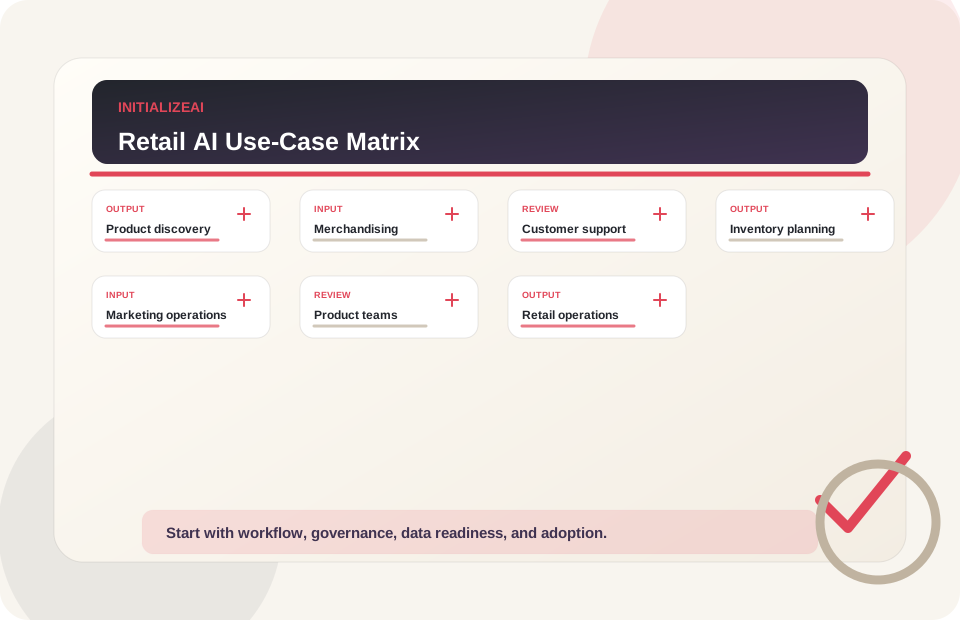
| Function | Use cases | Good first step |
|---|---|---|
| Product discovery and recommendations | Product recommendations, related products, search support, product comparison assistant, next-best-action suggestions, personalization concepts. | Recommendation System Scoping |
| Merchandising and catalog operations | Product categorization, attribute enrichment, collection building, promotion planning support, product content review, catalog data quality dashboards. | Product Data Readiness Review |
| Customer support and post-purchase | Support triage, return reason summarization, warranty/request routing, response drafting with review, customer history summaries, escalation workflows. | Workflow Automation Workshop |
| Inventory and planning | Demand forecasting support, replenishment planning, stockout/overstock signals, store/channel planning, seasonal planning, supplier/vendor communication support. | AI Readiness + Forecasting Pilot |
| Marketing and growth operations | Campaign brief drafting, email/content drafts, audience research support, landing page copy with review, offer analysis, review/social insight summaries. | Marketing Operations AI Workshop |
| Ecommerce product and platform teams | AI feature prioritization, in-product shopping assistant concepts, personalization governance, product analytics, customer journey intelligence, AI feature launch readiness. | AI Product Coaching or Strategy Workshop |
| Retail operations and stores | Store task assistants, associate knowledge assistants, inventory lookup support, customer service guidance, visual merchandising documentation, operations dashboards. | Workflow Automation or Custom AI Scoping |
How InitializeAI helps
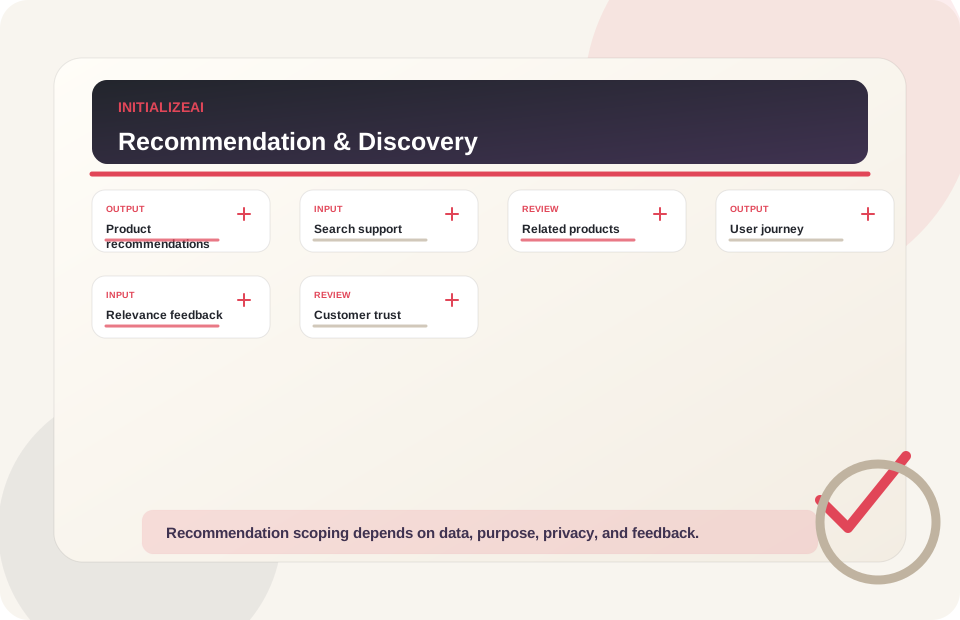
Evaluate recommendation and discovery opportunities based on user value, product data readiness, privacy expectations, customer trust, and measurable adoption.
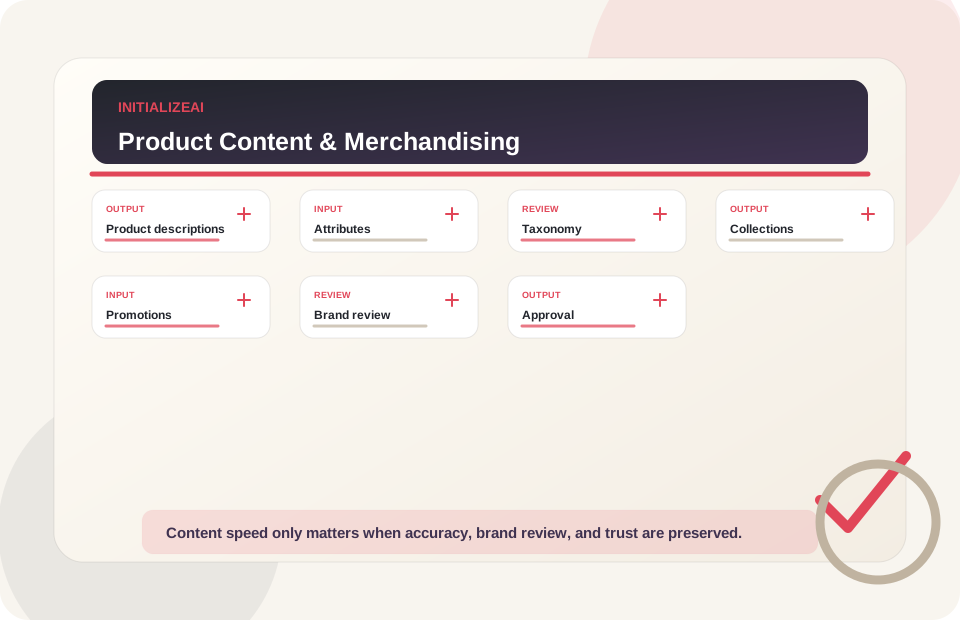
Map and improve product content, catalog enrichment, merchandising, promotion, collection, and product-data workflows with human review built in.
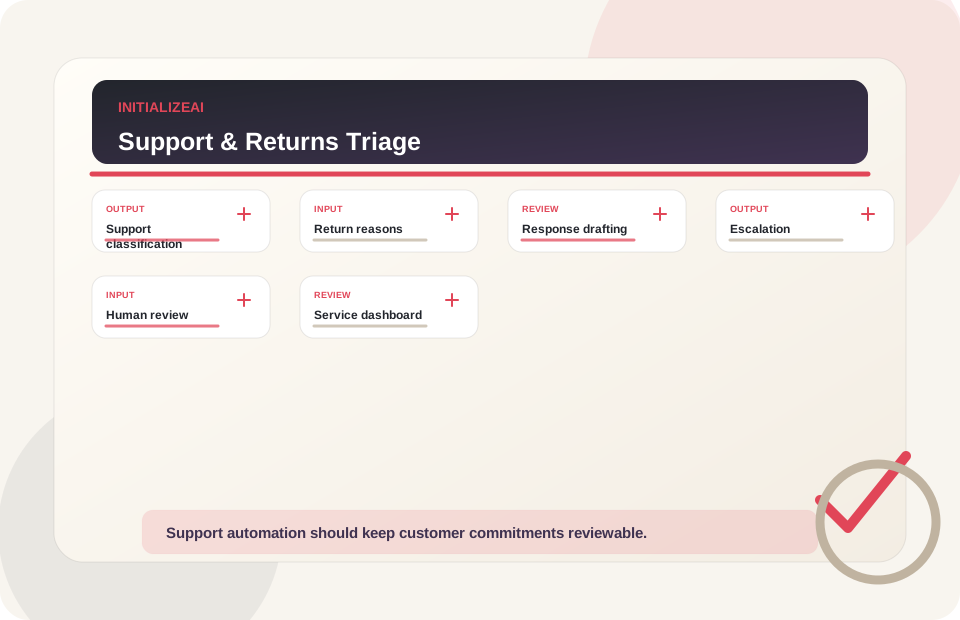
Evaluate AI support for triage, routing, summarization, response drafting, returns workflows, and escalation.
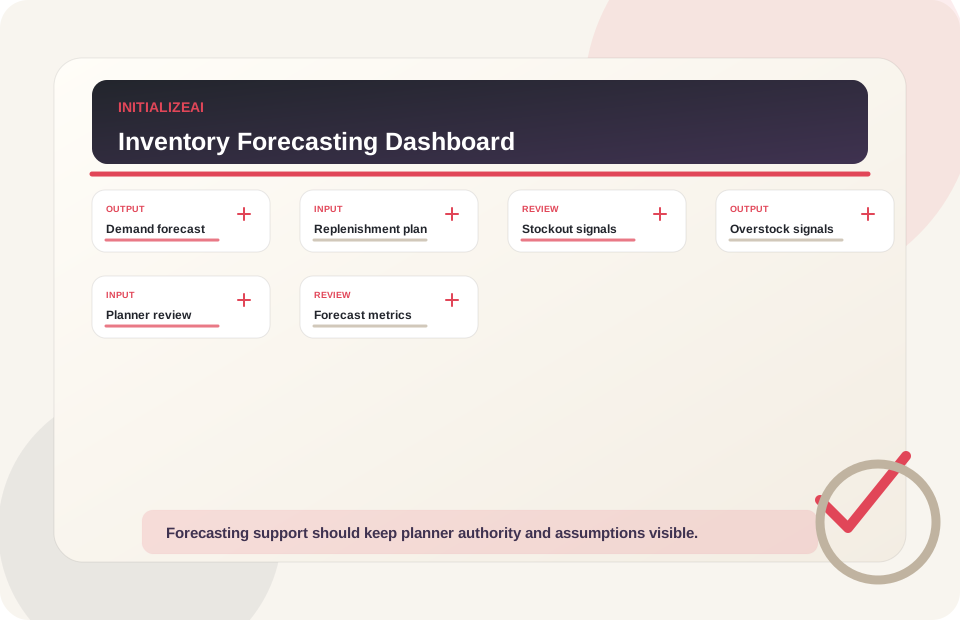
Assess AI opportunities across forecasting, replenishment, demand planning, inventory signals, and operations dashboards.
Product data and customer trust
Retail AI depends on clean product information, trustworthy customer interactions, privacy-aware personalization, and human review for content, pricing, and service workflows.
View Trust Center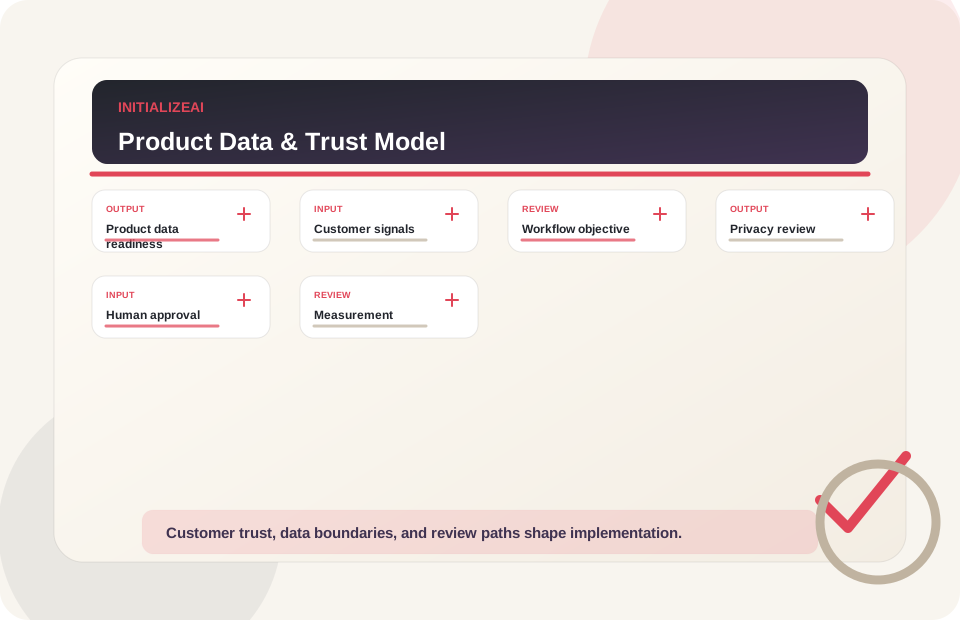
Attributes, taxonomy, product descriptions, variants, inventory, pricing, promotions, images, and product relationships.
Search, clicks, orders, returns, support tickets, reviews, preferences, and consent-aware data usage.
Discovery, conversion support, support quality, inventory planning, merchandising, content operations, or customer service.
Data boundaries, personalization rules, customer trust, accessibility, advertising claims, and policy constraints.
Merchandisers, marketers, support leads, product managers, planners, or legal/brand reviewers approve outputs where needed.
Adoption, relevance, review quality, support outcomes, customer feedback, and scale/refine/stop decisions.
Recommendation system scoping
Useful recommendations require a clear user problem, good product data, measurable relevance, privacy-aware personalization, and a feedback loop.
Discuss Recommendation System Scoping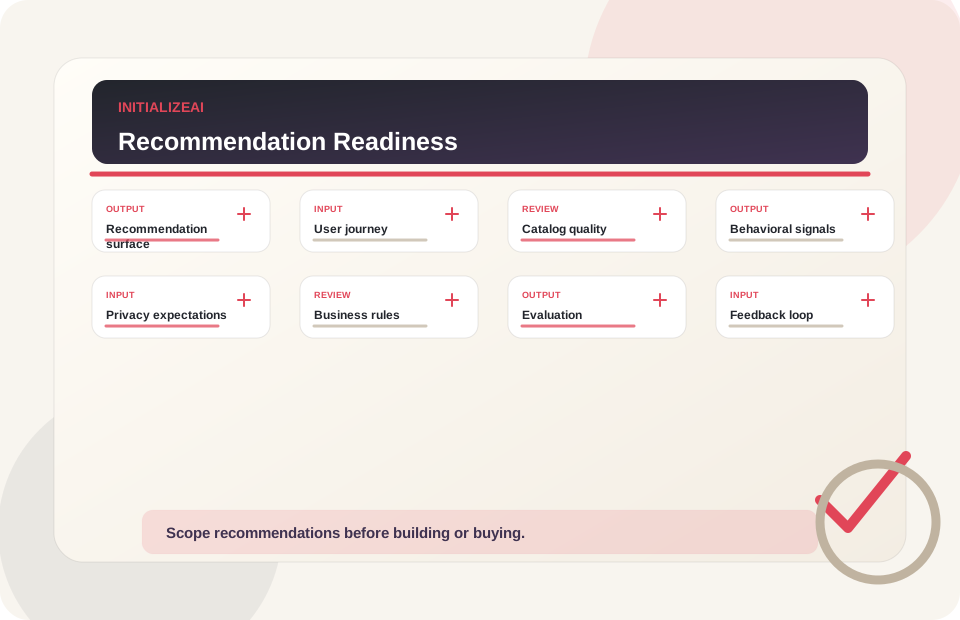
Define where the recommendation appears and which user decision it supports.
Clarify browsing, search, product detail, cart, post-purchase, email, or associate-assisted context.
Review attributes, taxonomy, variants, imagery, product relationships, and content gaps.
Evaluate signal quality, consent expectations, freshness, sampling, and feedback loops.
Clarify data boundaries, user control, merchandising constraints, inventory availability, and opt-out expectations.
Measure relevance quality, click/use signals as pilot signals, customer feedback, merchandiser review quality, inventory fit, and scale readiness.
Workflow automation
Retail teams adopt AI when it fits the work: product setup, content review, merchandising, support, returns, inventory planning, customer communication, and marketing operations.
Explore Workflow Automation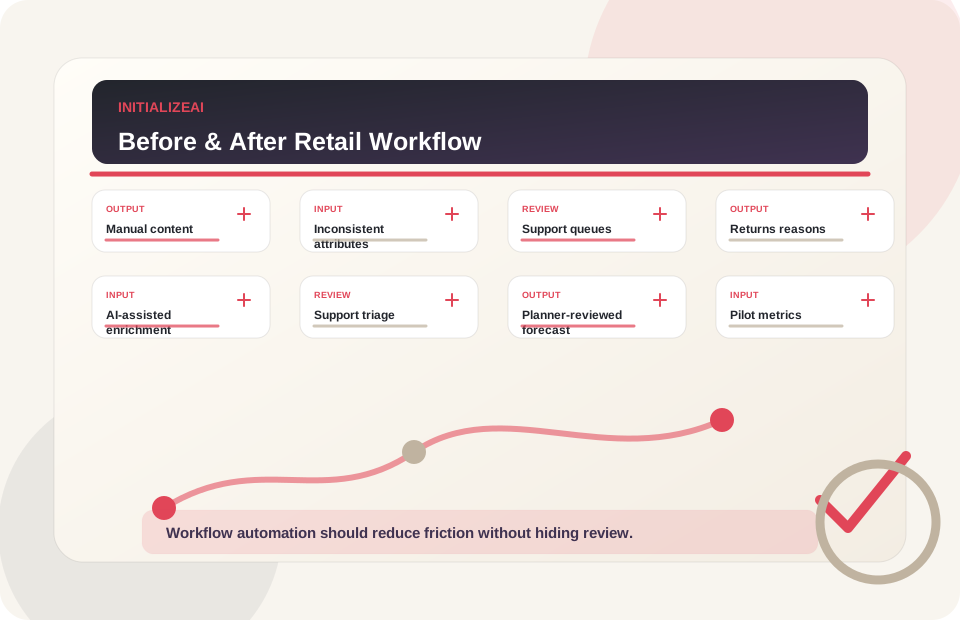
Manual product content updates, inconsistent product attributes, support queues overloaded, returns reasons scattered, forecasting in spreadsheets, campaign content rework, manual review handoffs, and limited pilot evidence.
AI-assisted product enrichment, human-reviewed content workflows, support triage and routing, return reason intelligence, planner-reviewed forecasts, marketing operations support, workflow dashboards, and pilot metrics.
Customer support and post-purchase operations
Customer support, returns, warranty, order issues, delivery questions, and service communications create high-volume workflows where AI can support staff without removing human judgment.
Discuss Support and Returns Automation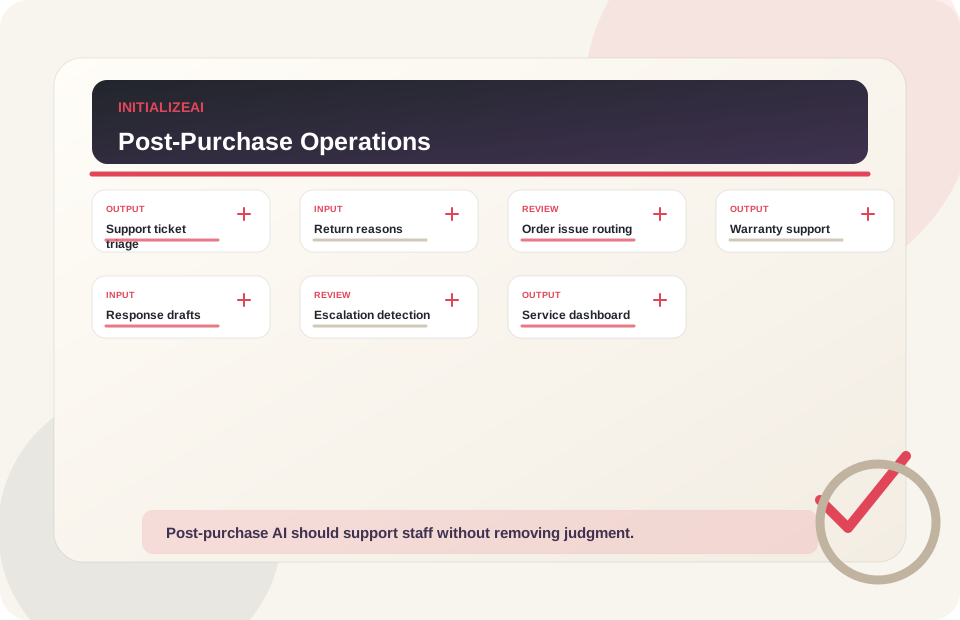
Classify issues, summarize context, identify next queue, and prepare agent review.
Organize reasons, product context, policy references, and exception notes for review.
Route delivery, damage, missing item, billing, and product questions to accountable teams.
Assemble customer context, product details, evidence, and reviewer notes.
Draft approved-message responses for agent or supervisor approval before use.
Surface policy exceptions, high-sensitivity issues, or unusual requests for human review.
Help agents find policies, product details, return rules, and troubleshooting steps.
Track workflow signals, adoption, review quality, escalation patterns, and feedback.
Product content and merchandising
AI can support product descriptions, metadata, categorization, translations, comparison content, merchandising notes, and campaign copy when outputs are reviewed against brand, legal, product, and customer expectations.
Explore Custom AI Implementation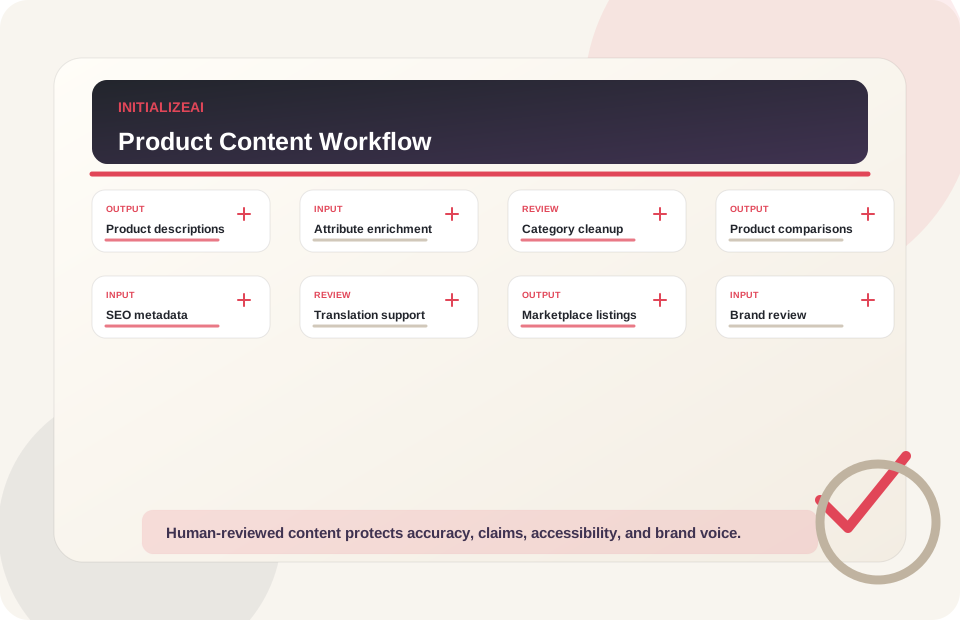
Draft and standardize product content for reviewer approval.
Identify missing attributes, taxonomy issues, and catalog inconsistencies.
Support classification, collection structure, and product relationship review.
Prepare source-grounded comparison content for merchandising or support review.
Support metadata drafts while keeping claims, accuracy, and brand review in the workflow.
Prepare localized drafts with human review for accuracy, tone, and accessibility.
Summarize assortment, inventory, audience, and promotion assumptions for merchandiser review.
Route sensitive claims, regulated products, and customer-facing promises for approval.
Evaluate content clarity, readability, and customer-facing usability signals.
Prepare listings, attributes, and exception queues for human-reviewed publishing.
Pilot design
Strong first pilots focus on one workflow, one data path, one review owner, and one measurement model before scaling.
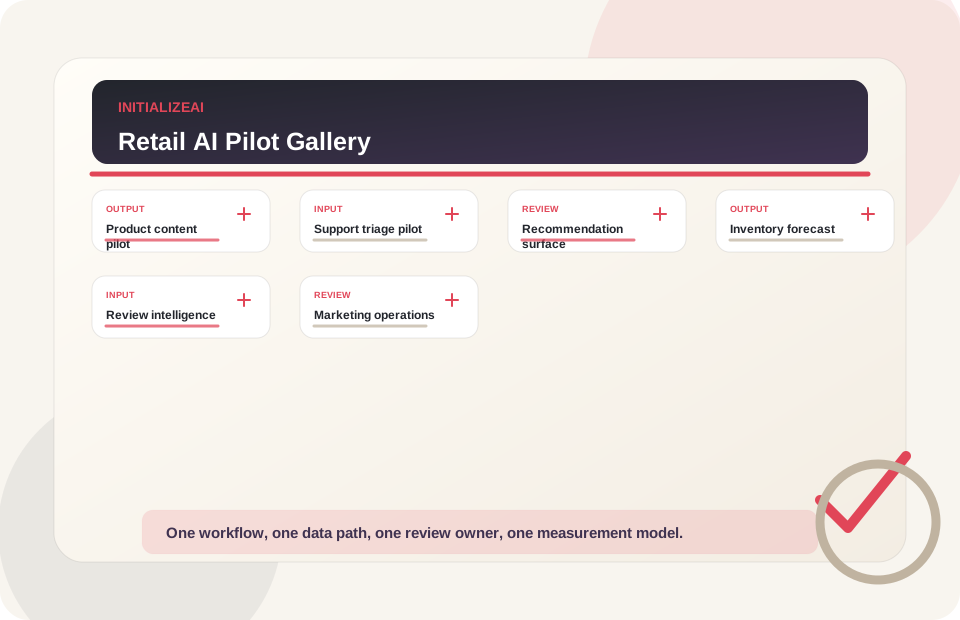
Scope: One product category, content type, or catalog enrichment workflow with brand/legal review.
Measures: drafting time, correction rate, content completeness, review quality, adoption.Scope: One support category such as order status, returns, warranty, product questions, or shipping issues.
Measures: routing quality, response quality, escalation rate, agent adoption.Scope: One product category, recommendation location, or user journey step.
Measures: relevance feedback, click/use signal, merchandiser review, customer trust signals.Scope: One category, SKU group, channel, store, or planning cadence.
Measures: forecast usefulness, planner trust, override rate, stockout/overstock signal quality.Scope: One review source, product line, or customer feedback channel.
Measures: insight quality, source traceability, product/merchandising usefulness, adoption.Scope: One campaign workflow with approved brand and claims review.
Measures: draft cycle time, review effort, brand consistency, approval quality.AI ROI and EBITDA impact
AI in retail and ecommerce should be tied to measurable operating levers: product content effort, support queue volume, returns workflows, inventory planning, forecast usefulness, merchandising review time, marketing production, and adoption.
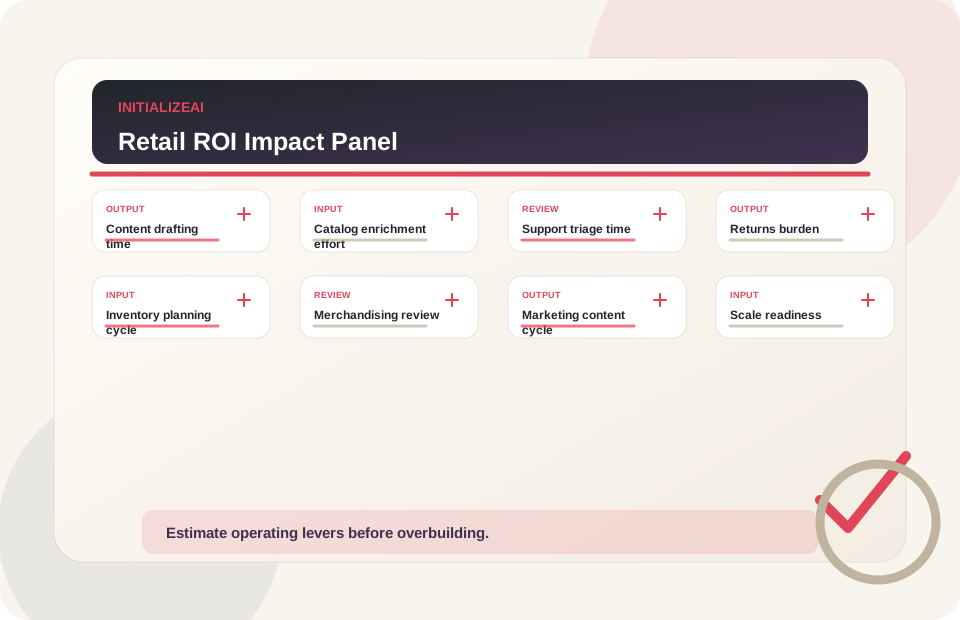
Estimate effort spent creating, updating, and reviewing product content.
Evaluate taxonomy, attributes, marketplace listing, and data cleanup workload.
Measure intake, classification, routing, summarization, and review effort.
Evaluate reason-code review, exception handling, documentation, and customer communication effort.
Estimate agent drafting, knowledge lookup, escalation, and approval work.
Assess data preparation, planning review, exception handling, and forecast usefulness.
Measure collection planning, promotion briefs, product grouping, and review handoffs.
Estimate campaign drafting, review, revision, and approval effort.
Track pilot relevance feedback, click/use signals, merchandiser review, and customer trust indicators.
Review adoption, governance controls, data quality, and workflow fit before broader rollout.
Extra review use cases
Some retail AI opportunities can affect customer trust, privacy, pricing, eligibility, returns, advertising claims, regulated products, minors, financial decisions, or consumer rights. These should be evaluated carefully and should involve appropriate legal, privacy, security, marketing, customer experience, product, and business stakeholders.
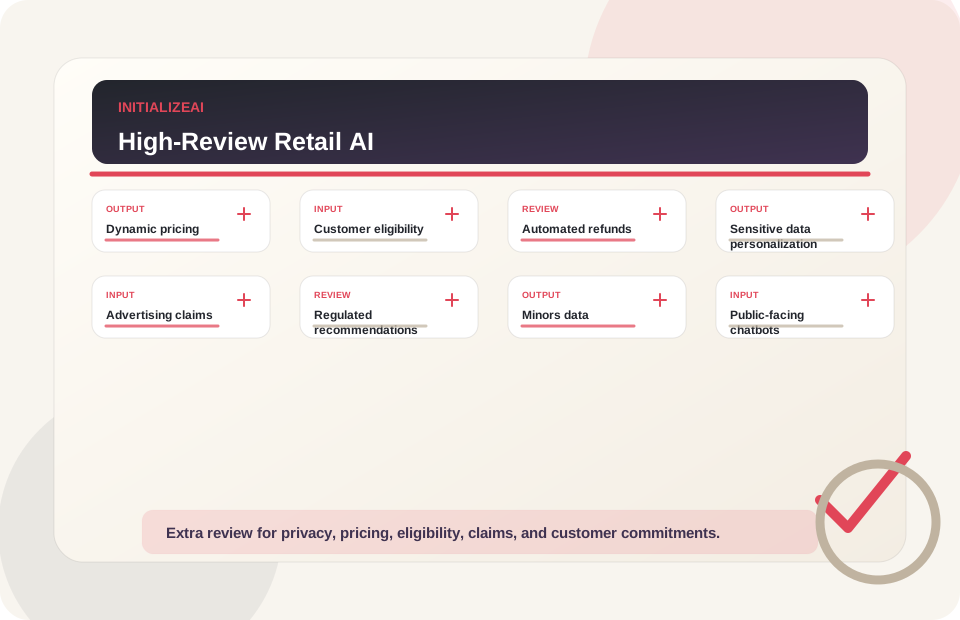
Why review matters: Pricing and offers can affect customer trust, legal review, fairness expectations, and margin assumptions.
Recommended first step: Governance review, privacy/legal/marketing review, human approval model.
Discuss Governance RequirementsWhy review matters: Eligibility and financial decisions can affect rights, access, and regulated obligations.
Recommended first step: Legal/privacy/security review and pilot-risk assessment.
View Trust CenterWhy review matters: These workflows can affect money, fairness, customer commitments, and exception handling.
Recommended first step: Human approval model, customer-trust review, and policy boundary review.
Explore AI GovernanceWhy review matters: Sensitive data, targeting, and consent expectations need strong data boundary review.
Recommended first step: Privacy/legal/marketing review and data boundary review.
Discuss Trust RequirementsWhy review matters: Customer-facing claims should be accurate, approved, accessible, and aligned with brand and legal expectations.
Recommended first step: Marketing/legal review and human approval model.
Discuss Governance RequirementsWhy review matters: Health, nutrition, financial, legal, or other regulated product categories may require stronger controls.
Recommended first step: Legal/privacy/marketing review and pilot-risk assessment.
View Trust CenterWhy review matters: These use cases raise privacy, trust, policy, fairness, and security questions that are not casual pilots.
Recommended first step: Data boundary review, security review, and governance review.
Explore AI GovernanceWhy review matters: Customer-facing commitments, refunds, warranties, promotions, and policy exceptions need approved messaging and escalation.
Recommended first step: Human approval model, escalation design, and customer-trust review.
View Trust CenterEngagement paths
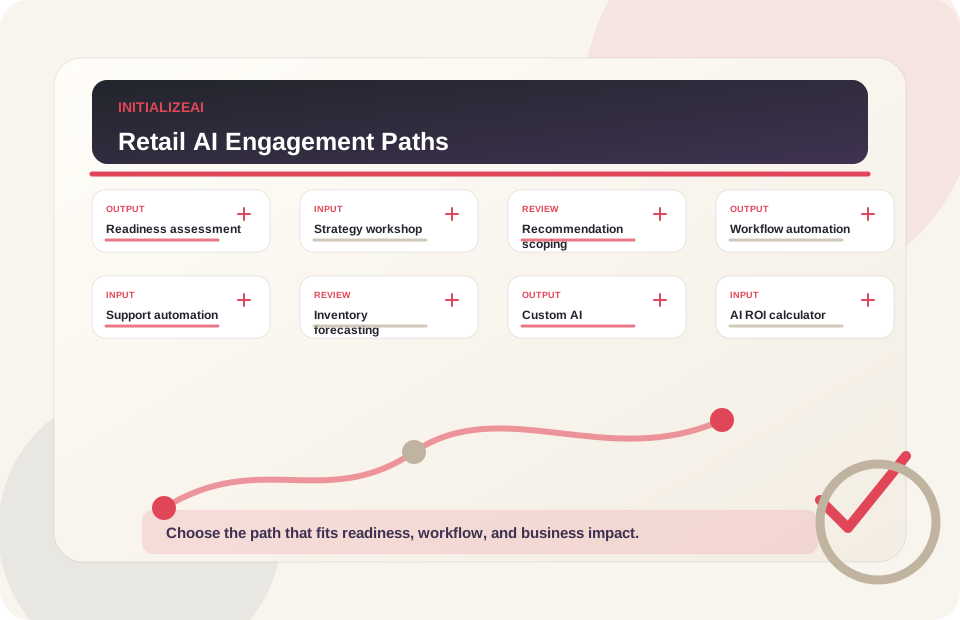
Recommended path: AI Readiness Assessment
Outputs: Readiness map, product/customer data gaps, use-case priorities, roadmap.
Explore AI ReadinessRecommended path: AI Strategy Workshop
Outputs: Use-case inventory, prioritization matrix, pilot candidates.
Explore Strategy WorkshopRecommended path: Recommendation System Scoping
Outputs: Recommendation surface map, data readiness review, governance questions, pilot metrics.
Discuss Recommendation ScopingRecommended path: Workflow Automation Workshop
Outputs: Workflow map, review path, automation candidates, pilot scope.
Explore Workflow AutomationRecommended path: Support Automation Pilot Scoping
Outputs: Support workflow map, triage model, escalation rules, quality metrics.
Discuss Support AutomationRecommended path: Data Readiness + Forecasting Pilot
Outputs: Data review, forecast target, planner review model, pilot path.
Explore Custom AIRecommended path: Custom AI Implementation Scoping
Outputs: Architecture map, prototype path, governance controls, launch plan.
Explore Custom AIRecommended path: AI ROI Calculator + Gap Review
Outputs: Impact estimate, assumption model, next-step recommendation.
Try the ROI CalculatorSolution mapping
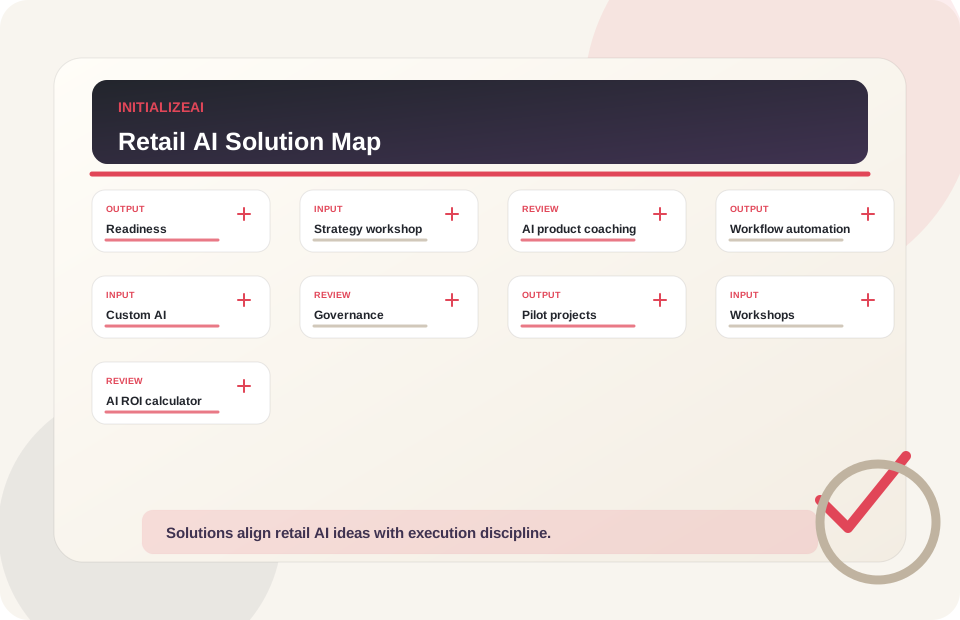
Evaluate readiness across strategy, product data, customer data, systems, governance, workflows, staff capability, and adoption.
StrategyAI Strategy WorkshopPrioritize retail and ecommerce use cases by value, feasibility, data readiness, risk, and workflow fit.
ProductAI Product CoachingSupport ecommerce and platform teams in prioritizing AI product capabilities, personalization, recommendations, and user adoption.
WorkflowWorkflow AutomationMap and improve product content, merchandising, support, returns, marketing, inventory, and back-office workflows.
BuildCustom AI ImplementationScope and build recommendation systems, internal assistants, catalog workflows, dashboards, review queues, and AI-enabled ecommerce tools.
GovernanceAI GovernanceCreate practical guardrails for responsible AI use, customer trust, personalization, data boundaries, human review, and product/marketing risk controls.
PilotAI Pilot ProjectsDesign measurable, bounded, reviewable pilots with owners, metrics, controls, and scale criteria.
WorkshopsWorkshops & BriefingsRun retail AI readiness, ecommerce strategy, workflow automation, staff training, recommendation scoping, and pilot-planning workshops.
ROIAI ROI CalculatorEstimate potential AI impact across cost, cycle time, labor, adoption, and EBITDA levers.
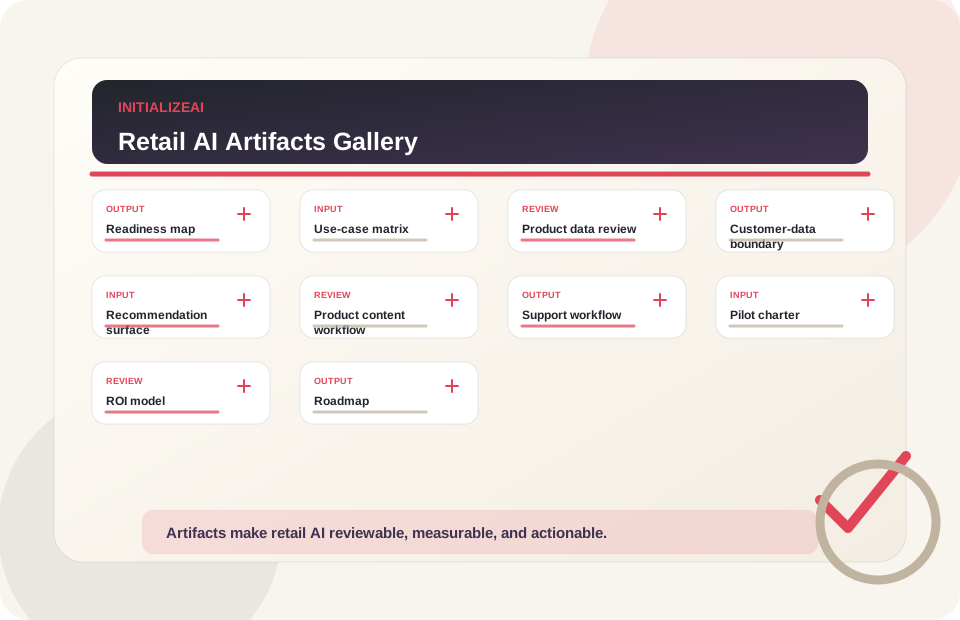
Actionable artifacts
Practical retail and ecommerce AI work should produce materials product, merchandising, marketing, support, inventory, operations, and technical teams can evaluate, discuss, and use.
Why InitializeAI?
InitializeAI brings a practical, workflow-first approach to AI adoption for retail and ecommerce teams that need clarity before implementation.
Understand whether the use case, product data, customer data, systems, workflow, governance, and adoption path are ready before funding AI work.
Evaluate personalization, product content, customer support, marketing, and recommendation workflows through the lens of transparency, privacy, approval, and user expectations.
Focus on real workflows across product discovery, merchandising, catalog operations, support, returns, inventory, marketing, and ecommerce product teams.
Clarify source systems, data quality, integration needs, permissions, and review requirements before building.
Design review steps, escalation paths, content approvals, support approvals, and accountability into customer-facing and operational workflows.
Define what success, risk, adoption, quality, and scale readiness mean before expansion.
Related resources
Explore retail, ecommerce, recommendation, support, inventory, and cross-industry AI use-case patterns.
ROIAI ROI CalculatorEstimate operating impact before overbuilding a pilot or custom tool.
WorkflowWorkflow AutomationMap product content, merchandising, support, returns, inventory, marketing, and back-office workflows.
BuildCustom AI ImplementationScope recommendation systems, catalog workflows, support triage, dashboards, and internal assistants.
ReadinessAI Readiness AssessmentAssess product data, customer data, systems, workflows, governance, and adoption capacity.
StrategyAI Strategy WorkshopPrioritize retail AI use cases by value, feasibility, risk, and workflow fit.
ProductAI Product CoachingPlan AI product capabilities, recommendation surfaces, personalization, and adoption evidence.
PilotAI Pilot ProjectsDesign bounded pilots with owners, metrics, controls, and scale criteria.
GovernanceAI GovernanceBuild data boundaries, personalization rules, human review, escalation paths, and customer-trust controls.
TrustTrust CenterReview InitializeAI's approach to responsible AI, security, privacy, and governance readiness.
WorkshopsWorkshops & BriefingsAlign merchandising, marketing, support, product, inventory, and operations teams around practical AI adoption.
TrainingAdvisory & TrainingBuild leadership alignment and team capability around responsible retail AI adoption.
MethodMethodologySee how InitializeAI moves from readiness to pilots, workflow implementation, and measurement.
EngagementsEngagement ModelsCompare workshops, sprints, pilots, implementation, and advisory support.
Related industrySaaS & TechnologyExplore AI product strategy, product governance, support automation, and product intelligence.
Related industryLogistics & OperationsExplore inventory, fulfillment, forecasting, exception management, and operational visibility.
Related industryManufacturing & Industrial OperationsExplore quality workflows, asset operations, maintenance readiness, and operations dashboards.
Related industryLegal & Professional ServicesExplore document intelligence, reviewability, client-data boundaries, and responsible-use policies.
ProofCase StudiesReview available examples and practical implementation patterns.
InsightsBlogRead practical AI strategy, governance, and workflow automation guidance.
Execution GapAI Execution GapUnderstand the operating layer between AI interest and measurable business value.
ScorecardAI Execution Gap ScorecardGet a practical gap score before investing in retail AI pilots.
ChecklistAI Readiness ChecklistReview readiness across strategy, data, governance, workflows, and pilot planning.
SolutionsExplore SolutionsCompare readiness, strategy, governance, workflow automation, custom AI, and training paths.
IndustriesView All IndustriesCompare adjacent paths for ecommerce platforms, operations, manufacturing, and professional services teams.
ContactContact InitializeAIStart a retail AI readiness, recommendation, support, inventory, or custom implementation conversation.
Retail and ecommerce AI FAQ
Start with readiness and use-case prioritization. Evaluate product data, customer data, workflows, governance, systems, staff capability, customer trust, and measurable business impact before investing in AI tools or pilots.
Good first pilots are bounded and measurable, such as product content workflow support, support triage, review summarization, recommendation surface scoping, returns workflow automation, inventory forecasting support, or marketing operations support.
Yes, AI can support recommendations and personalization when the product data, customer data, privacy expectations, governance, evaluation method, and customer trust considerations are clear. InitializeAI helps teams scope these opportunities before implementation.
Yes. AI can support product descriptions, attribute enrichment, categorization, translations, SEO metadata, comparison content, and marketplace listings when outputs are human-reviewed against brand, legal, product, and customer expectations.
AI can support customer support workflows such as triage, routing, summarization, response drafting, knowledge retrieval, returns support, and escalation when designed with human review and clear approval rules.
Data needs depend on the use case. Potential sources include product catalog data, attributes, inventory, pricing, promotions, orders, customer interactions, support tickets, reviews, returns, marketing data, product analytics, and ecommerce platform data.
Pilot metrics may include review time, content completeness, routing quality, response quality, relevance feedback, customer trust signals, planner usefulness, support adoption, merchandising review quality, and scale readiness.
Retail AI needs governance: privacy-aware data boundaries, human review, customer communication approval, marketing and product claims review, personalization rules, escalation paths, accessibility considerations, and accountability for customer-facing decisions.
Yes, depending on scope. InitializeAI can help evaluate, scope, and support custom AI workflows such as recommendation systems, catalog intelligence, support triage, product content workflows, internal assistants, dashboards, and workflow automation.
Retail and ecommerce consultation
Use this path for retail AI readiness, ecommerce strategy, recommendations, product content workflows, merchandising, support automation, returns triage, inventory forecasting, marketing operations, pilot scoping, or custom AI implementation planning.
Practical, trustworthy, measurable
InitializeAI can help your retail or ecommerce team assess readiness, prioritize use cases, map workflows, estimate ROI impact, scope pilots, automate customer and product workflows, and plan practical AI implementation around real product, merchandising, support, inventory, marketing, and customer-trust constraints.