AI Pilot Planning Template

AI Pilot Charter Template

Turn a prioritized AI opportunity into a scoped, governed, measurable pilot with clear business ownership, workflow boundaries, data requirements, success metrics, risk controls, timeline, and scale/revise/stop decision criteria.

Pilot Scope Business Owner Success Metrics Data Readiness Governance Controls Scale / Revise / Stop

Strategic Thesis

A pilot is not a demo. It is an execution test.

Many AI pilots fail because they begin as vendor demos, internal experiments, or executive mandates without a clear business problem, workflow boundary, accountable owner, measurable baseline, data readiness check, risk review, adoption plan, or decision gate.

The purpose of an AI pilot is not to prove that AI works. It is to prove whether a specific AI-enabled workflow can create measurable value under real operating conditions.
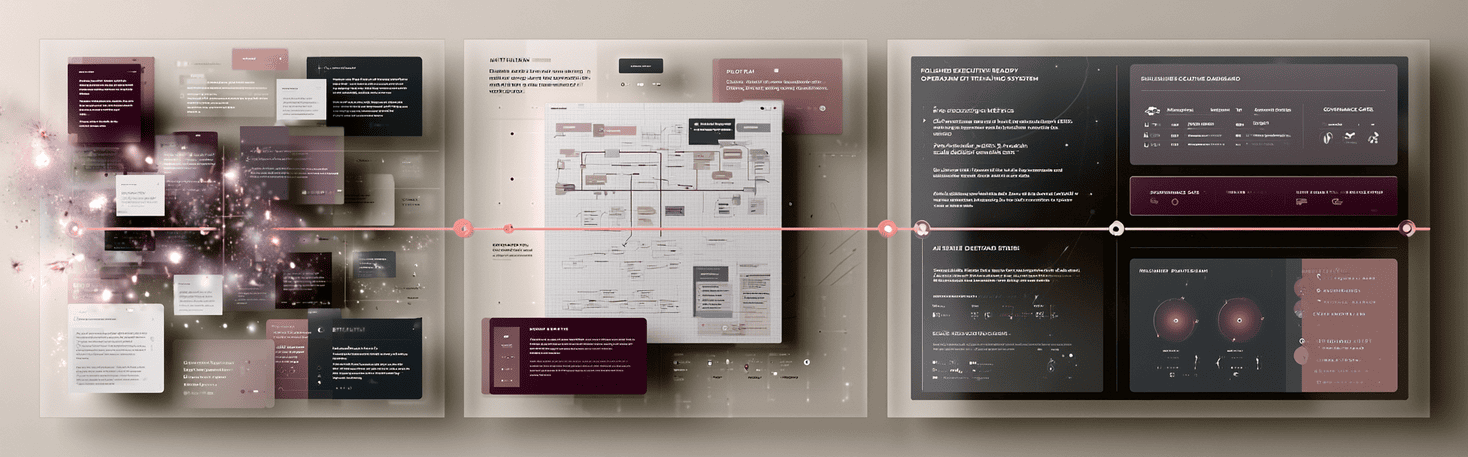
Executive AI pilot planning path showing the shift from demo thinking to governed pilot execution.
Demo Thinking
  • Tool-first
  • Novelty-driven
  • Unclear owner
  • No baseline
  • No scale criteria
Pilot Thinking
  • Workflow-first
  • Business problem defined
  • Metrics established
  • Risk reviewed
  • Users involved
Execution Thinking
  • Owner accountable
  • Governance built in
  • ROI modeled
  • Decision gate defined
  • Scale path visible

Pilot Failure Points

Most AI pilots fail before the model ever gets tested.

The risk is rarely just technical. AI pilots stall when there is no agreement on the problem, scope, data, users, governance, success metrics, ownership, adoption, or what happens after the pilot.

Blocked Pilot Timeline
Tool ideaScope creepMissing baselineLate governanceNo decision
Charter required before launch
01

Unclear business problem

The team starts with a tool or model idea instead of a specific business outcome or workflow pain point.

02

Scope creep

The pilot expands from one workflow into a vague enterprise initiative with no clear boundary.

03

Missing baseline metrics

The team cannot prove improvement because it never measured time, cost, quality, volume, error rate, cycle time, or throughput before launch.

04

Weak ownership

No accountable business owner has authority to make decisions, remove blockers, or judge whether the pilot worked.

05

Late governance review

Security, privacy, legal, compliance, data, vendor, and human oversight questions surface after the pilot is already in motion.

06

No decision criteria

The pilot ends with a demo or anecdotal feedback instead of a disciplined recommendation to scale, revise, or stop.

Charter Components

Define the decisions that make an AI pilot executable.

The charter turns a promising use case into a practical operating agreement across leadership, operators, technical teams, data owners, and governance stakeholders.

01

Business Problem

What specific workflow, cost, delay, quality issue, risk, or opportunity is the pilot designed to address?

Prompt: What problem are we solving, and why does it matter now?
02

Pilot Objective

What should the pilot prove or disprove within a defined window?

Prompt: What will we know at the end that we do not know today?
03

Workflow Scope

Which process, trigger, handoff, user group, department, and system boundary is included?

Prompt: Where does the pilot start and stop?
04

Users and Stakeholders

Who will use, approve, review, support, or be impacted by the pilot?

Prompt: Who needs to be involved for the pilot to be real?
05

AI Pattern

Which AI capability is being tested: classification, extraction, retrieval, summarization, drafting, decision support, QA, orchestration, or agent-assisted execution?

Prompt: What AI pattern fits the workflow?
06

Data and Systems

Which data sources, documents, tools, APIs, platforms, permissions, and integration points are needed?

Prompt: What inputs are required, and can we safely access them?
07

Success Metrics

How will the team measure business impact, adoption, quality, risk, and operational improvement?

Prompt: What numbers will determine whether this worked?
08

Baseline Metrics

What is the current state before AI is introduced?

Prompt: What are we comparing against?
09

Governance and Risk Controls

What privacy, security, legal, compliance, accuracy, human oversight, auditability, and change management controls are required?

Prompt: What must be true for this pilot to be responsible?
10

Pilot Team and RACI

Who owns the outcome, technical delivery, data access, governance review, user adoption, and final decision?

Prompt: Who is accountable for each workstream?
11

Timeline and Milestones

What happens in discovery, design, build/configuration, testing, launch, measurement, and review?

Prompt: What must happen by when?
12

Scale / Revise / Stop Criteria

What decision will leadership make at the end of the pilot?

Prompt: What conditions justify scaling, revising, or stopping?

Pilot Charter Preview

Preview the AI Pilot Charter Template.

Sample pilot charter shown for illustration. A real charter should be tailored to your workflow, data environment, risk profile, operating model, and business metrics.

Executive Pilot Charter

Customer Support Triage Assistant

8-week pilotVP Customer OperationsDecision: End of Week 8
Pilot nameCustomer Support Triage Assistant
Business ownerVP Customer Operations
FunctionCustomer Support
Target workflowInbound ticket intake, classification, summarization, and routing
Pilot window8 weeks
Decision dateEnd of Week 8

Business Problem

Support managers spend significant time reviewing and routing inbound tickets. First response times vary by queue, escalation quality is inconsistent, and agents often lack summarized context when work begins.

Pilot Objective

Test whether an AI-enabled intake assistant can classify, summarize, and route inbound support tickets while improving first response time, routing accuracy, and agent readiness without reducing quality or oversight.

Workflow Scope

In scope
  • New inbound support tickets
  • Ticket classification
  • Summary generation
  • Queue routing recommendation
  • Human review before routing changes are finalized
Out of scope
  • Fully autonomous customer response
  • Account-level escalation decisions
  • Refund or legal/compliance determinations
  • Production rollout beyond pilot queues

Data and Systems

  • Ticketing system
  • Knowledge base
  • Historical ticket categories
  • Escalation rules
  • Customer account context
  • Approved response guidelines

Success Metrics

  • Reduce average triage time by 30%
  • Improve routing accuracy to 90%+
  • Reduce incomplete ticket summaries by 50%
  • Maintain or improve CSAT
  • Achieve 70%+ agent adoption
  • No high-severity governance incidents

Governance and Risk Controls

  • Human review required before routing
  • No autonomous customer-facing responses in pilot
  • Sensitive data handling reviewed before launch
  • Audit log maintained for AI recommendations
  • Weekly quality review of sample outputs
  • Escalation path for low-confidence predictions

Team and Ownership

Executive sponsorBusiness ownerImplementation leadData ownerTechnical leadGovernance reviewerPilot user groupMeasurement owner

Timeline

  1. Week 1: Discovery and baseline measurement
  2. Week 2: Workflow/design alignment
  3. Week 3-4: Build/configure pilot workflow
  4. Week 5: User testing and governance review
  5. Week 6-7: Live pilot
  6. Week 8: Measurement, decision review, and scale/revise/stop recommendation

Decision Criteria

Scale if

Metrics improve materially, risks remain manageable, users adopt the workflow, integration is viable, and the business owner approves expansion.

Revise if

Value appears real but accuracy, adoption, data, or workflow design need improvement.

Stop if

Value is not measurable, risk is too high, ownership is weak, users reject the process, or data/system constraints are not resolvable.

Pilot Readiness Scorecard

Is your AI opportunity ready to become a pilot?

Use these questions before drafting a charter. If too many answers are unclear, go back to prioritization, workflow mapping, or ROI modeling first.

01

Is the business problem specific and important?

02

Is the target workflow clearly defined?

03

Is there an accountable business owner?

04

Are baseline metrics available or measurable?

05

Are users and stakeholders identified?

06

Are required data sources known and accessible?

07

Is the AI pattern appropriate for the workflow?

08

Are governance and risk concerns understood?

09

Is there a realistic pilot timeline?

10

Are scale/revise/stop criteria defined?

8-10 Yes

Ready for pilot chartering

The opportunity likely has enough clarity to move into pilot planning.

5-7 Yes

Validate before chartering

The opportunity may be promising, but key assumptions need to be tested first.

0-4 Yes

Prepare foundation

The opportunity needs sharper scope, ownership, data readiness, or metric definition before pilot planning.

If you scored 5 or below, use the AI Use Case Prioritization Matrix or Workflow Automation Opportunity Map first.

8-Week Pilot Timeline

A good pilot has phases, decision gates, and measurable learning.

Week 1

Discovery and Baseline

Workflow confirmed, current-state metrics captured, users and stakeholders identified.

Week 2

Charter and Governance Review

Pilot charter approved, risk review completed, data access confirmed.

Weeks 3-4

Build / Configure / Integrate

Pilot workflow configured, data/source connections tested, review process defined.

Week 5

User Testing and Quality Review

Test users trained, output quality sampled, human oversight workflow confirmed.

Weeks 6-7

Live Pilot

Pilot users active, metrics tracked, feedback collected, issues reviewed weekly.

Week 8

Decision Review

Results compared to baseline, risks reviewed, recommendation made, and 30/60/90-day next steps defined.

Measurement Model

Define success before the pilot starts.

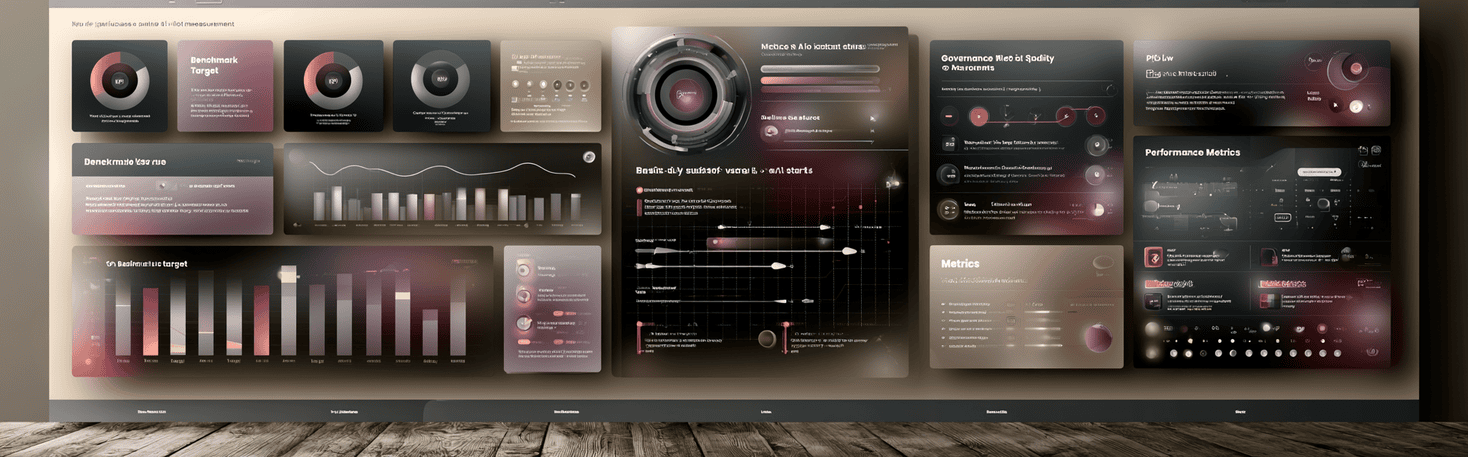
Pilots should not rely on anecdotal feedback alone. The charter should include baseline, target, measurement method, data source, owner, and review cadence.

AI pilot data and website measurement dashboard showing baseline, target, review cadence, and decision metrics.
Sample pilot measurement categories and metrics.
Metric CategoryExample Metrics
Efficiencytime saved per task, average handling time, cycle time, throughput per user
Qualityerror rate, completeness score, rework rate, quality review pass rate
Adoptionactive pilot users, usage frequency, task completion rate, user satisfaction
Financial Impactcost savings, avoided labor hours, revenue acceleration, margin improvement, payback period
Risk / Governancereview exceptions, data handling issues, low-confidence outputs, escalation incidents, audit completeness
Customer / Constituent Impactfirst response time, resolution time, satisfaction score, backlog reduction, service consistency

Scope Control

Protect the pilot from scope creep.

AI pilots often fail because they become too broad. The charter should clearly define in-scope, out-of-scope, assumptions, dependencies, and decision constraints.

In Scope

  • Workflow steps included
  • User group included
  • Data sources included
  • Systems included
  • AI capability being tested

Out of Scope

  • Adjacent workflows
  • Production rollout
  • Autonomous actions beyond approval
  • Unapproved data sources
  • Enterprise-wide scaling

Assumptions

  • Data access is granted
  • Users participate in testing
  • Governance review is completed
  • Baseline metrics can be captured
  • Technical integration is feasible

Dependencies

  • Data owner approval
  • SME availability
  • Security/privacy review
  • System access
  • Pilot user training
  • Measurement dashboard

Every AI pilot needs a clearly defined "not now" list.

Governance Gates

Build governance into the pilot before launch.

Governance should not be a final legal review. It should be part of the pilot design.

IdeaCharterData ReviewRisk ReviewUser TestingLive PilotDecision Review

Data Handling

What data is used, where it comes from, who can access it, and whether sensitive information is involved?

Human Oversight

Where must a human review, approve, override, or reject AI-generated outputs?

Output Quality

How will outputs be sampled, reviewed, scored, and improved during the pilot?

Security and Access

Which systems, permissions, vendors, APIs, or environments are involved?

Auditability

What decisions, recommendations, approvals, prompts, outputs, and user actions need to be logged?

Escalation Path

What happens when confidence is low, the model is wrong, the user disagrees, or risk is detected?

Vendor / Tool Review

If an external AI tool is involved, what procurement, security, data, and contract reviews are required?

Change Management

How will users be trained, supported, and informed about the pilot's purpose and boundaries?

Ownership Model

Assign ownership before the pilot starts.

Accountable

Executive Sponsor

Removes blockers, approves direction, and supports scale/revise/stop decision.

Accountable

Business Owner

Owns the workflow outcome and confirms whether the pilot creates business value.

Responsible

Pilot Lead

Coordinates timeline, workstreams, milestones, and communication.

Responsible

Technical Lead

Owns solution configuration, integration, testing, and technical feasibility.

Consulted

Data Owner

Approves data access, source reliability, permissions, and handling requirements.

Consulted

Governance/Risk Reviewer

Reviews privacy, security, legal, compliance, oversight, and audit controls.

Responsible

User Group Lead

Coordinates pilot users, feedback, adoption, and practical workflow fit.

Responsible

Measurement Owner

Defines baseline, tracks metrics, validates results, and prepares decision evidence.

Informed

Change/Adoption Lead

Supports training, communication, enablement, and rollout readiness.

Accountable

Final Decision Maker

Approves whether to scale, revise, or stop after results are reviewed.

AI Pilot Patterns

Pilot the AI pattern that fits the workflow.

Classification and Routing Pilot

Best for: Ticket triage, service requests, permit intake, claims, contract intake.

What to test: Classification accuracy, routing quality, first response time, escalation consistency.

Common risk: categories and escalation rules are unclear.Metric: routing accuracy.

Retrieval-Augmented Knowledge Pilot

Best for: Internal knowledge search, policy Q&A, SOP support, field guidance, HR helpdesk.

What to test: Answer accuracy, source grounding, user trust, response time, escalation needs.

Common risk: source material is stale or conflicting.Metric: source-backed answer accuracy.

Document Intelligence Pilot

Best for: Invoices, contracts, applications, forms, permits, case files, evidence packets.

What to test: Extraction accuracy, completeness, review time, exception handling.

Common risk: edge cases and document quality vary.Metric: extraction pass rate.

Summarization and Reporting Pilot

Best for: Calls, tickets, case notes, meetings, work orders, financial narratives.

What to test: Summary quality, time saved, factual accuracy, completeness, user adoption.

Common risk: material facts are lost.Metric: accepted summary rate.

Decision Support Pilot

Best for: Exception review, prioritization, triage, risk flagging, next-best action.

What to test: Recommendation quality, human override rate, decision speed, risk handling.

Common risk: decision rights are ambiguous.Metric: useful recommendation rate.

Drafting Assistance Pilot

Best for: Customer responses, memos, reports, explanations, internal communications.

What to test: Draft usefulness, edit time, quality, compliance, brand alignment.

Common risk: review and tone standards are weak.Metric: edit time reduction.

Quality Review / Completeness Pilot

Best for: Closeout documentation, required fields, compliance review, evidence packets.

What to test: Missing item detection, rework reduction, audit readiness, review speed.

Common risk: "complete" is not defined.Metric: completeness score.

Agent-Assisted Workflow Pilot

Best for: Structured multi-step workflows with clear boundaries and human approval.

What to test: Task completion, escalation quality, action boundaries, logging, oversight.

Common risk: action boundaries are too broad.Metric: supervised task completion.
Pilot Examples

Examples of pilot-ready AI opportunities.

Pilot readiness: High

Customer Support Triage Assistant

Workflow: Inbound ticket intake and routing.

Objective: Reduce first response time and improve routing accuracy.

Metrics: Triage time, routing accuracy, escalation quality, agent adoption.

Controls: Human review, confidence thresholds, quality sampling.

Recommended next step: Charter pilot
Pilot readiness: Medium

Finance Invoice Exception Review

Workflow: Invoice mismatch and approval exception handling.

Objective: Reduce manual review time and improve variance explanation consistency.

Metrics: Exception resolution time, rework rate, approval cycle time.

Controls: Human approval, audit log, data validation.

Recommended next step: Validate data
Pilot readiness: Medium

Legal Contract Intake Assistant

Workflow: Contract request intake and routing.

Objective: Improve intake completeness and identify risk flags earlier.

Metrics: Review readiness, routing accuracy, missing information rate.

Controls: Attorney review, risk categorization, no autonomous legal advice.

Recommended next step: Govern first
Pilot readiness: High

Field Service Closeout Documentation

Workflow: Work order completion and evidence capture.

Objective: Improve documentation completeness and reduce delayed billing.

Metrics: Closeout time, completeness rate, billing delay, rework.

Controls: Supervisor review, evidence requirements, audit trail.

Recommended next step: Estimate ROI
Pilot readiness: Medium

Public-Sector Permit Intake Review

Workflow: Permit or resident service request intake.

Objective: Reduce incomplete submissions and improve routing consistency.

Metrics: Intake review time, backlog reduction, missing document rate, routing accuracy.

Controls: Human review, transparency, data access controls, escalation path.

Recommended next step: Charter bounded pilot

Common Mistakes

Common mistakes that weaken AI pilots.

Starting with a model instead of a workflow

Why it hurts: The team may test technology without proving business value.

How the charter helps: It anchors the pilot to a real workflow and outcome.

Skipping baseline measurement

Why it hurts: The pilot cannot prove improvement.

How the charter helps: It defines baseline metrics before launch.

Making the pilot too broad

Why it hurts: The team cannot isolate what worked or failed.

How the charter helps: It defines in-scope and out-of-scope boundaries.

Ignoring user adoption

Why it hurts: A technically successful pilot can fail if users do not trust or use it.

How the charter helps: It names users, training needs, and adoption metrics.

Treating governance as a blocker

Why it hurts: Risk issues surface late and delay launch.

How the charter helps: It builds review, oversight, and controls into the pilot.

Forgetting scale criteria

Why it hurts: The pilot ends without a decision.

How the charter helps: It defines scale/revise/stop conditions upfront.

Confusing output quality with business impact

Why it hurts: Good AI outputs may not improve the workflow.

How the charter helps: It ties quality to time, cost, cycle time, throughput, risk, or experience metrics.

Not assigning a business owner

Why it hurts: No one can judge value, remove blockers, or sponsor scale.

How the charter helps: It forces ownership before work begins.

Pilot Charter Readiness Check

Check whether your opportunity is ready for chartering.

Answer eight yes/no questions to see whether to draft a charter, validate first, or prepare the foundation. The page works without JavaScript; this module adds a quick directional recommendation when enabled.

Readiness questions
Directional recommendation Ready for Chartering

You likely have enough clarity to draft a pilot charter and move into ROI modeling.

Editable Template

Want the editable AI Pilot Charter Template for your team?

Use the on-page preview to understand the framework, or request the editable version and we'll help you adapt the charter to your workflow, data environment, governance requirements, success metrics, and executive decision process.

No vague pilot plan. A practical charter designed to align executives, operators, technical teams, and governance stakeholders before build begins.

FAQ

AI Pilot Charter Template FAQ.

What is an AI Pilot Charter?

An AI Pilot Charter is a planning document that defines the business problem, workflow scope, pilot objective, users, data sources, success metrics, risks, owners, timeline, and scale/revise/stop decision criteria for an AI pilot.

Why do AI pilots need a charter?

A charter helps prevent vague experiments, scope creep, unclear ownership, weak measurement, late governance review, and pilots that end without a decision. It turns a promising AI idea into an execution-ready plan.

What should be included in an AI Pilot Charter?

A strong charter should include the business problem, workflow scope, pilot objective, AI pattern, data and systems, stakeholders, baseline metrics, success targets, governance controls, human oversight, pilot timeline, RACI, and scale/revise/stop criteria.

When should a team create an AI Pilot Charter?

A team should create a charter after a use case has been prioritized and the target workflow has been mapped, but before build, vendor configuration, system integration, or live pilot testing begins.

How long should an AI pilot run?

Many practical AI pilots can be structured around a 6-10 week window, depending on data access, integration needs, governance review, user testing, and measurement complexity.

How do you measure whether an AI pilot worked?

Teams should compare pilot results against baseline metrics such as time saved, cycle time, throughput, quality, error rate, rework, adoption, financial impact, customer experience, and governance outcomes.

What is the difference between an AI pilot and an AI proof of concept?

A proof of concept often tests whether a technical approach is possible. A pilot should test whether an AI-enabled workflow creates measurable value under real operating conditions with actual users, controls, and decision criteria.

What happens after an AI pilot ends?

The leadership team should review the results and make a clear decision: scale the pilot, revise and test again, prepare the foundation further, or stop the initiative.

Who should own an AI pilot?

Every AI pilot should have an accountable business owner, not only a technical owner. Technical, data, governance, and user adoption leads should support the pilot, but the business owner should own the outcome.

Can InitializeAI help run the pilot charter process?

Yes. InitializeAI can help teams prioritize use cases, map workflows, estimate ROI, define pilot scope, review governance risks, create the charter, and turn the strongest opportunity into a 90-day execution plan.